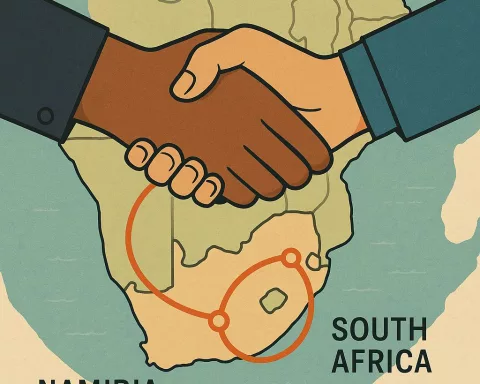
In the dry lands of the Northern Cape, South Africa is stirring up big changes in marriage laws. Public hearings invite everyday people – teachers, miners, healers – to share their stories and ideas about a new Marriage Bill that aims to treat all marriages fairly, ban child marriages under 18, and let more people become marriage officers. This lively, open process brings the government closer to the people, making sure the new law truly reflects South Africa’s rich diversity and hopes for a just future. It’s a powerful moment where voices from every corner shape a law that will protect families for generations to come.
What is the purpose of the Marriage Bill public hearings in the Northern Cape?
The Marriage Bill public hearings aim to gather diverse community input to unify South Africa’s marriage laws, ensuring equal recognition for all unions, banning child marriages under 18, and broadening who can serve as marriage officers. This inclusive process strengthens democracy and legal reform.
Bringing Legal Change to the Northern Cape
Amid the arid plains and golden sunlight of the Northern Cape, change often arrives with the steady patience of a farmer waiting for rain. Yet as August 2025 approaches, that pace quickens. The Portfolio Committee on Home Affairs prepares to journey through the heart of this province, determined to bring local voices into the national conversation on marriage law. Their mission centers on the Marriage Bill [B43-2023], an ambitious legislative proposal designed to overhaul and unify South Africa’s tangle of marriage statutes.
Departing from the historic chambers of Parliament in Cape Town, committee members embark on a route that will bring them face-to-face with residents from a variety of backgrounds. Their presence in Galeshewe, Kuruman, and Upington transforms ordinary municipal buildings into temporary parliaments. Here, in these makeshift forums, democracy becomes a lived reality as ordinary people engage directly with lawmakers.
This initiative signals a conscious effort to bridge the distance between government and the governed. Rather than relying on distant decisions, the committee aims to listen, consult, and create laws together with the communities affected. The journey through the Northern Cape is not just a symbolic gesture – it is a practical and necessary step in building legislation that reflects the true spirit and diversity of South Africa.
The Imperative for Marriage Law Reform
For decades, South Africa’s marriage laws have mirrored its layered history. The current legal framework consists of three primary statutes: the Marriage Act, the Recognition of Customary Marriages Act, and the Civil Union Act. Each originated in response to particular social and political contexts, carrying the distinct marks of their times – both its progress and its prejudices. The result is a patchwork of legal codes that sometimes clash or leave certain unions in a legal grey area.
Legal experts often highlight the country’s “legal pluralism,” a concept that captures the entwined legacies of colonial, customary, and constitutional traditions. The Marriage Bill seeks to bring these strands together under a single, inclusive law. Its main goal is clear: to guarantee that every marriage, regardless of tradition, belief, or sexual orientation, enjoys equal recognition and protection under the law.
This effort to unify marriage law responds to a long-standing need for clarity and equity. By addressing outdated or discriminatory aspects of former statutes, the bill aims to resolve unfinished business from the past. The stakes are high, as the new law will impact families, communities, and the very fabric of South African society for generations to come.
Engaging the Public: Democracy in Action
The South African Constitution, in Section 59, affirms every citizen’s right to participate in lawmaking. Chairperson Mosa Chabane and the committee view this not only as a procedural duty but as the ethical bedrock of the legislative process. For them, public input breathes life into the law, ensuring it embodies the hopes and priorities of the people it will govern.
This commitment brings to mind the participatory forums of the 1990s, when lawmakers gathered input from every corner of the nation in the process of drafting the Constitution. In the lead-up to the Marriage Bill hearings, public education teams travel to towns and villages, hosting workshops that explain the bill’s provisions in clear, accessible language. These efforts empower first-time participants and veterans alike to speak with confidence and clarity at the upcoming forums.
Previous hearings across provinces such as Gauteng, KwaZulu-Natal, Eastern Cape, Mpumalanga, North West, and the Free State have underscored the country’s diversity. In Free State, for example, attendees supported the idea of a unified law but raised concerns about specific sections. Debates touched on issues ranging from “marriages of convenience” – with one resident sharing her niece’s experience marrying a foreign national – to the appropriate minimum age for marriage. Many called for the legal age to be raised to 21, citing both their own experiences and international best practices.
The Marriage Bill’s Core Provisions
At the heart of the Marriage Bill lies a bold promise: any marriage – be it religious, customary, or civil – deserves full and equal recognition by the state. This provision addresses a longstanding injustice, as indigenous and faith-based unions have often been denied the same legal standing as civil marriages. By correcting this, the bill advances both social justice and legal certainty.
One of the bill’s most important reforms is the establishment of 18 as the minimum age for marriage. No longer will loopholes permit child marriages under the guise of tradition or religion. The law introduces robust penalties for anyone who arranges or performs a marriage involving a minor, demonstrating South Africa’s alignment with international agreements like the UN Convention on the Rights of the Child.
Another significant shift concerns who may serve as marriage officers. In the past, only state officials or select religious leaders held this authority. The new bill allows the Minister of Home Affairs to appoint marriage officers from a wider range of backgrounds, including respected figures in traditional communities. This change reflects South Africa’s multicultural ideals, building on a legacy that values inclusion and representation.
Voices from the Northern Cape: A Tapestry of Perspectives
The committee’s journey through the Northern Cape begins on Monday, August 4th, at the Galeshewe Recreational Hall in Kimberley – a venue that has hosted everything from music to activism. Their next stop is Kuruman’s Ga-Segonyana Municipal Hall, a key space for community dialogue and decision-making. By Thursday, they reach Piet Thole Hall in Rosedale, Upington, a place that stands at the crossroads of history and contemporary life.
In each location, a rich mosaic of South African society emerges. Teachers, miners, healers, and activists gather to share their personal stories and professional insights. Their testimonies often carry the weight of history; for instance, one activist in Kimberley recalls her parents’ marriage under apartheid, denied legal status due to racist laws. Her experience highlights the deeply personal and societal implications of legal reform.
Anthropologists have described public hearings as “living galleries,” where every contribution adds depth to the nation’s story. In the Northern Cape, Muslim participants seek clarity on the recognition of nikah weddings, while Khoisan elders advocate for explicit protections of indigenous marital customs. LGBTQ+ South Africans, drawing strength from the Civil Union Act, press for language that ensures no one faces discrimination under the new law. Tensions sometimes flare, as groups of young women argue for a critical re-examination of marriage itself, challenging patriarchal norms and seeking inspiration from feminist thinkers like Pumla Gqola.
Crafting Law in a Complex Nation
Writing a national law in South Africa involves navigating a landscape as varied as its people. The committee faces the daunting challenge of weaving countless viewpoints into a coherent, workable statute. Members often reflect on previous moments of profound legal transformation, such as the Truth and Reconciliation Commission or the drafting of the Bill of Rights, recognizing that legitimacy flows from genuine, widespread participation.
These discussions do not take place in isolation. South Africa’s efforts to harmonize customary and constitutional law place it at the forefront of global debates on post-colonial legal reform. The Marriage Bill’s inclusive vision – recognizing all forms of marriage, banning underage unions, and broadening the definition of marriage officers – serves as a model for societies wrestling with similar issues.
The outcomes of these hearings will shape not only the future of marriage in South Africa but also the country’s ongoing journey toward justice and equality. The committee’s work in the Northern Cape stands as a reminder that democracy requires patience, persistence, and above all, the willingness to listen to every voice, from every walk of life.
Looking Ahead: Lasting Impact Beyond Provincial Borders
Though these hearings take place in local halls under the Northern Cape sun, their impact will ripple far beyond the province’s boundaries. Each submission, debate, and story collected by the committee becomes part of a legislative tapestry that will influence families and communities for decades to come.
As South Africa continues to refine its legal identity, the Marriage Bill hearings exemplify the enduring power of inclusive, participatory democracy. They invite citizens to help write the next chapter in the country’s story – a chapter that aspires to honor every tradition, protect every child, and recognize the dignity of every union. The process serves as a beacon for societies worldwide, demonstrating that meaningful reform emerges when lawmakers engage humbly and openly with the people they serve.
What is the purpose of the Marriage Bill public hearings in the Northern Cape?
The public hearings in the Northern Cape aim to gather diverse input from communities – including teachers, miners, healers, and activists – on the proposed Marriage Bill [B43-2023]. The goal is to unify South Africa’s marriage laws to ensure equal recognition for all types of marriages, ban child marriages under 18, and expand who can be appointed as marriage officers. These hearings foster inclusive democracy by allowing citizens to actively participate in shaping legislation that affects their lives.
What key reforms does the Marriage Bill propose?
The Marriage Bill introduces several significant reforms:
– It guarantees full legal recognition for all marriages – civil, customary, religious, and same-sex unions – under one unified law.
– It sets 18 as the minimum legal age for marriage, banning child marriages and introducing penalties for violations.
– It broadens the pool of individuals who may be appointed as marriage officers beyond government officials and certain religious leaders, including respected traditional community figures.
These reforms aim to promote equality, protect children, and reflect South Africa’s diverse cultural landscape.
Why is reforming marriage laws important in South Africa today?
South Africa currently operates under multiple marriage laws – the Marriage Act, Recognition of Customary Marriages Act, and Civil Union Act – that reflect different historical and social contexts. This legal pluralism sometimes causes confusion and unequal treatment of marriages. The reform seeks to unify these laws into a single inclusive statute that acknowledges all forms of unions equally, eliminates discriminatory practices, and provides legal clarity and protection for families across the country.
How does the public participation process enhance the lawmaking of the Marriage Bill?
Public participation is a constitutional right in South Africa (Section 59 of the Constitution) and is foundational to democratic legitimacy. The Portfolio Committee on Home Affairs travels to provincial communities, holding hearings in accessible venues where citizens can share their perspectives and concerns directly with lawmakers. Public education campaigns help demystify the bill, enabling informed contributions. This process ensures the final law reflects the lived realities, values, and needs of South Africa’s diverse population.
What kinds of concerns and perspectives have emerged from communities in the Northern Cape?
Communities have brought a wide spectrum of views reflecting South Africa’s social diversity. Some participants emphasize protecting indigenous marital customs, such as Khoisan traditions and Muslim nikah marriages, within the new law. Others advocate for stronger measures against child marriage, with some calling for raising the legal marriage age to 21. LGBTQ+ groups stress the importance of non-discrimination clauses, while feminist voices challenge patriarchal norms embedded in marriage conventions. These debates illustrate the complex balance lawmakers must achieve.
What is the broader significance of these hearings beyond the Northern Cape?
Although the hearings physically take place in the Northern Cape, their impact extends nationally and even globally. The outcomes will influence South Africa’s legal framework for marriage for generations, promoting justice, equality, and social cohesion. South Africa’s approach to harmonizing customary, civil, and constitutional law serves as a leading example of post-colonial legal reform worldwide. The process demonstrates that meaningful change emerges when governments engage openly with citizens, honoring all voices in the legislative process.