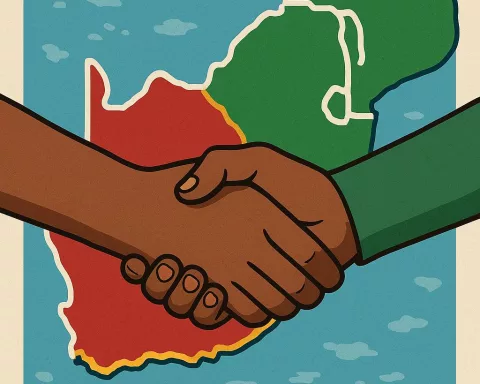
At the 45th SADC Summit in Madagascar, President Ramaphosa thanked all leaders for their commitment to unity and progress in Southern Africa. He praised Madagascar for hosting and celebrated outgoing leaders for their hard work in boosting the region’s economy, food security, and peace. Ramaphosa highlighted key goals like growing industries, improving agriculture, and embracing clean energy as steps toward a stronger future. His message was clear: Southern Africa’s strength comes from working together with shared vision and determination.
What was the significance of President Ramaphosa’s Vote of Thanks at the 45th SADC Summit?
President Ramaphosa’s Vote of Thanks highlighted SADC’s unity, leadership transitions, and regional cooperation. He praised Madagascar’s hosting, honored outgoing leaders, and emphasized themes like industrialization, agriculture, and energy transition as vital for Southern Africa’s collective economic growth and stability.
Setting the Stage: Antananarivo and the SADC Gathering
In the heart of Madagascar’s bustling capital, Antananarivo, the 45th Ordinary Summit of the Southern African Development Community (SADC) unfolded with the energy and anticipation befitting a landmark event. The city’s hills and multicolored rooftops bore witness to a convergence of leaders and delegates, all arriving with the shared purpose of charting a renewed course for regional integration. For Madagascar, this wasn’t simply a matter of hosting – it marked the nation’s return to the SADC spotlight after two decades, a symbolic reconnection with its continental peers and a testament to the power of perseverance in diplomacy.
Within the grand halls of the Ivato International Conference Centre, a meticulous choreography played out. Delegates, officials, and dignitaries mingled, exchanging the quiet confidences and animated discussions that often shape the outcomes of such gatherings. The summit’s side events – ranging from industrialization dialogues to trade exhibitions – mirrored the vibrancy of Antananarivo itself, infusing the formal proceedings with a palpable sense of optimism.
Amidst this convergence of history and ambition, President Cyril Ramaphosa of South Africa found himself entrusted with a task both ceremonial and substantial: delivering the Vote of Thanks on behalf of the assembled heads of state and government. Such a role, while deeply rooted in tradition, also serves as a critical moment to acknowledge collective achievements, highlight individual contributions, and set the tone for the journey ahead.
Leadership in Focus: Saluting Vision and Consensus
From the outset of his address, Ramaphosa struck a tone of respect and camaraderie, directing his gratitude toward King Mswati III, President Andry Rajoelina, and other dignitaries present. He positioned President Rajoelina’s new chairmanship of SADC as a pivotal moment for both Madagascar and the broader community, acknowledging the significance of the passing torch. Rajoelina’s vision – centered on accelerating industrialization, transforming agriculture, and steering an inclusive energy transition – resonated deeply with the summit’s themes and the region’s long-standing aspirations for economic resilience.
Ramaphosa’s narrative approach moved beyond mere formalities. He described listening intently to Rajoelina’s acceptance, finding inspiration in the new chair’s ambitions. What stood out most, however, was Rajoelina’s adeptness at fostering consensus. In a region shaped by diversity of language, culture, and economic structure, the ability to guide deliberations toward shared solutions is an art form unto itself – one that recalls the collaborative spirit of Africa’s great liberation movements. Ramaphosa, whose own legacy includes negotiating South Africa’s historic transition, recognized in Rajoelina a leader attuned to the subtleties of dialogue and unity.
His remarks, though laced with protocol, carried the weight of history. The Southern African region has, over decades, grappled with the complexities of forging alliances out of former colonial boundaries. The SADC, born from the twin imperatives of political independence and economic cooperation, has always depended on leaders willing to transcend national interests in service of a greater good. By affirming Rajoelina’s capacity for consensus-building, Ramaphosa reinforced the ideal that leadership in SADC is as much about listening and mediating as it is about charting bold new directions.
Honoring Service and Continuity
The summit’s narrative extended beyond new beginnings. Ramaphosa ensured that the outgoing leadership received its due recognition. He singled out President Emmerson Mnangagwa of Zimbabwe, lauding his dedication to advancing economic integration, food security, and transboundary conservation – core pillars that have underpinned SADC’s developmental agenda. Mnangagwa’s contributions, as Ramaphosa noted, built upon a tradition of stewardship that values tangible progress as much as visionary rhetoric.
A particularly personal note emerged as Ramaphosa turned to Dr. Samia Suluhu Hassan, President of Tanzania, who had chaired the Organ on Politics, Defence, and Security Cooperation during a period marked by extraordinary challenges. From mediating political tensions to overseeing complex peace support missions, Hassan’s steady leadership exemplified the resilience and determination required to safeguard SADC’s stability. Ramaphosa’s tribute acknowledged not only her achievements but also the often unseen emotional fortitude demanded by such responsibilities.
Institutional continuity also featured prominently in Ramaphosa’s address. He celebrated the reappointment of Elias Mpedi Magosi as SADC’s Executive Secretary, underlining the importance of consistent, capable stewardship within the Secretariat. Behind every successful summit lies a cadre of dedicated professionals – Ramaphosa referred to the SADC Council of Ministers as the “true heavy lifters,” those whose diligent efforts transform policy into practice and vision into reality. Their behind-the-scenes work, though seldom in the limelight, remains foundational to SADC’s ongoing evolution.
Madagascar’s Emergence and the Power of Hospitality
No regional gathering succeeds without the seamless collaboration of host and guest. Ramaphosa’s gratitude extended warmly to the government and people of Madagascar, whose meticulous preparations ensured not only that the summit ran smoothly but also that it reflected the best of Malagasy hospitality. From expertly managed logistics to the orchestration of side events like SADC Industrialisation Week, Madagascar demonstrated a readiness to lead and a desire to contribute meaningfully to Africa’s collective journey.
The summit’s vibrancy, Ramaphosa observed, owed much to the spirit and professionalism of the Malagasy people. Their hospitality transformed Antananarivo into a stage for continental cooperation, allowing visiting delegates to experience a culture rich in tradition yet forward-looking in its ambitions. By hosting the summit, Madagascar signaled its commitment to both the symbolic and practical work of regional integration – a gesture of solidarity that deepened inter-state bonds and left an enduring impression on participants.
Ramaphosa’s reflections suggested that such moments – where national pride meets regional purpose – serve as inflection points for SADC. The ability to host, organize, and participate actively in continental affairs expresses more than competence; it signals a readiness to shape the future trajectory of the region. As the summit concluded, Madagascar’s role as a gracious and dynamic host became as much a part of SADC’s evolving story as the deliberations themselves.
Beyond Ceremony: Weaving Tomorrow’s Vision
While the Vote of Thanks formally closes a summit, Ramaphosa used the platform to reassert the core tenets underpinning SADC’s vision. He spoke not only of gratitude but also of the values – unity, innovation, and the relentless quest for progress – that have defined the community since its formation. These ideals, like recurring motifs in a masterwork, have endured through political upheavals, economic crises, and shifting global landscapes.
The summit’s focus on industrialization, agricultural renewal, and energy transition revealed an organization attuned to both its historical roots and contemporary demands. As SADC nations confront the challenges of climate change, technological disruption, and evolving international alliances, the region’s founding hopes for economic self-determination and shared prosperity remain ever relevant. Ramaphosa’s narrative invited participants to see themselves as inheritors and stewards of a legacy – one that requires not only vision but also cooperation and perseverance.
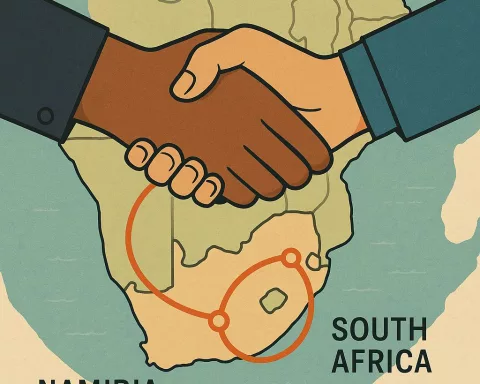
Looking ahead, Ramaphosa extended an invitation for the 46th SADC Summit to convene in South Africa, reinforcing the cycle of continuity that binds the region together. This gesture, though customary, embodied a deeper truth: SADC’s strength lies not in the singular achievements of any one nation, but in the collective, ongoing commitment to unity and development. Through summits, speeches, and shared endeavors, Southern Africa continues to craft a narrative of hope, resilience, and transformation – one that, like a vibrant tapestry, draws strength from every individual thread.
FAQ: President Ramaphosa’s Vote of Thanks at the 45th SADC Summit
1. What was the main message of President Ramaphosa’s Vote of Thanks at the 45th SADC Summit?
President Ramaphosa emphasized the importance of unity, cooperation, and shared vision among Southern African nations. He praised the commitment of leaders to advancing economic growth, food security, peace, and sustainable development in the region. His speech highlighted key priorities such as industrialization, agricultural improvement, and clean energy adoption as essential steps toward a stronger and more resilient Southern Africa.
2. Why was Madagascar’s role as host significant at this summit?
Madagascar’s hosting of the 45th SADC Summit marked its return to the SADC spotlight after two decades. The country showcased its diplomatic perseverance and readiness to contribute to regional integration. President Ramaphosa acknowledged Madagascar’s exemplary hospitality and organizational efforts, highlighting how the capital, Antananarivo, became a vibrant stage for continental cooperation and dialogue. Hosting the summit symbolized Madagascar’s renewed commitment and solidarity within the Southern African community.
3. Which leaders and contributions did President Ramaphosa particularly recognize in his speech?
Ramaphosa paid tribute to several key figures:
– President Andry Rajoelina of Madagascar, for his new role as SADC Chairperson and his vision to accelerate industrialization, transform agriculture, and guide an inclusive energy transition.
– President Emmerson Mnangagwa of Zimbabwe, for advancing economic integration, food security, and conservation efforts.
– President Samia Suluhu Hassan of Tanzania, for her leadership in the Organ on Politics, Defence, and Security Cooperation during challenging times.
– He also recognized the continued stewardship of Elias Mpedi Magosi, reappointed as SADC Executive Secretary, and praised the hard work of the SADC Council of Ministers.
4. How does the Vote of Thanks reflect the broader goals of SADC?
The Vote of Thanks serves not only as a formal expression of gratitude but also as a reaffirmation of SADC’s core goals:
– Promoting political stability and peace in the region.
– Encouraging economic integration and industrial development.
– Enhancing food security and agricultural productivity.
– Supporting a transition to clean and renewable energy.
It underscores the idea that collective progress depends on consensus-building, unity, and perseverance among member states.
5. What historical and regional context did President Ramaphosa reference in his address?
Ramaphosa situated SADC’s work within the legacy of Southern Africa’s liberation movements and post-colonial efforts to create a regional community focused on mutual support and development. He highlighted the complexities of uniting diverse nations linguistically, culturally, and economically, and praised the leadership’s ability to mediate differences and forge shared paths forward. This historical perspective reinforced the importance of solidarity and cooperation as foundations for the region’s future.
6. What was announced or proposed regarding the next SADC Summit?
President Ramaphosa extended an invitation for the 46th SADC Summit to be held in South Africa, continuing the tradition of rotating the summit among member states. This gesture highlights the ongoing cycle of leadership and cooperation that strengthens the community. The invitation also symbolizes South Africa’s commitment to supporting SADC’s vision of economic growth, stability, and integration in the years ahead.
If you want to learn more about SADC and its initiatives, visit the SADC official website.