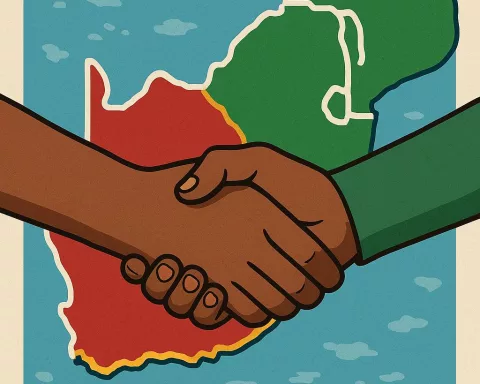
South African journalists gathered in Cape Town to protest the killing of over 190 media workers in Gaza since October 2023. They stood together to defend press freedom and demand justice for those targeted simply for reporting the truth. Drawing on South Africa’s history of fighting oppression, the protest called out unethical media practices and showed deep solidarity with Palestinian journalists facing violence. Their voices rose by the sea, a powerful reminder that telling the truth is never a crime, even in the darkest times.
Why are South African journalists protesting in support of Gaza?
South African journalists protest to honor over 190 media workers killed in Gaza since October 2023, defend press freedom, and condemn unethical sponsored trips to Israel. Their solidarity echoes South Africa’s legacy of resisting oppression and demands justice for journalists targeted while reporting conflict.
Voices Raised Along the Promenade
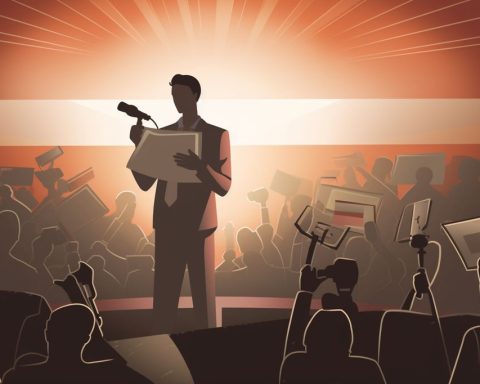
On a blustery Sunday at Cape Town’s Sea Point Promenade, a spirited crowd assembled, their banners snapping in the sea air. Journalists, activists, and concerned residents stepped forward with a shared sense of purpose: to denounce the recent killings of their colleagues in Gaza. Since October 2023, the Committee to Protect Journalists had reported over 190 journalists killed in Gaza, and when all media workers are counted, the toll swells beyond 270. Each footfall of the marchers whispered the names of the silenced, professionals who once chronicled turmoil and conflict, now themselves casualties of violence.
Just days before, a similar mood of grief and resolve enveloped Johannesburg outside the Al Jazeera offices, where journalists held a solemn vigil. Candles flickered in remembrance as the names of the fallen echoed through the evening, a tribute to those lost while bearing witness. That spirit of mourning and determination traveled to Cape Town, transforming the protest into not only a demand for justice but also a robust defense of press freedom – a principle deeply woven into the fabric of South Africa’s turbulent past.
South Africa’s media has a storied legacy of bravery. During the years of apartheid, reporters often risked arrest and harassment to expose the regime’s brutality. Their work, frequently carried out under threat, became an act of resistance: smuggling stories past censors and defying official narratives. Many at the Cape Town protest drew from this history, invoking the familiar rallying cry, “Journalism is not a crime.” For some, the echoes between South Africa’s own fight against oppression and the current realities in Palestine deepened their sense of outrage and responsibility.
Bearing Witness: Testimonies and Parallels
Crystal Orderson, a well-respected journalist, addressed the gathering with passionate conviction. She challenged the notion that journalism could ever be equated with criminality, invoking the experiences of colleagues in Gaza whose only tools were their notebooks and cameras. Her message underscored a painful reality: these journalists became targets simply for reporting on what she described as genocide. Her impassioned call urged South African newsrooms to reject silence and to stand united against injustice.
Palestinian journalist Sharif Mosa, now residing in South Africa, lent his voice to the proceedings. He described the violence against media workers as deliberate, rooted in what he called a “colonial logic.” He explained that colonial rule depends not just on physical domination but also on controlling the story. Citing thinkers like Frantz Fanon and Edward Said, Mosa connected the suppression of media voices to the broader machinery of oppression, which has manifested in places from British-ruled India and French-controlled Algeria to apartheid-era South Africa and today’s Palestine.
The demonstration, organized by Journalists Against Apartheid, brought together a broad coalition. Organizations such as the Palestine Solidarity Campaign, South African Jews for Palestine, and Gift of the Givers added their support. This diversity underscored the interconnectedness of their causes: a defense of journalists under siege, a push for Palestinian rights, and a commitment to preserving the integrity of the media.
However, the focus was not solely international. Protesters also scrutinized their own country’s media practices. In April and May, journalists from leading South African outlets – including Biznews, Sunday Times, and The Citizen – participated in trips to Israel funded by the South African Jewish Board of Deputies. The failure to immediately disclose this sponsorship drew sharp criticism. Many saw it as a breach of journalistic ethics, a dangerous lapse in transparency that risked undermining the credibility won through decades of courageous reporting.
Integrity on the Line: Navigating Media Ethics
Jews Against Apartheid issued a direct condemnation of these sponsored trips, asserting, “We condemn South African media organisations who have undertaken sponsored propaganda trips to Israel and published this propaganda without declaring how these trips were funded. This falls far short of journalism ethics, and is shameful in a country where the media’s bravery was central to dismantling apartheid.” For many, this rebuke cut deeply. South Africa’s journalists had once faced deadly consequences for insisting on editorial independence. To see even a hint of compromise or omission was, to them, a betrayal of that legacy.
The Press Council received formal complaints after the revelation. In response, Sunday Times and The Citizen issued apologies for failing to disclose their funding sources, while Biznews, which is not a council member, updated its article to acknowledge the sponsorship. Still, these actions did little to quell public resentment. The incident rekindled a longstanding debate about the relationship between journalism and power, highlighting how the contest over narratives remains as fierce as ever.
Meanwhile, the shadow of Gaza loomed over the proceedings. On August 10, six media workers lost their lives in an Israeli strike on the al-Shifa hospital precinct in Gaza City, including four Al Jazeera staff members. Since its founding in 1996, Al Jazeera has played a pivotal role in challenging dominant Western interpretations of Middle Eastern affairs. Its reporters have routinely faced arrest, intimidation, and violence yet continue to report from some of the globe’s most dangerous conflict zones.
Throughout history, targeting journalists in war has remained a grim constant. From Vietnam – where figures like Eddie Adams and Peter Arnett risked everything to document wartime atrocities – to the grisly chapters of Latin America’s Dirty Wars, the Balkans, and apartheid South Africa, journalists have paid a steep price to tell the truth. Their reports often shift global opinion and policy, yet the risks they shoulder are immense.
The Global Stakes: Solidarity, Resistance, and Legacy
In today’s digital era, the dangers have only intensified. Modern war correspondents transmit live images and footage, with the world sometimes witnessing their deaths in real-time. Social media amplifies both the stories these journalists tell and the attempts to censor or silence them. In Gaza, reporters document not only the devastation of bombings but also the slow-motion agony of siege – shortages of medicine, the collapse of essential services, and the heartbreak of families torn apart. Their reporting represents an act of defiance, pushing back against erasure in the age of misinformation.
The demand for solidarity among South African journalists goes beyond mere words. It draws on the nation’s proud tradition of internationalism – a belief that oppression in one part of the world imperils freedom everywhere. During apartheid, South African movements forged links with global struggles, from Vietnam to Palestine, guided by Martin Luther King Jr.’s insight that “injustice anywhere is a threat to justice everywhere.” Today’s generation claims this legacy, insisting that attacks on Palestinian journalists are an affront to all who cherish press freedom and truth.
Artists and writers have long illuminated the uneasy relationship between power and truth. Whether through Goya’s haunting images in “The Disasters of War,” Picasso’s “Guernica,” or James Nachtwey’s relentless photojournalism, creators have catalogued the suffering visited upon the innocent when violence goes unchecked. South African Nobel laureate Nadine Gordimer once wrote, “Truth isn’t always beauty, but the hunger for it is.” That hunger infused the Sea Point protest, mingling grief with hope and a fierce determination.
As the demonstrators wound along the promenade, seagulls circled overhead and sunlight danced on the waves. Their chants rose above the crash of the surf – a powerful call to remember the dead, defend the living, and demand a world where truth-telling is honored, not punished. The gathering affirmed not only solidarity with Gaza’s embattled journalists but also a broader, universal struggle: the fight to ensure that the voice of the press remains a force for justice in the face of power.
FAQ: South African Journalists Stand with Gaza
1. Why are South African journalists protesting in support of Gaza?
South African journalists are protesting to honor over 190 media workers killed in Gaza since October 2023 and to defend press freedom worldwide. They condemn the deliberate targeting of journalists reporting on the conflict and call for justice for those harmed simply for telling the truth. The protest also challenges unethical media practices, such as undisclosed sponsored trips to Israel, which undermine journalistic integrity. Their solidarity is rooted in South Africa’s own history of resisting oppression and censorship during apartheid.
2. What incidents have sparked the protests and solidarity actions?
The protests were sparked by the killing of over 190 journalists and more than 270 media workers in Gaza since October 2023, including six killed in an Israeli strike on Gaza’s al-Shifa hospital precinct on August 10. These deadly attacks on media workers emphasize the extreme dangers journalists face in conflict zones. Recent controversies over South African media outlets failing to disclose funding for trips to Israel also fueled calls for greater transparency and adherence to ethical standards.
3. How does South Africa’s history relate to the current protests?
South Africa’s anti-apartheid struggle set a precedent for courageous journalism under threat. During apartheid, journalists risked arrest and violence to expose government brutality, often working under censorship and harassment. The Cape Town protest drew on this legacy, using the rallying cry “Journalism is not a crime” to affirm the importance of editorial independence and to highlight parallels between South Africa’s past oppression and the current suppression of Palestinian journalists.
4. What role did Palestinian journalists play in the protest?
Palestinian journalist Sharif Mosa, currently based in South Africa, spoke at the protest to highlight the deliberate targeting of journalists in Gaza. He framed this violence as part of a broader colonial strategy aimed at controlling narratives and suppressing dissent. Drawing on thinkers like Frantz Fanon and Edward Said, Mosa connected the experiences of Palestinian journalists with historical struggles against colonial oppression, including South Africa’s apartheid regime.
5. What ethical concerns have been raised about South African media coverage of the Israel-Gaza conflict?
Several prominent South African media outlets – Biznews, Sunday Times, and The Citizen – participated in trips to Israel funded by the South African Jewish Board of Deputies but initially failed to disclose this sponsorship. This lack of transparency was widely criticized as a breach of journalistic ethics and a threat to media credibility. Following public backlash and formal complaints to the Press Council, some outlets issued apologies or updated their articles to clarify funding sources. The incident sparked renewed debate about the influence of power on journalism and the importance of maintaining editorial independence.
6. Why is the protection of journalists especially important in conflict zones like Gaza?
Journalists in conflict zones play a critical role in bearing witness to human suffering, war crimes, and violations of international law. Their reporting informs global audiences and can influence public opinion and policy. However, they often face extreme risks, including targeted killings, arrests, and intimidation. In Gaza, journalists document not only bombings but the effects of siege, medical shortages, and displacement, providing a vital counter-narrative to misinformation. Protecting journalists ensures that truth remains accessible and that abuses do not go unnoticed or unchallenged.
If you want to support press freedom or learn more about the situation, organizations like the Committee to Protect Journalists and the Palestine Solidarity Campaign offer resources and ways to get involved.