Andrew Blackwood-Murray, a skilled South African Airways pilot, went missing when his small plane disappeared off the coast of Durban. A large, ongoing search uses advanced sonar technology and the help of rescue teams and local volunteers to find the aircraft and bring answers to his family. The community stands united, combining high-tech tools with human care and hope, determined to turn the vast, mysterious ocean into a place of closure and healing.
Who is Andrew Blackwood-Murray and what is the current status of the search for him?
Andrew Blackwood-Murray was a skilled South African Airways pilot who disappeared after his light aircraft went missing off Durban’s coast. The ongoing search combines advanced multi-beam sonar technology, expert rescue teams, and community support to locate the plane and bring closure to the tragedy.
Dawn on the Indian Ocean: A Community Awaits
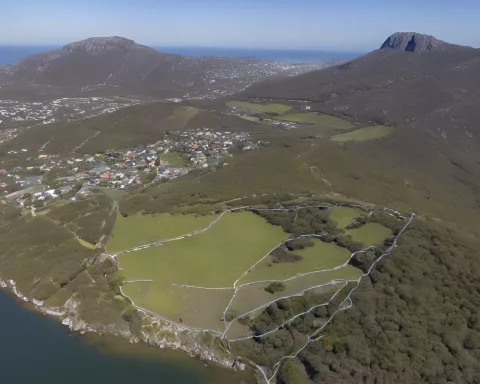
As another June morning unfolds along KwaZulu-Natal’s North Coast, golden sunlight dances over the Indian Ocean’s restless waves. While the daybreak promises calm for some, it signals another chapter in an ongoing ordeal for many on the shore. Friends, colleagues, and rescue personnel gather, bound by a shared mission: to find Andrew Blackwood-Murray. Known as a distinguished South African Airways pilot and a maestro of aerial precision, Blackwood-Murray possessed the experience and skill of a lifelong aviator. At 61, his legacy in South African aviation is marked by decades of expertise and a deep connection to flight.
His story took a tragic turn when a light aircraft disappeared off Durban’s rugged shoreline. The sudden event sent shockwaves through the aviation community, leaving behind unanswered questions and a race against time. In the wake of the crash, the search effort grew quickly and purposefully. Combining state-of-the-art technology with unwavering human commitment, teams from multiple agencies and disciplines converged to unravel the incident’s mysteries and offer comfort to those left waiting.
The disappearance did not just ignite a logistical undertaking; it triggered a wave of support across both official circles and local volunteers. They faced an ocean that guards its secrets closely, but the determination to bring answers – and closure – to Blackwood-Murray’s family only intensified as the days passed.
Harnessing Innovation: Sonar and Skill Beneath the Surface
The Indian Ocean, with its unpredictable currents and shifting sands, presents formidable obstacles to any search. In response, an impressive coalition of search-and-rescue professionals and maritime experts mobilized cutting-edge resources and expertise. The operation’s backbone relied on collaboration between the National Sea Rescue Institute (NSRI), the South African Navy, and a skilled group of [Police Search and Rescue ](https://capetown.today/a-multi-agency-rescue-operation-saves-a-life-in-hout-bay/)divers, all working in concert to comb the waters for signs of the missing plane.
One of the most powerful tools in their arsenal was the NORBIT MULTI BEAM SONAR system. Provided by SEA SHADOW, a Johannesburg-based technology firm, and operationally supported by Durban Marine, this advanced sonar mapped the ocean floor in remarkable detail. Its sophisticated beams painted the underwater landscape in three dimensions, allowing searchers to spot anomalies that might indicate wreckage or debris. The use of such equipment, typically reserved for scientific or archaeological pursuits, underscored just how far search-and-rescue techniques have advanced.
But high-tech hardware operated alongside human ingenuity. Volunteers like Peter Jacobs, a local boater, joined the search effort on his private vessel, using a recreational GARMIN sonar system to scan additional areas. His involvement, alongside official teams, expanded the scope of the investigation and highlighted the vital role community members play during times of crisis. By overlaying different sonar scans and sharing expertise, searchers turned the vastness of the ocean from an enemy into something they could methodically examine.
Building a Network: Collaboration Across Disciplines
The ongoing search didn’t rely on a single agency or approach – it drew strength from a tapestry of partnerships. Police Search and Rescue teams led the water-based operation, while Metro Police maintained a vigilant watch along the coastline. These officers scoured the beaches, eyes trained to notice anything unusual – every chunk of fuselage, fragment of equipment, or item of personal belonging held the possibility of answering a lingering question.
Once recovered, these items traveled to the Metro Police hangar at Virginia Airport. There, teams from the Accident and Incident Investigation Division (AIID) and the South African Police Service meticulously documented and analyzed every artifact. Their work mirrored the precision of forensic specialists, piecing together evidence to reconstruct the flight’s final moments. With procedures rooted in the best practices of forensic science, the team sought to determine why the flight ended as it did, looking for patterns in twisted metal and battered belongings.
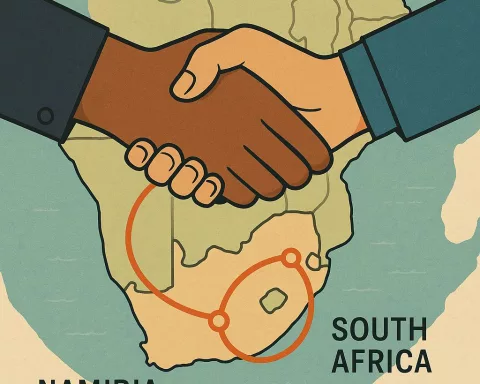
Effective communication ran like a thread through the entire operation. Regular updates between agencies ensured that resources were properly deployed and that new findings informed the ongoing strategy. This spirit of collaboration, honed through the hard lessons of previous disasters, kept everyone moving as a unified front. Where earlier eras often saw agencies working in isolation, modern practice favored integrated, multi-disciplinary responses – an approach that maximized the chances of success and minimized delays.
Public Engagement: The Power of Collective Vigilance
The search extended beyond official teams, as the broader community played a key role. Authorities called upon local fishermen, sailors, and anyone frequenting the beaches to remain alert for debris that could wash ashore. By encouraging immediate reporting of any discovery, officials harnessed the eyes and ears of thousands, transforming the search into a joint endeavor. Every piece of information, however small, carried the potential to guide the next phase of recovery.
This wide-reaching appeal fostered a sense of solidarity. As people joined the effort – whether by sharing sightings or simply offering support – they demonstrated a collective resilience. The involvement echoed large-scale search operations from the past, where the vigilance of ordinary citizens often proved critical. Each reported item, each call to authorities, represented a commitment to help and a refusal to let uncertainty prevail.
In times of crisis, these moments of connection offer much-needed comfort. The boundary between professional rescuers and public participants blurred, reinforcing the notion that communal strength can overcome even the most daunting challenges. The emotional impact rippled through the community, reminding all that compassion and care are as essential to recovery as technical skill.
Navigating Grief: Compassion in the Face of Loss
Behind the procedural routines and technological sophistication, the human dimension of the tragedy remained ever-present. As officials recovered some of Blackwood-Murray’s personal effects, they handled these items with sensitivity and respect. Regular briefings kept the family informed, while their privacy was carefully guarded. This delicate balance between transparency and discretion honored both the needs of loved ones and the public’s interest in the story.
Returning a cherished watch or a pilot’s logbook to grieving relatives carried a weight that transcended words. These objects, imbued with memories, became powerful tokens of connection. For investigators and rescuers, the task required more than technical expertise; it demanded empathy and a deep understanding of the pain that accompanies such loss.
The emphasis on privacy reflected a broader ethical tradition. Since the earliest days of disaster reporting, the need to protect families from unnecessary exposure has shaped the conduct of those involved. In this case, authorities remained steadfast in their commitment to shield the Blackwood-Murray family from intrusion, offering support without sensationalism.
The Spirit of Flight: Risk, Passion, and Legacy
Andrew Blackwood-Murray’s life epitomized both the thrill and the peril that define aviation. Aerobatics, a discipline rooted in the daredevil displays of the early twentieth century, demands exceptional skill, rigorous training, and a touch of artistry. For seasoned pilots, the sky is not just a workplace; it is a domain where mastery and intuition meet.
His untimely disappearance brought echoes of other historic losses in the world of flight. The aviation community, shaped by triumphs and tragedies alike, understands that every search for a missing pilot is a search for understanding – and for closure. The collective response to this incident paid tribute not only to Blackwood-Murray’s individual achievements, but to the broader pursuit of safety and excellence in the skies.
By seeking answers in the aftermath, investigators and peers sustain the tradition of learning from adversity. Each recovery effort strengthens the resolve to improve, ensuring that the sacrifices of those lost are not in vain.
Charting the Deep: Technology’s New Frontiers
The use of multi-beam sonar marked a significant evolution in underwater search operations. Decades ago, divers relied largely on experience and physical endurance, braving uncertain waters with limited tools. Today, advanced systems like those provided by SEA SHADOW and GARMIN allow search teams to visualize the ocean’s hidden terrain with unprecedented clarity.
This leap in capability mirrors developments across fields such as marine archaeology and environmental science, where similar technologies have revealed shipwrecks and natural features long thought unreachable. In the context of the Blackwood-Murray search, these tools did more than gather data – they offered hope, narrowing the vastness of the task and enabling focused, efficient dives.
The confluence of commercial innovation and public service stood out as a hallmark of the operation. By leveraging the strengths of both sectors, searchers gained new insights and strengthened their ability to respond to future incidents.
Enduring Bonds: The Coastline’s Silent Witness
As the days pass, the North Coast of KwaZulu-Natal continues to bear silent witness to both loss and resilience. Each morning, teams gather with renewed purpose, supported by families, colleagues, and a public united by shared concern. The drama playing out on these shores is more than a search for a missing pilot – it is a testament to the enduring strength of community, the healing power of empathy, and the relentless drive to bring answers to the unknown.
In the interplay between technology and humanity, the search for Andrew Blackwood-Murray reminds us that while machines can probe the depths, only human compassion can truly bridge the distance between tragedy and hope. The coastline, the community, and the memory of a pilot lost too soon converge in a story of persistence and care – a story still unfolding, marked by both sorrow and solidarity.
Who was Andrew Blackwood-Murray?
Andrew Blackwood-Murray was a highly skilled and experienced pilot with South African Airways. At age 61, he was known for his decades-long dedication to aviation, including aerobatics and precision flying. His disappearance occurred when his small light aircraft went missing off the coast of Durban, KwaZulu-Natal, sparking a large-scale search effort.
What is the current status of the search for Andrew Blackwood-Murray?
The search is ongoing, involving a coordinated effort between multiple agencies such as the National Sea Rescue Institute (NSRI), South African Navy, Police Search and Rescue divers, Metro Police, and local volunteers. Advanced multi-beam sonar technology, including the NORBIT system provided by SEA SHADOW and GARMIN recreational sonar from volunteer boats, is actively being used to scan the ocean floor for wreckage or debris.
What technologies are being used to locate the missing aircraft?
The primary technology in use is the NORBIT MULTI BEAM SONAR, which maps the seafloor in detailed 3D images to detect anomalies that may indicate wreckage. This high-tech equipment is supplemented by recreational sonar devices operated by volunteers, enhancing search coverage. These sonar technologies represent a significant advancement from traditional diving searches, allowing for more efficient and precise underwater exploration.
How are the community and authorities collaborating in the search?
The search operation is a multi-agency partnership with strong community involvement. Authorities have called on local fishermen, boaters, and residents to remain vigilant for debris washing ashore and report anything suspicious. Volunteers like local boater Peter Jacobs have contributed by scanning areas with their own equipment. Communication channels are kept open among rescue teams, police, and volunteers to share findings instantly, maximizing search effectiveness.
How are the personal effects and findings handled during the investigation?
Recovered items such as personal belongings and aircraft fragments are transported to the Metro Police hangar at Virginia Airport where the Accident and Incident Investigation Division (AIID) and South African Police Service conduct careful, forensic-style analyses. All evidence is documented meticulously to reconstruct the flight’s final moments. At the same time, authorities maintain sensitivity and privacy towards Blackwood-Murray’s family, balancing transparency with respect and compassion.
Why is this search significant beyond just locating the plane?
The search honors the legacy of Andrew Blackwood-Murray and reflects the broader aviation community’s commitment to learning from tragedy to improve safety. It showcases how modern technology combined with human dedication can turn the ocean’s vast unknowns into manageable challenges. Importantly, it highlights the strength of community solidarity, compassion, and resilience when facing loss, reminding us that search and rescue is as much about healing as it is about recovery.