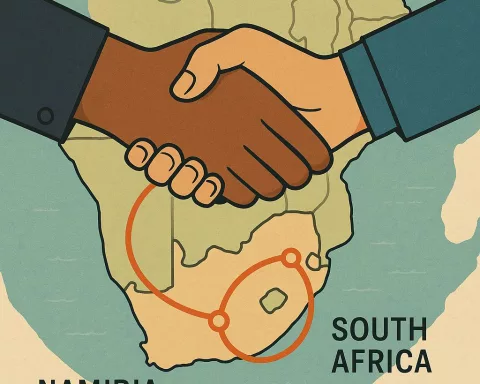
Dricus du Plessis, a South African UFC fighter, stirred strong feelings by speaking out about violent attacks on farmers in South Africa, calling it “white genocide.” His words reopened old wounds about race, land, and safety in a country still healing from its troubled past. The debate grew fierce online and beyond, mixing sports, politics, and deep fears about identity. For many, du Plessis is a symbol of courage and struggle, while others see his remarks as dangerous and divisive. This controversy shows how South Africa’s painful history still shapes its present, with stories of violence and resilience entwined in the nation’s soul.
What is the controversy surrounding Dricus du Plessis and South African farm murders?
Dricus du Plessis sparked debate by highlighting violence against South African farmers, citing over 13,000 attacks since 1994. His comments on “white genocide” reflect deep national tensions about race, land, and identity, intertwining sports, politics, and social issues in South Africa’s ongoing struggle.
The Aftermath of UFC 319: An Arena Beyond the Octagon
Chicago’s energy pulsed after UFC 319, as fans reveled in the drama of combat sports. For South Africans watching from half a world away, however, the event and its fallout meant much more than just the result in the cage. Mixed martial arts has always reflected larger societal currents, but the reaction to Dricus du Plessis’s statements following his loss to Khamzat Chimaev cut to the heart of South Africa’s enduring struggles with violence, identity, and legacy.
Du Plessis, a proud South African, didn’t spend much time discussing his performance in the octagon. Instead, he shifted the spotlight to a topic fraught with emotion: violence on South African farms. By referencing what he described as a “white genocide,” du Plessis reignited a debate that has simmered in the South African consciousness for decades. Figures like Donald Trump and Elon Musk have echoed these concerns, transforming a personal statement into a global flashpoint. As his words spread online, some called him brave for speaking out; others chastised him for fanning the flames of division.
This incident laid bare the deep wounds that still shape the South African experience. Supporters of du Plessis point to chilling statistics: since 1994, more than 13,000 farm attacks and roughly 2,000 farm murders have been reported, numbers that continue to evoke pain and anger across communities. Olympic swimmer Roland Schoeman joined the conversation, defending du Plessis and highlighting a higher murder rate among white South Africans relative to their share of the population. Schoeman argued that these numbers “don’t lie,” feeding a narrative of crisis that resonates for many.
Art, History, and the Haunting of the Land
The question of violence against farmers has long haunted South African literature, art, and public debate. In the years following the end of apartheid, writers and creators like Nadine Gordimer and William Kentridge explored how trauma and reconciliation shape life in the countryside. Gordimer’s novels often placed individuals at the crossroads of personal suffering and collective history, while Kentridge’s distinctive animations depicted a nation navigating uncertainty and transformation. Their work insisted that violence in South Africa cannot be separated from the unresolved questions of land, race, and belonging.
Du Plessis’s controversial comments sparked a fresh round of debate, with critics warning that terms like “white genocide” echo far-right rhetoric and stoke unnecessary fear. Scholars remind us that violence in rural South Africa has complex roots: from colonial conquest to forced removals under apartheid, and the ongoing challenges of land reform. The farm attacks that du Plessis cited, while a real and horrifying experience for many victims, occur within a broader context of high crime, widespread poverty, and sharp inequality across the nation.
For those living on South African farms, the threat of violence feels immediate and deeply personal. Both owners and farm workers confront an ever-present danger that can shatter lives overnight. News reports and community gatherings often carry grim stories: a family jolted awake by gunshots, a field worker returning to a scene of devastation. The violence can be shockingly brutal, sometimes ritualistic, and frequently lacks a clear motive beyond theft or vengeance. Photographer Pieter Hugo’s portraits capture the stoic faces of rural survivors, revealing both the hardship they endure and the resilience that keeps them rooted in the land.
Sport, Identity, and the Digital Coliseum
The controversy around du Plessis pulled in more than just fight fans. Influential voices like Tristan Tate, known for his strong views online, condemned the criticism aimed at du Plessis. Politicians also entered the fray; Minister Gayton McKenzie publicly supported the fighter, encouraging him to persevere and describing him as a “champion.” For many in South Africa’s Afrikaner and white communities, this support symbolized more than just admiration for an athlete; it became a statement of cultural identity and solidarity in the face of perceived threats.
Combat sports have always served as a stage for national pride, social anxieties, and the desire for recognition. The rise of Brazilian Jiu-Jitsu in the last century, a blend of global traditions, transformed martial arts into an international phenomenon. Today’s mixed martial arts scene gives fighters like du Plessis the chance to carry not just their country’s flag, but its burdens and dreams as well. Each entrance into the octagon becomes a moment of reckoning, both for the athlete and the nation that watches.
The fight between du Plessis and Chimaev – himself a product of Chechen and Swedish backgrounds – supercharged the symbolism. While the contest centered on skill and determination, the underlying themes of migration, identity, and belonging played out before a global audience. The clash evoked the timeless spectacle of gladiators or legendary heroes, but in today’s digital world, every word and gesture gets magnified, scrutinized, and debated endlessly on social media platforms.
Art, Media, and the Struggle for Narrative
South Africa’s ongoing tensions have also found expression in the art world, often serving as mirrors for society’s deepest anxieties. Jane Alexander’s installations, particularly her haunting “Butcher Boys,” use surreal imagery to explore themes of violence, vulnerability, and race. Her work, recognized internationally, invites viewers to confront the menace that often lurks just beneath the surface of daily life in South Africa.
The role of social media in these debates cannot be overstated. Platforms like Twitter and Facebook transform private pain into public spectacle and foster both genuine dialogue and intense hostility. Critics of du Plessis warn that focusing on white victims risks overlooking the broader crisis of violence affecting black and coloured South Africans, who face some of the world’s highest homicide rates. Supporters counter that ignoring the trauma of farm attacks signals a lack of empathy and understanding. The discussion, shaped by hashtags and algorithms, rarely finds resolution.
As commentators, writers, and civic leaders revisit these themes, they confront the enduring question of who holds the right to tell South Africa’s story. The visions of Steve Biko and Nelson Mandela, both of whom urged their compatriots to transcend the bitterness of the past, continue to inspire and challenge. South Africa’s journey remains unfinished, its wounds deep, and its narratives hotly contested.
The Unfinished National Story
Dricus du Plessis’s rise and struggles in the UFC mirror the broader odyssey of his homeland. To supporters, he stands as a figure of resilience – a man who refuses to be cowed by adversity, much like the embattled nation he represents. To detractors, his rhetoric rings with old dangers, threatening to feed the grievances and divisions that have plagued South Africa for generations. The flag he bears on his shoulder is more than just a national symbol; it’s a canvas for the country’s competing hopes and fears.
Sports have always intersected with politics in South Africa. During the 1980s, apartheid-era strife divided not just families, but even the nation’s sports leagues. Athletes such as Zola Budd and Gary Bailey found their careers and reputations entangled in the moral controversies of their time. Today, the line separating athletic achievement and political debate remains as thin as ever, with every victory and defeat laden with meaning.
The current storm around du Plessis is not just a momentary flare-up. It represents another chapter in a story that began with the founding of the South African nation, one written and rewritten by poets, activists, and revolutionaries. The voices arguing for and against du Plessis echo the passionate discussions that have always shaped South Africa’s public life. As the conversation continues, the country’s search for unity, justice, and belonging goes on – unfinished, but undeterred.
What sparked the controversy surrounding Dricus du Plessis and South African farm murders?
Dricus du Plessis, a South African UFC fighter, sparked controversy by publicly addressing violent attacks on farmers in South Africa, referring to the situation as “white genocide.” His comments highlighted more than 13,000 attacks and approximately 2,000 farm murders since 1994. These remarks reignited long-standing debates about race, land ownership, and safety in South Africa, touching nerves in a country still grappling with its apartheid legacy. While some praised du Plessis for speaking out, others criticized him for using inflammatory language that some see as divisive.
How do farm attacks fit into the broader context of South African violence and history?
Farm attacks in South Africa are part of a complex social and historical web. Violence in rural areas reflects issues rooted in colonial conquest, apartheid-era forced removals, and ongoing challenges related to land reform and inequality. While farm attacks are a genuine threat to both landowners and workers, they occur amid high national crime rates, widespread poverty, and social disparities. The term “white genocide” used by du Plessis and others has been contested, with critics warning it echoes far-right rhetoric and oversimplifies a multifaceted problem.
What role does sport play in South Africa’s social and political conversations?
Sport in South Africa has long been intertwined with politics, identity, and social change. From the apartheid era, when sports boycotts and divisions reflected wider societal conflicts, to today, athletes often carry symbolic weight beyond their athletic achievements. For du Plessis, representing South Africa in the UFC means more than competing; it involves embodying national struggles and pride. His confrontation with Khamzat Chimaev became a symbolic clash of identities, amplified by social media and global audiences, where sports serve as a “digital coliseum” for broader societal debates.
How have artists and writers contributed to the conversation about violence and identity in South Africa?
South African artists and writers have deeply engaged with themes of violence, trauma, and reconciliation. Writers like Nadine Gordimer explored personal and collective suffering related to apartheid and its aftermath, while visual artists such as William Kentridge and Jane Alexander use their work to confront issues of race, vulnerability, and societal wounds. Their art serves as a mirror reflecting South Africa’s unresolved tensions, often prompting public reflection and dialogue about identity, history, and the painful legacies still present in rural and urban life.
What is the public and political response to du Plessis’s statements on farm murders?
The responses to du Plessis’s remarks have been mixed and often polarized. Some public figures, including politician Gayton McKenzie and Olympian Roland Schoeman, have supported him, emphasizing the seriousness of farm attacks and the need for awareness. Others have condemned his use of the term “white genocide,” arguing it fuels division and distracts from the wider national challenges of crime and inequality affecting all communities. The debate has spilled over into social media, with strong opinions on both sides, highlighting the ongoing struggle over South Africa’s narrative and identity.
Why does the controversy surrounding Dricus du Plessis reflect larger national struggles in South Africa?
The debate around du Plessis’s comments encapsulates South Africa’s ongoing challenges with race, land, violence, and identity – issues deeply embedded in the nation’s history. His statements struck a chord because they touch on fears and grievances that many South Africans carry, while also provoking concern about unity and reconciliation efforts. This controversy is not isolated; it echoes historical divisions and reflects how sports, politics, and cultural expression continue to intersect in a country still searching for justice, belonging, and a shared future.