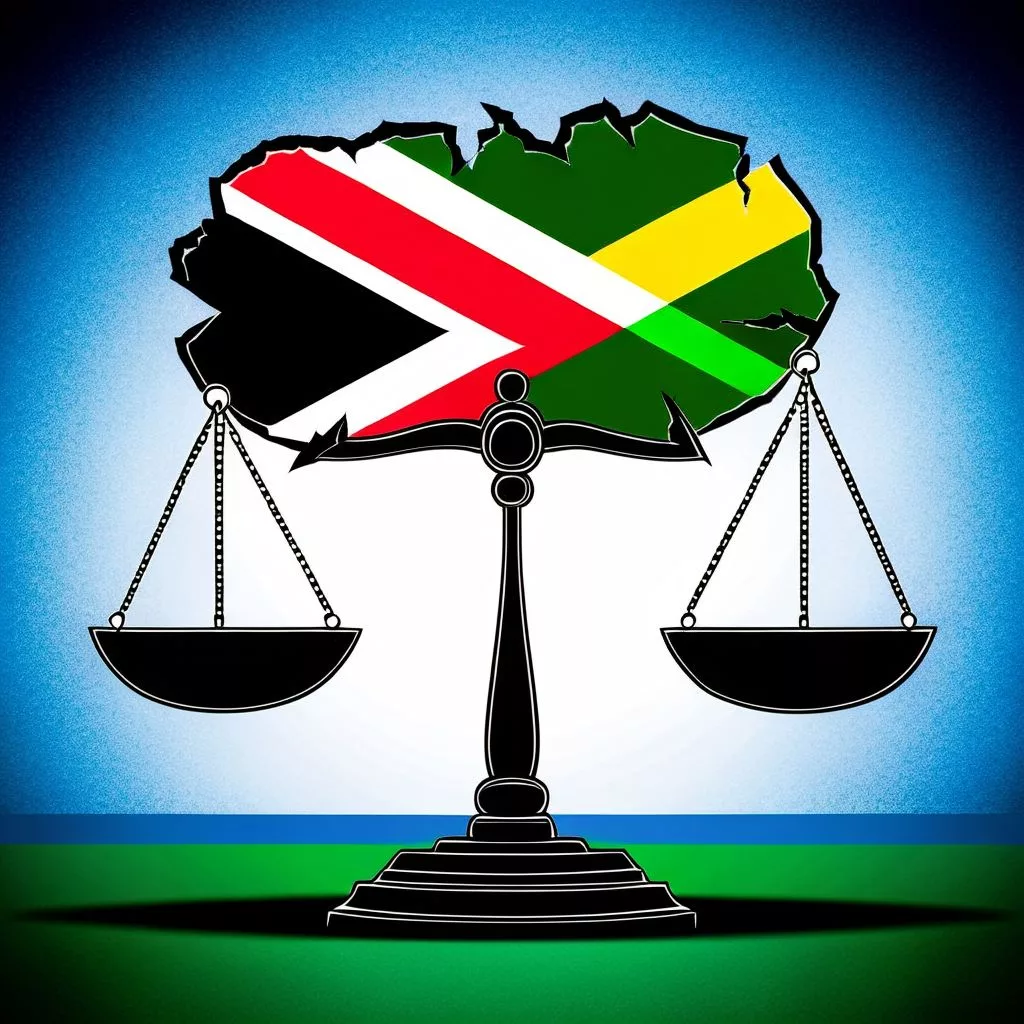
Julius Malema, a fiery South African political leader, was found guilty of hate speech for words that sparked violence and hatred at a 2022 rally. The court’s ruling shows how South Africa carefully balances freedom of speech with protecting people’s dignity, holding leaders accountable when their words harm others. This case connects to the country’s deep history of struggle, showing how speech can both inspire change and cause pain. As debates heat up, South Africa continues to wrestle with what it means to speak freely while keeping peace and respect alive.
What was Julius Malema’s hate speech ruling about in South Africa?
Julius Malema was found guilty of hate speech by the Western Cape Equality Court for inciting violence and hatred during a 2022 rally. The ruling highlights South Africa’s legal balance between free expression and protecting dignity, emphasizing accountability for political leaders’ inflammatory rhetoric.
Judgment Day in Cape Town: The Courtroom as a Battleground
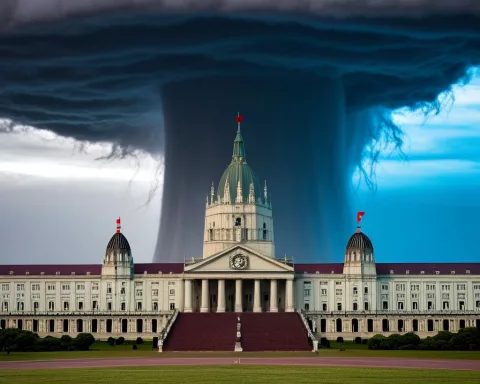
On a crisp morning within the dignified halls of the Western Cape Equality Court, South Africa’s roiling political tensions crystallized into a landmark ruling. Julius Malema, the fiery leader of the Economic Freedom Fighters (EFF), found himself at the center of a verdict that would ripple across the nation. The court determined that Malema committed hate speech during a 2022 rally in Cape Town, declaring his remarks as incitement to violence and the promotion of hatred. This moment, years in the making, traced its roots to a contentious event at Brackenfell High School in 2020 – a flashpoint that revealed the continued volatility of South Africa’s social landscape.
Malema’s words, delivered before a crowd energized by years of frustration and hope, bounded beyond the stadium that day. The court judged them to have transgressed South Africa’s finely negotiated legal limits – limits forged through decades of struggle against censorship and oppression. The boundaries drawn by the Constitution – between free speech and the right to dignity – are not merely legal abstractions. They anchor the nation’s ongoing quest for a just society, one scarred by history and restless for renewal.
The case reached the court through the determination of both the South African Human Rights Commission (SAHRC) and a private individual. Their efforts echoed the vigilance that characterized the resistance against Apartheid and the turbulent years that followed. The private complainant described a personal ordeal in the wake of Malema’s speech, receiving a torrent of threats in the thousands and ultimately retreating from social media under a barrage of abuse. This human impact, unfolding behind the headlines, underscored the real-world consequences when political speech turns toxic.
The Battle for Expression: Competing Narratives and Artistic Heritage
South Africa’s turbulent history with censorship and expression lingers in the collective memory. Emerging from the iron grip of Apartheid, the country enshrined the right to free expression in its new constitutional order, but always alongside the imperative for dignity and equality. As the British critic John Ruskin once suggested, “The highest reward for a person’s toil is not what they get for it, but what they become by it.” In South Africa, the discipline of public speech shapes not only policy but the very soul of the nation.
After the court’s decision, the Democratic Alliance (DA), the country’s largest opposition party, responded with swift approval. John Steenhuisen, the DA’s leader, celebrated the ruling as a milestone for constitutionalism and the rule of law. He commended the SAHRC for its vigilance and hinted at a broader campaign to reinforce accountability for hate speech among political leaders. The DA’s response, measured and resolute, articulated a vision of democracy in which words possess both power and consequence.
The EFF, renowned for their militant language and striking red berets, did not accept defeat quietly. Channeling the spirit of revolutionary art – from the murals of Diego Rivera to the tract-writing Marxists of the twentieth century – the party rejected the ruling as an attempt to neuter radical politics. In their view, the judgment represented an attack on democratic space and the right to revolutionary speech. Their statement argued that genuine transformation resists polite sanitization, and that the power of revolutionary discourse lies precisely in its provocations. By invoking the artistic provocateurs of history, the EFF situated their rhetoric within a tradition that has both challenged and scandalized the status quo.
Such appeals to the legacy of Dadaism and Surrealism, which used shock and absurdity to critique the society around them, reveal the deep connections between art, politics, and agitation. Yet, as art historian Andrew Graham-Dixon has observed, “art can never be truly free if it becomes complicit in cruelty.” The law, in evaluating Malema’s speech, faced the perennial challenge: does provocative language awaken society to injustice, or does it simply rekindle old resentments?
Brackenfell and Beyond: History, Memory, and the Limits of Speech
The origins of this legal battle trace back to the halls of Brackenfell High School in 2020. An altercation during a school gathering exposed the raw nerves of a nation still grappling with the unfinished business of reconciliation. These events set the stage for Malema’s later rally, where years of grievance and exclusion erupted into rhetoric that would soon stand trial. In turbulent times, words often acquire a life of their own, embodying the unresolved conflicts of the past.
For South African observers, Malema’s case signifies far more than a technical legal question. It mirrors the deeper tension between the country’s drive for transformation and its commitment to reconciliation; between the quest for justice and the need for restraint. The Constitution, written with both ambition and humility in the 1990s, codifies not only freedom of expression but also the right to dignity – a balance that remains elusive in practice. The court’s judgment reflected an effort to chart a course between these sometimes competing values, mindful of the wounds and hopes that shape the nation’s present.
Political rhetoric in South Africa, as elsewhere, draws its influence from both content and context. The country’s transition from Apartheid to democracy was marked by the landmark Truth and Reconciliation Commission, an experiment in public storytelling that revealed both the promise and peril of words. The Commission’s hearings, where perpetrators and victims recounted their experiences, demonstrated how language can both heal and divide. The legacy of these dialogues informs every courtroom drama, each political rally, and every viral social media post.
The Digital Age and the Law: New Frontiers for Old Debates
The complainant’s experience – forced off social media by threats and abuse – highlights the dark underbelly of the democratization of speech. Online platforms, celebrated for their potential to level hierarchies and amplify marginalized voices, have also become vectors for hate and intimidation. In South Africa, as in other democracies, the promise of free expression collides with the reality of viral outrage and digital mobbing.
Legal scholars often recall the “clear and present danger” doctrine from U.S. jurisprudence, developed during times of political paranoia, as a way to balance freedom with security. South Africa, with its own unique constitutional history, has crafted distinct standards for regulating speech. By ruling against Malema, the Equality Court signaled a willingness to defend these standards, joining a lineage of landmark cases on press freedom, protest, and satire.
As the EFF prepares to challenge the verdict, the debate over the boundaries of political rhetoric promises to intensify. Activists, legal experts, and ordinary citizens will all have a stake in the outcome. Some will warn against the danger of stifling dissent, while others will insist that holding leaders accountable for incitement is essential to protecting democracy. This tension animates the nation’s ongoing conversation about the meaning of both freedom and order.
South African thinkers and artists continue to grapple with these questions. Novelist and playwright Zakes Mda has described the country as “a nation perpetually in search of itself.” Each courtroom decision, every protest, and all public debates form new brushstrokes on the evolving canvas of South African identity. The Malema case, as it moves through appeals and further public scrutiny, will remain at the forefront of this national dialogue.
The unresolved struggle to define the limits of speech, especially in a society shaped by both historical trauma and ongoing transformation, ensures that the legacy of this case will echo through South Africa’s legal, political, and cultural arenas for years to come.
FAQ: Julius Malema, Hate Speech, and South African Politics
What was Julius Malema found guilty of in the 2022 hate speech ruling?
Julius Malema was found guilty of hate speech by the Western Cape Equality Court for inciting violence and hatred during a 2022 rally in Cape Town. The court ruled that his remarks crossed the constitutional boundary between freedom of expression and the right to human dignity, emphasizing accountability for political leaders whose speech harms others.
Why is this ruling significant in the context of South African history and politics?
The ruling reflects South Africa’s ongoing struggle to balance free speech with protecting people’s dignity – a tension rooted in the country’s history of apartheid, censorship, and transformation. South Africa’s Constitution enshrines both freedom of expression and equality, but cases like Malema’s highlight how these rights can conflict, especially in a society still healing from past wounds and grappling with social divisions.
What role did the South African Human Rights Commission and private individuals play in this case?
The case was brought before the court by both the South African Human Rights Commission (SAHRC) and a private individual who suffered direct consequences from Malema’s speech. The complainant experienced thousands of threats and abuse on social media, ultimately retreating from online platforms. Their involvement underscores the real human impact of hate speech beyond political rhetoric.
How did political parties in South Africa react to the court’s decision?
The Democratic Alliance (DA), South Africa’s official opposition party, welcomed the ruling as a victory for constitutionalism and accountability, praising the SAHRC for its vigilance. In contrast, Malema’s party, the Economic Freedom Fighters (EFF), rejected the judgment, framing it as an attack on radical politics and democratic space. The EFF argued that revolutionary speech must challenge the status quo and that the ruling risks sanitizing political discourse.
How does the Malema ruling relate to South Africa’s broader challenges with free speech and reconciliation?
This case highlights the ongoing tension between transformation and reconciliation in post-apartheid South Africa. It echoes past efforts like the Truth and Reconciliation Commission, where language was both a tool for healing and a source of division. The Malema ruling seeks to navigate these competing demands, balancing the imperative to protect dignity without stifling political dissent.
What impact does the digital age have on hate speech and freedom of expression in South Africa?
The digital era complicates the regulation of hate speech, as social media platforms can amplify both marginalized voices and toxic abuse. The complainant’s experience with online threats illustrates how digital environments can escalate harm. South Africa’s courts are increasingly confronting how to apply constitutional principles to regulate speech in this evolving landscape, striving to maintain democratic values while curbing incitement and intimidation.
If you want to learn more about how South Africa continues to negotiate these challenges, keep an eye on the appeals process and ongoing public debates surrounding political speech and accountability.