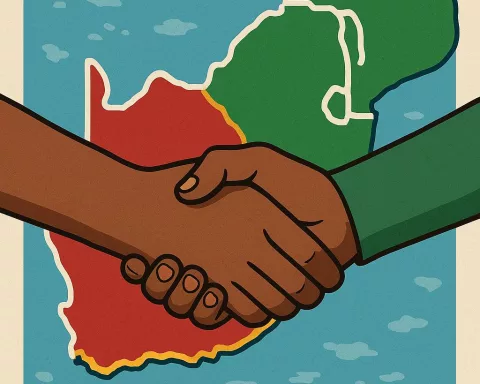
Cape Town’s Cape Flats is a place where history’s pain still echoes, with violence and poverty shaping everyday life. Long ago, apartheid forced many people here, creating deep wounds that gangs and crime now exploit. Though shootings and fear are common, the community fights back with art, school programs, and togetherness. Police are trying harder, but real change needs hope, jobs, and safety for kids. Amid all the hardship, the people of the Flats keep dreaming of a better tomorrow.
What is causing the violent crime crisis in Cape Town’s Cape Flats?
Cape Town’s Cape Flats violence stems from apartheid-era displacement, entrenched poverty, and gang activity. Chronic issues include high murder rates, lack of trust in police, and social exclusion. Solutions require increased policing, better forensic services, and community efforts addressing poverty, education, and youth support.
Shadows Across the Cape Flats
As dawn breaks over Cape Town, faint light reveals the sprawling expanse of the Cape Flats – a region marked as much by its unyielding spirit as by its struggles. Here, a dense network of neighborhoods, shaped by the legacies of apartheid, faces a relentless barrage of violence. Residents navigate lives suspended between aspiration and fear, where every street corner carries stories of both heartache and hope. Against the backdrop of Table Mountain and the city’s affluence, the Flats stand as a stark reminder of enduring inequalities.
Recent statistics from the South African Police Service paint a sobering portrait. From January to March, four of South Africa’s five most violent police precincts – Delft, Mfuleni, Philippi East, and Nyanga – were found in Cape Town’s heartland. Only Inanda, in KwaZulu-Natal, reported more murders. The numbers reinforce what many locals know too well: violence here is not random, but chronic.
In Nyanga, a township once infamous for its murder rate, the first quarter of the year brought a notable 12.5% decrease in killings. Some community advocates interpret this as a small but significant victory. Others, however, point out that the improvement remains overshadowed by broader citywide bloodshed. Abie Isaacs, leader of the Cape Flats Safety Forum, captures the prevailing sentiment: “People are being hunted down in their homes. It’s a war zone.” His words reflect the exhaustion and frustration felt by many who have witnessed loved ones lost to violence.
A History Written in Displacement and Exclusion
To understand today’s crisis, one must look back to the forced removals of apartheid. As authorities expelled communities of color from central Cape Town, these groups found themselves relocated to the Cape Flats – a barren region devoid of infrastructure or opportunity. This engineered displacement set the foundation for entrenched poverty, spatial isolation, and deep-seated resentment.
Within these challenging circumstances, the Flats became both crucible and community. While adversity gave rise to vibrant cultural traditions – Cape jazz, expressive murals, and neighborhood festivals – it also created fertile ground for gangsterism. Generations of young people, deprived of meaningful opportunities, sometimes found belonging in criminal networks rather than in schools or jobs.
Gang violence reached a fever pitch this April, with 90 people killed and more than 100 injured in a single month. Shootings, stabbings, and territorial disputes erupted across the Flats, leaving families shattered and neighborhoods reeling. Stories circulate of mothers shielding children from stray bullets and of youths losing their lives for crossing invisible gang boundaries. Isaacs voices the collective exasperation: “We don’t need another promise, we need real action.”
Even as chaos persists, threads of resilience wind through daily routines. Community workers walk children to school along routes scarred by gunfire, and shopkeepers resume business hours after police clear crime scenes. Against this backdrop, street life endures – fruit vendors, music, and the innocent laughter of children who have not yet internalized fear.
Policing and Policy: The Struggle for Security
Decades of uneven development and underfunded public services have undermined trust between law enforcement officers and the communities they serve. Many residents perceive the police as outsiders rather than protectors, a schism that emboldens criminal syndicates. In this climate, justice often feels elusive, even as violence escalates.
Police Minister Senzo Mchunu has designated the Western Cape, alongside Gauteng, the Eastern Cape, and KwaZulu-Natal, as key provinces where murder rates spiral most rapidly. Acknowledging the dire situation, he announced a surge in police visibility and the deployment of over 5,500 new recruits from SAPS academies by the end of the year. Authorities promise that many of these officers will reinforce the most embattled precincts around Cape Town.
Plans also include modernizing forensic facilities. Improved laboratories could accelerate investigations and court proceedings, addressing long-standing backlogs that have frustrated victims’ families and allowed offenders to escape justice. Faster case resolutions may boost public confidence, but questions linger about whether these measures will bring meaningful, lasting change.
Not everyone believes that increased policing alone offers a solution. Ian Cameron, a member of Parliament’s Portfolio Committee on Police, has called for a dedicated judicial probe into gang violence. Grassroots leaders and civic organizations echo this demand, arguing that only a comprehensive approach – one targeting poverty, education, and social services – can undermine the root causes of gangsterism. These advocates insist that real transformation must reach beyond the police station and into the schools, homes, and hearts of the Cape Flats.
Resilience, Resistance, and the Search for Renewal
Amid the turmoil, the spirit of the Flats persists. Billionaire Johann Rupert’s recent warnings to international officials about the city’s worsening violence have drawn global attention, amplifying pressure on local leaders to deliver results. For those living in affected areas, these outside commentaries feel distant, though they often bring much-needed resources and scrutiny to bear on neglected communities.
Art and culture offer both solace and resistance. The Cape Flats has nourished distinctive musical forms – goema, Cape jazz – that resonate with the rhythms of survival and protest. Murals, graffiti, and spoken-word poetry transform township walls into canvases of remembrance and hope. These creative expressions do not erase trauma, but they help residents process it and reaffirm community identity.
Schools and community centers, often stretched thin, serve as sanctuaries for children and families. Teachers improvise lesson plans when violence disrupts classes, while social workers and coaches organize activities designed to steer youth away from gang recruitment. Such efforts rarely capture headlines, yet they provide steady countercurrents of support and renewal.
Cape Town’s challenges mirror a broader national crisis. Provinces such as Gauteng and the Eastern Cape confront similar patterns of violence, while only the sparsely populated Northern Cape saw murder rates rise this quarter. These grim statistics point to systemic failures – inequality, unemployment, and broken promises – that demand attention far beyond the boundaries of the Flats.
For many residents, surviving – and hoping – remains a daily act of quiet protest. Every statistic conceals individual stories of loss, resistance, and dreams deferred. Night patrols, mothers’ support groups, and youth poetry circles form the fragile architecture of hope. In the battered streets of Delft, Mfuleni, Philippi East, and Nyanga, the fight for safety and dignity endures, fueled by the belief that change, however incremental, is still possible.
In these communities, hope rises each morning along with the sun. Through every setback, residents demonstrate the resilience and determination that have always defined the Cape Flats. Their collective struggle stands as both a warning and an inspiration, urging South Africa to confront its violent past and chart a course toward justice and renewal.
FAQ: Understanding the Violent Crime Crisis in Cape Town’s Cape Flats
What are the main causes of violent crime in Cape Town’s Cape Flats?
The violent crime crisis in the Cape Flats is rooted in the legacy of apartheid-era forced removals, which displaced communities to underdeveloped areas lacking infrastructure and opportunities. This historical displacement fostered entrenched poverty, social exclusion, and spatial isolation. Combined with limited access to education and employment, these conditions have allowed gangs and criminal networks to thrive, perpetuating cycles of violence and fear.
How severe is the violence in the Cape Flats compared to other regions?
The Cape Flats is one of the most violent regions in South Africa. In the first quarter of the year, four of the country’s five most violent police precincts – Delft, Mfuleni, Philippi East, and Nyanga – were located here. Only Inanda in KwaZulu-Natal reported more murders. In April alone, approximately 90 people were killed and over 100 injured due to gang-related shootings and conflicts. Despite a modest 12.5% reduction in killings in Nyanga, violence remains chronic and deeply embedded.
What role does policing play in addressing the crisis, and what challenges exist?
The South African Police Service (SAPS) is increasing efforts by deploying over 5,500 new recruits across the most affected precincts and modernizing forensic laboratories to speed up investigations. However, decades of underfunding and mistrust have created a divide between police and the community, undermining cooperation. Many residents view police as outsiders, limiting effectiveness. Experts and community leaders argue that policing alone is insufficient without broader social interventions.
Beyond policing, what community efforts are being made to combat violence?
Local communities actively resist the cycle of violence through cultural expression, education, and social programs. Art forms like Cape jazz, murals, and spoken word serve as outlets for trauma and sources of identity. Schools and community centers provide safe spaces and activities to engage youth and prevent gang recruitment. Social workers and youth coaches organize programs aimed at steering children away from crime, helping foster resilience and hope despite ongoing challenges.
How does the legacy of apartheid continue to affect the Cape Flats today?
Apartheid’s forced removals relocated predominantly non-white populations from central Cape Town to the Cape Flats, an area initially lacking basic services or economic opportunities. This spatial and social exclusion entrenched poverty and limited upward mobility across generations. The resulting marginalization created fertile ground for gang culture and violence, as many young people turned to gangs for belonging and survival in the absence of alternatives.
What long-term solutions are suggested to bring lasting peace and safety to the Cape Flats?
Experts and community leaders emphasize a multi-faceted approach that goes beyond increased policing. Sustainable change requires investment in education, job creation, social services, and improved housing. Judicial reforms, including dedicated probes into gang violence, are advocated to hold perpetrators accountable. Moreover, fostering trust between police and communities, alongside supporting grassroots initiatives, is crucial to breaking the cycles of violence and building a safer, more hopeful future for the Cape Flats.