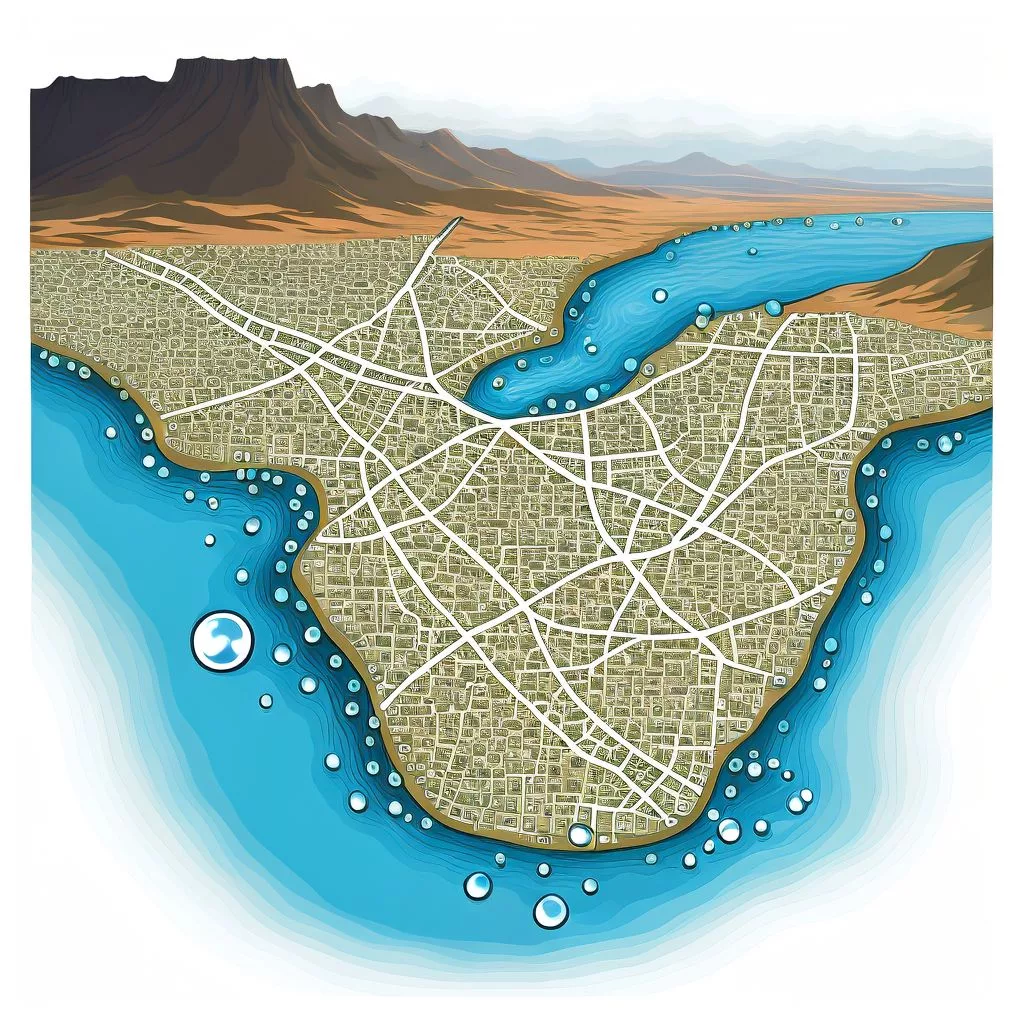
Cape Town faced a scary water shortage during the “Day Zero” crisis but has since turned things around through teamwork and smart ideas. The city now uses rainwater harvesting, cleans and reuses wastewater, and involves communities in saving water. By treating water as a valuable resource – not waste, Cape Town builds a future where everyone has fair access to clean water. This new way of working together and using technology helps the city stay strong and hopeful against water challenges.
How is Cape Town securing its water future after the Day Zero crisis?
Cape Town secures its water future through cross-sector collaboration, embracing circular water economies, and innovative technologies. Key strategies include integrated water management, community stewardship, rainwater harvesting, wastewater reuse, and inclusive policies promoting equity and sustainability for lasting water security.
Cape Town’s Water Crossroads
As the dawn breaks over Cape Town, Table Mountain stands watch over a city that knows water both as a gift and a challenge. On the closing day of the Water Security Africa Conference, a collective energy fills the air. Attendees gather not just to discuss policy, but to witness a city that has walked the tightrope between drought and abundance. Cape Town’s story, shaped by the looming specter of “Day Zero,” now transitions from one of crisis to a narrative of resilience and reinvention.
Deputy Minister David Mahlobo takes the stage before a room attentive to every word. The city’s brush with water scarcity remains fresh in everyone’s minds. Yet Mahlobo delivers a bold message: Cape Town has left water insecurity behind. This isn’t merely wishful thinking – it signals a deeper transformation in public consciousness, a readiness to confront challenges with new conviction.
Framing his address around “Delivering Water Security and Sustainability for All: A Vision for Inclusive Development,” Mahlobo draws inspiration from intellectual movements that champion unity and reimagination. His call rings clear: break free from isolated, “siloed” approaches and embrace collaboration across sectors, communities, and disciplines.
Uniting Sectors for Lasting Solutions
Traditionally, water management operated within rigid boundaries. Engineers focused on infrastructure, planners considered urban layouts, and lawmakers drafted regulations – each in their respective domains. While specialization brought efficiencies, it often obscured the bigger picture: water’s deep connections to public health, economic growth, environmental protection, and social equity.
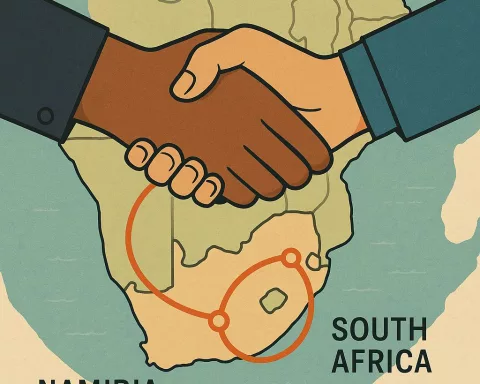
Mahlobo’s speech at the conference echoes a growing recognition that these boundaries must dissolve. South Africa’s water strategy now centers on partnerships that bridge government, private business, academia, and civil society. This holistic approach mirrors the Bauhaus movement’s insistence on uniting art, design, and technology – a model where innovation flourishes when barriers fall.
Integration also finds inspiration abroad. Singapore’s “Four National Taps” merges imported water, desalination, reclamation, and rainwater harvesting into one resilient system. This model underscores a universal truth: coordinated efforts increase adaptability and protection against shocks. Cape Town, too, now draws from diverse expertise and perspectives, turning crisis into opportunity.
Efforts to build a more resilient water future extend beyond technical fixes. Local stories – families collecting greywater, neighborhoods installing rain barrels, and communities managing shared boreholes – form the backbone of a new culture of stewardship. These grassroots actions, once seen as desperate measures, now shape citywide strategies.
Water’s New Identity: Resource, Not Waste
A transformative shift marks how people across South Africa and the globe view water. Mahlobo urges citizens and policymakers to reconsider their relationship with every drop – whether from rainfall, storm runoff, or household use. The term “wastewater,” he asserts, no longer fits. Instead, the real issue is squandering potential.
This mindset aligns with the global “One Water” movement, which sees all forms of water as part of an integrated cycle. Ancient civilizations thrived on this logic, routing every precious droplet through systems of reuse. Today, technological advances like membrane filtration and decentralized treatment revive these old ideas with new power, allowing urban centers to maximize every input.
Cape Town’s recent troubles remain vivid: rationed showers, lines at communal taps, and the normalization of reusing sink water for gardens. But these adaptations did more than stave off crisis – they seeded a lasting change. Community campaigns elevated the importance of rain harvesting, and city authorities adopted policies that reward creative conservation.
In this light, water’s journey – from source to tap to drain – no longer ends in disposal. Instead, each stage offers opportunities for regeneration and reuse. Public understanding shifts from seeing water as a commodity to embracing their role as custodians, responsible for sustaining the resource for future generations.
Circular Economies: Rethinking the Water Cycle
Leading voices at the conference championed the circular economy, where resources move in continuous loops, eliminating waste by design. Mahlobo’s vision positions water as central to this sustainable model, where reuse, recycling, and nature-sensitive infrastructure become both ecological necessities and economic drivers.
Windhoek, Namibia, offers a compelling example. The city adopted direct potable reuse decades ago, turning treated wastewater into drinking water. Where this once drew skepticism, it now stands as proof that innovation can overcome even the harshest scarcities. South African municipalities experiment with similar approaches, blending time-tested practices with modern solutions.
The circular approach goes beyond large-scale plants or high-tech answers. It finds life in urban design – green roofs that capture rain, permeable sidewalks that recharge groundwater, and constructed wetlands that filter runoff. Rural communities in Eastern Cape enhance traditional earth dams with low-cost rain tanks and solar pumps, merging indigenous knowledge with scientific advances.
These projects share a core principle: every drop retained, reused, or returned to nature multiplies the benefits, strengthening water security while fostering local economies. As Mahlobo stresses, solutions must reach marginalized areas first, where access to water remains uneven. Broadening the definition of value ensures that progress uplifts all communities, not just those with financial or political clout.
Innovation Meets Collaboration
Mahlobo highlights that addressing water’s challenges requires both cutting-edge technology and new forms of cooperation. The National Water and Sanitation Master Plan emerges as a blueprint built on skilled professionals, inventive technologies, and a readiness to experiment. The plan envisions a world where artificial intelligence, smart sensors, and grassroots involvement converge to monitor, manage, and conserve water.
At the conference, experts unveil diverse innovations. Satellite images track river health and identify illegal water tapping. Engineers showcase biodegradable filters inspired by plant leaves. In another inspiring example, schoolchildren in Stellenbosch monitor local streams and feed their findings into city planning databases.
Such creativity relies on partnerships. No single institution, however capable, can solve today’s water challenges alone. The conference becomes a melting pot – business investors, academic researchers, community leaders, and government officials exchanging ideas and forging alliances. This exchange, more than any policy, sets the stage for rapid, shared progress.
Education and empowerment stand out as essential ingredients. A delegate from Limpopo describes how her village, once dependent on distant wells, now manages its own borehole system, with school programs teaching water science and ethics. These local victories, repeated nationwide, weave a wider narrative of collective transformation.
Water Justice: Inclusion and Empowerment
Water’s importance goes far beyond engineering or economics. It sits at the heart of justice, inclusion, and empowerment. Mahlobo’s focus on inclusive development resonates deeply in a country marked by inequality. South Africa’s recent history reveals how uneven access to water fuels broader social divides.
The conference spotlights stories where marginalized groups gain agency. Women-led water cooperatives, youth-run innovation hubs, and collaborations with traditional leaders all feature prominently. Cape Town’s crisis revealed vulnerabilities – especially in informal settlements and among women and children – fueling new energy for participatory governance.
Globally, water management increasingly prioritizes gender equity, indigenous rights, and wide-ranging participation. By embedding these values into every project, decision-makers ensure that technical progress translates into real, lived improvements for those most at risk.
The Rhythm of Water: Culture, Identity, and Hope
Throughout the gathering, delegates reflect on water’s deeper meaning. It shapes customs, inspires art, and weaves through local identity. The Xhosa rainmakers’ rituals, the fisherman who reads the tides, and the jazz musicians whose melodies evoke the sea – all capture a culture adapted to water’s gifts and challenges.
As evening settles over Cape Town, the city’s fountains and gardens seem to echo the conference’s themes. The lessons drawn from disaster, the innovations born from necessity, and the collective resolve to steward water form a tapestry of hope. Cape Town doesn’t just tell a story of survival; it offers a blueprint for cities worldwide.
By learning from the past, fostering cross-sector unity, and championing both equity and innovation, Cape Town charts a course toward lasting water security. The journey continues, but the city’s resilience and imagination shine as a guide for all who seek to live in harmony with water’s endless cycle.
What caused Cape Town’s “Day Zero” water crisis, and how did the city respond?
Cape Town’s “Day Zero” crisis occurred due to a severe drought combined with increasing demand and limited water infrastructure. The city faced the prospect of running out of municipal water supplies, which would have forced strict rationing and severe restrictions on water use. In response, Cape Town implemented a range of measures including water rationing, public awareness campaigns, and emergency water-saving initiatives. Since then, the city has embraced innovative strategies such as rainwater harvesting, wastewater reuse, and community engagement to secure a sustainable water future.
How is Cape Town using technology and community efforts to improve water security?
Cape Town combines cutting-edge technology – like smart sensors, satellite monitoring, and advanced water treatment – with grassroots initiatives such as neighborhood rain barrel programs and community-managed boreholes. Technologies like membrane filtration enable efficient recycling of wastewater, while community stewardship fosters a culture of conservation. This integration of innovation and public participation helps monitor water resources closely, reduce waste, and ensure equitable access to clean water for all residents.
What role does the circular water economy play in Cape Town’s water strategy?
The circular water economy is central to Cape Town’s approach, treating water not as waste but as a resource to be reused and recycled continuously. This means capturing rainwater, reusing treated wastewater, and designing urban infrastructure to support water retention and natural filtration. Similar to successful models in places like Windhoek, Namibia, Cape Town incorporates low-tech and high-tech solutions to keep water moving in sustainable loops, reducing dependence on fresh sources and minimizing environmental impact.
How does Cape Town’s water strategy promote equity and inclusion?
Cape Town recognizes that water insecurity disproportionately affects marginalized communities, especially women, children, and informal settlements. Its strategy emphasizes inclusive policies and participatory governance, involving women-led cooperatives, youth groups, and traditional leaders in water management decisions. By prioritizing marginalized areas and embedding equity into planning, the city aims to ensure fair access to water and sanitation services, empowering communities to manage their own resources and improve their quality of life.
What lessons from Cape Town can other cities learn to avoid water crises?
Other cities can learn from Cape Town’s emphasis on cross-sector collaboration, combining government, private sector, academia, and civil society efforts. Embracing integrated water management, investing in innovation, and fostering community engagement are key. Importantly, shifting public perception to view water as a precious resource to be conserved and reused rather than wasted creates lasting behavioral change. Cape Town’s blueprint shows that resilience requires both technological solutions and social commitment.
How does culture and identity influence Cape Town’s approach to water?
Water in Cape Town is deeply woven into local culture and identity, inspiring rituals, art, and community values. Traditional practices, like the Xhosa rainmakers’ ceremonies, coexist with modern stewardship approaches. Recognizing water’s cultural significance helps motivate conservation efforts and strengthens communal bonds. This cultural rhythm provides hope and sustains long-term commitment to protecting water resources, making stewardship not just a technical challenge but a shared social and spiritual responsibility.