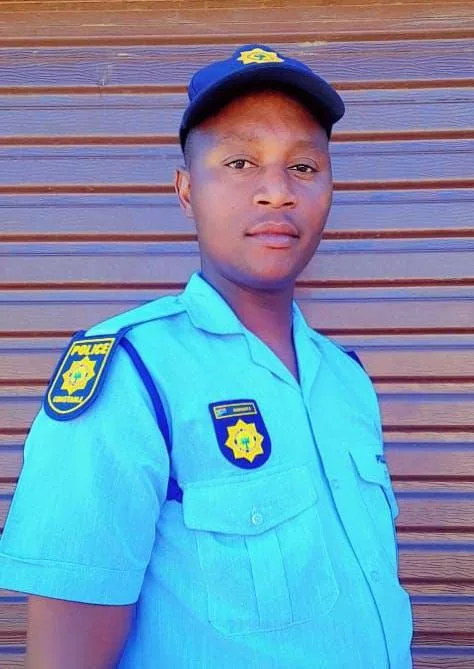
Constable Mlungisi Ernest Makhanya is a brave and caring police officer in eMalahleni who protects children and survivors of abuse. He works in a special unit that fights family violence and sexual crimes, always balancing tough investigations with kindness. Makhanya doesn’t just catch criminals – he helps heal survivors and teaches communities how to stay safe. His dedication shines like a bright light in a city often clouded by hardship, showing that hope and justice can grow even in the darkest times.
Who is Constable Mlungisi Ernest Makhanya and what is his role in eMalahleni?
Constable Mlungisi Ernest Makhanya is a dedicated South African police officer in eMalahleni’s Family Violence, Child Protection, and Sexual Offences (FCS) Unit. He focuses on protecting vulnerable children and survivors of abuse through compassionate investigations and community outreach.
The Morning Haze of eMalahleni and the Faces Behind the Badge
Every winter, the city of eMalahleni awakens beneath a blanket of dense fog that muffles the rising sun and hushes the usual city bustle. Life continues quietly under the mist, but amidst the obscured streets, a different kind of presence emerges with unwavering regularity: the officers who patrol and serve, steadfast in their pursuit of justice. Among these dedicated individuals, Constable Mlungisi Ernest Makhanya stands out – not for a dramatic act or national headline, but for his consistent dedication to protecting the most vulnerable.
Makhanya’s roots trace back to Mpumalanga, a province where breathtaking landscapes and persistent societal challenges coexist. Growing up there, he learned resilience early, a quality that would anchor his future. In 2016, after finishing his police training, Makhanya joined the Elukwatini police station, where his initial assignment at the [Client Service Centre ](https://capetown.today/citys-response-to-unprecedented-50000-electricity-service-requests-in-june-2023/)brought him face-to-face with the community’s raw fears and hopes. Daily, he met people in distress, learning firsthand the emotional realities behind the badge.
His early days, while repetitive and often exhausting, laid a critical foundation. Each interaction at the service center reminded him that real change happens not only through policy but through personal contact. Here, Makhanya absorbed the lessons that would later shape his approach to policing – compassion, patience, and the importance of being present for those in need.
Answering a Higher Calling: The FCS Unit and a New Chapter
Makhanya’s path took a transformative turn in 2018 when he transferred to the eMalahleni Family Violence, Child Protection and Sexual Offences (FCS) Unit. The FCS Unit, established to respond to South Africa’s growing crisis of gender-based violence, child abuse, and sexual offences, occupies a unique space in the country’s law enforcement landscape. Unlike routine policing, this work demands both legal precision and immense emotional strength, requiring officers to balance investigative rigor with empathy.
Specialized training soon followed his transfer, sharpening his investigative skills but also deepening his sense of duty, especially towards children and survivors of abuse. Makhanya approaches his cases with a firm belief in justice and an unwavering commitment to those who depend on his protection. He doesn’t hesitate when he explains his philosophy: “Justice always prevails, and those who harm children and vulnerable individuals will face the full might of the law.” Such conviction doesn’t just motivate him – it defines his approach to every case.
The FCS Unit’s impact stretches well beyond its offices. Against the backdrop of global movements like #MeToo and ongoing national struggles with femicide, South Africa faces some of the highest rates of gender-based violence in the world. Makhanya’s record – securing three life sentences and another ten years of imprisonment for three sexual offenders within a year – stands as a testament to what focused, compassionate work can achieve in even the most challenging circumstances.
Beyond Investigation: Empathy, Community, and Lasting Impact
Each case Makhanya handles carries its own heartbreak, but it’s the stories of resilience that stay with him. He remembers a case involving a very young child, whose ability to communicate remained limited, but whose testimony proved critical. Makhanya patiently built trust with the child, using play and gentle conversation to ease the process, ensuring that the investigation never compounded the trauma. His sensitive approach – blending technical skill with deep understanding – resulted in a successful conviction and, more importantly, helped restore a measure of safety to the child’s life.
His work reflects the principles championed by restorative justice and trauma-informed care. Makhanya doesn’t see himself as just an investigator; he often fills the role of counselor, advocate, and guide. He understands that justice means more than punishment – it means supporting survivors on their journey toward healing. The legacy of South African policing, marked by a difficult past, continues to evolve. Officers like Makhanya strive to shift perceptions – from enforcers to community allies – one careful, compassionate interview at a time.
Makhanya’s commitment extends beyond his official duties. He frequently visits schools to educate children about personal safety and the importance of speaking up about abuse. In community gatherings, he shares anonymized stories to help parents recognize the signs of abuse and empower them to protect their children. These community initiatives echo the African philosophy of Ubuntu – a belief that one’s humanity is intertwined with that of others. Makhanya sees his role as a communal responsibility rather than just an individual occupation.
Resilience in the Face of Challenge: Legacy and Inspiration
His dedication has not gone unnoticed within the South African Police Service. Supervisors praise his relentless work ethic and meticulous attention to detail, while colleagues admire his ability to remain compassionate amidst the emotional toll of handling traumatic cases. The demands of the FCS Unit are intense, requiring investigators to process distressing evidence while maintaining professionalism. Makhanya finds balance through peer support, regular debriefings, and moments spent in quiet reflection.
Observers often liken Makhanya’s work to the tradition of social realism in art – a movement focused on depicting the genuine struggles and triumphs of everyday people. Like those artists, Makhanya aims to make the invisible visible, ensuring that victims’ stories are heard and honored. His daily efforts echo not only the ideals set forth in international child protection protocols, such as the United Nations Convention on the Rights of the Child, but also the urgent realities of contemporary South African society.
His workday brings little rest, with new cases arriving relentlessly and court appearances filling his schedule. Despite the nonstop demands, Makhanya’s motivation never wavers. For him, justice is not an abstract ideal – it’s a lived experience, reflected in the recovery of each survivor and the renewed trust of families who once doubted the system’s ability to protect them.
As South Africa celebrates Youth Month, the police service highlights not just the achievements of its young officers, but the promise they hold for the nation. Constable Mlungisi Ernest Makhanya represents this promise – a new generation of law enforcement professionals guided by both courage and compassion. His story stands as a beacon for a country still striving to overcome its past, proving that meaningful change happens one act of integrity, one survivor’s story, at a time. Through his work, Makhanya reminds us that behind every statistic lies a person, and behind every act of justice, a measure of hope.
Who is Constable Mlungisi Ernest Makhanya and what role does he play in eMalahleni?
Constable Mlungisi Ernest Makhanya is a dedicated South African police officer serving in eMalahleni’s Family Violence, Child Protection, and Sexual Offences (FCS) Unit. His primary role is to protect vulnerable children and survivors of abuse by conducting compassionate and thorough investigations into family violence and sexual crimes. Beyond enforcement, he supports survivors on their path to healing and actively engages with the community to raise awareness about safety and abuse prevention.
What is the Family Violence, Child Protection, and Sexual Offences (FCS) Unit?
The FCS Unit is a specialized branch of the South African Police Service focused on addressing gender-based violence, child abuse, and sexual offences. Officers like Constable Makhanya receive specialized training to balance legal investigation skills with empathy and trauma-informed care. The unit plays a critical role in a country facing some of the highest rates of gender-based violence worldwide, ensuring perpetrators face justice while survivors receive support.
How does Constable Makhanya combine investigation with compassion in his work?
Constable Makhanya approaches each case with a combination of legal rigor and emotional sensitivity. He understands that survivors, especially children, often experience trauma that can be worsened by insensitive handling. He uses patient, gentle techniques like play therapy and trust-building conversations to ease communication, ensuring investigations do not add to the survivor’s distress. This empathy-driven approach has led to successful convictions and meaningful support for survivors.
What community initiatives does Constable Makhanya participate in beyond his investigative duties?
Beyond investigations, Constable Makhanya regularly visits schools to educate children about personal safety and the importance of reporting abuse. He also engages with parents and community members in gatherings, sharing anonymized stories to help them recognize signs of abuse and empowering them to protect vulnerable individuals. His work embraces the African philosophy of Ubuntu, emphasizing communal responsibility and interconnectedness.
What challenges does Constable Makhanya face in his role, and how does he manage them?
Working in the FCS Unit is emotionally demanding, as officers deal with distressing evidence and hear traumatic stories daily. Makhanya manages these challenges by relying on peer support, participating in regular debriefings, and finding moments for quiet reflection to maintain his mental well-being. His resilience and professionalism enable him to continue serving effectively despite the intense pressures.
Why is Constable Makhanya’s work significant for South Africa and the broader community?
Constable Makhanya’s work represents hope and progress in a country grappling with high rates of family violence and sexual crimes. His successful prosecutions, compassionate survivor care, and community education contribute to changing perceptions of policing – from mere enforcement to a partnership in healing and justice. His dedication embodies the promise of a new generation of law enforcement professionals committed to integrity, empathy, and meaningful social change.