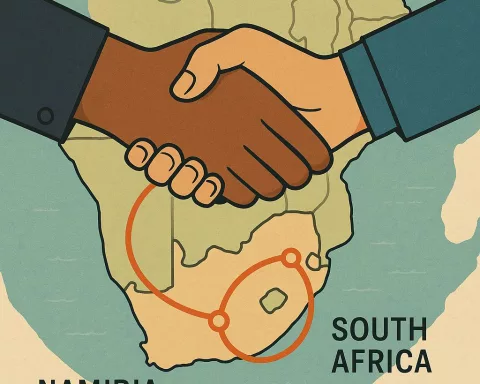
The summit between South Africa and the United States in Washington was a powerful moment where two nations came together to talk about trade, justice, and healing old wounds. Leaders like President Ramaphosa and President Trump met to build stronger ties and face tough issues like South Africa’s Black Economic Empowerment policies. Elon Musk’s sharp criticism of these policies added heat to the talks, highlighting the tricky balance between fairness and opportunity. More than just politics, the summit was about hope – finding common ground to create a future where both countries can grow and heal.
What was the significance of the summit between South Africa and the United States in Washington?
The summit between South Africa and the United States focused on strengthening bilateral ties through trade, investment, and cooperation, while addressing complex issues like South Africa’s Black Economic Empowerment (BEE) policies and national reconciliation. It highlighted shared challenges in social justice and economic transformation.
Prelude to Diplomacy: Setting the Stage in Washington
As the sun sets with a gentle gold over Washington, D.C., the city brims with restless anticipation. Leaders from two continents – President Cyril Ramaphosa of South Africa and President Donald Trump of the United States – prepare for a consequential rendezvous. Their meeting goes beyond formalities; it promises the forging of new alliances while confronting the shadows of complicated histories. The diplomatic table, elegantly set, bears not only the trappings of statecraft but the heavy expectations that come with representing nations shaped by both triumph and trauma.
The day’s events unfurl with deliberate elegance. Traditions hold sway at first, as President Ramaphosa inscribes his name in the visitors’ book, paying homage to the enduring legacies each nation carries. Almost immediately, however, the ceremonial veneer gives way to the business of governance. An evening working lunch – scheduled for 5:35 PM – gathers the two delegations. Plates crowd with cuisine, but the real nourishment comes from dialogue poised to shape the future of bilateral relations. These gatherings, meticulously choreographed for public view, are where rhetoric transforms into policy and where ambition meets reality.
Behind the scenes, a complex web of expectations and anxieties hums. The summit occurs at a time when both countries face internal and external pressures, and their leaders must balance domestic priorities with the demands of global leadership. The symbolism of the meeting is matched only by its substance, as each side arrives prepared to bargain, persuade, and perhaps reimagine the terms of their partnership.
Controversy and Critique: Musk and the Meaning of Transformation
No high-level summit unfolds without its share of controversy, and this occasion proves no different. Elon Musk, the most globally recognized South African entrepreneur, casts a long shadow over the proceedings. His recent denunciation of South Africa’s Black Economic Empowerment (BEE) policies as “racist laws” has sparked intense debate. Musk’s words cut deep, especially as his reputation as an innovator grants him an attentive audience in both political and business circles.
Born from the ashes of apartheid, BEE represents one of the most ambitious attempts at social and economic redress of the modern era. Its framework mandates companies to prioritize black South Africans in ownership, management, and procurement, aiming to heal the wounds left by decades of institutionalized exclusion. Supporters view BEE as an essential mechanism for promoting equity and reversing historical injustices. Detractors, however, question both its efficacy and its fairness, arguing that it sometimes fosters new imbalances in the guise of remedying old ones.
Musk’s critique, delivered with characteristic bluntness, accuses the law of perpetuating discrimination, suggesting that it substitutes one form of racial preference for another. By invoking Nelson Mandela’s vision of a “rainbow nation” united in its diversity, Musk frames his argument in stark moral terms. He argues for a system that transcends race, challenging South Africans to reexamine whether their policies fulfill Mandela’s legacy or merely invert the hierarchy of privilege.
His intervention arrives at a particularly sensitive moment. In the United States, debates around affirmative action and the legacy of segregation remain heated and unresolved. American officials such as Vice President JD Vance and Defence Secretary Pete Hegseth, present at the summit, bring their own perspectives on balancing principle and pragmatism in pursuit of social justice. Musk’s standing as a business titan and social commentator ensures his critique cannot be simply dismissed as an outsider’s opinion; it forces both nations to confront uncomfortable questions about the nature and limits of redress.
Negotiation by Numbers and Nuance: The Art of Bilateral Relations
President Ramaphosa and his South African team shoulder a formidable responsibility. The memory of apartheid lingers, and transformative policies like BEE carry the hopes of millions. For the ruling African National Congress, these reforms anchor their legitimacy, representing not just policy choices but the fulfillment of promises made at the dawn of democracy. The delegation includes key figures such as Minister of International Relations Ronald Lamola, Minister of Trade Ebrahim Patel, and Minister of Agriculture John Steenhuisen. Together, they bring both the legal grounding and the lived experience of South Africa’s ongoing transformation.
Beyond ministers and policy advisers, the South African contingent includes celebrated golfers Ernie Els and Retief Goosen. Their presence serves a dual purpose: as symbols of national pride and as subtle diplomatic tools. Including such figures nods to President Trump’s well-documented passion for golf and mirrors historical moments when sports or the arts have played pivotal roles in softening the edges of tense negotiations. These gestures, while outwardly symbolic, often help create an atmosphere of goodwill that can prove vital in reaching agreements.
On the American side, the mood combines curiosity with strategic calculation. The Trump administration’s approach to Africa has shown both engagement and periods of neglect, but South Africa’s pivotal role as both gateway and laboratory for reconciliation keeps it prominent on Washington’s radar. Economic topics dominate the agenda – trade, investment, and cooperation in fields like technology, agriculture, and mining. For American companies, the allure lies in accessing South Africa’s mineral resources and growing digital sector, while South Africa seeks investments that could spur job creation and modernize infrastructure.
Personal anecdotes and shared memories flavor the summit. Ramaphosa’s own journey from trade union leader to skilled negotiator during South Africa’s transition to democracy infuses the talks with experience and gravitas. He recalls the risks and rewards of compromise, and the enduring challenge of balancing idealism with practical governance. These lessons resonate with his American counterparts, who also face the ongoing work of reconciling national ideals with persistent inequalities.
Legacy, Opportunity, and the Search for Common Ground
The summit unfolds against a backdrop of pageantry, but its subtext remains urgent and real. For South Africa, foreign direct investment is both a necessity and a challenge, as unemployment stays high and critical infrastructure shows signs of strain. Global investors watch the proceedings closely, searching for any signs of regulatory change or new opportunities that might tip the balance in their favor.
The dialogue stretches beyond economics. The struggle for national reconciliation, so central to South Africa’s post-apartheid identity, draws lessons from international models like the truth commissions of postwar Europe. Similarly, debates about BEE echo the long-standing American conversation about affirmative action, raising questions about how best to foster inclusion without stoking new resentments. In both cases, the challenge remains the same: how to craft policies that address historical exclusion while opening doors to genuine opportunity for all.
Elon Musk’s personal saga, from his South African roots to his status as a Silicon Valley icon, embodies the complexities of transformation. His sharp critiques reflect both a deep connection to his homeland and the distance of the diaspora. He speaks for a generation torn between pride in South Africa’s achievements and frustration with its shortcomings – between the dream of meritocracy and the necessity of redress.
Meanwhile, South African cabinet members present practical examples of BEE’s impact, highlighting both its successes and its failures. Black-owned businesses have flourished under its shelter, yet bureaucratic obstacles, corruption, and inertia have sometimes blunted its intended effects. These candid assessments parallel global debates, as societies everywhere struggle to reconcile the need for justice with the realities of policymaking.
Ultimately, the Washington summit becomes far more than a diplomatic formality. It is a crucible in which the forces of history, ambition, memory, and aspiration collide. The stakes extend beyond the immediate participants, reflecting the universal pursuit of justice, equity, and reconciliation. As South Africa and the United States navigate the complexities of partnership, their dialogue offers a window into how nations confront their past while striving to build a more inclusive future.
FAQ: Power, Policy, and Identity – South Africa and United States Summit
What was the main purpose of the summit between South Africa and the United States in Washington?
The summit aimed to strengthen bilateral relations by focusing on trade, investment, and cooperation while addressing complex social and economic issues. Key topics included South Africa’s Black Economic Empowerment (BEE) policies and ongoing efforts toward national reconciliation. The meeting provided a platform for both countries to discuss challenges related to social justice, economic transformation, and healing historical wounds, with a shared goal of fostering mutual growth and opportunity.
What are South Africa’s Black Economic Empowerment (BEE) policies, and why are they significant?
BEE policies were designed to redress the legacy of apartheid by promoting the economic participation of Black South Africans in ownership, management, and procurement within businesses. These laws aim to promote equity and reverse decades of institutionalized exclusion. While supporters see BEE as essential for social justice and economic inclusion, critics argue that it can create new forms of racial preference and inefficiencies. The policies are a cornerstone of South Africa’s post-apartheid transformation and remain a central point of debate both domestically and internationally.
Why did Elon Musk criticize South Africa’s BEE policies, and what impact did his remarks have on the summit?
Elon Musk described BEE policies as “racist laws” that replace one form of racial discrimination with another, challenging whether these policies align with Nelson Mandela’s vision of a “rainbow nation.” His sharp critique highlighted the tension between pursuing redress and fostering meritocracy. Musk’s global profile as a tech innovator brought significant attention to the debate, forcing both South African and American leaders to confront nuanced questions about affirmative action, fairness, and economic opportunity. His intervention underscored broader international conversations around race-conscious policies.
How did the summit balance symbolic gestures with substantive negotiations?
The summit combined diplomatic ceremony with practical policy discussions. Symbolic acts, such as President Ramaphosa signing the visitors’ book and including celebrated golfers Ernie Els and Retief Goosen in the delegation, helped build goodwill and resonate with President Trump’s known interests. At the same time, ministers and officials engaged in detailed talks on trade, investment, and cooperation in sectors like technology, mining, and agriculture. This blend of symbolism and strategy helped set a constructive tone conducive to negotiating complex issues.
What challenges do South Africa and the United States face when addressing social justice and economic transformation?
Both countries wrestle with reconciling historical injustices with present-day realities. For South Africa, the legacy of apartheid demands policies like BEE to promote inclusion, but these efforts face obstacles such as bureaucracy, corruption, and unintended economic side effects. In the U.S., ongoing debates about affirmative action and racial equity reflect similar tensions about how to achieve justice without fostering new grievances. These shared challenges require careful balancing of principle, pragmatism, and political will to foster genuine opportunity for marginalized communities.
What are the broader implications of the summit for international relations and future cooperation?
Beyond immediate economic interests, the summit symbolizes a commitment by South Africa and the United States to engage in honest dialogue about difficult issues like race, equity, and national identity. It serves as a model for how nations with complicated histories can pursue partnerships based on mutual respect and shared goals. The discussions potentially open doors to increased foreign direct investment, collaboration in innovation and infrastructure, and strengthened diplomatic ties. Ultimately, the summit highlights the ongoing global pursuit of justice and reconciliation within international partnerships.