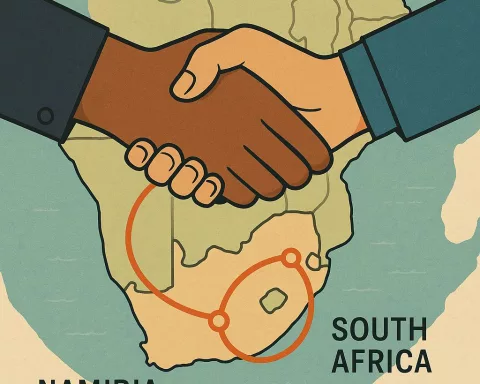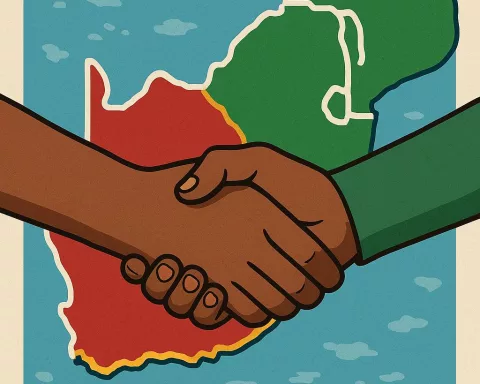
When Donald Trump met South Africa’s President Cyril Ramaphosa, tensions flared over a painful and controversial chant, “Kill the Boer,” tied to South Africa’s troubled history and ongoing land struggles. Trump, worried about violence against white farmers, pressed Ramaphosa hard, showing videos and demanding answers. Ramaphosa responded calmly but highlighted how complex and sensitive the issue really is, pointing out the gap between fears and facts. This clash revealed deep differences in how the two countries see protest, history, and justice – and showed how words can spark powerful global debates.
What caused the diplomatic clash between Donald Trump and Cyril Ramaphosa?
The clash centered on Trump confronting Ramaphosa about the controversial South African chant “Kill the Boer,” linked to violent rhetoric against white farmers. This raised tensions over land reform, protest meanings, and differing views on racial justice between the U.S. and South Africa.
A Showdown in Washington
Diplomatic meetings often unfold behind closed doors, guided by a script of politeness and carefully measured statements. But when Donald Trump, then President of the United States, sat down with South Africa’s Cyril Ramaphosa, the usual protocols quickly dissolved into an explosive confrontation. The spark? A single phrase embedded deep in South Africa’s historical wounds: “Kill the Boer.” This slogan, infamous within the country’s turbulent political landscape, would become the centerpiece of a fiery debate about justice, protest, and the international gaze.
Trump arrived at the encounter determined to address what he saw as a crisis facing white South African farmers. Armed with video evidence, he pressed Ramaphosa to explain the controversial chant, which had been amplified by Julius Malema, the leader of the radical Economic Freedom Fighters. For Trump, the issue was clear-cut: he saw white farmers as victims of a violent campaign fueled by dangerous rhetoric. “There are thousands of them, they are all farmers. It’s a terrible sight, I’ve never seen anything like it,” he asserted, his language painting a scene of imminent disaster.
The American president’s approach reflected his penchant for spectacle and directness. Rather than tiptoe around sensitive topics, he confronted Ramaphosa with recordings and headlines, expecting immediate answers. This method, typical of Trump’s brash style, clashed with the more nuanced and cautious approach preferred by South African leaders. The resulting tension exposed not only cultural differences but also the vastly different ways the two countries interpret protest, history, and the power of language.
Protest Slogans and the Weight of History
To understand the uproar, one must trace the roots of the phrase at the center of the controversy. “Kill the Boer,” which roughly translates to “Kill the Farmer,” emerged during South Africa’s liberation struggle as an expression of rage against the architects of apartheid. Like protest anthems from other eras – think of “We Shall Overcome” in the Civil Rights Movement or the revolutionary music of Latin America – the chant carried layers of pain, memory, and defiance. But while some view it as a relic of anti-apartheid resistance, others see it as a dangerous call to violence in the present.
Julius Malema, never one to shrink from controversy, has repeatedly resurrected the chant at rallies and protests. He frames it as a symbolic act, a reminder of the unfinished business of decolonization and economic justice. This tactic taps into a long tradition of protest art and performance, recalling the shock tactics of the Dadaists or the radical theater of the 1960s. For Malema and his supporters, lyrics and slogans are weapons in a struggle for land and dignity – a struggle that remains unresolved despite the fading of apartheid’s legal structures.
Yet, as the chant echoes through stadiums and social media, its meaning shifts. Critics – especially those outside South Africa – read it as a literal threat against the country’s white minority, particularly its farmers. The phrase has become a lightning rod for debates over land reform, racial justice, and the boundaries of free speech. The international spotlight, intensified by Trump’s focus, has only magnified these tensions, turning a local controversy into a global spectacle.
Memory, Myth, and the Limits of Speech
Claims of a “white genocide” in South Africa have circulated widely, particularly in right-wing circles abroad. These narratives often hinge on stories of violence against white farmers, portrayed as evidence of systematic persecution. However, careful analysis by human rights organizations and local experts has consistently found no evidence of a coordinated campaign of extermination. Instead, rural crime affects South Africans of all backgrounds, with white farmers representing just one, albeit highly visible, group among the victims.
Malema’s response to the foreign attention reveals his mastery of political theater. He dismisses the accusations as gossip and points to a lack of credible evidence for any alleged genocide. “A group of older men meet in Washington to gossip about me. No significant amount of intelligence evidence has been produced about white genocide,” he posted on X, blending mockery with defiance. His words underline the performative nature of modern politics, where social media platforms serve as both stage and battleground.
Ramaphosa, for his part, handled Trump’s barrage with a mix of skepticism and diplomatic finesse. When Trump insisted on the prevalence of tributes for slain white farmers, Ramaphosa calmly asked, “They told you where that is, Mr President? I’d like to know where that is because this, I’ve never seen.” His response highlighted the chasm between perception and reality, as well as South Africa’s sensitivity to being misunderstood or misrepresented on the world stage.
Land, Identity, and the Global Gaze
At the heart of this diplomatic drama lies a problem that has haunted South Africa since the colonial era: the question of land. Who owns it, who works it, and how to distribute it fairly – these issues remain deeply contentious more than a generation after apartheid’s end. The government’s promise of land reform, including the prospect of expropriation without compensation, has sparked fear and anger among many white farmers and their allies. For supporters of radical change, such measures offer a way to address historic injustices and empower the country’s black majority.
The debate over land echoes similar struggles in postcolonial societies around the world. Zimbabwe’s chaotic land seizures in the early 2000s resulted in international condemnation and economic crisis – an example South Africa’s leaders are keen to avoid. Ramaphosa, aware of the risks, has stressed that while all voices should be heard, the EFF and its most incendiary slogans represent a minority. “We allow everyone to express themselves, but EFF is a minority party,” he told Trump, signaling the government’s commitment to both free expression and responsible governance.
International reactions to South Africa’s land debates often reveal more about the observer than the situation itself. For some, the spectacle of white farmers under threat evokes a morality play, with clear heroes and villains. For others, it is a reminder of the unfinished project of decolonization and the dangers of simplistic narratives. Trump’s intervention, blending empathy with alarmism, fit neatly into his broader pattern of combative, media-driven diplomacy – using vivid imagery and direct confrontation to make his points, regardless of local complexities.
The Politics of Performance and the Stakes of Reform
Malema’s use of provocative rhetoric exemplifies a broader trend in global politics, where leaders harness the power of spectacle and controversy to rally support. In South Africa, the aesthetics of protest – whether through song, chant, or viral video – continue to shape public debate. These performances tap into deep-seated emotions, both of hope and fear, as the country struggles with the legacies of dispossession and inequality.
Meanwhile, the lives of ordinary South Africans – farmers, workers, and communities – remain entwined with the outcomes of these political dramas. The challenge of land reform defies easy solutions: how to right centuries-old wrongs without triggering social collapse or economic ruin. For many, the stakes are not abstract but urgent and immediate, as families navigate threats of violence, shifting policies, and the uncertainties of a transforming society.
The meeting between Trump and Ramaphosa, though inconclusive in its immediate results, captured the dilemmas facing societies reckoning with their own histories. It showed how protest, memory, and diplomacy intersect in the age of social media, where every chant and soundbite can reverberate across continents. As South Africans continue to debate the meaning of justice, and as outside observers look on with curiosity and concern, the story of “Kill the Boer” and its global aftershocks remains a powerful reminder of the enduring struggles over land, identity, and the power of words.
FAQ: When Trump and Ramaphosa Collided Over “Kill the Boer”
1. What sparked the diplomatic clash between Donald Trump and Cyril Ramaphosa?
The clash was triggered when then U.S. President Donald Trump confronted South African President Cyril Ramaphosa about the controversial chant “Kill the Boer,” which has historical roots in South Africa’s anti-apartheid struggle but is viewed by some as promoting violence against white farmers. Trump pressed Ramaphosa with videos and allegations of violence against white farmers, raising tensions about land reform, racial justice, and differing national perspectives on protest and history.
2. What is the historical significance of the chant “Kill the Boer”?
“Kill the Boer” originated during South Africa’s liberation struggle as a protest slogan expressing rage against apartheid-era oppressors, namely the Boers (descendants of Dutch settlers). For many South Africans, it is a symbol of resistance and the ongoing fight for economic justice and land reform. However, others – especially critics and international observers – interpret it as a call for violence against the white farming community, making it a highly sensitive and divisive phrase.
3. How did Julius Malema and the Economic Freedom Fighters (EFF) influence the controversy?
Julius Malema, leader of the radical Economic Freedom Fighters (EFF), has revived the chant in protests and rallies, framing it as a symbolic call for decolonization and land redistribution. Malema uses provocative rhetoric as a political tool to highlight unresolved inequalities in South Africa. His use of the chant has contributed to international concern and debate, especially among those who see the slogan as inciting violence against white farmers.
4. Is there evidence of a coordinated campaign of violence or “white genocide” against farmers in South Africa?
Despite fears and claims circulated in some right-wing international circles, independent investigations by human rights organizations and experts find no evidence of an organized campaign or “white genocide” targeting white farmers. Farm attacks and rural crime affect South Africans of all races, and the narrative of systematic persecution is widely regarded as exaggerated or misleading.
5. How did Cyril Ramaphosa respond to Trump’s concerns during their meeting?
Ramaphosa responded to Trump’s accusations with calm skepticism and diplomatic tact, challenging the accuracy of the claims about widespread violence against white farmers. He emphasized the complexity of South Africa’s land issues, pointed out the lack of evidence supporting the “white genocide” narrative, and highlighted the fact that the EFF is a minority party. Ramaphosa’s measured approach contrasted with Trump’s confrontational style, underscoring differing diplomatic cultures.
6. What broader issues does this confrontation highlight about South Africa’s land reform and racial tensions?
The dispute touches on deep-rooted challenges in South Africa related to land ownership, historical injustices, and economic inequality. Land reform remains a contentious and unresolved topic more than 25 years after apartheid’s end, with debates over expropriation without compensation stirring fears among white landowners and hopes among black South Africans seeking restitution. This diplomatic episode also reflects how protest, memory, and political rhetoric continue to shape national identity and international perceptions in an era of social media and globalized discourse.
If you want to learn more about South Africa’s history, land reform policies, or international relations, feel free to ask!