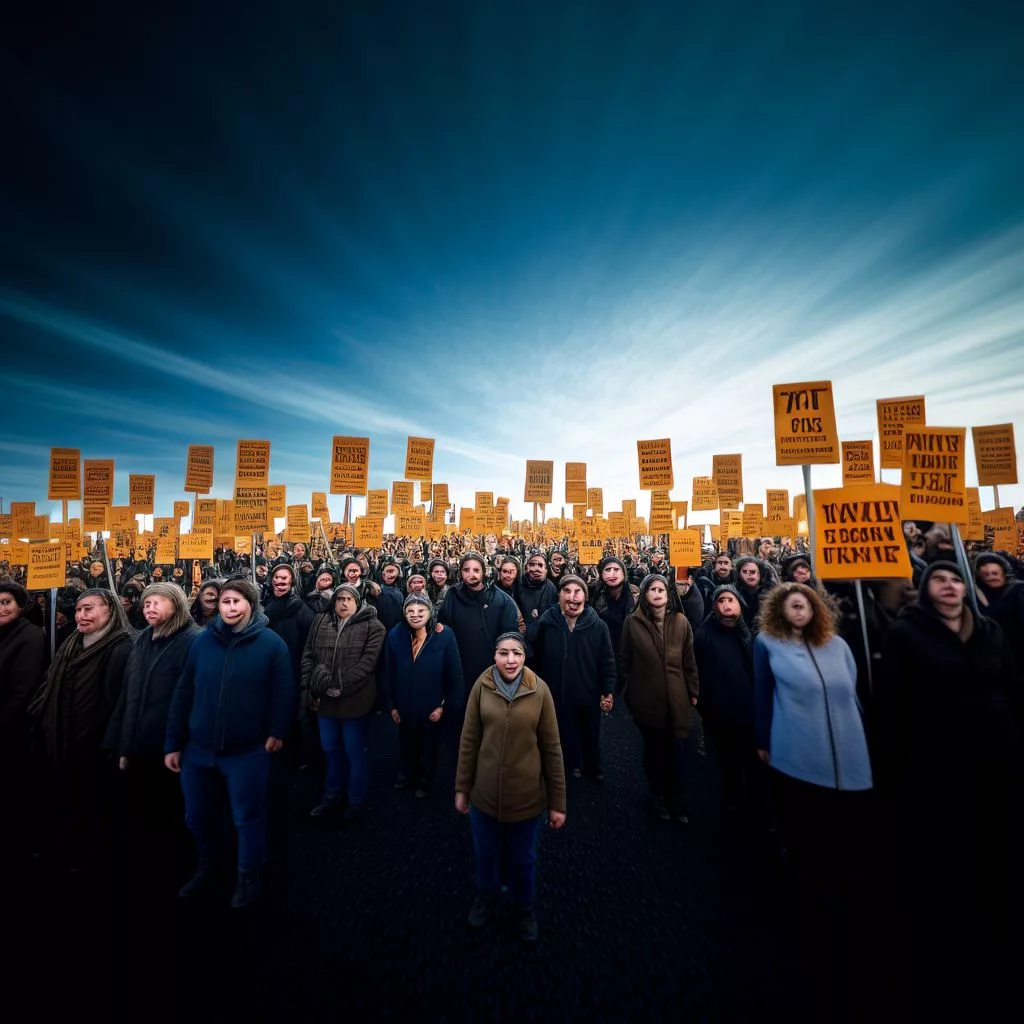
The MK Party held a lively protest in Pretoria against a proposed 2% VAT hike, which they believe unfairly burdens working-class people. Activists gathered passionately, calling for the government to find better solutions to the R60 billion budget deficit, like tackling tax evasion by big companies. Mzwanele Manyi, a leader in the party, criticized the government for ignoring their concerns and argued that the proposed measures wouldn’t help those struggling with rising costs. This event echoed South Africa’s fight for justice, showing how deeply the community cares about economic fairness.
What was the MK Party’s protest against the VAT hike about?
The MK Party’s protest in Pretoria addressed the proposed 2% VAT increase aimed at resolving a R60 billion budget deficit. Activists criticized this measure for overburdening the working class and called for alternative solutions, such as cracking down on tax evasion by multinational corporations.
The Streets of Pretoria Ignite with Political Activism
March saw Pretoria’s streets transform into a vibrant stage for political action, as the uMkhonto weSizwe (MK) Party mobilized an enormous protest against a proposed 2% rise in Value Added Tax (VAT). Known for its substantial influence in South African politics, the MK Party brought together impassioned activists who voiced their opposition through fervent speeches and chants. This event highlighted the mounting dissatisfaction among South Africans, particularly the working class, who felt overburdened by the fiscal policies being considered.
The catalyst for this demonstration was Finance Minister Enoch Godongwana’s plan to address a looming R60 billion budget deficit through a VAT increase. This announcement, initially set for February, faced a delay until 12 March due to the overwhelming backlash. Pretoria’s streets became the arena for a clash of ideas as MK members and their supporters made their way to the South African Reserve Bank’s offices, expressing their firm disapproval.
MK Party’s Critique and Alternative Proposals
Mzwanele Manyi, the parliamentary chief whip for MK, sharply criticized the government’s fiscal approach. He revealed the party’s previous attempts to engage through formal political channels, which he felt were ignored. “Our members participate in the standing committee on Finance in Parliament and have raised these issues, but to deaf ears. We’ve written letters to the Minister. Nothing comes of it,” Manyi lamented. Frustrated by this perceived indifference, the MK decided to take their grievances directly to the streets.
Offering solutions to the budget deficit that wouldn’t burden the working class, Manyi suggested cracking down on illicit financial transfers and tax evasion by multinational corporations. He argued that the South African Revenue Service (SARS) could recover up to R800 billion through these measures. “We are saying we must clamp down on illicit financial outflows. These multinationals use price transfer schemes to evade tax. We need to clamp down on that, along with corruption,” Manyi asserted.
Manyi also took issue with the government’s proposal to zero-rate certain food items, contending that this measure was insufficient. “We are not opposed to the zero-rating of some foods, but we are saying that it is not enough. There shouldn’t be a trade-off between zero-rating food and increasing VAT,” he stated. He emphasized that the cost of living extends beyond food, mentioning transportation and electricity costs as additional burdens on the poor. Manyi dismissed the zero-rating proposal as a “smokescreen,” noting the broader inflationary pressures a VAT hike would exacerbate.
Government’s Response and Internal Dynamics
The MK’s memorandum, delivered to the government, criticized the Government of National Unity (GNU) for allegedly prioritizing white monopoly capital. The document demanded that the VAT rate remain unchanged, reflecting broader concerns about economic inequality and social justice.
In response, ANC secretary-general Fikile Mbalula offered a different perspective. He dismissed the effectiveness of protests in providing viable solutions to complex budgetary issues. “We see people protesting and raising issues and all of that. It’s nice to protest about anything, but they don’t provide solutions,” Mbalula stated. He reiterated that while suggestions like increasing taxes on the wealthy and corporate entities were considered, they were not complete solutions to the budget shortfall. “The fundamental question before us is how we address the shortfall,” Mbalula contended.
Interestingly, Mbalula also disclosed that ANC officials had not met with Finance Minister Godongwana to discuss the finalization of the national budget for the 2025/26 fiscal year. This revelation pointed to potential gaps within the ruling party’s internal communication and strategic planning processes.
The Broader Implications of the Protest
As the political theatre unfolded, the complex dance between governance and grassroots activism came to the fore. The MK’s protest echoed historical moments of civic resistance, reminiscent of the anti-apartheid struggle. The streets of Pretoria resonated with the voices of those who felt marginalized by economic policies, their cries reflecting enduring battles for justice and equality.
The protest illuminated the broader landscape of South African politics, where fiscal decisions often become flashpoints for larger social and economic debates. The government’s approach to addressing budgetary shortfalls, tax collection mechanisms, and economic policy prioritization came under intense scrutiny. The MK’s call for a more equitable tax system and their critique of multinational corporations’ tax evasion practices resonated with global movements advocating for economic justice.
The Anticipation of the Budget Speech
In this charged atmosphere, the postponed budget speech loomed large. Scheduled for 2 pm on 12 March at the Parliament Dome in Cape Town, it promised to be a pivotal moment. The government’s fiscal strategy would face intense scrutiny, with citizens and political actors alike keenly awaiting the outcome.
Reflecting on these events, it’s evident that the intersection of fiscal policy and social justice remains a contentious and vital arena for political engagement. The MK’s protest serves as a potent reminder of the enduring power of collective action and the need for responsive, inclusive governance. Once more, the streets of Pretoria became a stage for the democratic process, where voices from all walks of life sought to shape the nation’s future.
FAQ: MK Party’s Protest Against VAT Hike
What was the MK Party’s protest against the VAT hike about?
The MK Party’s protest in Pretoria addressed a proposed 2% VAT increase aimed at resolving a R60 billion budget deficit. Activists criticized this measure for overburdening the working class and called for alternative solutions, such as cracking down on tax evasion by multinational corporations.
Why did the MK Party believe the VAT hike would negatively impact working-class individuals?
The MK Party argued that the VAT hike would disproportionately affect working-class individuals who are already struggling with rising costs of living. They emphasized that fiscal policies should not further burden those already facing economic hardships.
What alternative solutions did the MK Party propose to address the budget deficit?
Mzwanele Manyi, a leader in the MK Party, suggested that the government should focus on cracking down on tax evasion and illicit financial transfers by multinational corporations. He highlighted that the South African Revenue Service could potentially recover up to R800 billion through these measures.
How did the government respond to the MK Party’s criticism and protest?
In response, ANC Secretary-General Fikile Mbalula indicated that while protests highlight issues, they do not necessarily provide viable solutions to complex budgetary problems. He mentioned that suggestions like increasing taxes on the wealthy were considered but deemed insufficient to address the budget shortfall.
What was the broader significance of the protest in the context of South African politics?
The protest represented a deeper struggle for economic justice and highlighted ongoing issues of inequality, reflecting a historical context of civic resistance in South Africa. It brought attention to the need for inclusive governance and a fairer tax system, resonating with global movements advocating for economic justice.
What were the expectations surrounding the postponed budget speech?
The postponed budget speech, scheduled for 12 March, was anticipated to be a crucial moment for the government’s fiscal strategy. Citizens and political actors were keenly awaiting the outcomes and how the government planned to address budgetary shortfalls, with the MK Party’s protest framing the discussion around economic fairness and social justice.