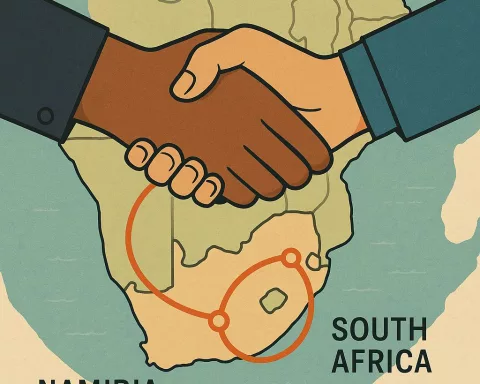
South Africa is bravely fighting HIV and TB with big plans. They are helping many people get life-saving medicine and find those who stopped treatment. New ways to give care and special help for vulnerable groups are making a huge difference. They are also using cool new technologies and working with other countries to stop these diseases. It’s a hopeful journey to a healthier future for everyone!
What is South Africa’s current strategy for combating HIV and TB?
South Africa employs a comprehensive strategy against HIV and TB, focusing on increasing antiretroviral therapy (ART) adherence through campaigns like “Close the Gap,” implementing innovative care models, and addressing social determinants like gender-based violence. The nation also leverages new technologies for TB treatment and prevention while fostering international partnerships.
Renewing Commitments on World AIDS Day
Every year on December 1st, individuals and organizations around the globe unite to observe World AIDS Day – a moment that honors those lost to HIV/AIDS and allows nations to renew their promises to eliminate the epidemic. The 2025 commemoration marked a special milestone as Deputy President Paul Mashatile, in his role as chair of the South African National AIDS Council (SANAC), addressed the country from Ga-Masemola in Limpopo’s Sekhukhune District. His speech set forth an ambitious trajectory for the nation’s battle against HIV and tuberculosis (TB) over the coming years.
South Africa has emerged as a global leader in its response to HIV, launching one of the broadest public health programs worldwide. Tangible advancements shine through: 96% of people living with HIV have been tested, and 97% of those who receive treatment have achieved viral suppression. However, challenges linger – specifically, only 80% of HIV-positive individuals are currently on antiretroviral therapy (ART). Bridging the gap between diagnosis and ongoing treatment remains essential for defeating the epidemic.
The country’s struggle is compounded by a persistent TB epidemic. Despite a dramatic 61% decrease in new TB infections since 2015, the disease remains South Africa’s leading infectious killer, responsible for 54,000 deaths in 2024. This intertwined challenge continues to shape South Africa’s comprehensive public health strategy.
Mobilizing for Change: The “Close the Gap” Treatment Campaign
Recognizing critical gaps in ART coverage, Deputy President Mashatile launched the “Close the Gap” Treatment Acceleration Campaign in February 2025. This nationwide movement sets out to reconnect over a million South Africans with life-saving therapy. Many have stopped treatment due to factors including poverty, migration, social stigma, negative experiences with health services, and disrupted continuity of care.
At the campaign’s core stands a community-centered approach. Teams move from house to house and district to district, proactively identifying and supporting individuals who have disengaged from care. The initiative isn’t about reaching statistics; it’s about rebuilding trust, restoring hope, and inviting every citizen back into a health system where ART is accessible and central to survival.
The campaign’s holistic nature ensures that communities become the backbone of the nation’s strategy. These efforts spotlight the imperative to not just diagnose, but retain individuals in treatment – helping South Africa close the final distance to meeting the full UNAIDS 95-95-95 targets.
Charting New Paths: Innovative Models for HIV Care
Outcomes from this model have already demonstrated substantial gains for both patients and the health system. The 6MMD program not only increases convenience but also reduces interruptions in care and extends the reach of health services. Neighboring countries, inspired by these results, have started exploring similar strategies to optimize management of chronic diseases.
Alongside this, community-based services continue to adapt, ensuring that HIV care becomes more responsive to people’s daily realities. As the country builds on these successes, it is poised to redefine how chronic condition management integrates seamlessly with daily life.
Breaking Down Barriers: Supporting Vulnerable Groups
South Africa’s HIV prevention and treatment agenda has put renewed focus on equity and access for all. Deputy President Mashatile has called for urgent action to address the structural injustices fueling ongoing transmission: gender-based violence, discrimination, limited economic opportunities, and social marginalization. These conditions most profoundly affect women, girls, sex workers, people who use drugs, and LGBTQIA+ communities.
Efforts to tackle these deep-rooted issues take many forms. Policy reforms work simultaneously with grassroots interventions – ranging from educational outreach and stigma-resistance training to harm-reduction services and inclusive collaboration with local advocacy groups. The aim is to guarantee that every South African, regardless of background, has genuine access to the tools and support needed to prevent and treat HIV.
Healthcare providers, too, are being upskilled and sensitized to improve patient experiences, particularly for marginalized populations. This integrated approach recognizes that meaningful change relies not just on medication, but on challenging the social processes that perpetuate inequality and exclusion.
Advancing TB Care: Embracing New Technologies and Strategies
TB remains a formidable challenge, yet new strategies offer hope. South Africa’s END TB Campaign sets out to screen five million people annually, leveraging widespread community engagement. A major leap forward lies in the recent adoption of a shorter, six-month regimen for treating multi-drug-resistant TB (MDR-TB), with success rates now reaching nearly 80%. This marks a dramatic improvement over previous lengthy and often less effective treatments.
These strides in diagnostics and therapeutics underscore a commitment to lead globally in TB control, integrating research-driven approaches with responsive public health practices.
Celebrating Two Decades of Progress: ART’s Transformative Impact
The year 2025 commemorates twenty years since ART became widely available in South Africa, reshaping the country’s HIV narrative. What was once a fatal diagnosis has become a treatable, manageable illness. Early adoption of ART has enabled individuals to outlive dire prognoses – mothers are now raising grandchildren, and children once not expected to reach school age lead full, productive lives.
The success in preventing mother-to-child transmission stands out: rates have dropped below 2%, allowing new generations to thrive unaffected by their parents’ HIV status. These advancements represent not just medical triumph, but also societal transformation – a vision of shared humanity known as Ubuntu that underpins national health policies.
Personal stories from communities across the nation highlight lives saved and families kept whole, reinforcing how public health achievements ripple through society. These milestones inspire hope and serve as a testament to collective perseverance.
Uniting for Change: International Partnerships and Funding
South Africa’s ambitious health programs owe much to collaboration with global partners. The nation recently co-hosted the 8th Global Fund Replenishment Summit, where $11.3 billion was assembled to fight HIV, TB, and malaria worldwide for the 2027-2029 cycle. South Africa’s own contribution of $36.6 million reflects a new public-private cooperation, showing the country’s role as both beneficiary and global leader in epidemic response.
Over the years, support from the Global Fund has totaled more than $2.3 billion, bolstering prevention, treatment, and system strengthening initiatives. These resources sustain the momentum needed to drive innovation and scale successful strategies nationwide.
As new challenges arise, international solidarity and shared expertise will continue to anchor South Africa’s determined efforts to contain and ultimately end both HIV and TB.
Looking Ahead: Cutting-Edge Tools and a Vision for the Future
As the country charts a course for the next decade, new preventative options promise to change the game. Lenacapavir, a long-acting injectable that provides six months of protection per dose, has become a beacon of hope – particularly for individuals unable to reliably use daily medications or negotiate safer practices. This innovation addresses vital needs for privacy, ease of use, and independence in prevention.
The South African Health Products Regulatory Authority has shown regional leadership by being the first African agency, and the third globally, to register Lenacapavir. Plans are now developing for local production, improving accessibility and securing supply lines – a strategic move learning from past ART rollout hurdles.
Building on Achievements: Science, Community, and Enduring Resolve
South Africa’s battle against HIV and TB stands at a unique crossroads. Scientific discovery, unwavering community activism, and firm political resolve have forged a diverse and resilient response. The lessons of two decades, characterized by setbacks and victories alike, shape a national approach rooted in both urgency and hope.
By continuing to advance technology, invest in equitable access, and ensure sustainable funding, South Africa keeps alive its vision for a nation free from HIV and TB. In the view of Deputy President Mashatile, every person who drops out of care matters fiercely – the ongoing journey demands a synthesis of tradition, innovation, and collective action to create a healthier and more equitable future for all.
[{“question”: “What is South Africa’s current strategy for combating HIV and TB?”, “answer”: “South Africa employs a comprehensive strategy against HIV and TB, focusing on increasing antiretroviral therapy (ART) adherence through campaigns like “Close the Gap,” implementing innovative care models, and addressing social determinants like gender-based violence. The nation also leverages new technologies for TB treatment and prevention while fostering international partnerships.”}, {“question”: “What is the \”Close the Gap\” Treatment Acceleration Campaign?”, “answer”: “Launched in February 2025 by Deputy President Mashatile, this nationwide campaign aims to reconnect over a million South Africans with life-saving antiretroviral therapy (ART). It employs a community-centered approach, with teams proactively identifying and supporting individuals who have disengaged from care due to factors such as poverty, migration, stigma, or negative health service experiences. The goal is to rebuild trust and ensure accessible ART to meet UNAIDS 95-95-95 targets.”}, {“question”: “How is South Africa addressing the challenges of TB?”, “answer”: “Despite a significant 61% decrease in new TB infections since 2015, TB remains South Africa’s leading infectious killer. The country’s END TB Campaign aims to screen five million people annually and has adopted a shorter, six-month regimen for treating multi-drug-resistant TB (MDR-TB), achieving nearly 80% success rates. This commitment to research-driven approaches and community engagement positions South Africa as a global leader in TB control.”}, {“question”: “What are some of the innovative models for HIV care being implemented?”, “answer”: “South Africa is implementing innovative models like the 6MMD program, which provides six-month multi-month dispensing of ART, increasing convenience for patients and reducing care interruptions. Additionally, community-based services are adapting to be more responsive to people’s daily realities, ensuring HIV care integrates seamlessly into daily life. These models aim to improve patient outcomes and extend the reach of health services.”}, {“question”: “How is South Africa supporting vulnerable groups in the fight against HIV?”, “answer”: “South Africa’s HIV prevention and treatment agenda has a renewed focus on equity and access for all, particularly vulnerable groups such as women, girls, sex workers, people who use drugs, and LGBTQIA+ communities. Efforts include policy reforms, grassroots interventions like educational outreach and stigma-resistance training, harm-reduction services, and inclusive collaboration with local advocacy groups. Healthcare providers are also being upskilled to improve patient experiences for marginalized populations.”}, {“question”: “What new technologies are being adopted for HIV prevention and treatment?”, “answer”: “A significant advancement is the adoption of Lenacapavir, a long-acting injectable that provides six months of protection against HIV per dose. The South African Health Products Regulatory Authority was the first African agency and the third globally to register this drug, with plans for local production to improve accessibility and secure supply lines. This innovation offers a new, convenient option for HIV prevention, especially for individuals who might struggle with daily medication adherence.”}]