South Africa’s border guards are doing a great job, stopping many people trying to sneak in. They cleared over 9 million travelers and caught thousands with no papers. Now, for the holidays, they have a big plan! They’re adding more staff, keeping borders open longer, and making sure everyone follows the rules for health, passports, and what you can bring into the country. They want everything to go smoothly for holiday travelers.
What is the South African Border Management Authority’s (BMA) Q2 performance and holiday plan?
The South African BMA achieved a 92% success rate in Q2 2025/26, clearing 9.28 million passengers and intercepting 8,135 individuals attempting to bypass official entry. For the holidays, the BMA has a four-phase plan focused on extended border operating hours, increased staffing, and strict enforcement of compliance rules for health, immigration, agriculture, and environmental biosecurity.
Quarter-Two in Review: Nine Million Travellers, Two Dozen VIP Jets and One Unblinking Eye in the Sky
The Border Management Authority (BMA) has released its score-card for July-September 2025 and the numbers speak louder than any speech. Eleven of the twelve quarterly targets turned green, giving the organisation a 92 % success rate at the mid-point of the 2025/26 financial year. The announcement came from Commissioner Michael Masiapato during a live media briefing at BMA House, deliberately timed to coincide with the national 16 Days of Activism against Gender-Based Violence. The choice of date was no accident: with 71 official ports of entry, the authority is often the first and last line of defence for women and children on the move.
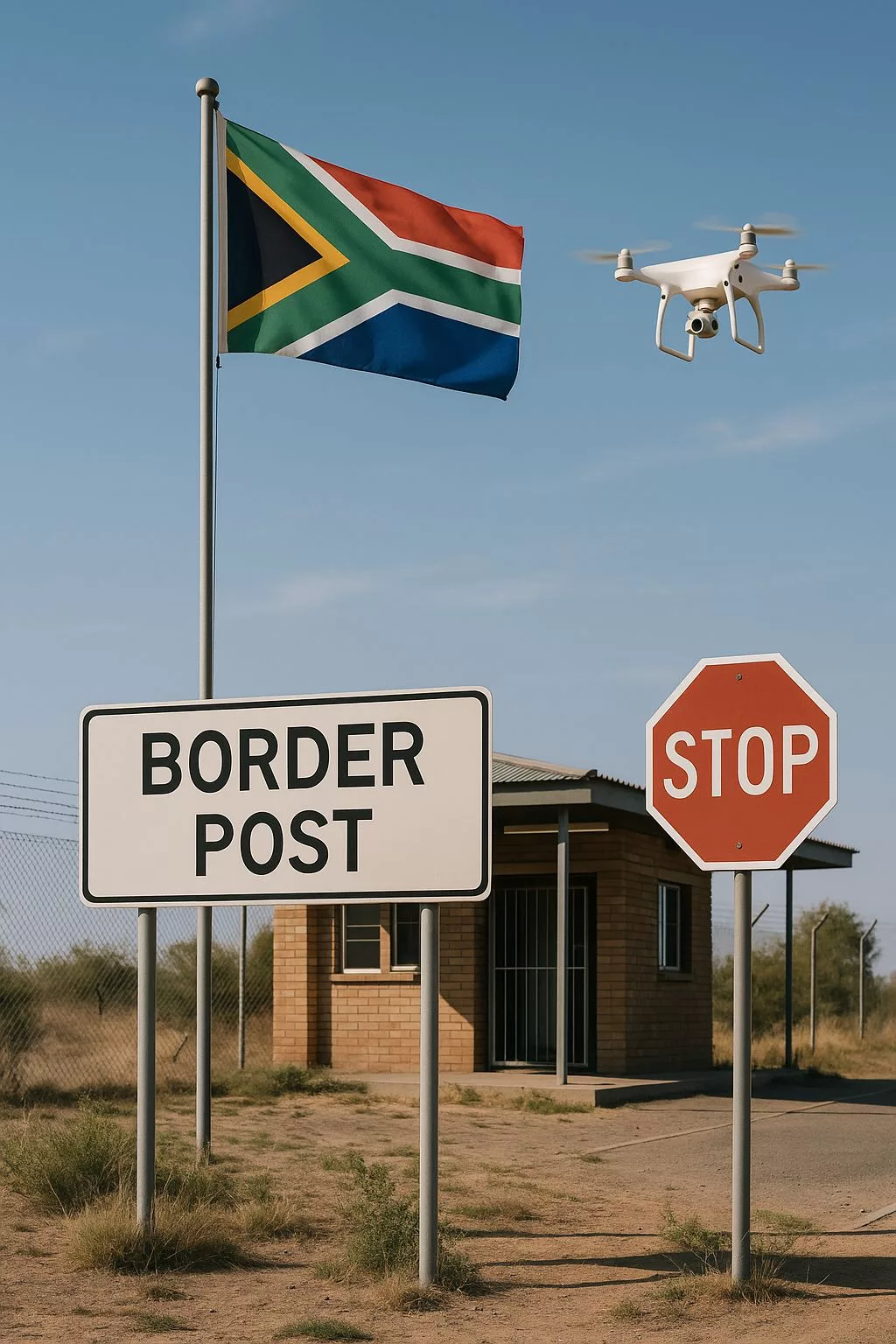
Between 1 July and 30 September South Africa hosted more than 40 G20 track meetings and the Leaders’ Summit itself, the biggest diplomatic traffic jam since the 2023 BRICS gathering. Immigration desks cleared 9.28 million passengers, a 23 % jump on the same window last year. While diplomats shook hands inside Sandton, an unseen aerial squadron of BMA drones patrolled the fences and river-lines, flagging 8 135 people who had decided to skip the hand-shakes altogether. The breakdown of those stopped reads like a pocket atlas of the region: 4 092 had no papers, 2 061 were turned back at the booth and 1 982 were recorded as “undesirable” on the movement-control system. Basotho, Mozambicans, Zimbabweans and Swazi nationals dominated the list, confirming historic labour-migration corridors that no fence has ever erased.
The same quarter saw customs sleuths recover 15 more high-end stolen vehicles, nudging the running total to 349 since the first border-guard boots hit the ground in July 2022. Fake goods worth R1.28 million were yanked off trucks and buses, pushing the three-year haul of counterfeit merchandise past the R220 million mark. Narcotics officers seized half a kilogram of crystal meth, 240 grams of heroin and a container-load of illicit cigarettes valued at R827 500. Port-health teams screened 172 858 people, sending 73 back across the line for arriving without yellow-fever cards. Mortuary desks handled 997 human remains; 25 bodies were refused entry because paperwork was missing or dubious. Quarantine inspectors destroyed 5 000 illegal birth-control tablets and 117 unauthorised HIV-test kits laced with mercury and hydroquinone, substances linked to kidney failure and long-term poisoning. Agriculture officers cleared 39 316 consignments and inspected 1 241 wildlife shipments regulated under CITES, while the BMA quietly raised its flag at four seaports – Mossel Bay, Gqeberha, Richards Bay and East London – giving the agency its first permanent foothold on the coastline.
The Science of Holiday Chaos: Data-Driven Strategy to Keep Christmas Queues Moving
Any South African who has spent 31 December in a bumper-to-bumper line at Lebombo or Beitbridge knows that December traffic is less a flow than a tidal wave. The BMA’s answer is a four-phase operational blueprint that starts on 15 September and only winds down after the Easter egg shells are thrown away. The plan is glued together by historical passenger data, bilateral agreements hammered out in Maputo, Maseru and Harare, and a cost-recovery model that invites private-sector partners to pick up part of the bill.
During the planning window the authority locked in extra boots on the ground: the Western Cape provincial government seconded 50 officials to Cape Town International Airport, Gautung chipped in 80 bodies for OR Tambo, and the Department of Tourism promised 160 queue marshals who will roam the halls with tablets and patience. Social workers from the Department of Social Development will station themselves at land and air ports to protect unaccompanied minors and to spot potential trafficking victims. Meanwhile the freight fraternity – South African Freight Forwarders, the Meat Importers and Exporters Association, and the Ship Operators and Agents – signed memoranda that cover catering, communication and overtime costs. Tech vendors DCD Protected Mobility, Aselsan South Africa and Unipro Protective Wear have donated or leased drones, body-cameras and thermal towers that can read a number-plate at two kilometres, tools the BMA hopes will both deter smugglers and shame corrupt officials into honesty.
Bilateral meetings that ended in mid-November produced the single most passenger-friendly decision of the season: 14 land borders will stay open for longer on peak travel days. Groblersbrug, Lebombo, Oshoek, Maseru Bridge and ten others will trade the usual 18-hour shift for a 24-hour pulse between 20 December and 5 January. The agreement required sign-off from six neighbour states – Lesotho, Mozambique, Zimbabwe, Namibia, eSwatini and Botswana – because when one gate lifts its boom an hour longer, the matching gate on the opposite side has to do the same or the tail-back becomes a parking lot.
What Travellers Must Carry, Declare or Leave at Home: The Four Pillars of Holiday Compliance
The execution phase splits the holiday into two legs: the outbound rush from 10 to 31 December and the homeward surge from 1 to 15 January. During both legs the BMA, RTMC, CBRTA and provincial traffic police will run rolling road-blocks on the N1, N4, N2 and the R537 corridor to Mpumalanga. Officers have been told to enforce four non-negotiables that repeatedly trip travellers up.
Health first: anyone arriving from a yellow-fever belt must produce a valid vaccination certificate issued at least ten days before arrival; human remains need a cross-border permit signed by the National Department of Health and, if death was from an infectious disease, a cremation or hermetically-sealed coffin certificate. Immigration second: passports must be machine-readable, host at least two blank pages and comply with the 30-day visa rule; parents with children still need unabridged birth certificates plus an affidavit or court order when only one adult is present. Agriculture third: travellers may not bring raw meat, cold cuts, fresh milk, avocados or citrus without an import permit; sniffer dogs will patrol the baggage hall and any illegal sausage or mango will be seized and destroyed on the spot. Environmental biosecurity fourth: CITES-listed curios – whether a zebra-skin rug, ivory key-ring or dried abalone – must be accompanied by a permit from the Department of Forestry, Fisheries and the Environment; failure to declare can lead to arrest, seizure and a fine of up to R10 million.
The BMA has also issued a stern reminder that gifts are not exempt. A bottle of Glenfiddich for uncle Joe, a pair of Nike sneakers for cousin Aisha or a generic asthma pump for
{“faq”: [{“question”: “
What is the South African Border Management Authority’s (BMA) Q2 performance and holiday plan?
“, “answer”: “The South African BMA achieved a 92% success rate in Q2 2025/26, clearing 9.28 million passengers and intercepting 8,135 individuals attempting to bypass official entry. For the holidays, the BMA has a four-phase plan focused on extended border operating hours, increased staffing, and strict enforcement of compliance rules for health, immigration, agriculture, and environmental biosecurity.”}, {“question”: “
What were the key achievements of the BMA during Q2 (July-September 2025)?
“, “answer”: “During Q2 2025, the BMA achieved a 92% success rate, clearing 9.28 million passengers (a 23% jump from the previous year). They intercepted 8,135 individuals attempting to enter illegally, recovered 15 stolen vehicles, seized fake goods worth R1.28 million, and confiscated narcotics and illicit cigarettes. Port health teams screened over 172,000 people, and quarantine inspectors destroyed illegal medical items. The BMA also expanded its presence by raising its flag at four seaports.”}, {“question”: “
How is the BMA preparing for the increased holiday traffic?
“, “answer”: “The BMA has implemented a four-phase operational blueprint starting in mid-September and extending beyond Easter. This plan is data-driven and involves increased staffing, with officials seconded from provincial governments (e.g., 50 for Cape Town International, 80 for OR Tambo) and 160 queue marshals from the Department of Tourism. Social workers will also be present to assist unaccompanied minors and spot trafficking victims. Private sector partners are contributing to costs, and technological tools like drones and thermal towers are being utilized.”}, {“question”: “
Which land borders will have extended operating hours during the holiday peak?
“, “answer”: “To accommodate holiday travelers, 14 land borders will operate for longer hours on peak travel days. Specifically, Groblersbrug, Lebombo, Oshoek, Maseru Bridge, and ten other borders will switch from their usual 18-hour shifts to operating 24 hours a day between December 20th and January 5th. This agreement required sign-off from six neighboring states: Lesotho, Mozambique, Zimbabwe, Namibia, eSwatini, and Botswana.”}, {“question”: “
What are the ‘four non-negotiables’ for travelers entering South Africa?
“, “answer”: “Travelers must adhere to four strict compliance rules: 1. Health: Valid yellow-fever vaccination certificates are required for those from affected areas, and specific permits/certificates for human remains. 2. Immigration: Passports must be machine-readable, have at least two blank pages, and comply with the 30-day visa rule. Parents traveling with children need unabridged birth certificates and affidavits if only one parent is present. 3. Agriculture: Raw meat, cold cuts, fresh milk, avocados, and citrus require import permits. Sniffer dogs will be used, and illegal items will be confiscated. 4. Environmental Biosecurity: CITES-listed curios (e.g., zebra-skin rugs, ivory, dried abalone) need permits from the Department of Forestry, Fisheries, and the Environment. Failure to declare can result in arrest, seizure, and fines up to R10 million.”}, {“question”: “
Are gifts exempt from customs regulations?
“, “answer”: “No, the BMA has issued a stern reminder that gifts are not exempt from customs regulations. Travelers must declare items, regardless of whether they are intended as gifts, and ensure they comply with all import restrictions and duties.”}],”metadata”:{“generated_by”:”LLM”}}