
KwaZulu-Natal province just had a wild week of inspections! Officials zoomed around, checking out good and bad building projects. They saw amazing new taxi ranks and roads, but also found empty, crumbling houses and schools with no roofs. Now, KZN is making tough new laws, like making sure 8% of money always goes to fixing things and giving projects ‘readiness certificates.’ They even plan to put officials on the spot every 90 days. This big shake-up could change laws for the whole country, all to make sure money is spent right and communities get what they were promised.
What reforms is KwaZulu-Natal implementing to improve infrastructure and accountability?
KwaZulu-Natal is implementing several reforms, including the 8% Maintenance Law requiring municipalities to allocate 8% of capital budgets to maintenance, “Readiness Certificates” for projects on a public blockchain, quarterly accountability sessions for officials, and four new bills to enhance infrastructure accountability and transparency, aiming to eliminate corruption and inefficiency.
Day One – The Delegation Arrives, Clipboards in Hand
At dawn on 18 November the uMgungundlovu District turned into an outdoor war-room. Twenty-six permanent NCOP delegates stepped off the plane clutching tablets, drone remotes and a brand-new rule: no project gets a cent until an independent engineer issues a “readiness certificate.” By nightfall the convoy had already clocked 260 km, dropped in on three quarries, two taxi ranks and a school with no roof, and gathered 27 voice-notes from street-side traders who still call a pothole “igovu likaMshana.”
The mandate was simple but brutal: verify every promise, photograph every crack, and be back in Pietermaritzburg four days later with a dossier Treasury could not ignore. Delegates were split into colour-coded teams – transport, water, housing, education, energy – each paired with a local interpreter, a drone pilot and a lawyer ready to draft directives on the bonnet of a bakkie if necessary.
By the time the first public hearing began at 19:30 in Howick Town Hall, 300 residents had already posted geotagged clips of leaking pipes on the delegation’s WhatsApp hotline. The message was clear: this would not be another talk-shop; every shaky slab would be chased to its casting date.
Day Two – The Good, the Bad and the Unforgivable
uMngeni Taxi Rank: A R600-m PPP That Hums
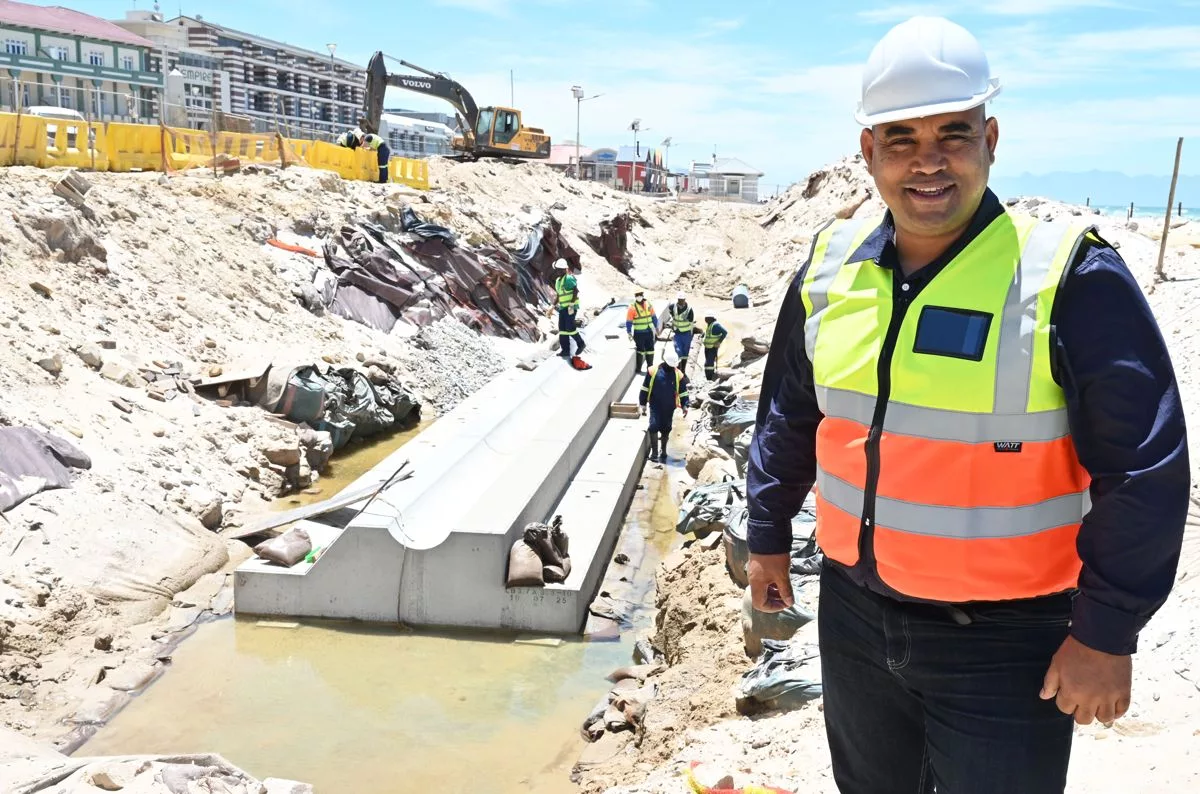
The Howick rank looks nothing like the rust-streaked facilities most commuters know. Under a 25-year concession, private backers tipped in R420 million and the municipality added R180 million, producing 180 weather-proof bays, 60 EV chargers, a 24-hour clinic and a mesh network that pushed 1.2 terabytes of free data in October alone.
Financial close took 11 months – half the usual time – because lawyers inserted a “step-in” clause: miss three KPIs and the operator is out within 30 days, no court drama. Eight percent of annual toll revenue is locked into a maintenance escrow from day one, so potholes will never wait for a budget vote. Treasury already feeds the live passenger-count into its national PPP dashboard; Colombia’s transport minister has asked for the code.
A World Bank observer who shadowed the team called the 0.3 % cost variance “absurdly low,” a phrase no engineer had ever applied to a South African transport build. The template is now baked into every new bidding document Treasury circulates.
Richmond’s R518: The Road That Bids for Itself
Further south, a 42 km strip once nicknamed “the dentist’s dream” for its gaping holes is now smoother than the N3 and cost R1.8 million per kilometre instead of the provincial average R3.2 million. The trick was an open, real-time reverse auction on the eTender platform: 19 contractors watched bids drop on a giant screen and the lowest compliant offer won before supper.
To keep itself honest, Richmond Council took out a 10 % performance bond on its own finance department: if grant money arrives late, salaries will bridge the gap. Skid tests already record a 0.62 friction coefficient – higher than any national highway – and neighbouring Northern Cape districts are copying the clause verbatim. Moodys has flagged the bond structure for a sub-sovereign upgrade, the first time a gravel-to-tar conversion made global credit radar.
Cedara Housing: A Billion-Rand Ruin
Then came the gut-punch. On a 62 ha former dairy farm outside Hilton, 1 400 roofless shells stand like broken teeth. The provincial department paid R1.2 billion for 3 200 Breaking New Ground units promised in 2019; bulk water was meant to finish by March 2021, but the contractor walked in late 2022 after 14 variation orders added R190 million without Treasury consent.
One bored soldier guards R40 million worth of shutter-board and steel; below ground, 300 half-built manholes collect rain and frogs. A forensic report – pried loose with a PAIA threat – shows invoices for R6 million in “community liaison” that no ward committee can recall.
Delegates triggered three instant actions: the municipal manager was suspended under Section 106 of the MFMA, the DBSA froze the remaining R260 million grant, and the Water Minister pledged a R110 million pipeline direct from Nagle Dam, cutting out the district entirely. The site is now a crime scene; title deeds will wait until the SIU finishes tracing the money.
Day Three – Schools, Buses and Power Lines to Nowhere
Woodlands Primary: A Foundation Full of Cows
Drone footage posted on Parliament’s TikTok shows a double-storey slab doubling as a cattle crossing and a shebeen shortcut. Phakama JV was paid R67 million before someone noticed the Environmental Impact Assessment was conducted for a site 4 km away, a error lawyers call “a textbook material defect.”
The provincial education department has 60 days to sue for the full R67 million or watch the contractor’s R8.5 million retention bond vanish. Meanwhile 1 050 pupils spend four hours a day on a bus to Mpumuza, where classes run in shifts under tarpaulins. The report orders modular classrooms within 90 days, funded from the disaster allocation usually reserved for floods.
Msunduzi’s Idle Bus fleet: When Talks Replace Tyres
Five years after the planned launch, 41 Mercedes buses worth R380 million sit in a guarded depot, engines idled once a week to stop pistons seizing. The hold-up is taxi turf: operators demanded 17 % of ticket revenue – triple the national norm – before they would allow painted lanes.
A 14-hour mediation, chaired by the Competition Commission, produced a draft SPV: taxi co-operatives own 55 %, the city 45 %, but violence triggers a R15 000 daily penalty deducted from dividends. The proposal needs a Section 79 exemption under the Land Transport Act; the Minister has 30 days to decide whether to nationalise the template.
uMshwathi Electrification: apartheid-era Title Deeds vs 2025 Lights
A R210 million Eskom grant strung 280 km of 11 kV line across communal land, but 68 km cross farms whose 1879 title deeds carry no servitude clauses. One retired cardiologist obtained an interdict switching off 18 transformers and plunging 340 households into darkness.
Using the Intergovernmental Relations Framework, delegates convened a dispute chamber within 72 hours. The draft solution: the Ingonyama Trust will expropriate the servitudes at agricultural-value rates, capping compensation at 5 % of project cost. A draft Expropriation Act notice is ready, the first test of the 2022 amendment allowing state custodianship where land reform serves “public interest.” Farmers will be paid, but the lights will stay on.
Day Four – New Rules, New Clocks, Global Eyes
The 8 % Maintenance Law: A Fiscal Straitjacket
KZN Treasury depreciation curves show infrastructure loses 8 % of value every year; the report makes that figure law. From July 2026, municipalities must lock away 8 % of capital budgets for maintenance, up from the polite 2 % “guideline” everyone ignores.
Miss the target and the province steps in: bank accounts freeze, invoices require engineer sign-off, and only spare-part suppliers get paid. National Treasury is sweetening the pill with a 150 % tax rebate for any private firm that tops up a municipal escrow, a move analysts say could pull R14 billion off corporate balance sheets and onto potholed streets.
Readiness Certificates: A Blockchain Padlock
Borrowing from Chile’s “Certificado de Arranque,” the delegation wants every project to pass nine gatekeepers – from geotech survey to exit strategy – before a shovel hits dirt. Certificates will live on a public blockchain; one keystroke alteration triggers an automatic forensic audit.
A pilot covering 38 water projects worth R9.4 billion starts in January 2026. If the pipes stay leak-free, the clause will be inserted into the 2026 Infrastructure Development Bill, making KZN the laboratory for national rollout.
Quarterly Reckoning: Subpoenas and 4-metre Screens
Mayors, MECs and municipal managers must now face the NCOP every 90 days. Skip a session and the Chairperson issues a constitutional subpoena; contempt lands you in criminal court. The first grilling is 10 March 2026; a data-analytics team will project real-time drone footage and spend-trackers onto screens taller than the average delegate. Credit-rating analysts have already booked front-row seats.
Four Bills Already in the Pipeline
Draft legislation is speeding through the corridors: the Bulk Infrastructure Accountability Act threatens ten-year jail terms for engineers who certify non-existent bulk services; the PPP Expansion Act slashes transaction costs by 40 % and mandates 30 % black equity; the Project Readiness Certification Act deletes un-certified projects from budget votes; the Infrastructure Transparency Act forces monthly geocoded uploads searchable by ward, budget line and CIDB contractor number.
Citizens, Cameras and Creditors: The Countdown Starts Now
Behind the jargon lie 2.4 million uMgungundlovu residents whose taps still run brown at 4 a.m. Their voice-notes – translated, time-stamped and silk-screened – now grace the cover of Treasury’s forthcoming Infrastructure Review. The World Bank wants the drone footage, Moodys has upgraded Richmond road bonds, and Singapore is paying commercial rates to embed 30 municipal managers with KZN engineers.
Eleven laws, 43 municipalities, 5.8 million voters and one stopwatch will restart at 09:00 on 10 March 2026. By then every cracked slab, every missing roof and every idle bus will have to show a certificate – or face the coldest accounting of all.
What prompted the recent inspections in KwaZulu-Natal?
The recent inspections in KwaZulu-Natal were prompted by an initiative to verify promises, photograph deficiencies, and gather data on the state of building projects. The goal was to create a comprehensive dossier for Treasury, highlighting both successes and failures in infrastructure development across the province.
What are “Readiness Certificates” and how will they be implemented?
“Readiness Certificates” are a new requirement for all projects, ensuring they pass nine gatekeepers, from geotechnical surveys to exit strategies, before construction begins. These certificates will be stored on a public blockchain, and any alteration will trigger an automatic forensic audit. A pilot program for 38 water projects is set to begin in January 2026, with plans to integrate this clause into the 2026 Infrastructure Development Bill if successful.
How is KwaZulu-Natal addressing maintenance issues in its infrastructure?
KwaZulu-Natal is addressing maintenance through the new 8% Maintenance Law, which mandates that municipalities allocate 8% of their capital budgets to maintenance, a significant increase from the previous 2% guideline. Failure to meet this target will result in provincial intervention, including frozen bank accounts and engineer sign-offs for invoices. National Treasury is also offering a 150% tax rebate for private firms that contribute to municipal maintenance escrows.
Can you provide an example of a successful project highlighted during the inspections?
The uMngeni Taxi Rank is a prime example of a successful project. This R600 million public-private partnership (PPP) features 180 weatherproof bays, EV chargers, a 24-hour clinic, and free Wi-Fi. It achieved financial close in half the usual time due to a ‘step-in’ clause for KPI breaches and locks 8% of annual toll revenue into a maintenance escrow from day one. Its 0.3% cost variance was deemed “absurdly low” by a World Bank observer, setting a new template for future projects.
What were some of the major failures or issues identified during the inspections?
Significant failures included the Cedara Housing project, where R1.2 billion was spent on 1,400 roofless units, with bulk water services unfinished and a contractor walking away after numerous variation orders. Another issue was Woodlands Primary, where a R67 million payment was made for a school slab built on the wrong site, leading to students being bussed to another school. These issues highlighted corruption, mismanagement, and lack of oversight.
What are the new accountability measures for officials in KwaZulu-Natal?
Under the new rules, mayors, MECs, and municipal managers must face the NCOP every 90 days. Skipping a session will result in a constitutional subpoena, with contempt leading to criminal court. The first session is scheduled for March 10, 2026, where real-time drone footage and spend-trackers will be used to hold officials accountable. This aims to ensure continuous oversight and transparency in project delivery and financial management.