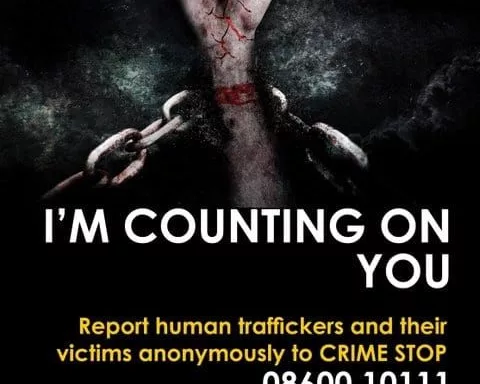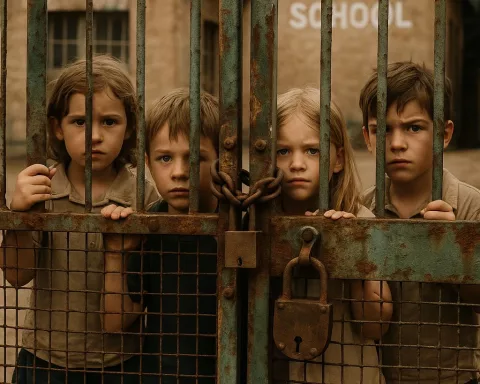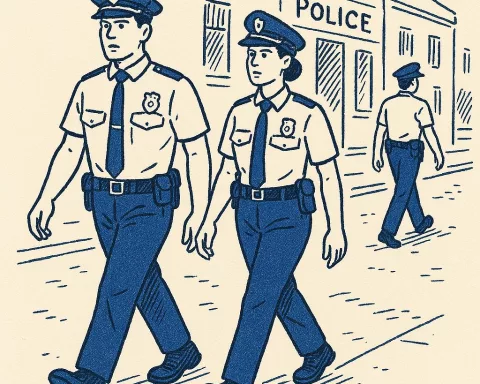
Cape traffic cops, once focused on speeding, now hunt for hidden chains of human trafficking. A special course teaches them to spot red flags, understand laws, and treat potential victims with care. They use ‘Red-Flag Bingo’ cards and empathy to turn routine stops into rescue missions. This new approach has already saved lives, showing that a small investment can make a huge difference, transforming traffic duty into a fight for freedom.
How are Cape traffic cops being trained to identify human trafficking victims?
Cape traffic cops are trained through a four-module course covering what trafficking looks like, relevant laws, a “Red-Flag Bingo” system for identifying suspicious signs, and trauma-informed interaction techniques. This training equips them to turn routine stops into potential rescue missions, focusing on identifying subtle indicators of human trafficking.
From Speed Guns to Soul-Saving: A New Job Description
The Western Cape’s traffic corps has long been the province’s undisputed champion of brake-pad fragrances and speeding-point politics. Since November, however, the same neon bibs that signal “licence and registration, please” have become portable antennas for human anguish. In under four months, 334 uniformed members of the Mobility Department’s enforcement arm – about twenty-five percent of the total – graduated from a compact, four-module crash course on Trafficking in Persons (TIP). The booklet they slip into their cargo pocket is thinner than a takeaway menu, yet it can flip an ordinary roadblock into a rescue mission within minutes.
Instructors call the new mindset “blue-light empathy.” Officers still chase exhaust-belching trucks and fine tailgaters, but every stop now passes through a second lens: Could any passenger be cargo instead of commuter? The shift did not arrive via glossy policy speeches. It began when senior commanders studied a 2018 national report revealing that nearly two-thirds of confirmed trafficking journeys rolled along major highways, yet fewer than one in ten interventions happened at roadside checks. The logical next step was to weaponise the people who already own the asphalt: traffic cops who collectively flag down more than 1.2 million vehicles every thirty days.
The graduation ceremony looked nothing like a police parade. Instead of salutes and medals, officers received a wallet-sized “Red-Flag Bingo” card and a quiet directive: keep it within arm’s reach for the rest of your career. In traffic jargon, they are still “point-duty specialists”; in human-rights language, they have become a rolling first-responder network – an upgrade no radar gun ever offered.
Inside the Syllabus: Four Classes That Rewrite Night Shifts
-
Module 1 – “What Trafficking Actually Looks Like Up Close”*
Classroom walls display local horror stories, not foreign statistics. A sixteen-year-old girl promised a modelling gig in Cape Town ends up locked in a Bellville flat. A twelve-year-old cigarette hawker at a Grabouw intersection hands his daily takings to an “uncle” waiting in a idling minibus. Seasonal farm buses from the Eastern Cape carry pickers whose pay cards never reach their own pockets. Officers dissect each case using the three-P scalpel: Process, Means, Purpose. By lunchtime, the consensus is clear: if you know what exploitation smells like, you will never un-smell it. -
Module 2 – “The Law You Can Recite at Window Height”*
Facilitators shrink the 2013 Prevention and Combating of Trafficking in Persons Act into a breath-test script: establish consent, freedom, and legal status within ninety seconds or escalate. Trainees rehearse the magic sentence until it rolls off the tongue like a Miranda warning: “I need to verify that every minor in this vehicle has lawful consent – please follow me to the bay.” No legalese, no jargon – just a verbal key that unlocks further inspection without sounding like a lecture. -
Module 3 – “Red-Flag Bingo”*
Laminated cards clip to sun visors. Squares read like grim poetry: “Minor + unrelated adult + no luggage,” “Passenger stares at floor while driver speaks,” “Story mutates when questioned separately.” Four squares in a row oblige the officer to radio the 24-hour TIP hotline. Gamifying suspicion sounds flippant, yet the mechanism works because it removes guesswork; suspicion becomes arithmetic, not instinct. -
Module 4 – “Trauma-Informed Touch”*
Psychologists from Tygerberg Hospital choreograph body language: never block the car door, never hover over the victim, never ask, “Why didn’t you run?” Trainees practice squatting to eye level, offering water first, opening with name and reassurance. They drill the exchange until “My name is Thandi, I’m here to help, would you like a blanket?” arrives as naturally as “License, please.”
When Flashing Lights Found a Child on the R300
On 7 March at 22:14, Constable Nontobeko Mkwanazi – two weeks out of the academy – pulled over a rust-red Quantum with a broken tail-light on the R300. Inside sat a thirty-eight-year-old driver, a brand-new Nintendo Switch, and a fourteen-year-old girl without an ID. The driver claimed a school-holiday trip to an aunt in Worcester. Mkwanazi noticed the girl’s fingernails – chewed raw and bleeding – and felt the Bingo card throb in her pocket. She separated them, invoked the rehearsed script, and called the hotline. Forty-five minutes later, the Hawks led the driver away in handcuffs; the child, lured from Mthatha by TikTok fantasies of a gaming career, was en route to a place of safety instead of a locked bedroom. One routine stop, one childhood rerouted.
The March rescue is not a lone headline. In the first eight weeks, officers logged 1 847 red-flag interactions through a stripped-down app supplied by A21 South Africa. Even offline, GPS co-ordinates, plate numbers, and timestamps queue for encryption, bursting into the cloud the moment the phone sniffs Wi-Fi. Stellenbosch University’s algorithm compares each entry to a missing-children roster; a 78-percent match triggers an automatic ping to the Hawks. Two confirmed victims and five open investigations later, the tech proves its worth: data beats asphalt every time.
Greyhound buses, long-distance trucking firms, and even minibus-taxi associations have asked for the curriculum. Meanwhile, provincial analysts crunch numbers and discover an ominous overlap: municipalities with the worst pothole counts also register the highest grooming rates. Bad roads equal missed school days, idle teenagers, and easy prey. The 2026 budget therefore twins TIP refresher courses with accelerated road repair in Botrivier, Vredendal, and Beaufort West – turning gravel into prevention.
Price Tags, Pay-offs, and Tomorrows Written in Crayon
The entire programme cost R2.4 million – R7 185 per officer, cheaper than a single hour of helicopter pursuit. Danish development aid covered seventy percent; traffic-fine surpluses footed the rest. Economists contrast that with the Global Slavery Index’s estimate: one trafficked person in South Africa generates roughly R210 000 in illicit annual profit. Prevent a single exploitation and you have funded the training of twenty-nine more officers. In pure accounting terms, empathy has become the most lucrative investment the province has made.
Yet numbers rarely keep officers awake during graveyard shifts; stories do. Constable Latoya Pienaar, 26, mother of twins, patrols the N1 from midnight to dawn. Tucked between her citation book and a spare torch lies a crayon drawing: two stick figures holding hands, given by the fourteen-year-old rescued in March. “She said traffic cops used to terrify her,” Pienaar laughs. “Now she wants to wear the bib herself.” The page is creased, colours smudged, but the message is pristine – every kilometre of tarmac can lead either to captivity or to class room, depending on who asks the right question at the right window.
Looking ahead, engineers test QR-coded posters that passengers can scan in secret, firing off silent distress pings. Brazilian pilots cut bus-related trafficking by nearly a fifth using the same trick. Computer scientists at the Council for Scientific and Industrial Research prototype number-plate analytics: algorithms flag “vehicle-back-vehicle” convoys that shadow each other across three consecutive weigh-bridges – an asphalt breadcrumb trail of coercion. Meanwhile, the provincial legislature debates a bill that would embed TIP training inside every new driver-licence application, potentially making South Africa only the third nation to mainstream anti-trafficking education at the learner-permit level.
Until then, 334 officers keep the Bingo card within reach, the trauma-informed script on their tongue, and an invisible question hovering above every lane: Who in this stream of taillights is praying that tonight somebody finally sees them? The answer may rest in a rust-red minibus, a Greyhound coach, or the next overloaded taxi that meets a reflective vest now trained to recognise fear in the shape of a bitten fingernail.
How are Cape traffic cops being trained to identify human trafficking victims?
Cape traffic cops are being trained through a specialized four-module course. This training covers identifying red flags, understanding relevant laws, using a “Red-Flag Bingo” system for suspicious signs, and employing trauma-informed interaction techniques. The goal is to transform routine traffic stops into potential rescue missions for human trafficking victims.
What is the “Red-Flag Bingo” system?
The “Red-Flag Bingo” system is a practical tool provided to traffic cops in the form of a laminated card. It contains various suspicious indicators like “Minor + unrelated adult + no luggage,” or “Passenger stares at floor while driver speaks.” If an officer observes four such squares in a row during a stop, they are obliged to contact a 24-hour Human Trafficking hotline, effectively gamifying the process of identifying potential trafficking situations.
What specific laws are traffic cops being trained on regarding human trafficking?
Traffic cops are being trained on the 2013 Prevention and Combating of Trafficking in Persons Act. The training simplifies the legal requirements into a concise script, focusing on establishing consent, freedom, and legal status within a short timeframe. This allows officers to conduct initial checks and escalate situations for further investigation if needed, without requiring extensive legal jargon.
How much did this human trafficking training program cost and who funded it?
The entire training program cost R2.4 million, which breaks down to R7,185 per officer. Danish development aid covered 70% of the cost, while the remaining portion was funded by traffic-fine surpluses. This investment is highlighted as highly cost-effective, as preventing even one case of exploitation can fund the training of many more officers.
What is “blue-light empathy” in the context of this new training?
“Blue-light empathy” refers to the new mindset instilled in traffic officers. While they continue their traditional duties like enforcing speeding, every vehicle stop is now also viewed through a second lens: could any passenger be a victim of human trafficking rather than just a commuter? This shift emphasizes approaching individuals with care and a focus on potential vulnerability, turning officers into a