Cape Town hosted a Heineken World Tour event, turning Green Point into a buzzing F1 party. A roaring Red Bull car became a musical instrument, while drift cars danced with cinnamon-smelling smoke. Live music perfectly matched race action, and guests even tasted a 1920s beer recipe. It was a wild night where racing thrills met local Cape Town magic!
What is the Heineken World Tour event in Cape Town?
The Heineken World Tour in Cape Town was an immersive F1-themed event that transformed Green Point into a vibrant spectacle. It featured a Red Bull F1 car as a musical instrument, drift car performances using bio-ethanol, live music synchronized with race telemetry, a lost 1920s lager recipe, 4D motion simulators, and culinary innovations, blending motorsports with local culture.
When the Atlantic Meets Asphalt
Saturday dusk smothered Green Point’s usual Atlantic breeze under a neon tide of sodium and carbon-fibre shimmer, installing Cape Town as the 21st stop on the travelling Heineken World Tour. By mid-afternoon the promenade had surrendered its familiar weekend pulse – joggers, coconut vendors, roller-bladers – to a 15 000-person pop-up metropolis plotted tighter than an F1 pit lane. GPS co-ordinates governed every stride: a 200-metre hospitality straight, a 90-decibel concert arc, a chicane of micro-brew bars and, dead centre, the Heineken®House where a 12-metre LED wall screamed the Qatar Grand Prix with 120 ms latency, quick enough for armchair strategists to toast undercuts the instant they happened.
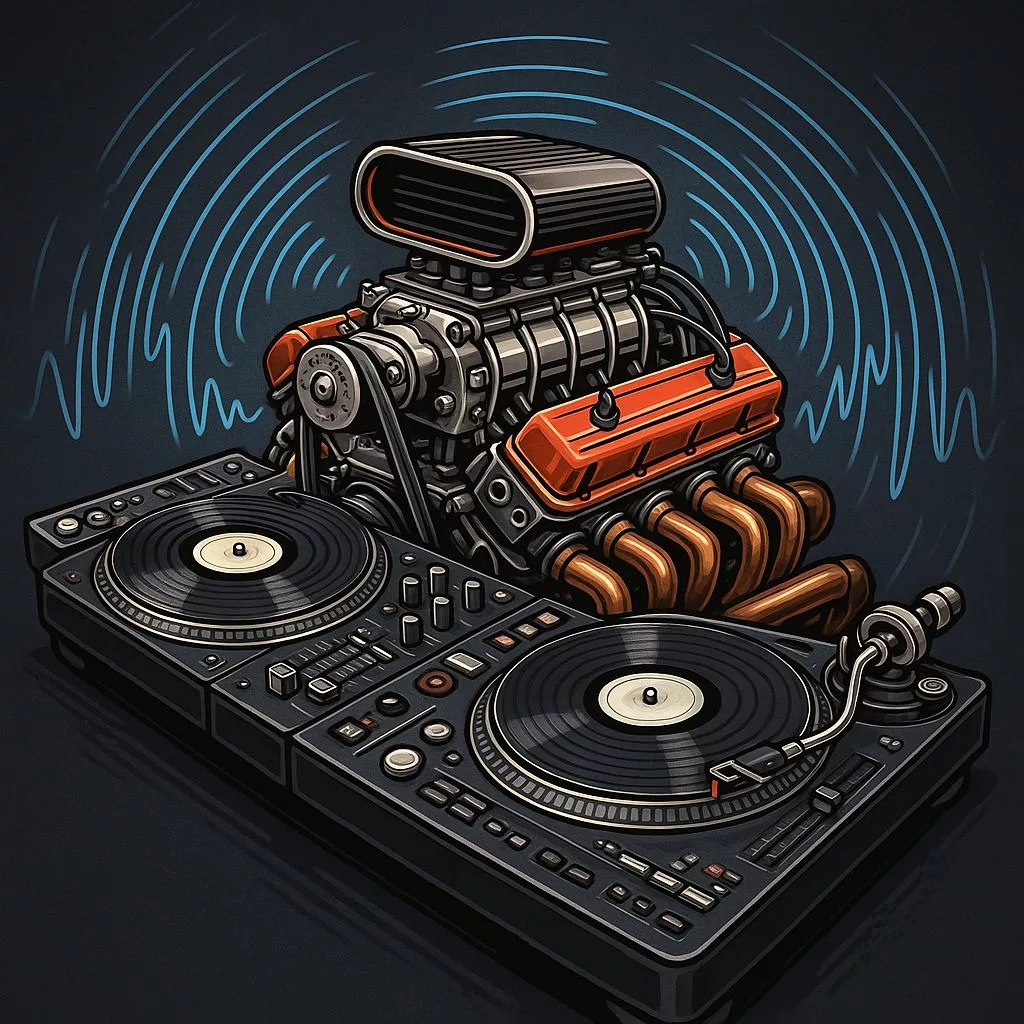
Noon sounded the first note when a 2006 Red Bull RB2 barked alive inside a mobile acoustic pod built by a Cape Town studio. Beneath the engine cover sat a Cosworth TJ2005 3.0-litre V10 that once howled at 19 000 rpm; now its throttle was patched to a MIDI board so every stab of the pedal detonated sub-bass on the neighbouring stage. The car had become a percussive instrument. Patrick Friesacher, who last wrestled the machine at Imola, grinned from the cockpit: “I used to shift at 17 800 rpm; tonight the rev limiter drops the beat.” Three thirty-second bursts thundered across the Atlantic seaboard at 103 dB, sending gulls wheeling and seismic needles twitching.
Opposite the paddock, drift ace Samkeliso “Sam Sam” Thubane rehearsed a new routine in a 420 kW Nissan 350Z. A Safari-spec diff and home-grown bio-ethanol – distilled from left-over chenin blanc grapes in the Swartland – gave the coupe a cinnamon-smelling burnout. While Thubane flicked clutch-kick entries at 80 km/h, a hidden djembe corps inside the grandstand translated every tyre shriek into live drum flourishes, turning rubber smoke into a jazz fog that curled under the floodlights. The stunt doubled as R&D: mobile gas probes on the rear bumper logged a 38 % CO₂ cut versus pump fuel, proof that South Africa’s first carbon-negative drift brew could still shred treads.
The Beat That Followed the Lap
Music curation ran on the same telemetry feed as the racing. Cassper Nyovest stepped up at 17:45, the precise instant the live stream hit Losail’s lap 14 – historically the graveyard for soft-compound grip. He sipped timing data from Heineken’s analytics partner; when the graphic flashed 30 % rubber left, he fired “Doc Shebeleza,” a track whose tempo mirrors an engine banging the limiter in fourth. Only eagle-eyed fans spotted the marriage of melody and marbles, yet the roar for Charles Leclerc’s dive-bomb entered the chorus like a well-rehearsed choir.
Inside the same warehouse, bartenders cracked kegs of a once-lost lager. Brewers reverse-engineered the 1920s Dutch recipe from ledgers found in Amsterdam, then dry-hopped the batch with African Queen hops grown outside Suid-Agter-Paarl. Unpasteurised and zero-kilometre, the beer travelled in ex-oyster crates kept at 4 °C. Each glass carried an NFC disk; when two rims collided the base flashed Heineken orange and logged a “cheers.” Before midnight the counter ticked 14 857 digital toasts, raw data for next year’s smart-bottle roll-out.
Deeper still, a Bellville start-up hoisted guests on a 4D motion rig three metres above the concrete. The carbon-fibre arm flung riders through a drone-shot 360° lap of Silverstone, pumping 2.3 g laterally, 20 km/h headwind and a puff of octane every virtual downshift. Queuing thrill-seekers whispered that the faceless chrome-helmet brand avatar handed VIP lanyards to anyone who could beat his sim time. A 19-year-old UCT engineering student clocked 1:27.048, two tenths inside Max Verstappen’s 2022 pole, and walked away with a boarding pass for Austin’s next Grand Prix.
Masters of Ceremony and Molecules
Veteran broadcaster Robert Marawa, flanked by Anele Mdoda and Scoop, commandeered eight hours of zero-dead-air programming. Marawa wielded a steering-wheel mic, thumbing paddle shifters to cue engine samples or air-horn blasts, turning his voice into a rolling start-light gantry. Mdoda invited WhatsApp voice-note emoji storms, then hurled the pictograms onto a 40-metre halo screen until it looked like a comic-book tire wall. When Hamilton radioed “tyres gone, man,” Scoop seized the lament, looped it into a house track and taught 15 000 people to chant the misery back at the pixelated Mercedes like a football terrace hook.
Culinary crews approached food like aero engineers chase drag. Peri-peri skewers took a liquid-nitrogen bath so volatile spice oils slept until tongue heat re-ignited them, a trick stolen from Copenhagen labs. Vegan bobotie spring rolls arrived wearing rice-paper QR decals; one scan revealed the GPS co-ordinates of the turmeric root, the onion patch and the linseed field. Even the ice carried CFD credentials: slow-melt spheres laser-etched with the 2024 calendar so your final sip coincided with Abu Dhabi, not Bahrain, ensuring the after-taste tasted like a season finale.
At 21:00 sharp the LED wall unfurled Qatar’s chequered flag and metallic snow filled the sky. Recycled aluminium flakes, anodised Racing Red or Heineken Green, hovered like weightless carbon fibre before dissolving into biodegradable dust. Only then did the waiting minstrel troupes strike up ghoema rhythms, cross-cutting the DJ’s four-on-the-floor kick in a sonic handshake between 19th-century Cape culture and 21st-century EDM – something no European fan zone has ever dared.
Numbers, Noise and Next Port of Call
Back-of-house analytics spat out their own victory lane: 14 000 litres of beer poured with zero keg returns, 1.2 terabytes of behavioural data harvested from RFID wristbands, 847 000 social-media impressions before the asphalt cooled. Yet the figure that lit WhatsApp groups at 02:00 was 11 – the number of Capetonians algorithmically chosen to fly to Austin. The formula weighed VR-lap duration, digital cheers and kilometres travelled to the site, proving the World Tour doesn’t only import spectacle; it exports South African heartbeat into Formula One’s global bloodstream.
Beyond the floodlights, de-rigging cranes hoisted the RB2’s V10 into a salt-sprayed container. Its MIDI firmware was flashed clean, ready to become São Paulo’s jukebox in six weeks. Green Point’s lawn, tattooed with perfect rubber spirals, will green over by spring. Somewhere in the city’s seismic records, though, micro-spikes remain – tiny tectonic footnotes that, for one night, Cape Town spun a fraction faster than the planet itself.
What was the Heineken World Tour event in Cape Town?
The Heineken World Tour in Cape Town was an immersive F1-themed event that transformed Green Point into a vibrant spectacle. It featured a Red Bull F1 car as a musical instrument, drift car performances using bio-ethanol, live music synchronized with race telemetry, a lost 1920s lager recipe, 4D motion simulators, and culinary innovations, blending motorsports with local culture.
How did the Red Bull F1 car contribute to the event’s atmosphere?
The Red Bull F1 car, specifically a 2006 Red Bull RB2 with a Cosworth TJ2005 3.0-litre V10 engine, was transformed into a percussive instrument. Its throttle was patched to a MIDI board, allowing every stab of the pedal to detonate sub-bass on a neighbouring stage. This unique performance, reaching 103 dB, literally turned the car’s roar into music.
What unique aspects did the drift car performance offer?
Drift ace Samkeliso “Sam Sam” Thubane performed using a 420 kW Nissan 350Z. A unique aspect was the use of home-grown bio-ethanol, distilled from left-over chenin blanc grapes, which produced a cinnamon-smelling burnout. Additionally, a hidden djembe corps translated tyre shrieks into live drum flourishes, and mobile gas probes on the car logged a 38% CO₂ cut, showcasing carbon-negative drift fuel.
How was music integrated with the racing action?
The music curation was directly linked to racing telemetry. For example, Cassper Nyovest performed “Doc Shebeleza” at the precise moment the live stream hit Losail’s lap 14, a critical point for soft-compound grip. The tempo of his track mirrored an engine hitting the limiter, and even Charles Leclerc’s dive-bomb entered the chorus like a well-rehearsed choir, creating a seamless blend of live music and race events.
What special culinary and beverage experiences were available?
Guests could taste a reverse-engineered 1920s Dutch lager recipe, dry-hopped with local African Queen hops, unpasteurised and transported in ex-oyster crates. Culinary innovations included peri-peri skewers flash-frozen with liquid nitrogen to control spice release, vegan bobotie spring rolls with QR codes revealing ingredient origins, and slow-melt ice spheres laser-etched with the 2024 F1 calendar, designed to last until the season finale.
What was the impact or outcome of the Cape Town Heineken World Tour event?
The event was a massive success, with 14,000 litres of beer poured and 1.2 terabytes of behavioural data harvested. It generated 847,000 social media impressions. Crucially, 11 Capetonians were chosen based on VR lap times, digital cheers, and travel distance to attend the next Grand Prix in Austin, demonstrating how the World Tour not only brought spectacle to Cape Town but also connected local enthusiasts to the global F1 stage.