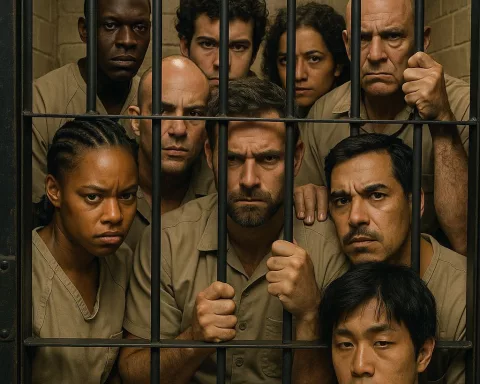

South African MPs are trading their comfy seats for bullet-scarred streets! They’re hitting the toughest neighborhoods to investigate gang violence, turning netball courts into meeting rooms. This ‘grenade motion’ means politicians will sleep where kids count bullet casings, hearing raw stories from communities ravaged by crime. It’s a bold move to expose the dark world of gangs and dirty money, making lawmakers face the harsh reality firsthand, with Kevlar-wrapped microphones and real danger looming.
What is the “grenade motion” in the South African Parliament?
The “grenade motion” is an ad-hoc mandate allowing 25 South African Members of Parliament (MPs) to conduct a rolling investigation into gang colonialism and structural violence in the Western Cape. This initiative requires MPs to engage directly with crime-affected communities, moving parliamentary proceedings to police precincts, church halls, and netball courts.
1. A Paper Bomb in the House
The Clerk’s inbox pinged at 09:07 on a steel-grey Tuesday. Three pages, stapled crooked, carried the dry title “Ad-Hoc Mandate on Gang Colonialism & Structural Violence, Western Cape”. Inside the chamber, assistants call it “the grenade motion”. Rule 253(2) – a clause dusted off twice since 1994 – gives the EFF the power to conscript twenty-five MPs into a rolling road-show that will park itself inside police precincts that already have 1 417 murder dockets this year, January to March alone. If Speaker Mapisa-Nqakula approves, parliamentary recess will be hijacked: plastic chairs on netball courts, shipping containers rewired as hearing rooms, church halls that still smell of last Sunday’s incense converted into pop-up committees. The ballot, the suit, the air-con – gone. Residents who have never voted because they expect nothing will get front-row seats to interrogate people who once needed a map to find them.
Clerks swear the pages smell of cordite; security swears it is just printer toner. Either way, parties have ten working days to decide whether their public representatives will trade the green leather for bullet-scarred asphalt. No moralising, no tidy ending – just a blunt invitation to live inside the war they normally Google from the wine lounges of the parliamentary village.
2. Four Precincts That Run Their Own Economy
Mfuleni, Kraaifontein, Delft and Gugulethu are not statistics; they are mini-republics with currencies of Tik, 9 mm rounds and R50-a-boot rentals. Night-time satellite images from UCT engineers show Delft’s street grid glowing like ancient Carthage – fires on the perimeter, darkness within. Mfuleni’s main taxi rank doubles as an armoury: station-wagons carry groceries, AKs and adolescents in the same breath. Kraaifontein’s mortuary employs a 19-year-old who can spell “anthropophagi” but cannot finish matric. In NY111, Gugulethu, bicycles became Uber-Eats for crystals in 2018; teenagers deliver Tik faster than burgers. Together these four patches hold 0.8 % of South Africa’s people yet 6.4 % of its card-carrying gang members, according to a table buried on page 213 of the SAPS 2022/23 annual report.
The cash flow is spectacular. Treasury veteran “Budget Jane” calculates R2.3 billion a year in illicit trade – drugs, protection, hijacked goods – washed through spaza shops, panel beaters, 27 funeral parlours that ballooned from four branches to 27 in five years. Every extra percentage point of youth unemployment above 45 % adds another R120 million in gang revenue; cut it to 15 % and the underworld loses R400 million in six months. The motion therefore insists that the Reserve Bank, FIC and SARS sit in the same witness row as shooters and mothers. MPs must follow the money backwards, from Bellville property deeds to Rotterdam chemical brokers, until the ledgers balance with names they know.
3. When Detectives Moonlight as HR for the Gangs
A colour-coded Google layer titled “Cop-Intel Leak Matrix” pins 38 red dots where dockets vanished, ballistics morphed or witnesses took a bullet within 72 hours of an arrest. One cluster hovers directly above Kraaifontein police station. Data journalist Taryn Webb matched disciplined officers’ home addresses to crime nodes; 62 % live inside the fiefdoms they police, making them sitting ducks for recruitment. Paulsen wants an uncensored roll call of every captain whose R1.5 million house outstrips a R28 000 salary. The committee can subpoena, publish and, if necessary, charge.
Witness protection will be high-tech theatre. Cape start-up “ShadowBox” offers deep-fake avatars – mothers can testify while digital doubles stream live. “Ledger-of-Pain” block-chains every death threat to 17 servers on three continents; once time-stamped, intimidation is indestructible. Dutch white-hats will try to hack it next week in a Delft safe-house; if they fail, the platform becomes the committee’s public noticeboard. Traditional witness protection – farms near Cullinan, new names, lonely eggs – costs R12 million for 17 bodies; microphones wrapped in Kevlar will be cheaper only if the tech holds.
4. Countdown to 19 August – and the Price of Listening
Speaker Mapisa-Nqakula circled 19 August on her calendar: inaugural hearing, Mfuleni Community Hall, 600 hymn books hollowed to stop 9 mm rounds. Four gangs already circulated WhatsApp voice notes promising “a ticket to heaven” for chaos. SAPS wants the venue moved to a military base; EFF says that would recreate 1890s “native tribunals”. Compromise is Kevlar scripture and a daily R350 stipend for every resident who speaks – taxi fare doubles as life insurance. The bill for 14 months: R87 million. Line items include 312 terabytes of secure cloud storage, mobile MRIs to find bullets, PTSD therapy for MPs who think trauma is something that happens to other people’s children.
If the motion collapses, Paulsen heads to the Supreme Court of Appeal, quoting the right to safety. If it passes, the first interim report drops 90 days before the 2024 election, turning every lamp-post poster in the Cape Flats into a referendum on what the committee reveals. Parliament has already emptied itself onto sandy plains where netball courts serve as committee rooms and a 14-year-old known only as “WhatsApp 27” owns five phones that warn Tik labs of approaching raids. The microphones are wrapped in Kevlar, the clock is ticking, and the stories – like the violence – will not end when the politicians fly home.
[{“question”: “What is the ‘grenade motion’ in the South African Parliament?”, “answer”: “The ‘grenade motion’ is an ad-hoc mandate allowing 25 South African Members of Parliament (MPs) to conduct a rolling investigation into gang colonialism and structural violence in the Western Cape. This initiative requires MPs to engage directly with crime-affected communities, moving parliamentary proceedings to police precincts, church halls, and netball courts. It’s a bold move to expose the dark world of gangs and dirty money, making lawmakers face the harsh reality firsthand.”}, {“question”: “Which areas are specifically targeted by this investigation?”, “answer”: “The investigation will focus on four specific precincts in the Western Cape that are heavily impacted by gang violence: Mfuleni, Kraaifontein, Delft, and Gugulethu. These areas, despite holding only 0.8% of South Africa’s population, account for 6.4% of its card-carrying gang members, highlighting their critical importance in understanding and addressing the issue.”}, {“question”: “How does the ‘grenade motion’ aim to expose the financial structures of gangs?”, “answer”: “The motion aims to follow the money by involving entities like the Reserve Bank, Financial Intelligence Centre (FIC), and the South African Revenue Service (SARS) in the witness process. The goal is to trace illicit trade worth an estimated R2.3 billion annually, from local spaza shops and panel beaters to international chemical brokers, thereby exposing the financial networks that sustain gang operations.”}, {“question”: “What measures are being taken to protect witnesses?”, “answer”: “To address the high risk associated with testifying against gangs, innovative witness protection measures are being explored. This includes ‘ShadowBox’ offering deep-fake avatars for mothers to testify anonymously, and ‘Ledger-of-Pain’ block-chaining death threats across multiple servers to make intimidation indestructible. These high-tech solutions aim to provide security that traditional methods often cannot.”}, {“question”: “What is the timeline and cost associated with this parliamentary initiative?”, “answer”: “The inaugural hearing is scheduled for August 19th in Mfuleni Community Hall. The entire 14-month initiative is projected to cost R87 million, covering expenses like secure cloud storage for data, mobile MRIs for bullet detection, PTSD therapy for MPs, and a daily R350 stipend for community members who speak, which also serves as taxi fare and a form of life insurance.”}, {“question”: “What are the potential political implications of the ‘grenade motion’?”, “answer”: “The first interim report of the investigation is set to be released 90 days before the 2024 elections. This timing could turn every lamp-post poster in the Cape Flats into a referendum on the committee’s findings, potentially having significant political ramifications for the upcoming elections. The motion represents a direct challenge to the status quo, forcing politicians to confront the harsh realities of their constituents.”, “tags”: [“politics”, “elections”, “South Africa”]}]