
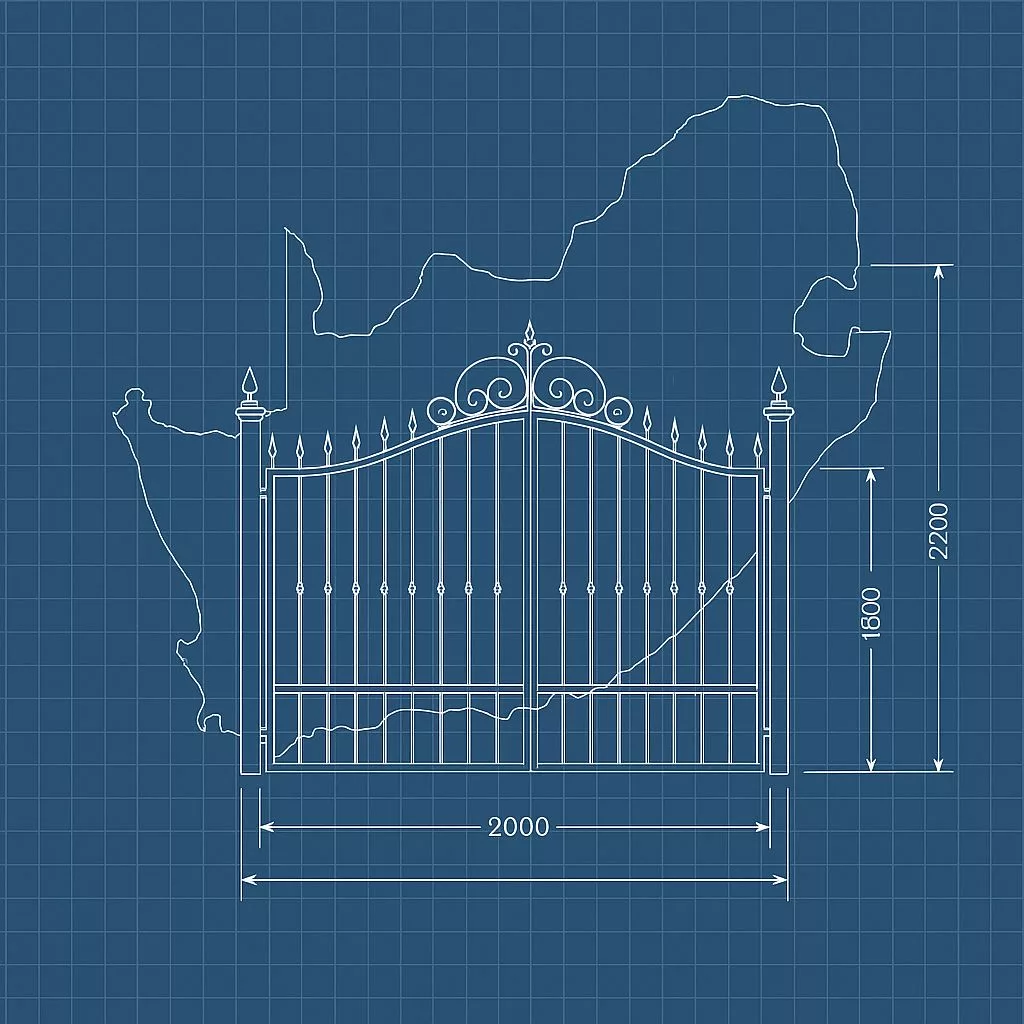
South Africa is shaking things up big time with a new plan for who gets to live there. They’re changing all the old rules about who belongs, who can visit, and who can stay. They want to pick people who can help the country, using a points system for citizenship and new kinds of visas. This means it will be much harder to become a citizen or get asylum, and borders will be watched super closely. It’s like building a whole new gate, and only the ‘right’ people will get a key.
What is South Africa’s 2026 White Paper on Citizenship, Immigration, and Refugee Protection?
South Africa’s 2026 White Paper is a radical proposed policy overhaul that redefines who belongs in the country. It shifts from a passive immigration system to one actively selecting valuable contributors, introducing a points-based system for citizenship, new visa categories, and an “Intelligent Population Register” for real-time tracking and control of borders and residents.
The Christmas Eve Missile No One Saw Coming
On 18 December, long after editors had filed their holiday copy, a fat PDF slipped into the Government Gazette. “Draft Revised White Paper on Citizenship, Immigration and Refugee Protection” sounded like bedtime reading for bureaucrats, yet its 212 pages yank the wiring out of every rule that has governed South African borders since Nelson Mandela took the oath. Leon Schreiber, the DA rookie at Home Affairs, chose the annual exodus to table a new constitution for belonging. When MPs return on 11 February, the comment window will slam shut and the most explosive migration debate since 1991 will detonate.
The document’s first paragraph kills the fairy-tale that South Africa is a “country of immigration.” Instead, it recasts the republic as a high-stakes turnstile in a region on the move. Inside the file sits the blueprint for an Intelligent Population Register that will decide, in real time, whether an unborn child gets a birth certificate, whether a tech coder from Lagos boards the SAA flight, and whether a Tamil family who spent two weeks in Malawi is shoved onto a charter back to Lilongwe.
By releasing the paper while parliamentarians were sipping beach cocktails, Schreiber bought six quiet weeks. The tactic worked: only two Sunday papers gave the story 300 words. Yet the festive silence was tactical rehearsal for the political theatre ahead – every lobby group now has 40 working days to crack the code before the machinery becomes law.
Why 1999’s Rulebook Burst at the Seams
The outgoing White Paper still bears the optimism of a young democracy. It assumed neighbours would stay friendly, refugees would be few, and jobs plentiful. Reality has shredded that script. Stats SA counts 4.6 million foreign-born residents – more people than live in Namibia – while the asylum system drowns under 120,000 fresh claims a year. Meanwhile, South Africa exports 1,200 accountants, nurses and engineers monthly to Canada, Britain and Australia.
The new drafters diagnose three fractures. First, a humanitarian system designed for 20,000 annual asylum seekers now faces numbers six times higher. Second, the naturalisation queue has metastasised into a decade-long limbo; 318,000 folders gather fungus in Arcadia basements. Third, the National Population Register is a static snapshot from the film-camera era, useless in an age of deep-fakes and double identities. The revised paper therefore does not patch potholes – it dynamites the road and builds an algorithmic highway.
If adopted, the framework will pivot South Africa from a passive recipient of whoever arrives to an active selector of who adds value. It ends the era in which a birth on South African soil or a five-year wait plus good behaviour guaranteed a second passport. From 2026, belonging becomes a points game, a swap deal, and a risk calculation executed by border sensors in under a second.
Gate 1 – Refugees: A One-Way Ticket Back to the First “Safe” Stop
The most radical chapter rewrites the right to request asylum. Anyone who set foot in a country the Minister lists as “safe” on his annual schedule will face mandatory rejection at the South African gate. Tanzania, Botswana, even Malawi can thus become legal moats. The draft annexes a model treaty: Pretoria offers to resettle 500 Congolese graduates already hosted in Kigali; Rwanda, in exchange, accepts 2,000 Zimbabwean asylum applicants caught crossing the Limpopo. Price tag: R 72 million for chartered jets and welcome kits, a bargain beside the R 480 million Pretoria currently splurges on detention beds and court appeals.
To plug the 220 informal footpaths along the Limpopo, Home Affairs will plant solar-powered biometric kiosks able to scan irises and faces within 1.2 seconds. A pilot in Musina last November flagged 1,400 claimants; 87 % confessed they had earned wages in Tanzanian farms for months. Expect litigation: lawyers already rehearse the argument that automatic push-backs breach Section 21 of the Refugees Act, which outlaws refoulement. Schreiber’s team counters that bilateral safeguards – appeal panels, UNHCR oversight, resettlement slots – keep the plan constitutional.
Gate 2 – Citizenship: The Points Ledger That Rewards Brains and Bank
Gone is the simple formula: five years of permanent residence plus one extra year equals a new passport. From September 2026, every applicant must score 60 out of 100 points before even joining the queue. A doctorate in artificial intelligence earns 30 points straight off, a master’s 20, a bachelor’s 10. Crossing the income 80th percentile – currently R 1.7 million a year – adds 25. Community service, from voter-registration drives to youth mentoring, can chip in 15. Any criminal conviction erases 50 points at once, a punitive swipe that ends dreams overnight.
To stop the paperwork avalanche, applications will open only during a 90-day window each year. A Citizenship Advisory Panel of thirteen voting members – seven scholars, four business delegates, two unionists, one civil-society voice – must clear 80 % of cases within six months or lose a tenth of its budget. Children retain birth-right citizenship, but maternity-ward clerks must upload parental IDs to the central register within 24 hours; failure flashes a fraud alert that freezes the birth certificate until a DNA test settles the claim.
Gate 3 – Visas: Five Lego Bricks Replace a Nine-Colour Mosaic
The current zoo of permits – critical skills, general work, corporate, exchange, volunteer, study, relative’s, treaty, and retired person – collapses into five clean blocks. A tech founder needs only to park R 1 million in a South African bank or surrender 20 % equity to a local partner to unlock the Start-up Visa. Digital nomads who earn foreign currency above R 1 million annually can live in Cape Town for twelve months without ever hiring a local lawyer. Salaries, qualifications, age and language ability are scored in a transparent online league; 70 points out of 100 yields an invitation to board.
Electronic Travel Authorisation becomes compulsory for every non-SADC visitor. Airlines upload passenger data 72 hours before departure; a machine-learning engine cross-checks credit-card fraud patterns, Interpol red notices and the safe-third-country roster. The USD 25 fee is projected to raise R 2.4 billion annually, enough to fund the entire modernisation budget without dipping into the fiscus.
Gate 4 – The Algorithmic Spine: A Population Register that Breathes
The National Population Register stores 59 million records as lifeless text files. The proposed Intelligent Population Register will inhale live data 24/7: birth alerts from state hospitals, graduation rolls from universities, tax numbers from SARS, death alerts from Home Affairs. An AI layer will flag a 63-year-old listed as a newborn or one fingerprint enrolled for three separate IDs within 200 milliseconds.
Privacy firewalls divide data into three tiers. Public tier shows name and birth date; inter-department tier shares biometric templates and visa status; security tier hosts risk scores and watch-list hits. Every query leaves a digital footprint; illegal browsing can trigger prosecution under the Cybercrimes Act. When coverage hits 80 % in 2028, citizens will carry a QR code in a mobile wallet; overstayers will discover their code disabled at supermarket tills, a nudge more potent than any midnight raid.
Cash, Controversy and the Clock
National Treasury’s leaked cost-benefit model predicts that full implementation could lift GDP by 1.7 % and save R 13 billion in detention, appeals and lost productivity. The R 8.9 billion roll-out cost will be financed by ETA fees and a 0.2 % levy on outbound air tickets. Business lobbies want the skills salary cap halved; unions fear employers will import 300,000 “platinum engineers” at rock-bottom wages. NGOs vow to challenge the safe-third-country list the minute it is gazetted; AfriForum and the EFF, strange bedfellows, distrust “surveillance colonialism” hosted on overseas clouds.
The March to Law
Key milestones are already inked: regulations for travel authorisation and the safe-country list emerge on 1 March 2025; new visas go live in July; the first citizenship points window opens in September. By April 2026 Cabinet will adopt the final White Paper and bills will hit Parliament. Should the Constitutional Court strike down the mandatory return of asylum seekers, drafters have stuffed the text with pilot clauses ready to switch on Plan B overnight. Whatever survives the melee will hard-wire South Africa’s identity for the next quarter-century. The gate is being re-forged; who passes through it will hinge less on pity or persistence than on data points, deal-making and the speed of an iris scan at a dusty border post.
What is South Africa’s 2026 White Paper on Citizenship, Immigration, and Refugee Protection?
South Africa’s 2026 White Paper is a radical proposed policy overhaul redefining who belongs in the country. It shifts from a passive immigration system to one actively selecting valuable contributors, introducing a points-based system for citizenship, new visa categories, and an “Intelligent Population Register” for real-time tracking and control of borders and residents. This framework aims to move South Africa from a recipient of whoever arrives to an active selector of those who add value.
When was the White Paper released and what is its current status?
The “Draft Revised White Paper on Citizenship, Immigration and Refugee Protection” was quietly released into the Government Gazette on December 18th (Christmas Eve Missile). Currently, it is in a public comment phase, which closes on February 11th, after which the proposals will be debated and potentially legislated. The document is expected to be adopted by Cabinet in April 2026, with various components rolling out before then.
Why is South Africa revamping its immigration policies?
The existing 1999 immigration framework is deemed outdated and unable to cope with current realities. Key reasons for the revamp include: a humanitarian system overwhelmed by a six-fold increase in asylum seekers, a naturalization process with a decade-long backlog of 318,000 applications, and a static National Population Register that is ineffective against modern challenges like deep-fakes and double identities. The new paper aims to address these