Three Cape Town schools started a cool recycling project called “From Bottle to Breakthrough.” They turned plastic trash into a big community effort, using fun digital scoreboards to show how much everyone collected. Kids and parents worked together, learning about recycling in class and even making money from their efforts. This awesome idea is now inspiring others, showing how old bottles can become new, useful things for everyone.
What is the “From Bottle to Breakthrough” initiative about?
“From Bottle to Breakthrough” is a recycling initiative in three Cape Town schools that transforms plastic waste into a community movement. It integrates digital scoreboards, curriculum-based learning, parent engagement, and local partnerships to collect PET plastic, fostering environmental awareness, generating income, and inspiring innovative uses for recycled materials.
Dawn Patrol and Digital Scoreboards
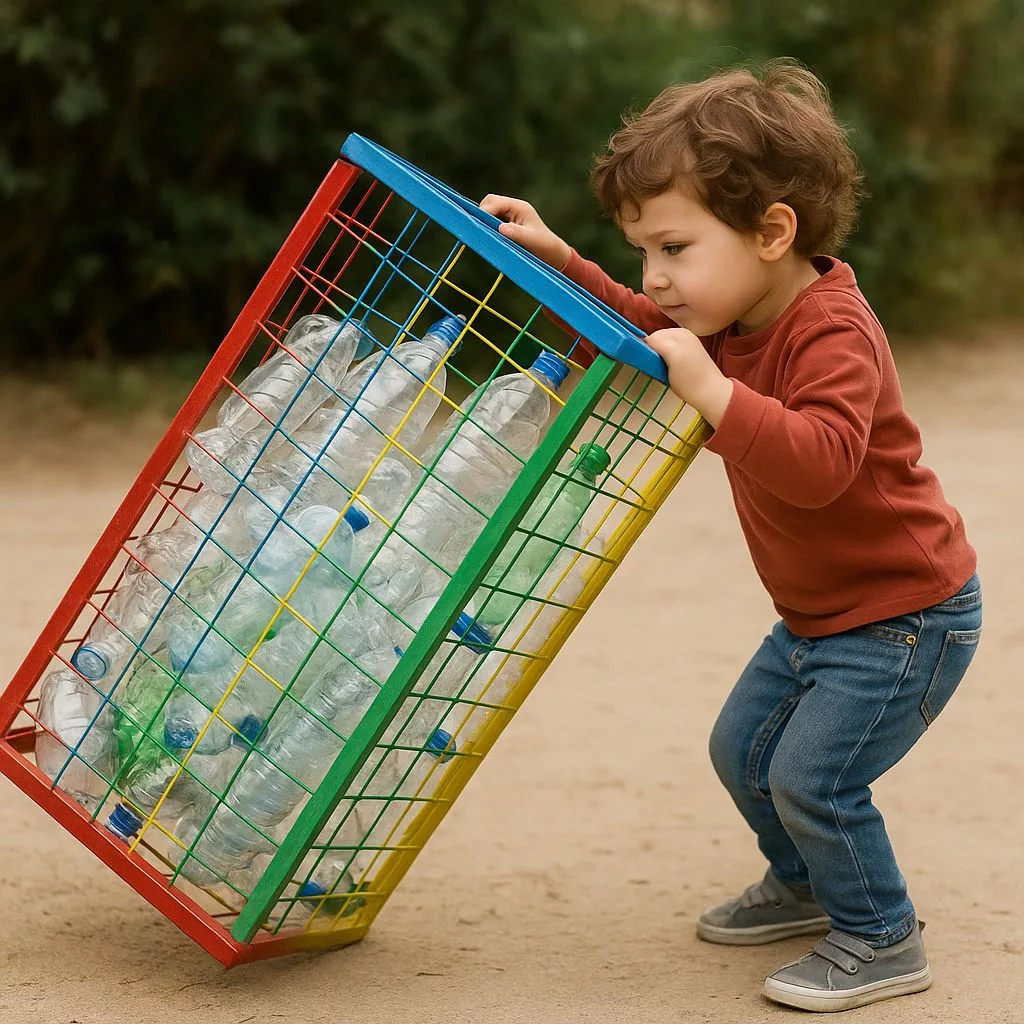
Every weekday at 06:45, while most of Mitchells Plain is still rubbing sleep from its eyes, fourteen bakkies roll up to Liesbeeck Primary. Each vehicle carries colour-coded cages welded by a neighbourhood uncle who normally fashions burglar bars. The design is toddler-proof: a seven-year-old can flip and lock a cage without pinching a finger. By 07:10, a pint-size “green brigade” of Grade-6 volunteers has already dragged the first sack of PET onto a borrowed bathroom scale wired to a Raspberry Pi. A flat-screen bolted outside the staffroom flashes the live tally, refreshing every half-minute. Learners shuffle past whispering, “We’re still 14 kg behind Wavecrest,” the same way teens mutter about Champions League standings.
The morning ritual is only the visible froth on a six-week wave of micro-actions. Long after the final soccer ball has been kicked off the field, parents and learners are still rinsing, stomping and sorting. The 674,8 kg that eventually tipped the scales did not appear by magic; it was the cumulative mass of thousands of these bite-size choices. By the time the opening bell rings, the school’s heartbeat is already thumping in bright LED digits, daring every learner to add one more bottle before break.
Teachers quickly discovered that the competition could run itself if the numbers stayed public. Kids began timing their drop-offs to coincide with the 30-minute updates, hoping to watch the kilograms leap in real time. One Grade-4 girl compared the sensation to “watching my heartbeat on the nurse’s machine,” except the pulse belonged to the whole school. No one wanted to be the learner who walked past an unchanged total at second break.
Curriculum, Culture and Cold Cash
Inside the classrooms, the recycling drive morphed into stealth learning. Grade-5 mathematicians worked out that 19 clear 500 ml bottles weigh exactly one kilogram, while only 13 green bottles hit the same mark thanks to thicker pigment. Grade-7s stretched the exercise into exponential modelling: a single extra bottle per household per day could yank 1 050 tonnes of plastic out of Mitchells Plain annually – roughly the displacement of a nuclear submarine. Bilingual infographics, silk-screened onto flattened cereal boxes, were slid under 3 200 gates one Saturday morning, turning homework into door-to-door activism.
Mrs Kassiem’s “hype letters” were simply the glossy tip of a parent-engagement iceberg. WhatsApp voice notes nudged moms at 21:00, reminding them to rinse bottles for the next morning. A TikTok dance – #StompAndDrop – challenged families to crush PET to a beat, racking up 17 000 views in a weekend. On Fridays at sunset the school hosted a mini-market where 20 bottles bought a scoop of home-made sorbet churned in an antique ice-cream maker. A nearby spaza owner volunteered his counter as a micro-drop-off point; he now earns 30 cents per kilogram, enough to restock an extra box of maize meal every fortnight.
Wavecrest Primary, only two kilometres away, rewired the logistics around scholar transport. Minibus taxis agreed to hang onion-net pouches behind the front seat; learners feed in bottles during the ride home, drivers pocket a stipend, and the school gains a fleet that moves even during load-shedding. Caradale Primary, on the edge of Colorado Park, drafted the local soccer academy. Every Saturday, under-12 players warm up by jogging a 2 km “plastics route,” stuffing roadside litter into branded drawstring bags. Coach reports lap times are dropping because “nobody wants to be the slowpoke who tosses wrappers.”
Solar Shredders, Blockchain Ledgers and Cape Town Beats
Petco’s support went far beyond poster-ready resin-code charts. They parked a mobile extrusion lab in the school hall for three days: a solar-powered shredder and extruder that turned bottle caps into 3-D printer filament. The air smelled of warm plastic and popcorn while learners printed Springbok-antelope key-rings and sold them at R10 a pop to bankroll the chess team’s transport. The filament – mottled green from mixed caps – is now undergoing tensile tests at the University of Cape Town. Early results suggest it could serve as non-load-bearing spacers in low-cost housing, another pipeline from trash to township infrastructure.
Grandmaster Ready D’s G-CAP sessions flipped the playground into a recording studio. Learners penned “recycling raps” in Kaapse slang: “Jy kannie net weg gooi wat jy ge-bruik het nie, check die binnekant van die simbool, dan kry jy die sleutel.” They sampled the percussive crunch of stomped PET, then analysed spectrograms that spike at 2,4 kHz – the exact frequency of brittle plastic fracturing. Community radio now blasts the track “Loop So” every Thursday at 16:30, the precise moment kids spill onto streets where FM still trumps data bundles.
Behind the music, the City’s WasteWise team quietly piloted a blockchain “waste-credit” ledger. Each kilogram is scanned, time-stamped and logged to a unique learner QR code, eliminating double-counting and laying the groundwork for future rates rebates or school-infrastructure upgrades. Forecasts show that scaling the ledger to 200 000 households could buy Cape Town an extra 18 months of landfill life – time enough to finalise a long-delayed organic-waste composting plant.
Rand Signs, Health Wins and Global Eyes
Entrepreneurs are already chasing the scent of warm plastic. A 19-year-old Caradale alumnus launched a bicycle pick-up service: R50 for 20 kg, 30 % cheaper than commercial trolleys. Code4CapeTown interns built him an app that geotags high-volume households, turning recycling into a data-driven gig. In Lentegeur, grandmothers crochet cool-drink labels into tote bags – 40 labels per bag, sold for R35 each, translating to R140 per kilogram of material versus the R2,50 refund. The margins speak louder than any environmental slogan.
Doctors logged unexpected side-effects. Liesbeeck’s school nurse recorded a 12 % drop in asthma-reliever inhaler use during September, tracing the improvement to the disappearance of fermenting organics that once stewed in uncovered bins. Psychologists observe that structured eco-tasks give restless children a controllable domain amid domestic turbulence; one previously distracted Grade-3 boy now mans the weighing station and hasn’t missed a day of school since the challenge began.
Outsiders are taking notes. A Nairobi-based “Uncycled” crew filmed the entire workflow for replication in Kenyan settlements where alleys are too narrow for garbage trucks but perfect for hand trolleys. Uniqlo has inquired about buying the filament for a limited “Cape Town Caps” T-shirt line, pledging 5 % of revenue to expand the extrusion lab. Yet perhaps the deepest shift is philosophical: learners now treat the 4 380 school days from Grade 1 to matric as a countdown in which today’s 500 ml sprite bottle could re-emerge as next year’s soccer jersey, roof tile, or 3-D-printed hinge on a prosthetic hand. They call it the “second birthday” – the moment waste becomes something that matters.
What is the “From Bottle to Breakthrough” initiative about?
“From Bottle to Breakthrough” is a recycling initiative launched in three Cape Town schools, transforming plastic waste into a community-driven movement. It uses digital scoreboards to track collections, integrates recycling into the school curriculum, actively engages parents, and forms local partnerships. The project primarily focuses on collecting PET plastic, aiming to raise environmental awareness, generate income for the community, and inspire innovative second uses for recycled materials.
How do the schools motivate participation in the recycling program?
The schools primarily motivate participation through friendly competition and real-time feedback. They use fun digital scoreboards that display live collection tallies, refreshing every 30 seconds. This creates a competitive atmosphere among classes and schools, similar to sports standings. Grade-6 volunteers operate the weighing stations, and the immediate updates encourage learners to bring in more bottles throughout the day. Additionally, incentives like mini-markets where recycled bottles can be exchanged for treats, and even TikTok challenges, keep engagement high.
How does the recycling initiative integrate with the school curriculum?
The initiative cleverly integrates recycling into various subjects. For instance, Grade-5 students apply math skills to calculate the weight differences between clear and green PET bottles. Grade-7 students delve into exponential modeling, understanding the large-scale impact of individual recycling efforts. Teachers also use bilingual infographics, created from recycled materials, for homework assignments that encourage door-to-door activism, turning learning into practical community engagement.
What innovative uses have been found for the collected plastic?
The collected PET plastic is being used in several innovative ways. A mobile extrusion lab turns bottle caps into 3D printer filament, which learners use to create and sell items like Springbok keyrings, funding school activities. This filament is also being tested for use as non-load-bearing spacers in low-cost housing. Furthermore, local grandmothers crochet cool-drink labels into tote bags, and there’s interest from a global brand like Uniqlo in using the filament for a special clothing line.
How does the “From Bottle to Breakthrough” initiative benefit the wider community?
Beyond environmental benefits, the initiative brings significant community advantages. It generates income for local partners, such as spaza shop owners who become micro-drop-off points and earn per kilogram. Scholar transport providers receive stipends for collecting bottles during routes. An alumnus even started a bicycle pick-up service, creating economic opportunities. Health benefits have been observed, with a reported decrease in asthma-related issues due to less fermenting organic waste. The project fosters community spirit and provides structured activities for children, improving school attendance and focus.
What advanced technologies are being used or explored within the program?
The program incorporates several advanced technologies. Digital scoreboards use Raspberry Pi for real-time data display. The City’s WasteWise team is piloting a blockchain “waste-credit” ledger to track and log each kilogram of recycled material with a unique learner QR code. This aims to eliminate double-counting and could potentially lay the groundwork for future rates rebates or school infrastructure upgrades. There’s also the development of a mobile app for a bicycle pick-up service to geotag high-volume households, turning recycling into a data-driven gig economy.