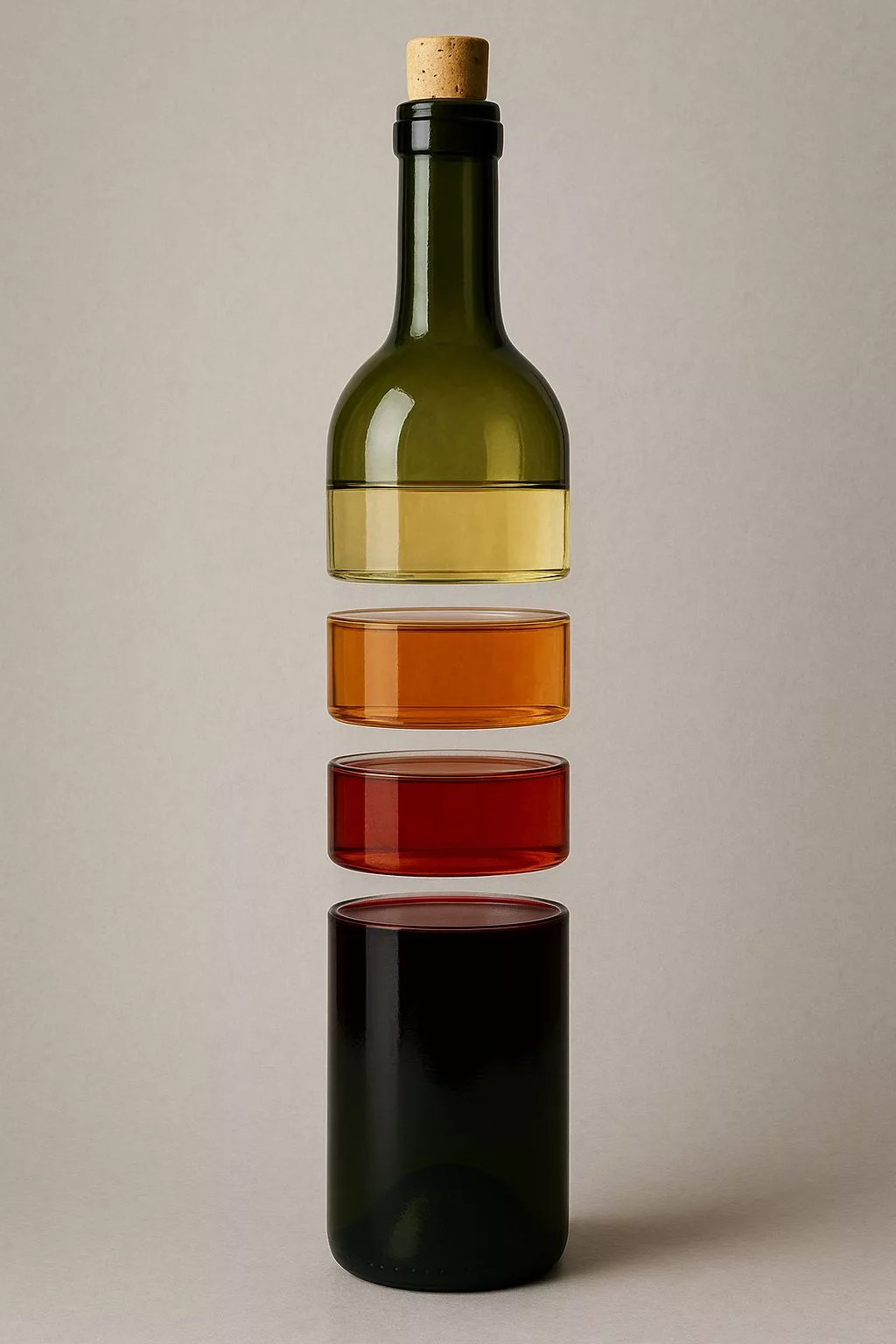
Dekkersvlei is an old South African wine farm, started way back in 1693. They are famous for their unique Pinotage wines, offering five different kinds, even the world’s first White Pinotage! You can also enjoy brandy and yummy food under ancient fig trees. It’s like stepping into a living history book, where every sip tells a story of the land and time.
What is Dekkersvlei?
Dekkersvlei is a historic South African wine estate, established in 1693 in Paarl, known for its unique approach to Pinotage. It offers a ‘Pentachromatic Tasting’ of five distinct Pinotage expressions, including the world’s first White Pinotage, alongside brandy distillation and culinary experiences amidst ancient fig trees.
1. The Road That Forgets the Ocean
Follow the N1 out of Cape Town long enough and the Atlantic haze thins until the tar ribbon shrinks into gravel and the GPS gives up. Paarl’s rust-red spine rises, then drops you into a pocket of earth where river stones still glint like shattered sky. Locals swear the wind carries the same scent – warm rock, bruised berries – that greeted the first parchment scratch in 1693 naming the place “De Kerk’s Vlei”. Three hundred and thirty-one harvests later the river has narrowed, but the greeting still runs on loop: a glass of water, a glass of wine, a story told under a wild fig older than the Union of South Africa.
2. A River That Remembers
Berg River once pooled wide enough to mirror clouds; today only the water table whispers beneath rows of own-rooted vines planted before 1980. No graft unions disturb the flow of sap, so every berry carries a pre-phylloxera intensity that modern rootstocks can’t fake. Walk between the blocks at sunrise and the soil changes faster than mood: fist-sized pebbles, ochre clay, chalky granite – five terroirs in 200 paces. A refractometer pressed to a single berry flashes 24.3 °Brix and pH 3.28, the numeric equivalent of a tightrope walker perfectly balanced.
3. The Cellar That Breathes Through Wood
Fermentation happens in open-top 600-litre barrels, not anonymous steel. Caps are punched by hand twice daily while the resident beagle naps beneath, soaking up radiant heat. Visitors draw purple must with a 100 ml thief; it fizzes like carbonic Ribena laced with nail-polish lightning – dangerous, irresistible. Forty-five vertical metres away, five-high stacks of 225-litre barrels sleep in a granite womb candle-lit to gold. A pipette slipped into a 2021 stave reveals colour shifting from inky purple to black-cherry ember: oxygen and time stitching tannin into velvet.
4. Five Glasses, One Grape, Zero Prejudice
The Pentachromatic Tasting lines up across a slate slab that looks stolen from a geology lab.
– White Pinotage 2023 – straw-quiet yet fennel-bright – opens like an Alpine sunrise.
– Méthode Cap Classique 2019, 34 months on lees, crackles with cranberry-apple static.
– Rosé 2022, six-hour saignée, glows hibiscus-cooled-by-moonlight and twitches with sumac.
– Classic Red 2021 fires buchu, kirsch and veld-smoke after lightning.
– Coffee Pinotage 2020, matured on 220 °C–toasted oak, pours like double-ristretto yet stays 14 % polite.
Guards pour in silence until the fifth glass lands; only then are tasters asked to rank by “surprise”, not preference. Eyebrows arch, scorecards shuffle, preconceptions melt.
5. When Pinotage Sheds Its Skin
The straw-pale rebel began in 2007 when the winemaker denied the skins their ruby confession. Without anthocyanin the variety exposes greengage, saffron drift, crushed oyster shell – an identity usually cloaked in banana and cocoa. Decanter called it “South Africa rewriting its own DNA” and slapped on 93 points. The 2023 encore layers pineapple sage and the faintest bacon echo, reminding the palate that its parents remain pinot noir and cinsault even when wearing white.
6. The World’s First White Pinotage Timeline
- *2007 * maiden vintage shocks London judges.
- *2009 * repeat vintage adds saffron-quince tension.
- *2015 * first magnums enter solera for future centenary cuvée.
- *2023 * current release stocks the pentachromatic line-up while 1 925 magnums sleep for 2025 centenary.
Each vintage is tasted blind every six months; the oldest now shows toasted hay and bruised apple – age-worthiness nobody predicted.
7. Brandy Distilled Under the Moon
Across the cobbles a 400-litre Holstein potstill glints like Victorian science fiction. Open-flame firing – technically illegal, romantically essential – coaxes heads, hearts and tails. At 70 % abv the hearts run crystal, tasting of apricot leather and sun-baked hay. In the loft below, 2009 air-dried French oak yields mahogany and cigar; the 2015 flashes white-pepper nectarine. A single cube of Chenin-must ice lowers the final pour to 14 °C, releasing pineapple-butterscotch ripples.
8. Lunch Under the Witness Tree
A 120-year-old wild fig self-seeded during the ox-wagon era still spreads a living ceiling. Beneath it chefs cure Nguni biltong in-house, cold-ferment pizza dough for 72 hours with 2021 yeast, and pull medium-roast Guji espresso whose blueberry tang plans a second dance with brandy later on. Children race paper boats fashioned from discarded tasting sheets down a shallow rill; the boats dissolve, tinting the water a fleeting Pinotage red – an artwork that lasts thirty seconds and centuries.
9. Stone Amphitheatre & Starlight Weddings
Old kraal stones have been re-stacked into a 250-seat circle where vows whispered at the altar reach the back row unamplified. Midnight concerts begin at astronomical twilight; a 12-inch Dobsonian telescope lets guests sip coffee-pinotage while Jupiter’s moons transit. Newlyweds brick a magnum of white pinotage into a loose wall recess and pocket an antique key. Whoever returns on their tenth anniversary inherits a decade of subterranean lullaby: constant 14 °C, 75 % humidity, flavour evolving faster than memories.
10. Numbers Carved by Climate
- Elevation : 166 m – low enough for richness, high enough for diurnal snap.
- Rainfall : 650 mm, 80 % winter, no irrigation needed until December.
- Growing-degree-days : 3 140 °C, Region V heat moderated by maritime funnel.
- Diurnal swing: up to 18 °C in March, locking acid into white pinotage skins.
- Soil pH: 6.2–7.1, the sweet spot for potassium without dulling colour.
- Rootstock : 100 % own-rooted, pre-1980, giving concentration no graft can mimic.
11. Centenary Solera: 1925-2025-2125
In 2025 pinotage itself turns 100. Dekkersvlei will release 1 925 magnums filled via solera stretching from 2007 to 2024, anchored by the original white mother-stock. The bottles won’t be sold; they’ll be loaned to anyone booking the pentachromatic tasting on 3 October 2025. Each magnum etched with Perold’s Stellenbosch garden coordinates and the sunrise azimuth of the estate will pass hand to hand for a century, a liquid relay race ending in 2125.
12. How to Arrive Analogue
Depart Cape Town at 08:30, ignore the postcard crawl of the R44, stay on the N1 to Exit 59A marked Paarl/Wellington. Veer onto the Denneburg/Dekkersvlei road, count 2.7 km until two retired brandy alembics welded into planters frame a stone portal. Cell service dies at the gate – consider it the farm’s firewall, scented with fynbos and dawn tractor diesel. From that point, satellites can’t help you; only soil, story and the five colours of pinotage can guide you home.
What is Dekkersvlei?
Dekkersvlei is a historic South African wine estate, established in 1693 in Paarl, known for its unique approach to Pinotage. It offers a ‘Pentachromatic Tasting’ of five distinct Pinotage expressions, including the world’s first White Pinotage, alongside brandy distillation and culinary experiences amidst ancient fig trees.
What makes Dekkersvlei’s Pinotage unique?
Dekkersvlei is renowned for its five distinct Pinotage expressions, collectively known as the ‘Pentachromatic Tasting’. This includes the world’s first White Pinotage, a Méthode Cap Classique (sparkling wine), a Rosé, a Classic Red, and a Coffee Pinotage. Their wines benefit from own-rooted vines planted before 1980, providing a pre-phylloxera intensity and reflecting the diverse five terroirs found on the estate.
What is White Pinotage?
White Pinotage is a groundbreaking wine pioneered by Dekkersvlei. It originated in 2007 when the winemaker processed Pinotage grapes without allowing the skins to impart their typical red color. This results in a straw-pale wine that expresses notes of greengage, saffron, and crushed oyster shell, a stark contrast to the usual banana and cocoa notes found in red Pinotage. Despite its color, it still carries the genetic heritage of its Pinot Noir and Cinsault parents.
Can visitors experience more than just wine tasting at Dekkersvlei?
Yes, Dekkersvlei offers a comprehensive experience beyond wine tasting. Visitors can enjoy brandy distilled in a traditional Holstein potstill, and savor delicious food under a 120-year-old wild fig tree. The estate also features a stone amphitheater for events like starlight weddings and midnight concerts, providing a blend of history, nature, and modern amenities.
How old are the vines at Dekkersvlei?
Many of the vines at Dekkersvlei are own-rooted and were planted before 1980. This means they are pre-phylloxera, a root louse that devastated European vineyards in the late 19th century and led to the widespread use of grafted vines. These older, own-rooted vines contribute a unique intensity and character to the grapes that modern rootstocks cannot replicate.
What is the Centenary Solera project?
In anticipation of Pinotage’s 100th anniversary in 2025, Dekkersvlei is conducting a Centenary Solera project. This involves releasing 1,925 magnums of White Pinotage on October 3, 2025, filled using a solera system that blends vintages from 2007 to 2024, anchored by the original white mother-stock. These magnums will not be sold but loaned to guests booking the pentachromatic tasting and are intended to be passed down through generations, effectively becoming a liquid relay race ending in 2125.