Leopards, once thought gone forever, are making a big comeback on the Cape’s West Coast! Thanks to special cameras and DNA tracking, we now know these stealthy cats are living close to cities and farms. People are learning to live with them, and even farmers are helping. This amazing return shows how humans and wild animals can share the land.
How are leopards reclaiming the Cape’s West Coast?
Leopards are reclaiming the Cape’s West Coast through conservation efforts, landowner tolerance, and technological advancements. Genetic tracking reveals two donor populations, and the Berg River provides a crucial corridor. West Coast National Park acts as a breeding node, while innovative funding and citizen science support their return, even in human-modified landscapes.
1. Night Vision on the Strandveld
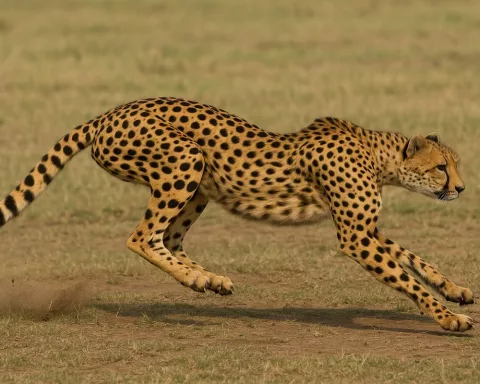
A single infrared flash freezes the image: rosettes tight against muscle, ears swivelled toward the lens, the timestamp glowing 02:17. The camera is bolted to a fence post usually checked by vineyard security, yet the subject is not a trespasser with wire-cutters but a 65-kilogram male leopard less than 35 kilometres from Cape Town’s Waterfront. The December 2023 clip, encrypted and uploaded by LTE, is the 1 247th independent detection logged by conservation NGO Landmark since 2019. Each frame chips away at a myth that has dominated local imagination for almost two centuries: that the West Coast is, and always was, predator-free farmland.
The organisation’s grid now blankets 28 000 hectares of wheat, canola, vineyards and coastal thicket with 160 Reconyx units. Motion triggers are paired with acoustic recorders that distinguish a leopard’s hoarse cough from jackal yips through machine-learning algorithms trained in Botswana. Solar panels, salvaged from decommissioned traffic lights, keep batteries alive; MTN zero-rates the data package under a corporate social responsibility clause. The hardware is cheap, repairable and camouflaged, because the moment a camera becomes visible it walks away in a thief’s pocket.
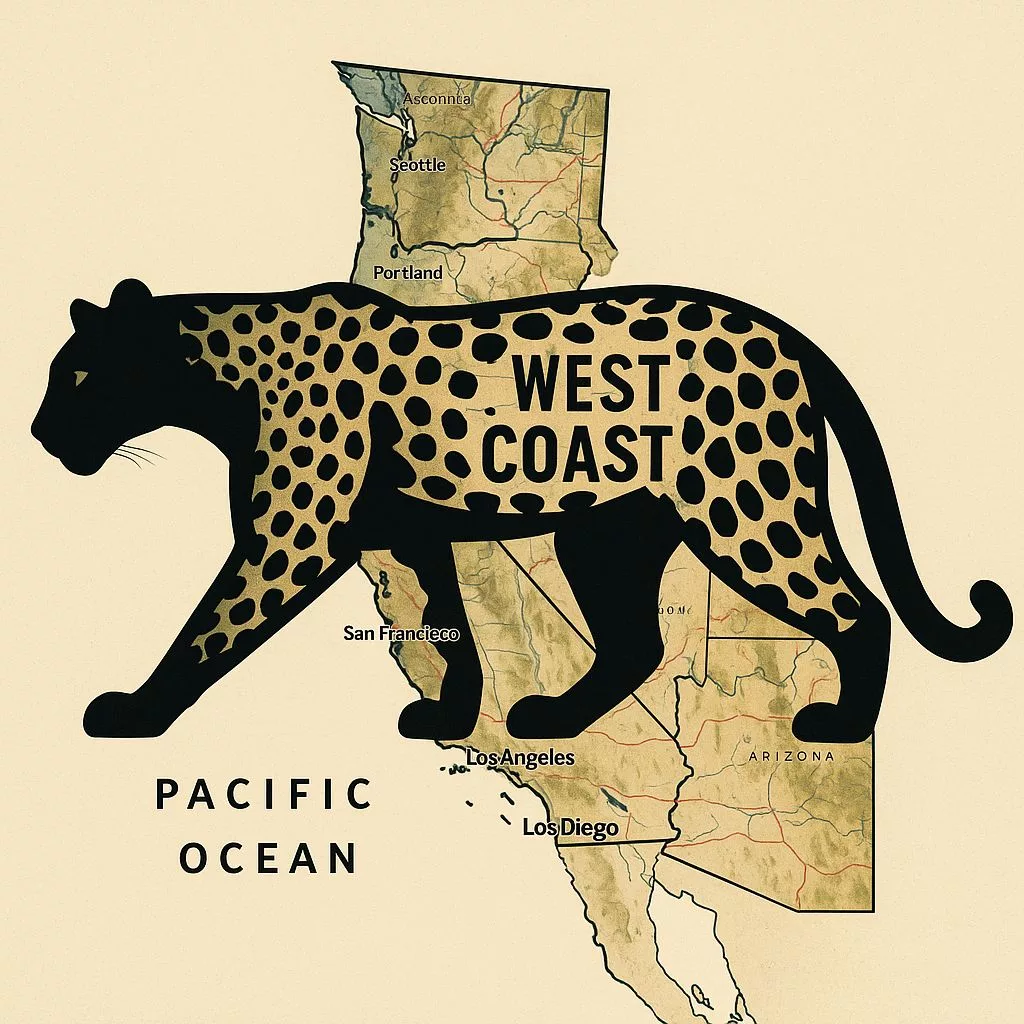
Results overturn textbook ecology. Leopards are supposed to need rugged escarpments, low human density and intact prey. Instead, Landmark identified five adults between the city limits and West Coast National Park, animals that negotiate four-lane highways, dodge harvesters and den within sight of beach-cottage braais. Occupancy probability sits at 0.61, a figure that rivals tiger densities in Rajasthan’s most celebrated reserve and dwarfs anything recorded for free-roaming leopards in modified African landscapes.
2. Erased History, Empty Landscape
Colonial cash books tell the tale. Between 1832 and 1856 the magistrate of Malmesbury paid out two pounds for every “tiger-cat” presented, a fortune for a farmhand then earning ten shillings a month. The district tally reached 29 carcasses, skins salted and freighted to Cape Town for export. The last Camps Bay leopard was shot in 1862; a Hout Bay male followed in 1938, its body displayed in a butcher’s window as “the final lion of the Cape.” Newspapers of the day used the word extinction without hesitation, confident the frontier had been tamed.
The deletion campaign continued long after headlines faded. State bounties on “vermin” survived until 1962, overlapping with wetland drainage that removed reedbuck, otters and waterfowl. Coastal thicket was uprooted for potato fields, while strychnine collars wiped out black-backed jackals and thereby erased the leopard’s last natural competitor. Three generations of children grew up believing the only cats present were the ones asleep on kitchen windowsills; when Landmark erected its first trap in 2019 a 78-year-old wheat farmer insisted “no wild cats ever lived here.” Forty-eight hours later KG, named after the looming Koeberg nuclear plant, stared back from the night.
3. The Path Back: Rivers, Wines and War Dogs
Genetic scatology points to two donor populations. Mitochondrial haplotypes match Cederberg leopards 180 kilometres north, while nuclear microsatellites show signatures from the Boland mountains east of Stellenbosch. The link is the Berg River, its riparian strip now flanked by biodiversity-certified vineyards required to keep predator-friendly fencing. Male leopards cruise the watercourse at night, sometimes covering 40 kilometres of monoculture before breakfast, resting in granite koppies where remnant Acacia karoo still offers shade.
West Coast National Park provides the crucial node. Reclaimed from overgrazed sheep farms in 1985, the 36 000-hectare reserve conserves strandveld, salt marsh and the sapphire Langebaan Lagoon. Telemetry collars on relocated roan antelope inadvertently revealed leopard GPS clusters; camera traps later captured a lactating female with two cubs, proof of breeding inside a protected area surrounded by wheat. Absence of lions accelerates occupancy, a dynamic repeatedly observed in small KwaZulu-Natal reserves where adult survival jumps when competitive mega-predators are missing.
Tolerance outside the park boundary has soared. A 2021 Stellenbosch University survey showed 68 % of landowners willing to accept occasional losses, up from 17 % in 2010. The shift tracks the collapse of weekend “jackal clubs” that once hunted with radio-collared hounds; the last organised shoot in Piketberg folded in 2014 after social-media outrage. Cape Leopard Trust now hosts predator-aware barbecues where footage of spotted night-walkers is screened over craft beer, and farmers sign non-lethal conflict contracts in exchange for subsidised Anatolian shepherd dogs that sleep among sheep.
4. Dollars, Dogs and Data Streams
Money seals the deal. The “Cape Fynbos Free” certification pays wine estates a five-percent premium if biodiversity audits detect leopard presence, verified by remote-sensing algorithms that flag thicket health. Two estates bottle “Leopard Label” merlot; QR codes on the neck open a live feed from vineyard cameras. Preliminary modelling shows that even a one-percent price uplift across 35 000 hectares of eligible vines exceeds historical livestock losses, turning an apex carnivore from cost centre to profit trigger.
Technology keeps the tally honest. Scat-detector dogs – rescued Malinois trained by the police – quarter 40-kilometre transects each full moon when scent lingers longest. DNA from 178 droppings confirms nine individuals: five males, three females, two cubs. Inbreeding levels remain low, likely because the Atlantic Ocean is not a total barrier; males swim tidal channels less than 400 metres wide at Saldanha, behaviour previously undocumented in African leopards but routine in Sri Lanka.
Conflict has not vanished. Poultry raids peaked at 92 birds in early 2023; a female was found with a crushed forepaw, darted and treated at a wildlife ranch at donor cost of R47 000. City expansion presents fresh hazards: leopard GPS fixes after midnight correlate with landfill sites, and one scat held 43 fragments of plastic shopping bag. Policy is scrambling to keep pace; the draft National Leopard Management Plan gazetted in December 2023 lists the West Coast as a “priority recolonisation node,” obliging future highway upgrades to include wildlife overpasses modelled on California’s puma crossings.
Citizen science feeds the frenzy. A WhatsApp group named “WC Leopard Spotters” has 3 200 members sharing spoor photographs; AI software filters out caracal mis-hits in under a minute. Correct sightings auto-upload to iNaturalist, feeding the Global Biodiversity Information Facility used by researchers on five continents. Hikers have even geo-referenced nineteenth-century wolf traps, allowing historians to map the old bounty frontier for the first time.
Whether the experiment endures depends on choices made nightly: a farmer who closes a gate, a councillor who approves another cul-de-sac, a suburban resident who secures refuse bins. For now, the cameras keep clicking, the dogs keep sniffing, and the leopards – silent, pliable, endlessly resourceful – continue to pad through the wheat, the vineyards and the collective imagination of a coastline learning again what it means to live with something bigger than itself.
How are leopards making a comeback on the Cape’s West Coast?
Leopards are making a comeback thanks to a combination of conservation efforts, increased tolerance from landowners, and advanced technology. This includes genetic tracking to identify donor populations, the Berg River acting as a crucial wildlife corridor, and West Coast National Park serving as a breeding ground. Innovative funding mechanisms and citizen science also play a significant role in supporting their return, even in areas close to human settlements.
What technology is being used to track leopards?
Conservation NGO Landmark utilizes 160 Reconyx camera units across 28,000 hectares, equipped with motion triggers and acoustic recorders that can differentiate a leopard’s cough from other animal sounds using machine-learning algorithms. These cameras use infrared flashes for night vision and their data is uploaded via LTE. Solar panels, often salvaged from traffic lights, power these units, and MTN zero-rates the data package. Additionally, scat-detector dogs (rescued Malinois) are used to find leopard droppings for DNA analysis, and a WhatsApp group for citizen scientists uses AI software to filter sightings.
Were leopards always absent from the West Coast?
Contrary to popular belief, leopards were historically present on the West Coast. Colonial records show bounties paid for “tiger-cats” between 1832 and 1856, and newspapers declared the “extinction” of local leopards by the mid-19th century. State bounties on “vermin” continued until 1962, alongside habitat destruction. It wasn’t until Landmark’s camera traps in 2019 that the persistent myth of a predator-free West Coast was decisively debunked, revealing leopards living surprisingly close to human activity.
How has human perception and tolerance towards leopards changed?
A significant shift in human perception has occurred. A 2021 Stellenbosch University survey found 68% of landowners willing to accept occasional losses from leopards, a substantial increase from just 17% in 2010. This change is partly due to the decline of traditional “jackal clubs” and the rise of predator-aware initiatives like barbecues hosted by the Cape Leopard Trust, where farmers can learn about non-lethal conflict resolution and receive subsidized Anatolian shepherd dogs to protect livestock.
How does the return of leopards benefit the local economy?
The return of leopards is being integrated into the local economy through initiatives like the “Cape Fynbos Free” certification, which offers wine estates a 5% premium for demonstrating leopard presence verified by biodiversity audits. Some estates even bottle “Leopard Label” wines with QR codes linking to live camera feeds. Preliminary modeling suggests that even a 1% price uplift across eligible vineyards can outweigh historical livestock losses, effectively turning the apex predator into a profit incentive rather than a cost.
What are the main challenges and future considerations for leopard conservation?
Despite the successes, challenges remain. Poultry raids have occurred, and one leopard was found with a crushed paw, highlighting human-wildlife conflict. City expansion poses new hazards, with leopards found near landfill sites and consuming plastic. Policy is adapting, with the draft National Leopard Management Plan identifying the West Coast as a “priority recolonisation node,” advocating for wildlife overpasses during future highway upgrades. The long-term success depends on daily choices by farmers, urban planners, and residents to coexist with these resilient creatures.