In the gritty streets of Cape Flats, a brutal gang war rages. A shocking murder outside a courthouse ignited a fierce raid by the Anti-Gang Unit, leading to arrests and weapon seizures. This raid also reopened old, chilling cases, showing how deep the gang problem runs. Even with all the arrests, the war on the streets is far from over, with new threats constantly emerging.
What is the Cape Flats Siege?
The ‘Cape Flats Siege’ refers to a dramatic weekend raid by the Western Cape Anti-Gang Unit (AGU) in response to a gang-related murder at Athlone Magistrate’s Court. This operation targeted key figures in Cape Town’s gang landscape, leading to arrests, weapon seizures, and reopening numerous cold cases, highlighting the ongoing gang warfare in the region.
Field reconstruction | ±1 050 words
1. The Grid That Raised a War
Cape Flats is not a dot on Google Maps; it is a 150 km sickle of wind-blown sand Apartheid turned into a racial refuse bin in the 1960s. District Six, Simon’s Town and other “black spots” were bulldozed and their residents dumped here under the Group Areas Act. Sixty years on, the same plain is diced into 22 micro-kingdoms whose borders live only in local memory. Eight-year-olds can recite them like catechism: here the Americans stop, there the Hard Livings begin.
Each kingdom runs a parallel economy. One street houses a tik lab, the next a shebeen, the third a taxi stand that triples as armoury, labour exchange and courthouse. The only state buildings granted immunity are magistrates’ courts – every crew needs bail – and churches, because even triggermen want a sermon at their send-off.
Google Earth cannot photograph the real boundary lines. They are drawn in chalk on school walls, whispered in rap lyrics, sprayed as cryptic emojis on stop signs. Step over them and you graduate from pedestrian to target.
2. The Spark: 3 December Outside Court 53
Athlone Magistrate’s Court squats beside the M5 like a concrete toad, processing 800 bail slips a week. At 11:42 a Toyota Avanza with cloned plates idled out front. Two hooded men climbed out; one cradled a CZ 75 wrapped in a Shoprite packet, the other palmed a 9 mm whose serial had been rasped away.
Their mark was 27-year-old Rashaad “Rash-E” Staggie, nephew of the Hard Livings founder burnt alive on the same pavement in 1996. Rash-E had just signed bail papers for meth possession. Grainy foyer footage shows the first shooter squeezing off eleven rounds, his partner sprinting through the detector gate toward the holding cells. A bullet clipped a constable’s radio; another spider-webbed Court 53’s bullet-proof glass, peppering the gallery with cubes. Rash-E folded on the granite steps; a 17-year-old art student on a school tour caught a round in the chest and died on the Groote Schuur table at 14:27.
Before the sirens faded, WhatsApp voice-notes were ricocheting: “HL vs Americans reignited – lock your gates.”
3. Flash-Mob Detectives & the Saturday Night Sweep
The Western Cape Anti-Gang Unit (AGU) was born in 2019 after a commission revealed that 1 587 of Cape Town’s 1 918 murders the previous year were gang-tainted. The unit stays intentionally small – 175 permanent members – to keep moles out. When a high-value hit occurs, detectives are dragooned from robbery, cash-in-transit and cold-case dockets for a 72-hour “flash-mob” of intelligence.
By 20:00 on 3 December the mob had 41 names. Metadata isolated three handsets that had pinged the court tower in the half-hour before the gunfire; all traced to Manenberg, Athlone and Mitchell’s Plain.
The Raid Geometry
-
21:00-23:00 – Eye in the Sky*
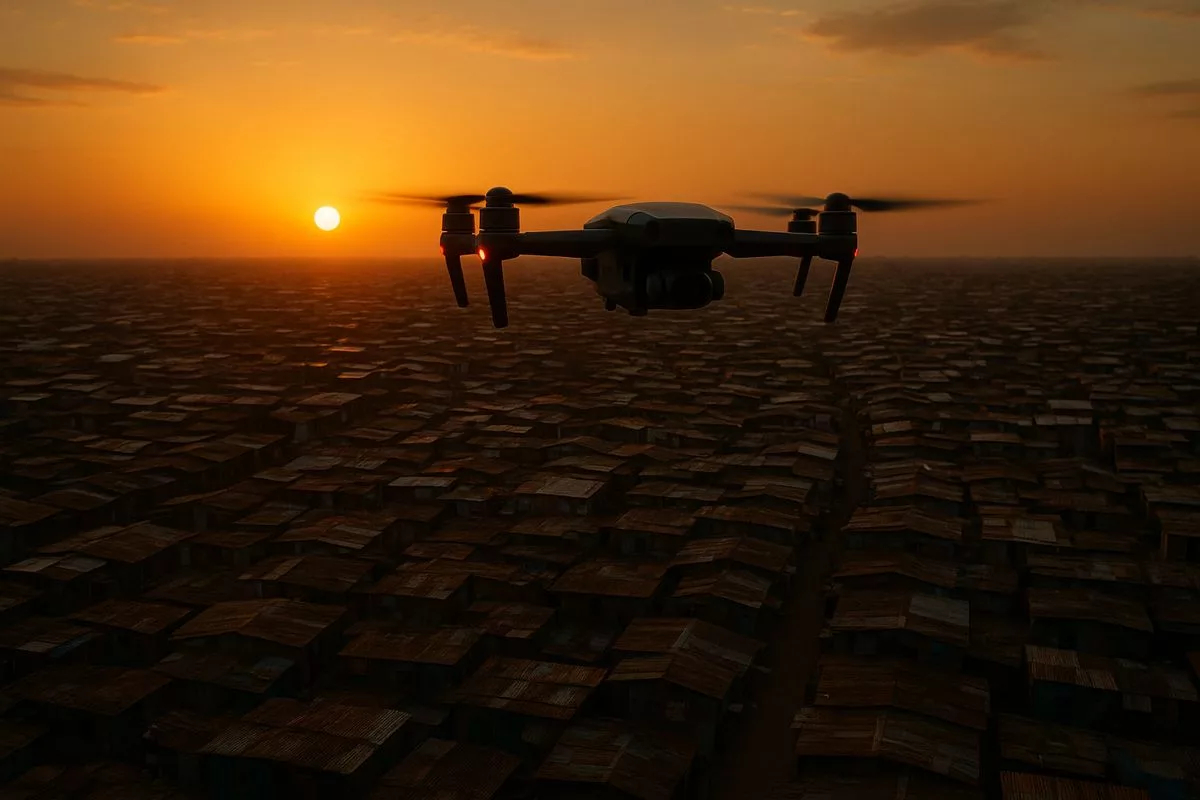
A DJI Mini 3 hovered 80 m above Extension 6, tailing a green Honda Ballade spotted at four prior murders. Meanwhile, an informer codenamed “Kewpie” live-streamed from a body-cam while buying klipdrif in a Renoster Street shebeen, confirming Ruwaan “Gats” Gasant was tossing bones in the back room. -
23:15-01:30 – Breach*
Three four-man fire-teams hit simultaneously: - Alpha booted Gasant’s zinc door; a Rottweiler dropped to a dart from the SPCA.
- Bravo burst into an Athlone council house where “Bubbles”, 36, was oiling a Vector CP1.
- Charlie cloned a master key and ghosted into a Manenberg flat, cuffing a 19-year-old lookout.
4. What They Dragged Out & What It Means
- Hardware Carted Away*
- A Vector CP1 with a scrubbed serial, seven in the mag.
- A Beretta 92S, once standard-issue to Italian carabinieri, now matched ballistically to four previous scenes.
-
A home-made “ghat” shotgun whose barrel began life as a steering column.
-
Chemistry & Cash*
- 312 mandrax tablets stamped Rolex, street value R31k.
- Two half-kilo tik bricks, 78 % pure.
-
R14 730 in R50 wads, each note marinated in gun oil.
-
Paper Trail*
- A 2003 baptism certificate scanned for fake IDs.
- A crayon sketch of the Athlone court, arrows pointing to “cover” and “exfil”.
Because South Africa never clocks out on murder, detectives reopened 17 cold dockets. The Beretta now ties to:
– A nine-year-old girl shot while doing homework in Hanover Park, 2017.
– A Metro cop wounded in Lavender Hill, 2019.
– A birthday-party massacre in Parow that left three teens dead, 2021.
Charges stack up like bricks: two murders, five attempted murders, four counts of illicit firearms, three POCA money-laundering raps, plus conspiracy extracted from WhatsApp transcripts.
5. Prison, Politics & the Algorithm of Gunfire
The trio were trucked to Pollsmoor’s A4 wing where newcomers must march the “timeline parade” while their dockets are shouted through the bars. A R5 000 airtime bounty already floats on each head – penance for Rash-E’s blood – so warders imposed 23-hour lockdown, a privilege normally reserved for cop-killers.
Outside, 450 rookies marched out of Oudtshoorn and Bishop Lavis academies on 25 November. Seventy-two percent grew up on these streets; they speak Kaapse Afrikaans and sabela, the prison dialect. Policy forces them to spend year one embedded with the AGU, patting down cousins and former classmates. The informer tariff has crashed from R1 000 to R200 per tip, a side-effect economists label “trust commodification” and gang bosses call “Christmas groceries”.
Technology is the new snitch. Since 2022 the city has hidden 312 acoustic sensors inside fake Telkom boxes. Calibrated to the crack of an R5, the algorithm swallows 1.2 million sound clips daily. Over raid weekend it logged fourteen volleys; only one triggered a human 10111 call. Two echoes married the Vector found under Bubbles’ pillow, nailing him to affidavits he never saw coming.
6. Aftermath & the Calendar of Threats
In Manenberg the morning after, grandmothers brewed tea on primus stoves while kids reclaimed the road for cricket with a plank for a bat. Aunty B, 48, who has buried two sons, watched the sky: “When the choppers hover we applaud, when they leave we count fresh bodies.” Crime-scene tape fluttered like Pentecost streamers; a teen filmed it for TikTok, tagging it “cleanup on aisle death”.
In Lavender Hill an Anglican priest gathers spent shells – 1 347 so far – for a “monument of cartridges” he plans to erect beside the nave. Each casing is scrubbed of residue and etched with the date it was picked off a pavement.
Meanwhile, young generals stream Vice documentaries on Chicago drill rap and Naples’ Camorra. Cocaine lands at the harbour for US $21k a kilo; cut and retailed on the Flats it fetches US $78k – a 270 % mark-up higher than any American or European port. The locals have copied the Camorra’s franchising playbook: rent a corner to a freelancer who pays protection in grams, not rand.
What the Next 90 Days Hold
- Ballistic reports on fourteen more firearms are due mid-January; six are rumoured to unlock new dockets and a second arrest wave.
- Prosecutors will petition the high court under the beefed-up POCA, which hands down 20-year stretches for possessing a gang-linked firearm even if the owner didn’t pull the trigger.
- The Social Justice Coalition is suing to force the police minister to publish the full AGU operational blueprint, betting that transparency can disinfect informer corruption.
- Intercepted voice-notes warn of a “fireworks show” before New Year’s – either a beachfront club or a taxi rank, venues chosen for maximum CCTV face-time and social-media virality.
And the drone that filmed Gasant’s zinc palace? It now patrols Philippi wetlands where new shacks sprout overnight. From the sky the tin roofs spell a word no algorithm has learned to read: survival.
What is the Cape Flats Siege?
The ‘Cape Flats Siege’ refers to a dramatic weekend raid by the Western Cape Anti-Gang Unit (AGU) in response to a gang-related murder at Athlone Magistrate’s Court. This operation targeted key figures in Cape Town’s gang landscape, leading to arrests, weapon seizures, and reopening numerous cold cases, highlighting the ongoing gang warfare in the region.
Where are the Cape Flats and why are they significant?
The Cape Flats are a substantial 150 km stretch of land in South Africa, formed as a result of Apartheid’s Group Areas Act in the 1960s. It was where residents from “black spots” like District Six, Simon’s Town, and others were forcibly relocated. Today, it’s divided into 22 distinct territories, each controlled by different gangs, and is the heart of a brutal and long-standing gang war. The significance lies in its history of forced displacement and the ongoing socio-economic challenges that continue to fuel gang activity.
What sparked the specific raid described as the ‘Cape Flats Siege’?
The immediate spark for the ‘Cape Flats Siege’ was the brazen murder of Rashaad “Rash-E” Staggie, a 27-year-old nephew of a Hard Livings gang founder, outside Athlone Magistrate’s Court on December 3rd. He was shot after signing bail papers. This high-profile gang-related killing, which also resulted in the death of a 17-year-old art student caught in the crossfire, reignited tensions between rival gangs, particularly the Hard Livings and Americans, and prompted a swift and aggressive response from the Anti-Gang Unit.
How did the Anti-Gang Unit (AGU) conduct the raid?
The AGU, known for its small, specialized teams, responded with a 72-hour “flash-mob” intelligence operation. They gathered 41 names, used metadata to track suspects, and employed surveillance tools like a DJI Mini 3 drone and an informer with a body-cam. The raid itself involved three four-man fire-teams simultaneously breaching locations in Manenberg, Athlone, and Mitchell’s Plain, leading to arrests and seizures of weapons, drugs, and cash.
What were the results of the raid and what do they signify?
The raid resulted in the seizure of various firearms (including a Vector CP1, a Beretta 92S, and a homemade “ghat” shotgun), substantial amounts of mandrax and tik, and cash. Crucially, the Beretta was ballistically matched to 17 cold cases, including the murder of a nine-year-old girl and a birthday-party massacre. This signifies the deep-rooted nature of the gang problem, the interconnectedness of seemingly disparate crimes, and the AGU’s capacity to link current arrests to past unsolved violence.
What are the ongoing challenges and future threats in the Cape Flats gang war?
Despite the raid, the gang war in Cape Flats is far from over. New threats are constantly emerging, with captured voice-notes warning of a “fireworks show” before New Year’s targeting public venues. The prison system also presents challenges, with bounties placed on the heads of arrested gang members. Technologically, acoustic sensors are being used to detect gunfire, but the underlying socio-economic issues persist, as evidenced by the high profitability of drug trafficking. The sheer scale of violence is highlighted by the collection of 1,347 spent casings for a monument, indicating a community constantly under siege.