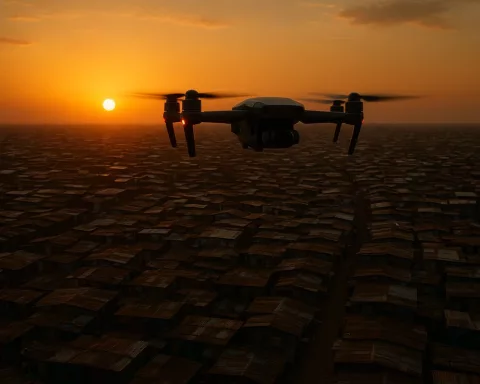
On one Sunday, Table Mountain called for help three times. First, a man fell while taking a photo and sadly died. Then, a lady broke her leg on a slippery path, needing a helicopter rescue. Later, two hikers got lost but were safely guided back. These events show how dangerous the mountain can be, even on nice days, and how important it is to be careful and prepared.
What are the main causes of incidents and rescues on Table Mountain?
Table Mountain incidents are primarily caused by disorientated hikers, falls on slippery or loose terrain, and medical emergencies. Factors like micro-mist, polished quartzite, and poor navigation lead to serious injuries or fatalities, underlining the unpredictable nature of scrambling routes and popular trails.
Dawn on the Slopes: When a Flower Costs a Life
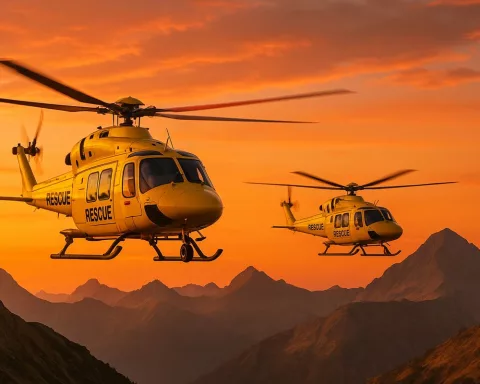
The first light of Sunday painted thin cirrus across the sky, gifting helicopter pilots crystal visibility and hikers merciless heat. At 06:42 the Wilderness Search & Rescue hotline vibrated: a lone scrambler had disappeared over the edge above Bailey’s Kloof, the slender cleft that splits Muizenberg Peak from the St James cliffs. Early callers had heard clacking rock and shouts for help, little more, yet the coordinates were enough for the Western Cape EMS/Air Mercy Service desk to spin up the BK-117 within eleven minutes.
From the cockpit the scene resembled a green wall tilted sixty degrees; a hover deep inside the gully was impossible. Instead, flight paramedic Lauren February rode a 35-metre high-line to a ledge no wider than a kitchen table. She found a 38-year-old man alert yet combative – early cerebral oedema shouting through his actions. While he repeatedly tried to rip off his helmet, February slid a vacuum mattress beneath him, started a norepinephrine push to counter neurogenic shock and packaged him for a four-minute hoist ride. Eight minutes later the helicopter touched down at Groote Schuur’s trauma bay, but despite emergency craniectomy and repeated mannitol blasts, intracranial pressure kept climbing. He died at 09:57.
Guidebooks file Bailey’s Kloof under “moderate,” yet its polished grooves glaze instantly when the Peninsula’s micro-mist rolls in. Investigators learnt the man left the main trail to frame a scarlet Disa uniflora in his viewfinder, stepped onto a veneer of loose scree and loaded his weight onto a cantilevered boulder that was waiting for exactly that impulse. The episode underlines the lethal ambiguity of “scrambling” terrain – neither a path nor a climb – where helmets stay in packs yet ankle traps and head-sized stones lurk every metre.
Rescuers packed up, but the mountain had only begun its shift. Fuel gauges, rotor blades and cardiac monitors reset while families elsewhere tightened shoelaces, oblivious to the fresh scuff now marking the kloof wall.
Mid-Morning on Lion’s Head: One Step, One Snap, Nine Months
Before the BK-117 blades cooled on the V&A Waterfront pad, radio static spilled a second alert. A 52-year-old visitor from Bloemfontein had slipped off the famous ladder sequence on Lion’s Head, two-thirds of the way down the clockwise spiral. She paused to let faster descenders pass, shifted onto quartzite chips polished by thousands of soles, and slid four metres onto a fin of rock. The City Bowl’s cellular shadow meant the first 112 call came from a distant runner who glimpsed the tumble; fifteen precious minutes evaporated before GPS rings closed.
With Kloof Nek road already snarled, the pilot opted for a one-wheel perch on the summit platform. Advanced-life-support paramedic Miguel dos Santos jogged down with a weight-bridged pack, found an open tib-fib fracture spraying arterial blood, and cinched a tourniquet. A traction splint, 250 ml of Voluven and a Bauman bag later, the patient was short-hauled eighty metres to the aircraft. Four minutes of flight set her on the Green Point athletics track where an ambulance shuttled her to Christiaan Barnard Memorial Hospital. Surgeons nailed an intramedullary rod that afternoon; doctors predict full mobility within nine months.
Between the sunrise fatality and the mid-morning maiming, Table Mountain had served notice: gravity works on quartzite just as ruthlessly on sandstone. Social-media albums rarely show the ladder rungs slick with sea-salt haze; they focus on the 360-degree payoff, not the ankle-deep scree that behaves like marbles on glass. The injured hiker had followed a track beaten by legions, yet a single polished chip became the pivot between an ordinary Sunday and months of rehab.
For rescue crews, Lion’s Head is a numbers game: one mission here every forty-eight hours during peak season. The bottleneck path, the radio shadow and the summit landing pad no bigger than a tennis court are constants; only the faces and fractures change.
Afternoon Among the Fynbos: Lost at Kloof Corner
Heat rebounded off the rocks as a south-easter inversion trapped cool, slippery air beneath a warm lid. At 15:17 two British hill-walkers pinged the WSAR WhatsApp from beneath Kloof Corner, the prow that catapults views of the City Bowl into postcard territory. They had set out at 13:00 aiming to tick India Venster before the forecast wind, drifted left at the upper buttress and cliffed out on a vegetated ramp. Phone batteries bled down to nine percent; a blurred photo of vertical fynbos and a single GPS pin were their lifeline.
Afternoon thermals ruled the helicopter out, so incident commander Gavin Dijkhuis launched a ground-only sortie. Nkosinathi Mbele, a 32-year-old medical student and Mountain Club trail runner, grabbed a waterproof 1:10 000 topo and a handheld VHF at the lower cable station. Twenty-eight minutes later he intercepted the pair beside “a big tree growing out of a crack,” exactly as their last voice note promised. Electrolyte sachets, wind-shells and a calm explanation of uphill versus downhill later, Mbele shepherded them back to the Kloof Corner contour path. They reached the Roundhouse in time for sunset beers – embarrassed, intact and now lifelong evangelists for offline maps.
Disorientation claims more victims on Table Mountain than technical falls. Every cairn looks decisive, every gorge appears to offer a shortcut, yet fynbos walls close in like green hallways until even seasoned navigators question their compass. Sunday’s incident ended without an IV line or a medevac, but it chewed through responder hours, topo maps and cortisol all the same. In the rescue ledger, a “simple walk-out” still counts against the annual budget and volunteer stamina.
Hidden Numbers, Hard Questions: What One Day Really Costs
Three emergencies, twelve hours, but the visible tally is only the tip. WSAR archives reveal 2.3 “ghost calls” for every verified incident – false alarms, hoaxes or self-resolved panics that still trigger satellite sweeps, weather-risk matrices and helicopter fuel calculations. An AMS BK-117 burns R 28,000 per airborne hour; Cape Peninsula flight time now exceeds 400 hours a year, triple the figure of a decade ago. Someone’s taxes, donations and medical-aid premiums foot that bill even when hashtags have moved on.
Sunday’s weather looked benign, yet a 2.8-metre post-frontal swell wrapped salt haze around lower trails, and a temperature inversion at 800 m laid an invisible film of condensation on every rock face – black ice in summer form. Forecasters already feed inversion data into ranger briefings; future trailhead posters will flag “micro-slick risk” the way Alpine bulletins warn of avalanche. Knowledge spreads, but so does the crowd.
Gear trends lag behind marketing hype. None of the three parties carried satellite communicators; rescues began only when bystanders dialled in. Sales of Garmin inReach and Spot units have jumped 40 % year-on-year, yet buyers often forget to register emergency contacts, turning SOS buttons into expensive paperweights. WSAR is piloting QR-code trailhead kiosks: scan, auto-email your route, turn-around time and device IMEI to a dashboard the City’s Disaster Risk Management Centre can ping if you go quiet. Quick, free, frictionless – if hikers use it.
Policy looms larger each season. The 2025–2030 Table Mountain National Park management plan proposes colour-coded permits: free for “green” hikes such as Platteklip, R 35 for “orange” routes like India Venster, and guide-only access to “red” traverses such as Tranquillity Cracks. Revenue would fund a permanent rescue cache at the upper cable station – vacuum mattresses, haemostatic gauze, drone-mounted thermal imager. Critics call it exclusionary; planners point to Aoraki/Mt. Cook and Torres del Paine where user-pays keeps helicopters fuelled and volunteers trained. The debate is far from settled.
Monday morning delivered the human postscript. The partner of the Bailey’s Kloof victim posted on WSAR’s wall: “He left at 5 a.m. to catch sunrise and still make our daughter’s first ballet exam. Please, take a friend, leave a plan.” The note eclipsed rugby scores for half a day and cut India Venster footfall by 23 % on Tuesday – an ephemeral dip, yet measurable. Behavioural scientists argue that emotion, not statistics, changes behaviour; for a few hours at least, the mountain had a smaller audience.
And yet the sandstone endures. Hydrangeas already disguise the heel-scrape on Lion’s Head; tyre marks from Mbele’s shoes will vanish in the next south-easter; fresh quartzite gleams where a boot chipped the surface. Instagram feeds refill with golden-hour panoramas, and rescue crews swap oxygen cylinders, knowing the next ringtone is only a misstep away. In an urban wilderness the line between routine and tragic is sometimes no wider than a damp footprint on warm rock.
What are the main causes of incidents and rescues on Table Mountain?
Incidents on Table Mountain are primarily caused by disorientated hikers, falls on slippery or loose terrain, and medical emergencies. Factors such as micro-mist creating slick surfaces, polished quartzite, and poor navigation contribute to serious injuries or fatalities, highlighting the unpredictable nature of both scrambling routes and popular trails.
Why is Table Mountain considered dangerous even on nice days?
Even on seemingly nice days, Table Mountain poses significant dangers due to various factors. Micro-mist can roll in unexpectedly, making rock surfaces like polished quartzite extremely slippery. The terrain itself, particularly scrambling routes, can be ambiguous and unstable, with loose scree and cantilevered boulders. Additionally, the mountain’s vastness can lead to disorientation, and cell signal shadows can delay emergency calls, as seen in the Lion’s Head incident.
What precautions should hikers take when visiting Table Mountain?
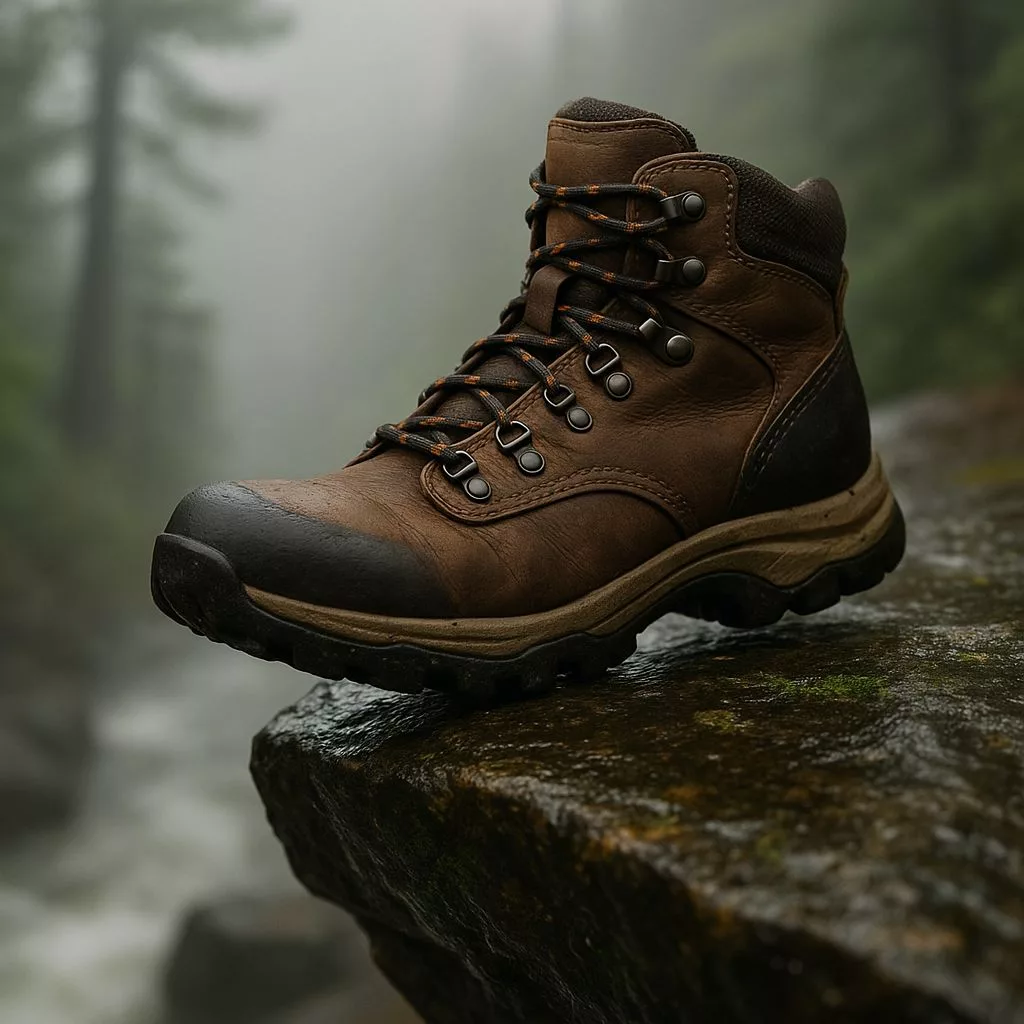
Hikers should be well-prepared and take several precautions. This includes carrying offline maps, ensuring phone batteries are fully charged, and ideally, carrying satellite communicators with registered emergency contacts. It’s crucial to stay on marked trails, be aware of weather conditions and potential micro-slick risks, and inform someone of your route and expected return time. Wearing appropriate footwear with good grip is also essential.
How do rescue operations on Table Mountain work, and what resources are involved?
Rescue operations on Table Mountain are coordinated by Wilderness Search & Rescue (WSAR) and involve various resources. These include helicopter services (like the BK-117 from Western Cape EMS/Air Mercy Service) for rapid evacuation, advanced-life-support paramedics, and ground teams comprising volunteers, medical students, and experienced trail runners. Rescuers utilize specialized equipment such as high-lines, vacuum mattresses, traction splints, and VHF radios. The operations can be complex due to challenging terrain, weather, and cellular signal limitations.
What are the financial costs associated with Table Mountain rescues?
Table Mountain rescues incur significant financial costs, which are often covered by taxes, donations, and medical-aid premiums. An AMS BK-117 helicopter, for example, costs R 28,000 per airborne hour, with annual flight time exceeding 400 hours. This doesn’t include the costs for ground teams, equipment, and administrative overhead. Even “ghost calls” and false alarms trigger resource deployment and contribute to these expenses.
What future changes are being considered to improve safety and manage access on Table Mountain?
Future changes to improve safety and manage access are being debated. The 2025–2030 Table Mountain National Park management plan proposes colour-coded permits, with varying fees for different routes (e.g., free for “green” hikes, R 35 for “orange,” and guide-only for “red”). This revenue would fund a permanent rescue cache at the upper cable station. Additionally, initiatives like QR-code trailhead kiosks are being piloted to allow hikers to easily share their route plans and emergency contacts, aiming to make safety measures more accessible and frictionless.