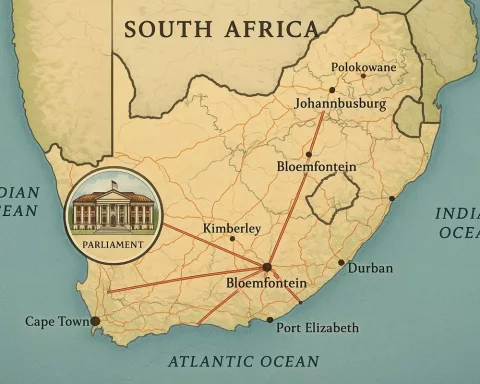
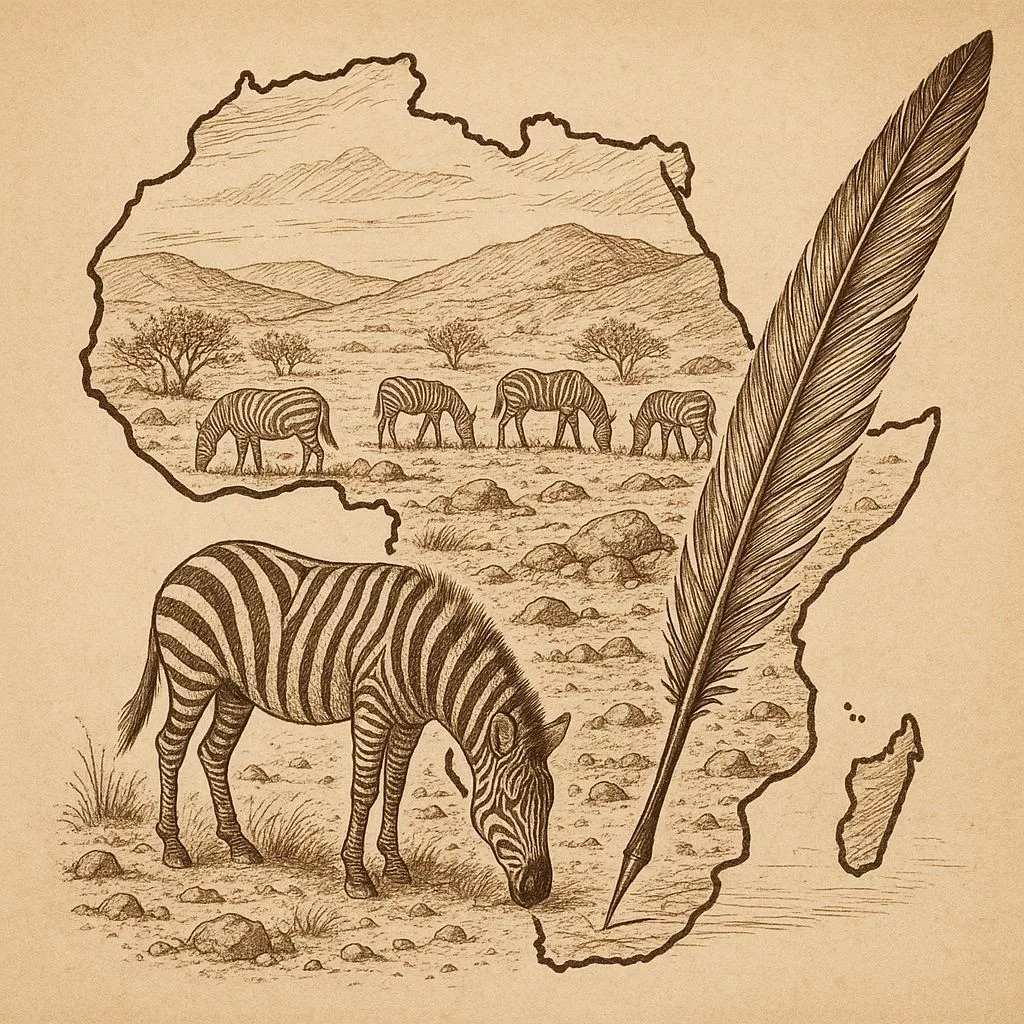
Woohoo! Almost 50,000 hectares of wild land in the Succulent Karoo just got a huge Christmas present! This amazing gift created brand new nature reserves and made old ones even bigger. It’s like magic, completing a super-long zebra pathway and keeping Ladismith’s water flowing. Plus, it’s a safe home for many special plants and animals, some of them super rare and found nowhere else on Earth!
What is the significance of the new reserve additions in the Succulent Karoo?
On December 8, 2023, nearly 50,000 hectares were added to the public estate in the Succulent Karoo, creating new reserves and expanding existing ones. This expansion completed a 150,000-hectare zebra corridor, secured vital spring-fed headwaters for Ladismith, and protected numerous endangered plant and animal species, including the Cape mountain zebra and unique succulents.
1. The Stroke of a Pen That Redrew the Map
On 8 December 2023, while the rest of South Africa prepared for the holiday lull, a quiet bureaucratic flourish pulled almost 50 000 ha of quartz flats, folded gorges and wolf-pack mountains into the public estate.
Two brand-new nature reserves – Zebraskop and Waterkloof – were born, and two veterans, Anysberg and Knersvlakte, each swallowed a neighbour whole.
The scale is easiest to grasp if you imagine bulldozing 65 000 soccer pitches into one contiguous wild block; the ecological payoff is harder to visualise until you realise the transactions welded together the last missing piece of a 150 000-ha zebra corridor and locked down spring-fed headwaters that keep Ladismith’s taps from coughing dust.
Money came from the Leslie Hill Succulent Karoo Trust, a silent Johannesburg philanthropist’s posthumous cheque-book, plus a constellation of donors rallied by WWF-South Africa.
CapeNature supplied the ecologists, the Surveyor-General the ink, and four farm deeds were flipped from “agricultural” to “protected” before the livestock auctions reopened in January.
No speeches, no ribbon-cutters, just four title deeds sliding across a desk and the instant knowledge that the Cape’s conservation jigsaw had snapped another 47 017 pieces into place.
2. Zebraskop: Where the Last Zebra Gap Vanished
Zebraskop is a 3 952 ha tilting plateau that stares south into the Gamka River canyon.
Until December it was a goat-and-cattle farm called Excelsior, laced with barbed wire that told Cape mountain zebra stallions to turn back.
Radio-collars fitted in 2021 proved the animals were willing to trek the 6 km gap between the Gamkaberg stronghold and the Rooiberg range, yet the fence kept them genetically boxed.
When the wire rolled up, a mare stepped through within 36 hours; camera traps now register nightly nose-to-tail traffic, swelling the world’s largest free-ranging population beyond the 2 600 already counted.
The same basalt koppies that tempted zebra also hide the planet’s tiniest tortoise, the speckled padloper, and a ruby-flowered aloe that waits for lightning fires before it blooms.
Aloe gamkaensis was described only in 2019; its entire global footprint is the renosterveld ridges now safe inside the reserve.
In one stroke the province gained a stepping-stone for megafauna and a micro-refuge for thumb-sized vegetation, proving that conservation can multitask at wildly different scales.
3. Waterkloof: The Karst Sponge That Saved a Town
Ladismith at the foot of the Towerkop peak survives on 180 mm of annual rain that behaves like a drunken calendar – either skipping entire years or arriving in one February tempest.
Waterkloof, a 2 062 ha former goat ranch, owns six springs that never dry.
Hydrologists drizzled fluorescent dye into a north-border sinkhole and watched it pop out 14 km away in the town’s boreholes exactly 11 days later, confirming an underground highway that carries snow-melt from cliff to tap.
By declaring the farm a reserve, the municipality ditched a R120 million dam scheme that had haunted its budget since 2017 and secured a watershed for the price of a fence removal crew.
The plateau is a lace-work of dolines and blind valleys – karst architecture that turns every thundercloud into a rechargeable battery.
Above ground, the new status protects relic stands of Breede River yellowwood and a pair of black eagles that nest on the waterfall that only flows after big winter cold fronts.
Below ground, dissolved limestone caverns store the insurance policy Ladismith will need when climate models squeeze the southern Cape dry.
4. Anysberg & Knersvlakte: Old Hands, New Tricks
-
Anysberg swells by 6 918 ha*
Born in 1986 as a buffer for the Swartberg mountains, Anysberg already shelters black rhino and the densest zebra herd outside of Kruger.
The new wedge climbs to the 1 622 m summit of the Anysberg itself and cradles a fynbos patch on north-facing quartzite scree last botanised in 1949.
Field teams rediscovered two stands of the critically endangered Anysberg spiderhead, a 30 cm protea relative pollinated exclusively by winter-active monkey beetles.
The addition pushes the reserve boundary to 62 918 ha, enough room for a collared leopard named Matinjies to log a 92 km midnight dash to the Swartberg pass – longest inland traverse recorded in the province since 2018. -
Knersvlakte gains 34 084 ha of blinding quartz*
The plain’s name comes from the grinding crunch of wagon wheels on gravel the size of golf balls; under each pebble lives a galaxy of succulents.
The December deal scoops up 28 former farm portions, including “Numees” where 12 Red-Listed species survive on soil that never exceeds 6 °C thanks to quartz mirrors that bounce heat away.
One denizen, Conophytum ratum, has translucent leaves like frozen grapes and fetches €1 500 on Seoul auction sites; the proclamation now classifies any picking as a Schedule 1 crime with a minimum R5 million fine.
Climate modellers call the acquisition a “living seed bank for a 2070 heat scenario,” because reflective quartz fields lag regional temperatures by half a decade, buying plants time to evolve or migrate.
5. Beyond the Hectares: Jobs, Carbon and Crime
Fence posts became currency: 83 km of obsolete wire were rolled up and stored for recycling into anti-poaching kraals elsewhere, opening a 150 000-ha super-block from Anysberg to Rooiberg.
Inside that space CapeNature embedded two environmental-crime investigators; within six weeks they busted two Taiwanese nationals at Cape Town International with 400 stolen Conophytum wettsteinii traced to the freshly minted Zebraskop section.
Meanwhile, LiDAR flights pegged above-ground carbon at 1.3 million tonnes CO₂-eq, mostly in root systems that qualify for deferred-credit payments under South Africa’s draft climate-finance rules – cash without planting a single tree.
The same declaration created 180 temporary “Green Jobs” posts, 70 % reserved for women and half for youth under 35.
Trainees leave with a National Qualification Framework certificate in Natural Resource Guardianship and skills that span snake-handling, drone piloting and data science, a ladder into a biodiversity sector that keeps expanding as the climate warms.
If the province can repeat the formula on the 18 000 ha Remhoogte plateau above Hermanus and the 27 000 ha whale-coast strandveld now pencilled on its secret map, the Western Cape will hit its 30-by-30 target with time to spare.
What is the significance of the new reserve additions in the Succulent Karoo?
On December 8, 2023, nearly 50,000 hectares were added to the public estate in the Succulent Karoo, creating new reserves and expanding existing ones. This expansion completed a 150,000-hectare zebra corridor, secured vital spring-fed headwaters for Ladismith, and protected numerous endangered plant and animal species, including the Cape mountain zebra and unique succulents.
How much land was added and what new reserves were created or expanded?
Almost 50,000 hectares (specifically 47,017 hectares) were added to the public estate. This led to the creation of two new nature reserves, Zebraskop (3,952 ha) and Waterkloof (2,062 ha), and the expansion of two existing reserves: Anysberg by 6,918 ha and Knersvlakte by 34,084 ha.
What is the ‘super-long zebra pathway’ and how was it completed?
The ‘super-long zebra pathway’ refers to a 150,000-hectare zebra corridor, which was completed by the addition of Zebraskop Nature Reserve. This 3,952-hectare plateau, formerly a goat-and-cattle farm called Excelsior, eliminated the last missing piece of the corridor, allowing Cape mountain zebras to freely move between the Gamkaberg stronghold and the Rooiberg range, facilitating genetic diversity and increasing their free-ranging population.
How do the new reserves protect Ladismith’s water supply?
Waterkloof, a 2,062-hectare former goat ranch, contains six springs that never dry. Hydrological studies confirmed an underground connection between the plateau’s karst architecture and Ladismith’s boreholes. By declaring Waterkloof a reserve, the town secured its water source, avoiding a costly dam construction project and relying on the natural underground storage of snow-melt.
What unique biodiversity is protected by these new additions?
The new reserves protect a wide array of unique biodiversity. Zebraskop is home to the world’s tiniest tortoise, the speckled padloper, and the recently described ruby-flowered Aloe gamkaensis, whose entire global footprint is within the new reserve. Anysberg’s expansion protects critically endangered Anysberg spiderhead, a protea relative, while the Knersvlakte addition secures 12 Red-Listed succulent species, including the highly sought-after Conophytum ratum, within reflective quartz fields that act as a ‘living seed bank’ for future climate scenarios.
What are some of the broader benefits beyond ecological protection?
Beyond ecological protection, the new reserves bring several broader benefits. Environmentally, 83 km of old fences were recycled into anti-poaching kraals, and the area’s root systems hold 1.3 million tonnes of CO₂-equivalent, qualifying for carbon credit payments. Economically and socially, 180 temporary ‘Green Jobs’ were created, with 70% for women and half for youth, providing training in Natural Resource Guardianship, drone piloting, and data science. Furthermore, the declaration led to the apprehension of poachers attempting to smuggle rare succulents, highlighting enhanced anti-crime measures.