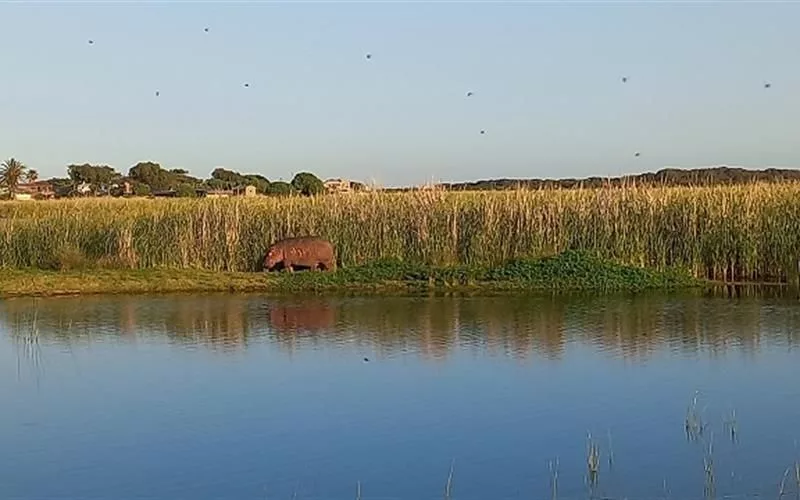
Experience the wonder of a family of Common Hippopotamus living in the heart of Cape Town’s False Bay Nature Reserve. These hippos have been shaping the wetland ecology under the City’s Biodiversity Management team’s vigilant supervision since 1981, and their survival and thriving are a tribute to the relentless work of conservationists. Hippos are native to Africa and face multiple threats, including habitat loss, poaching, human-wildlife conflict, climate change, and uncontrolled trade, making the City’s commitment to preserving this distinct population all the more crucial.
A Bountiful Oasis Amidst Concrete: Cape Town’s Hippo Haven
Discover the extraordinary family of Common Hippopotamus nestled within the lush expanse of the False Bay Nature Reserve in Cape Town. These hippos have been shaping the wetland ecology under the City’s Biodiversity Management team’s vigilant supervision since 1981. The survival and thriving of these hippos are a tribute to the relentless work of conservationists who have strived to restore the natural heritage of the Fynbos Biome.
The Hippo Hermitage within the False Bay Nature Reserve
Nestled within the lush expanse of the False Bay Nature Reserve, in the heart of Cape Town, is an extraordinary family of Common Hippopotamus. This small hippo clan has made Rondevlei their home since 1981. For over four decades, they have shaped the wetland ecology under the City’s Biodiversity Management team‘s vigilant supervision. The survival and thriving of these hippos are a tribute to the relentless work of conservationists who have strived to restore the natural heritage of the Fynbos Biome, a legacy that was on the brink of extinction around 300 years ago.
Two male hippos began the revival journey in 1981, followed by two females in 1983. The main goal was to control the intrusive Seashore Paspalum, a species threatening the wetland habitats’ equilibrium. The hippos, seemingly conscious of their crucial role, took command swiftly, halting the invasive species‘ destructive activities and reinstating the ecological balance of the Rondevlei wetlands.
A Typical Hippo Family and the City’s Role
In nature, a hippo pod usually consists of one leading male, multiple females, and their offspring. When male calves mature, they branch out to establish their territories. Intriguingly, the original alpha male of Rondevlei still reigns, leading to older male offspring’s need to relocate to prevent internal disputes. The City has undertaken numerous successful hippo relocation initiatives to this effect.
Currently, a young male hippo is making headlines for his audacious escape from Rondevlei, an attempt to avoid the dominant male. This young male is now targeted for relocation. The City’s Biodiversity Management Branch, together with Quemic security rangers and SAPS, is responsible for a safe and tranquil capture of the animal before he is transported skillfully in a specialized container to his new habitat.
The Life of Hippos and Conservation Efforts
Hippos, native to Africa, are semi-aquatic creatures, often hidden within their wetland homes during the day and only roaming after sunset to feed on grass. Their existence in an ecosystem leads to alterations in plant communities, nutrient distribution, and the physical environment, all through their simple mobility. These large, awe-inspiring animals require extensive foraging areas, consuming anywhere between 25 and 40 kg of plant material daily.
However, the urban environment confines these majestic creatures, necessitating thoughtful and controlled management. Globally, hippos are on the brink of extinction and confront multiple threats, including habitat loss, poaching, human-wildlife conflict, climate change, and uncontrolled trade. While South Africa’s hippopotamus population is not currently endangered, these challenges highlight the importance of protective measures.
The City’s Commitment to Preserve the Hippo Population
The City of Cape Town is conscious of its duty and has been proactive in preserving this distinct Hippopotamus population. The City’s commitment stretches beyond these emblematic creatures, as it also aims to maintain the False Bay Nature Reserve as an ecological education center and a beacon of natural heritage.
The fascinating spectacle of the hippo pod offers a compelling glimpse into the past, narrating a rich story of Cape Town’s natural heritage before the onset of urban development. The existence of these captivating creatures in Rondevlei is a testament to the city’s pledge to conserve its unique biodiversity, encouraging both residents and visitors to appreciate the wild splendor hidden in their backyard.
What is Cape Town’s Hippo Haven?
Cape Town’s Hippo Haven is a family of Common Hippopotamus living in the False Bay Nature Reserve in Cape Town. They have been shaping the wetland ecology under the City’s Biodiversity Management team’s supervision since 1981.
What is the City’s role in preserving the Hippo population?
The City of Cape Town is committed to preserving the distinct Hippopotamus population and maintaining the False Bay Nature Reserve as an ecological education center and a beacon of natural heritage. The City has been proactive in protecting these creatures, who face multiple threats globally, including habitat loss, poaching, human-wildlife conflict, climate change, and uncontrolled trade.
What is a typical hippo family and the City’s role in managing the population?
A hippo pod usually consists of one leading male, multiple females, and their offspring. The City has undertaken numerous successful hippo relocation initiatives to prevent internal disputes when male calves mature and need to establish their territories.
What is the life of hippos and conservation efforts?
Hippos are semi-aquatic creatures, often hidden within their wetland homes during the day and only roaming after sunset to feed on grass. Their existence in an ecosystem leads to alterations in plant communities, nutrient distribution, and the physical environment, all through their simple mobility. The urban environment confines these majestic creatures, necessitating thoughtful and controlled management. Hippos face multiple threats globally, including habitat loss, poaching, human-wildlife conflict, climate change, and uncontrolled trade.
What is the Hippo Hermitage within the False Bay Nature Reserve?
The Hippo Hermitage is a family of Common Hippopotamus nestled within the lush expanse of the False Bay Nature Reserve in Cape Town. They have been shaping the wetland ecology under the City’s Biodiversity Management team’s vigilant supervision since 1981. The hippo pod in Rondevlei is a testament to the city’s pledge to conserve its unique biodiversity.
What is the story behind the Hippo Hermitage in Rondevlei?
Two male hippos began the revival journey in 1981, followed by two females in 1983. The main goal was to control the intrusive Seashore Paspalum, a species threatening the wetland habitats’ equilibrium. The hippos took command swiftly, halting the invasive species’ destructive activities and reinstating the ecological balance of the Rondevlei wetlands. The existence of these captivating creatures in Rondevlei is a testament to the city’s pledge to conserve its unique biodiversity.