
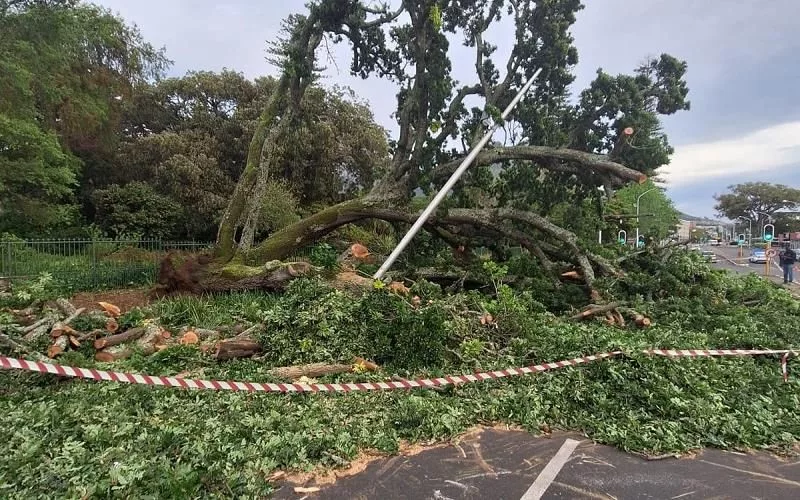
A Champion Tree in Arderne Gardens, Cape Town, has fallen, causing sadness among locals and horticulture enthusiasts. The Turkish Oak, which stood for nearly a century, was a majestic sight, reaching up to 25 meters in height with a 16-meter spread. Various factors contributed to the oak’s collapse, but the wood will be repurposed and reused in the garden, ensuring its continued contribution to its beauty and sustainability. The remaining four Champion Trees in the garden enjoy protected status, and ongoing efforts to preserve and nurture the collection ensure Arderne Gardens remains a symbol of natural wonder for future generations.
A Tragic Loss in Arderne Gardens
Arderne Gardens, a lush haven located in Claremont, Cape Town, recently faced a devastating loss. An emblematic Champion Tree unexpectedly toppled in early October, causing shock and grief among locals and horticulture enthusiasts. This magnificent Turkish Oak (Quercus cerris) towered for nearly a century, proudly displaying the community’s rich botanical legacy.
On the morning of October 4th, the City’s Recreation and Parks Department was alerted to the fallen giant. Their emergency tree team promptly responded and located the damaged colossus, which had blocked Claremont Main Road and disrupted traffic. Fortunately, no one was injured, and only minor damage occurred to the road curbing and a streetlight pole.
The Turkish Oak, originating from Europe and parts of Asia, was undeniably awe-inspiring, reaching up to 25 meters in height, with a 16-meter spread and a 1.2-meter trunk diameter. Planted during the early to mid-20th century, this historic tree was likely a gift from the Arderne family, whose tradition of diverse tree species persists today.
The Fall of the Mighty Oak
Several elements played a role in the mighty oak’s demise, including above-average rainfall, powerful gale-force winds, and the lingering effects of previous storms. In addition, the tree may have succumbed to heart rot, a fungal disease that weakens the core, making it vulnerable to collapse.
However, the fallen Champion Tree’s story does not end here. As the City’s Mayoral Committee Member for Community Services and Health, Councillor Patricia van der Ross, expressed, “The wood from the fallen tree will be repurposed and reused within Arderne Gardens, ensuring that it continues to contribute to the beauty and sustainability of the garden.”
This event signifies the second Champion Tree loss in two years, following the great Cork Oak’s downfall in 2021. The garden’s Champion Tree tally has now decreased from six to four. Nevertheless, Arderne Gardens remains a sanctuary of natural beauty for visitors seeking solace and inspiration among its abundant assortment of native and exotic plant species.
The Legacy of Champion Trees
Champion Trees, of which 13 remain in the city, hold immense significance and value. Their distinctive size, age, aesthetic appeal, cultural importance, historical value, and tourist attraction set them apart. Arderne Gardens houses the remaining four, including the Moreton Bay Fig (Ficus macrophylla), Norfolk Island Pine (Araucaria heterophylla), Aleppo Pine (Pinus halepensis), and Queensland Kauri (Agathis robusta).
These extraordinary trees enjoy protected status under the National Forests Act of 1998 (ACT NO. 84 OF 1998), as amended. The act’s provisions stipulate that no person may interfere with a protected tree or obtain products from it without a granted license or exemption.
As we grieve the loss of this magnificent Turkish Oak, the legacy of Arderne Gardens and the remaining Champion Trees continues to thrive. Through ongoing efforts to preserve and nurture the garden’s remarkable tree collection, Arderne Gardens endures as a steadfast emblem of natural wonder and serenity for future generations.
What is a Champion Tree?
A Champion Tree is a tree that is recognized for its size, age, aesthetic appeal, cultural importance, historical value, and tourist attraction.
How many Champion Trees are left in Cape Town?
There are 13 Champion Trees left in Cape Town.
What happened to the fallen Champion Tree in Arderne Gardens?
The fallen Champion Tree in Arderne Gardens was a Turkish Oak that succumbed to several factors, including above-average rainfall, powerful gale-force winds, the lingering effects of previous storms, and possibly heart rot.
What will happen to the fallen tree’s wood?
The wood from the fallen tree will be repurposed and reused within Arderne Gardens, ensuring that it continues to contribute to the beauty and sustainability of the garden.
How many Champion Trees are left in Arderne Gardens?
Arderne Gardens now has four Champion Trees left after the loss of the Turkish Oak and the Cork Oak in 2021.
What kind of trees are the remaining Champion Trees in Arderne Gardens?
The remaining Champion Trees in Arderne Gardens are the Moreton Bay Fig, Norfolk Island Pine, Aleppo Pine, and Queensland Kauri.
What is the National Forests Act of 1998?
The National Forests Act of 1998 is an act that protects trees, including Champion Trees, under its provisions, which stipulate that no person may interfere with a protected tree or obtain products from it without a granted license or exemption.
How is Arderne Gardens preserving and nurturing its remaining Champion Trees?
Arderne Gardens is making ongoing efforts to preserve and nurture its remaining Champion Trees to ensure their continued growth and survival.