At Strand Beach in Cape Town, South Africa, a group of people harassed an adult seal, throwing rocks and sticks and allowing their dogs to attack the animal. The seal eventually bit a beachgoer who got too close, and the incident raised concerns about respecting wildlife. A cooperative effort led to the seal’s capture and removal for evaluation, but the animal ultimately died due to stress. The tragedy underscores the importance of conservation efforts and enforcing laws to protect wildlife from mistreatment.
What happened to the seal at Strand Beach in Cape Town, South Africa?
A group of people harassed an adult seal at Strand Beach, throwing rocks and sticks and allowing their dogs to attack the animal. The seal eventually bit a beachgoer who got too close, and the incident raised concerns about respecting wildlife. A cooperative effort led to the seal’s capture and removal for evaluation, but the animal ultimately died due to stress. The tragedy underscores the importance of conservation efforts and enforcing laws to protect wildlife from mistreatment.
A Disturbing Incident: Disregard for Wildlife
In the scenic coastal city of Cape Town, South Africa, a distressing event occurred recently that powerfully demonstrates the significance of respecting wildlife and their natural homes. An adult seal, looking for solace on Strand Beach‘s shores, suffered from mindless harassment by a group of people. The heartbreaking outcome of this incident raises concerns about our responsibilities as humans towards the creatures with whom we share our world.
On the fateful evening of October 18, 2023, the tormented seal, having suffered endless provocation, finally reached its breaking point. A beachgoer, accidentally coming too close, faced the full force of the animal’s fear-fueled aggression. Injured by the seal’s bite, the woman was immediately taken to the hospital for medical help. Although she remains in good spirits and is expected to make a complete recovery, the same cannot be said for the seal, who had been cruelly harassed.
People visiting Strand Beach subjected the helpless animal to a barrage of rocks and stones, poked it with sticks, and even allowed their dogs to assault it. Many tried to capture footage of the terrified seal reacting to their taunts, completely unaware of the distress they inflicted. Alderman Eddie Andrews, City’s Deputy Mayor and Mayoral Committee Member for Spatial Planning and Environment, condemned the actions of these individuals, stressing the unlawfulness of harassing coastal wildlife and advising the public to maintain a respectful distance.
A Tragic Turn of Events: The Seal’s Untimely Demise
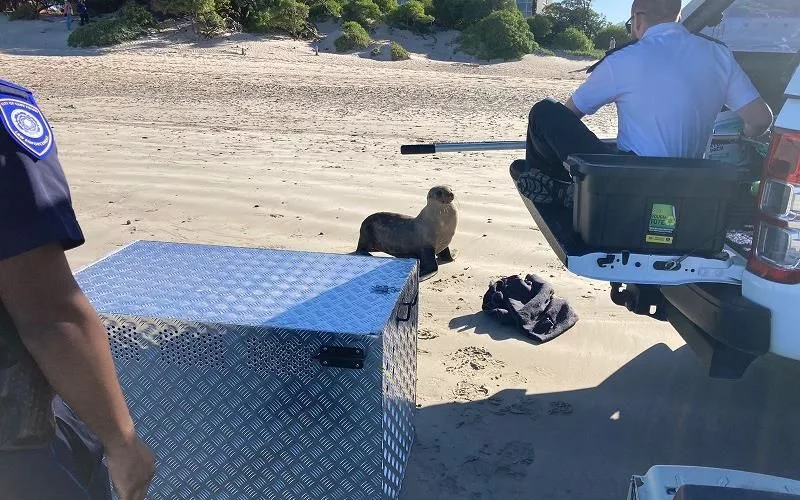
On October 19th, a cooperative effort by the City’s Coastal Management and Law Enforcement teams, the SPCA Wildlife Unit, and the Department of Forestry, Fisheries and the Environment led to the temporary closure of a section of Strand Beach. Their goal: to safely capture and remove the beleaguered seal. Transported to the Two Oceans Aquarium for evaluation, the intention was to release the animal at a secure location, far from human interference.
However, this story was not meant for a happy conclusion. The seal, subjected to tremendous stress from the mistreatment and subsequent capture, ultimately succumbed to its ordeal and perished. Alderman Andrews expressed sorrow over the outcome, stating that this unfortunate situation is all too familiar when seals suffer from harassment or capture. He pointed out the high mortality rate due to stress as the main reason why the Department of Forestry, Fisheries and the Environment, the City, and the SPCA do not engage in capturing and relocating seals as a standard practice.
Learning from Tragedy: Fostering Conservation and Harmony
This upsetting incident serves as a grave reminder of the consequences of human insensitivity and cruelty towards wildlife. We all share the responsibility of protecting the wellbeing of the numerous creatures that inhabit the Earth and respecting the boundaries between our world and theirs. The rich tapestry of life on our planet is an intricate network of interconnections, with each species playing a crucial role in preserving ecological balance.
The story of the Strand Beach seal underlines the importance of conservation efforts and the need for heightened awareness of the wildlife with whom we share our surroundings. Educational programs and public awareness campaigns can be valuable resources in encouraging responsible coexistence between humans and animals. Additionally, it is vital for authorities to enforce existing laws that shield wildlife from harassment and mistreatment, ensuring that the tragic fate of the Strand Beach seal does not befall other defenseless creatures.
Throughout art, literature, and history, we often come across narratives of humans’ deep connection with the natural world. From Romantic poetry that extols the beauty of nature to the reverence displayed by indigenous cultures towards their surroundings, we can find motivation to appreciate and safeguard the diverse life that exists around us. By recognizing our role as Earth’s caretakers and embracing the principles of respect, empathy, and responsibility, we have the power to cultivate a harmonious relationship with our planet’s inhabitants.
The tale of the seal at Strand Beach imparts a profound lesson: the necessity for respect and compassion towards the natural world. It urges us to reevaluate our actions and emphasizes the significance of cherishing the beauty and vulnerability of our shared environment. As we work towards a future where humans and wildlife can coexist peacefully, let this tragic occurrence serve as a reminder of our obligation to protect and treasure the wonders of nature that enrich our lives.
1. What happened to the seal at Strand Beach in Cape Town, South Africa?
A group of people harassed an adult seal at Strand Beach, throwing rocks and sticks and allowing their dogs to attack the animal. The seal eventually bit a beachgoer who got too close, and the incident raised concerns about respecting wildlife. A cooperative effort led to the seal’s capture and removal for evaluation, but the animal ultimately died due to stress.
2. Who was involved in the effort to capture the seal?
The City’s Coastal Management and Law Enforcement teams, the SPCA Wildlife Unit, and the Department of Forestry, Fisheries and the Environment were involved in the effort to capture the seal.
3. Why was a section of Strand Beach temporarily closed?
A section of Strand Beach was temporarily closed to ensure the safe capture and removal of the beleaguered seal.
4. What was the intention for the seal after it was captured?
The intention for the seal after it was captured was to release the animal at a secure location, far from human interference.
5. Why did the seal die after being captured?
The seal ultimately died due to stress from the mistreatment and subsequent capture.
6. Why is it important to respect wildlife?
It is important to respect wildlife to protect their wellbeing and preserve ecological balance.
7. How can we encourage responsible coexistence between humans and animals?
Educational programs and public awareness campaigns can be valuable resources in encouraging responsible coexistence between humans and animals.
8. What lesson can we learn from the tragic incident with the seal at Strand Beach?
The tragic incident with the seal at Strand Beach teaches us the necessity for respect and compassion towards the natural world and emphasizes the significance of cherishing the beauty and vulnerability of our shared environment.