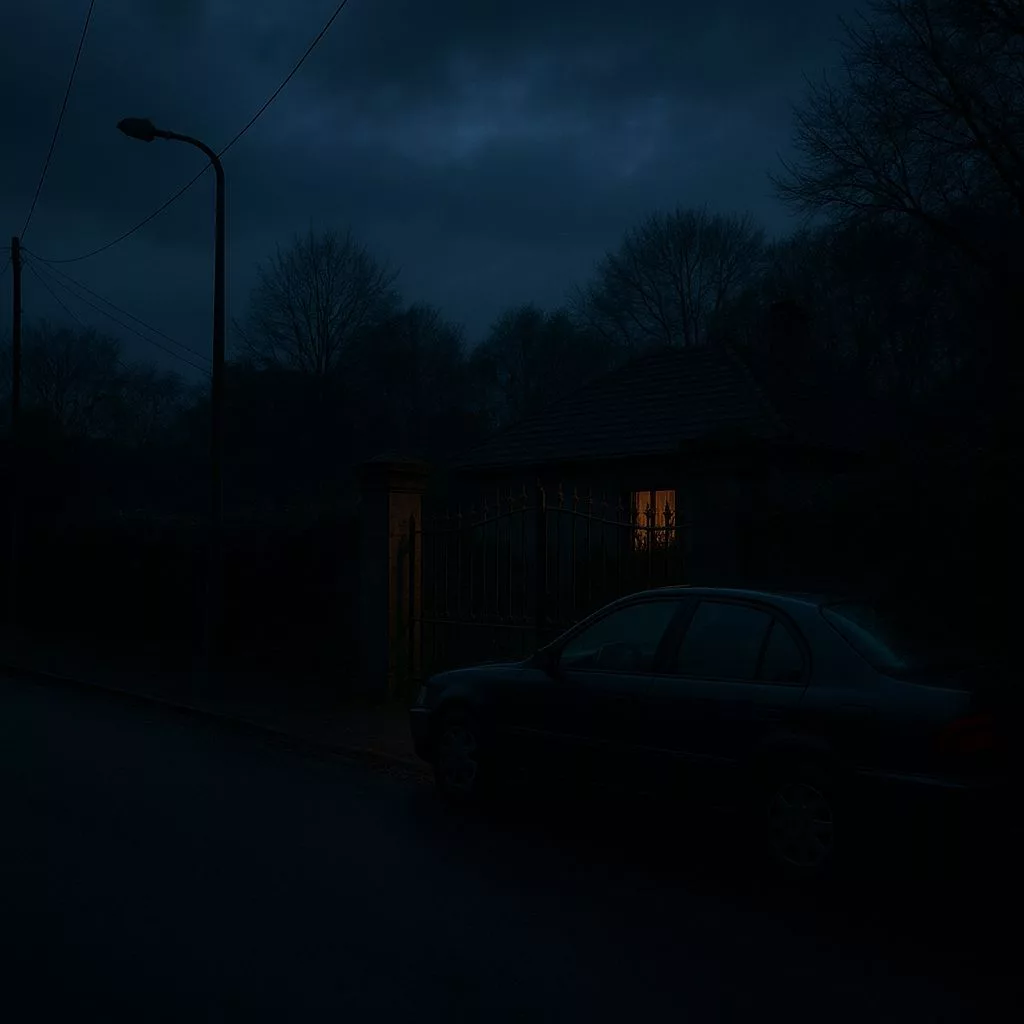
Marius van der Merwe, a former police officer and security firm owner, was brutally shot nine times outside his home in Brakpan, South Africa. He was murdered just after testifying against powerful criminal groups involved in police corruption and illegal tobacco. His death, a clear message from organized crime, left his family shattered and a nation wondering if speaking the truth is now a death sentence. This horrifying event shows how dangerous it is to fight crime in South Africa.
What happened to Marius van der Merwe in Brakpan?
Marius van der Merwe, a former police officer and private security firm owner, was brutally murdered outside his Brakpan home on December 5, 2025. He was shot nine times by assailants in a charcoal-grey Hyundai Tucson after testifying before the Madlanga Commission, where he provided evidence against organized crime networks linked to police corruption and illicit tobacco trade.
1. The Friday That Froze Brakpan: A Summer Night Turns to Horror
The jacarandas were still blooming when the first shots rang out. It was 8:17 PM on December 5, 2025, in the old East Rand mining town of Brakpan, and the summer dusk had painted the sky in shades of lilac and gold. Marius van der Merwe, 49, stepped outside his modest three-bedroom home on Sonnekom Street to lock the gate – a routine gesture that would be his last. Inside, his wife Elana cleared the dinner table while their 12-year-old daughter practiced TikTok dances by the living room window and their 19-year-old son battled virtual enemies on his PlayStation.
Neighbors would later tell investigators that the charcoal-grey Hyundai Tucson had been idling on the corner since 7:50 PM. Two domestic workers walking their dogs noticed the passenger – a light-skinned man in a black hoodie, speaking with what sounded like a Nigerian accent. The vehicle’s presence seemed unremarkable at first; this was, after all, a street where unfamiliar cars often parked while drivers waited for friends or made phone calls.
The first two shots sounded like a taxi backfiring on the nearby R554 highway. Elana barely looked up from her dishes. But the third shot brought something else – her husband’s scream, followed by the metallic clatter of the gate being shaken, the crunch of gravel under running feet, and finally, the screech of tires as the Tucson sped toward the Kempston Road off-ramp. By the time their son reached the driveway, pressing T-shirts against his father’s wounds while his sister frantically dialed 10111, Marius van der Merwe lay dying from nine bullet wounds. The paramedics would arrive at 8:42 PM, but death had already claimed him at 8:48 PM – just thirty-one minutes from the first shot to the last heartbeat.
2. The Man Behind the Badge: From Law Enforcer to Target
Victor-Mike, visible and mobile – that’s how Marius van der Merwe used to sign off on police radio channels across Ekurhuleni. His colleagues called him V-M, a nickname that stuck through twenty-two years of service across the East Rand’s fragmented police services. Starting in the now-defunct East Rand Municipal Police Service before transferring to the unified Ekurhuleni Metro Police Department, Van der Merwe had built a reputation as a cop who got results. His internal performance reviews told the story: 1,038 arrests, 312 convictions, two lifesaving commendations, and one controversial eight-day suspension in 2016 after he publicly accused a senior captain of taking bribes for firearm licenses.
But numbers only tell part of the story. Van der Merwe’s career trajectory changed when he left the EMPD in March 2023, trading his blue uniform for the private sector. He founded Iron Net Risk Solutions, a security company staffed mostly by former colleagues, which quickly won contracts escorting cash-in-transit trucks between OR Tambo International Airport and Brakpan. The route was notorious for “Blue Light” heists – elaborate robberies where criminals posed as police officers – but Van der Merwe’s company seemed to crack the code. Revenue exploded from R2.1 million in their first year to R11.7 million by mid-2025.
His real work, however, happened in the shadows. As a pro-bono consultant to the Hawks – South Africa’s elite crime-fighting unit – Van der Merwe had become a crucial link in dismantling organized crime networks. His surveillance footage had already connected four 2024 cash-in-transit robberies to a criminal circle operating from Brakpan’s Spartan industrial sector. Three weeks before his death, he walked into the Madlanga Commission hearings carrying a black flash drive labeled “Zonke” – isiZulu for “everything.” Nobody knew it then, but that drive contained evidence that would make him a marked man.
3. The Commission That Changed Everything: When Justice Becomes a Death Sentence
The Madlanga Commission wasn’t supposed to be revolutionary. President Ramaphosa’s Proclamation 42 of 2025 created what insiders called “the last cleanup before 2026 elections,” but its mandate was sweeping: investigate political manipulation of prosecutorial decisions, systemic corruption within SAPS Crime Intelligence, and the wholesale capture of the National Prosecuting Authority by organized crime. Judge Thembile Madlanga, a Constitutional Court veteran who once sentenced ex-police commissioner Jackie Selebi, received unprecedented powers – blanket subpoena authority, a R600 million budget, and the ability to bypass normal whistle-blower channels.
The commission had already heard seventy-one closed-session testimonies by December 4th, with only four leaking to the public. But those leaks painted a disturbing picture: one transcript mentioned “a senior EMPD colonel running a parallel assassination squad under the cover of cash-in-transit escorts.” When Van der Merwe testified on November 21st – for six hours and fourteen minutes – he reportedly focused on this exact cell, allegedly bankrolled by cigarette smuggling syndicates linked to South Africa’s illicit tobacco wars.
The timing was no coincidence. South Africa’s illicit tobacco trade had exploded into a R1.8 billion insurance fraud scheme, where manufacturers arranged their own truck hijackings to collect double payouts on “burst bonds” – special insurance policies that pay out twice for stolen shipments. Van der Merwe’s evidence threatened to expose how police officers were moonlighting as assassins, protecting these criminal enterprises while eliminating anyone who got too close to the truth. His murder, execution-style on his own driveway, sent a message that even the president’s commission couldn’t protect its witnesses.
4. Aftermath: A Nation’s Descent into Darkness and the Fight for Light
By dawn on December 6th, Sonnekom Street looked like a war zone. Hawks investigators had cordoned off three blocks, forcing residents to show utility bills to reach their own homes. Ballistic teams sifted through asphalt with mesh sieves, discovering a .45 ACP casing that didn’t match either murder weapon – suggesting Van der Merwe might have drawn his own firearm before being overwhelmed. The torched Tucson was found in a sugar-cane field near the N17, its VIN number tracing back to a rental at OR Tambo using a forged Nigerian passport. Inside, investigators found the inexplicable: a Metro police peaked cap from EMPD’s tactical unit, raising the terrifying possibility that a serving officer had driven the getaway car.
The technical sophistication of the hit was equally alarming. Van der Merwe’s own dash-cam stream was cut at 8:14 PM – three minutes before the shooting – by a GSM jammer that costs just R3,200 on the black market. These devices, flooding South African markets, don’t just disable cameras; they create “blackout bubbles” where killers can operate with impunity. MTN can detect the jammers in under thirty seconds but won’t cut data to phones, fearing lost prepaid revenue. The result: a fifteen-minute murder window where technology itself becomes an accomplice.
The economic shockwaves spread quickly. Brakpan’s property market plummeted as two home sales on Sonnekom Street collapsed, sellers slashing prices by 18 percent overnight. Security companies reported a 300 percent spike in safe-room inquiries, while ammunition distributors couldn’t keep 9mm hollow-points in stock. Even the Johannesburg Stock Exchange felt the impact: ADT Security shares jumped 7.2 percent, Chubb rose 5.4 percent, as investors bet on South Africa’s inevitable pivot toward privatized protection. But perhaps most telling was the digital reaction – #BrakpanBullet trended number one on X, generating 1.2 million mentions in fourteen hours, as South Africans collectively processed what Van der Merwe’s murder meant: in a country where 29 whistle-blowers have been killed since 2016 with only a 7 percent conviction rate, speaking truth to power has become a death sentence.
[{“question”: “What happened to Marius van der Merwe?”, “answer”: “Marius van der Merwe, a former police officer and security firm owner, was brutally shot nine times outside his home in Brakpan, South Africa, on December 5, 2025. He was murdered just after testifying against powerful criminal groups involved in police corruption and illegal tobacco.”}, {“question”: “What was Marius van der Merwe’s background and career?”, “answer”: “Marius van der Merwe was a former police officer who served for twenty-two years across the East Rand’s police services, known for his effectiveness and high arrest rates. After leaving the Ekurhuleni Metro Police Department (EMPD) in March 2023, he founded Iron Net Risk Solutions, a successful private security company. He also worked pro-bono as a consultant to the Hawks, South Africa’s elite crime-fighting unit, focusing on dismantling organized crime networks.”}, {“question”: “Why was Marius van der Merwe targeted?”, “answer”: “Marius van der Merwe was targeted because he provided crucial evidence during the Madlanga Commission against organized crime networks linked to police corruption and the illicit tobacco trade. His testimony threatened to expose how police officers were allegedly moonlighting as assassins to protect these criminal enterprises, making him a marked man.”}, {“question”: “What is the Madlanga Commission?”, “answer”: “The Madlanga Commission was established by President Ramaphosa to investigate political manipulation of prosecutorial decisions, systemic corruption within SAPS Crime Intelligence, and the capture of the National Prosecuting Authority by organized crime. It had sweeping powers to subpoena and investigate, aiming to clean up corruption before the 2026 elections.”}, {“question”: “What evidence did Marius van der Merwe present to the Madlanga Commission?”, “answer”: “Van der Merwe testified for over six hours, reportedly focusing on a cell within the EMPD that was allegedly running an assassination squad under the guise of cash-in-transit escorts. He connected four 2024 cash-in-transit robberies to a criminal circle in Brakpan’s Spartan industrial sector. His evidence, contained on a flash drive labeled ‘Zonke’ (everything), was believed to expose the links between police corruption and cigarette smuggling syndicates involved in South Africa’s illicit tobacco wars.”}, {“question”: “What was the immediate aftermath of Van der Merwe’s murder?”, “answer”: “Following Van der Merwe’s murder, the scene on Sonnekom Street was cordoned off by Hawks investigators. The getaway vehicle, a charcoal-grey Hyundai Tucson, was found torched, and a Metro police peaked cap was discovered inside, suggesting involvement of a serving officer. The murder also highlighted the use of GSM jammers to create ‘blackout bubbles’ for criminals. The event caused economic shockwaves, with property values in Brakpan plummeting and a surge in demand for private security, while #BrakpanBullet trended online, reflecting national concern over the dangers of whistleblowing in South Africa.”}]