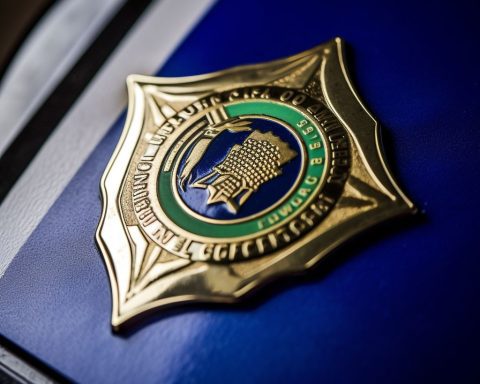

The Gauteng Crime Prevention Wardens, also known as Amapanyaza, have been renamed Gauteng Traffic Officers by Minister Ronald Lamola, giving them the legal structure to wield the powers of peace officers. This change signifies an endorsement of their crucial role in upholding law and order within the province, which could lead to heightened effectiveness in crime prevention. The decision came after an exhaustive review of the relevant legal frameworks and following a period when the wardens were barred from performing police duties. This strategic move empowers the wardens with a broader legal purview to fulfill their duties and brings renewed hope for a safer Gauteng.
Gauteng Crime Prevention Wardens become Traffic Officers
Gauteng Crime Prevention Wardens, also known as Amapanyaza, will now be recognized as Gauteng Traffic Officers, following a directive issued by Minister Ronald Lamola. This change ensures that the wardens have the appropriate legal structure to wield the powers of peace officers. The new designation signifies an endorsement of their crucial role in upholding law and order within the province and could lead to heightened effectiveness in crime prevention.
In an extraordinary turn of events, the Gauteng Crime Prevention Wardens, also known as Amapanyaza, will now bear the title of Gauteng Traffic Officers, discarding their previous role as peace officers. This volte-face follows a directive issued by Minister Ronald Lamola, the steward of the Ministry of Justice and Correctional Services.
Traditionally, the Gauteng Provincial Government held the reins of designating Crime Prevention Wardens as peace officers. In June 2023, the provincial government turned to the Minister of Justice and Correctional Services, requesting official recognition of Crime Prevention Wardens under section 334 of the Criminal Procedure Act, 1977. As per the legislation’s section 334(1)(a), the Minister of Justice and Correctional Services has the authority to confer peace officer status upon individuals based on their office, granting them jurisdiction over any crime or specified category of crimes.
The Rationale Behind the Decision
Chrispin Phiri, the Spokesperson for the Ministry, shed light on the decision-making process. “After an exhaustive review of the relevant legal frameworks, it became clear that for the Gauteng Crime Prevention Wardens to wield the powers of a peace officer, they needed to be on par legally with the Gauteng Provincial traffic officers,” he explained. He also acknowledged that Provincial traffic officers currently function within their peace officer designation, bolstered by the appropriate legal structure.
According to Phiri, the government remains steadfast in its commitment to adopting every practicable strategy to combat crime and safeguard the tranquility of our communities. He conveyed the gratitude of Minister Lamola to the Minister of Police and the Premier of Gauteng Province for their collaborative and fruitful efforts.
Overcoming Previous Setbacks
The timing of this significant decision is noteworthy, as it follows a period when the AmaPanyaza were barred from performing police duties at police stations, as per a directive issued by Gauteng provincial police commissioner Lieutenant General Elias Mawela in the preceding month.
The elevation of the wardens to traffic officer status, however, was greeted with enthusiasm, particularly from Panyaza Lesufi, the Premier of Gauteng Province and the driving force behind the Gauteng Crime Prevention Wardens. Lesufi welcomed the resolution that dispelled doubts over the wardens’ status. “This declaration confirms what we have always advocated – that the Crime Prevention Wardens are a legitimate, adequately equipped provincial law enforcement agency that works in tandem with other law enforcement organizations in the province. They operate under the supervision of Gauteng Traffic and local authorities,” Lesufi stated.
Implications for the Future
The redefinition of the Crime Prevention Wardens’ role underscores the Gauteng Provincial government’s forward-thinking approach to law enforcement. It signifies more than just a change in title, but an endorsement of their crucial part in upholding law and order within the province. This metamorphosis empowers the wardens with a broader legal purview to fulfill their duties, possibly leading to heightened effectiveness in crime prevention.
The ensuing synergy between traffic officers and other law enforcement agencies could serve as a model for future modifications in the realm of public safety. This strategic move to strengthen the wardens’ role brings with it renewed hope for a safer Gauteng, and indeed, a better South Africa.
1. What are Gauteng Crime Prevention Wardens?
Gauteng Crime Prevention Wardens, also known as Amapanyaza, were previously designated as peace officers by the Gauteng Provincial Government and tasked with crime prevention duties in the province.
2. Why have Gauteng Crime Prevention Wardens been renamed?
Gauteng Crime Prevention Wardens have been renamed as Gauteng Traffic Officers by Minister Ronald Lamola to give them the legal structure to wield the powers of peace officers and endorse their crucial role in upholding law and order within the province.
3. What is the rationale behind this decision?
The decision to rename Gauteng Crime Prevention Wardens to Gauteng Traffic Officers was made after an exhaustive review of the relevant legal frameworks. It was clear that for the wardens to wield the powers of a peace officer, they needed to be on par legally with the Gauteng Provincial traffic officers.
4. What are the implications of this decision for the future?
The redefinition of the Crime Prevention Wardens’ role empowers them with a broader legal purview to fulfill their duties, possibly leading to heightened effectiveness in crime prevention. The ensuing synergy between traffic officers and other law enforcement agencies could serve as a model for future modifications in the realm of public safety.
5. What were the setbacks faced by Gauteng Crime Prevention Wardens?
The Gauteng Crime Prevention Wardens were barred from performing police duties at police stations, as per a directive issued by Gauteng provincial police commissioner Lieutenant General Elias Mawela in the preceding month.
6. Who welcomed the redefinition of Gauteng Crime Prevention Wardens’ role?
Panyaza Lesufi, the Premier of Gauteng Province and the driving force behind the Gauteng Crime Prevention Wardens, welcomed the resolution that dispelled doubts over the wardens’ status. He stated that the declaration confirms what they have always advocated – that the Crime Prevention Wardens are a legitimate, adequately equipped provincial law enforcement agency that works in tandem with other law enforcement organizations in the province.