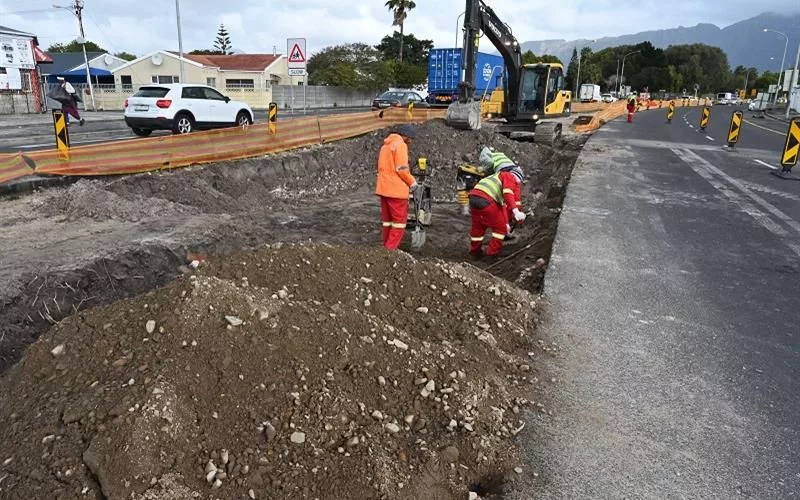
The MyCiTi bus service on Turfhall Road is an exciting project that aims to revolutionize public transport in Cape Town. It will connect travellers from Mitchells Plain and Khayelitsha to Wynberg and Claremont through dedicated bus lanes and improvements to roads and transportation facilities. The project, set to be completed by July 2027, involves extensive construction and is being carried out in phases to minimize disruption to local residents. Despite the disruptions caused by construction, the project promises to provide accessible, dependable, and affordable public transportation, shaping a new era of connection and mobility in Cape Town.
What is the MyCiTi bus service on Turfhall Road?
The MyCiTi bus service on Turfhall Road is an ambitious project aimed at revolutionizing Cape Town’s public transport system. It will link travellers from Mitchells Plain and Khayelitsha to Wynberg and Claremont through dedicated bus lanes and improvements to roads and transportation facilities. The project is expected to be completed by July 2027.
Section 1: The Spark of Transformation Begins
May 2024 brought about an exhilarating wave of change and prospects in the Lansdowne region. The Urban Mobility Directorate of the city had initiated steps to revolutionize Cape Town’s public transport system starting from Turfhall Road. This extensive construction is a part of a comprehensive scheme aiming to link travellers from Mitchells Plain and Khayelitsha to Wynberg and Claremont through the groundbreaking MyCiTi bus services.
This ambitious endeavor is projected to last for three years, with the finish line set for July 2027. Recently, the City’s Mayoral Committee Member for Urban Mobility, Councillor Rob Quintas, made a site visit to the bustling construction site. The visible progress bore witness to the relentless effort and meticulous planning guiding this project to its realization.
Specifically, the construction is manifesting on Turfhall Road (M24), a 1.7 km segment between the junction with the M5 freeway in the west and the intersection with Castor and Benona Roads in the east. At present, the transformation of the road median island from the junction with Castor Road is in progress. This spot is set aside to accommodate the two proposed dedicated bus lanes to be situated in the median of Turfhall Road.
Section 2: The Changing Landscape and Future Promises
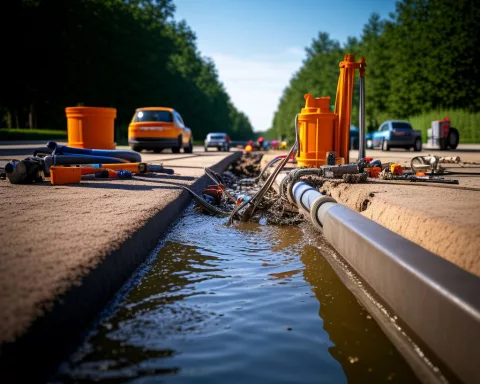
The sight of a methodically chaotic construction site is indeed fascinating. Amidst the rumblings of heavy machinery and dust-laden winds, traces of the old give way to the new, all while maintaining the area’s natural allure. The palm trees, a common feature along Turfhall Road, receive careful uprooting for transplantation, ensuring the conservation of the local environment. The remaining asphalt and kerbs are also undergoing removal, paving the way for the new temporary layers to arise.
Councillor Quintas conveyed his admiration for the on-site activity. The project manager offered him a comprehensive overview of the project’s progress and the planned work sequence, designed to minimize the impact on pedestrians and local inhabitants. Though the transformation might be a temporary inconvenience, it’s also an inspiring spectacle. In the future, this revamped road will become a crucial part of public transport infrastructure, serving future generations and keeping Cape Town in motion.
Section 3: Integrating Communities and Upgrading Infrastructure
The next phase of the MyCiTi bus service plans to unite over 30 communities within its network. The upcoming three fiscal years will see a rise in construction projects focused on crafting dedicated red bus lanes, stations, stops, and improvements to roads and transportation facilities.
The Turfhall Road project mainly encompasses the rebuilding of two eastbound and two westbound lanes, the establishment of two dedicated bus lanes in the road median, and the creation of pedestrian paths and cycle lanes on either side of the road. Enhancements to traffic signals and drainage, new road markings, along with the relocation and upgrade of bulk water mains and sewer mains, are also part of the plan.
The work is divided into phases, with each one targeting specific areas and components of the project. In an effort to lessen disruption, construction is strategically planned between 09:00 and 15:00 on weekdays, with a provision for weekend and public holiday work if necessary. Temporary detours and pedestrian pathways have been set up, and residents will have continuous access to their properties.
Section 4: A Path Towards a Better Future
Despite the unavoidable disruptions caused by roadworks and construction activities, the team is dedicated to reducing the impact as much as feasible. Councillor Quintas encouraged the public to pay attention to the warning signs on site and to follow instructions from flag personnel, ensuring the safety of everyone involved in this transformation.
As Turfhall Road embarks on this significant makeover, the heartbeat of the city synchronizes with it. The drone of engines and the symphony of construction work serve as a reminder of the progress unfolding, shaping a new era of connection and mobility in Cape Town. This project is reshaping the cityscape, not merely in concrete and steel, but in the lives that will be affected by the provision of accessible, dependable, and affordable public transportation. This isn’t just a road under construction, but a pathway towards an improved future for the people of Cape Town.
1. What is the MyCiTi bus service on Turfhall Road?
The MyCiTi bus service on Turfhall Road is an ambitious project aimed at revolutionizing Cape Town’s public transport system. It will link travellers from Mitchells Plain and Khayelitsha to Wynberg and Claremont through dedicated bus lanes and improvements to roads and transportation facilities. The project is expected to be completed by July 2027.
2. When will the MyCiTi bus service on Turfhall Road be completed?
The project is expected to be completed by July 2027.
3. What are the specific improvements included in the Turfhall Road project?
The Turfhall Road project mainly encompasses the rebuilding of two eastbound and two westbound lanes, the establishment of two dedicated bus lanes in the road median, and the creation of pedestrian paths and cycle lanes on either side of the road. Enhancements to traffic signals and drainage, new road markings, along with the relocation and upgrade of bulk water mains and sewer mains, are also part of the plan.
4. How is the construction being carried out to minimize disruption to local residents?
The work is divided into phases, with each one targeting specific areas and components of the project. In an effort to lessen disruption, construction is strategically planned between 09:00 and 15:00 on weekdays, with a provision for weekend and public holiday work if necessary. Temporary detours and pedestrian pathways have been set up, and residents will have continuous access to their properties.
5. What is the goal of the MyCiTi bus service project?
The goal of the MyCiTi bus service project is to provide accessible, dependable, and affordable public transportation, shaping a new era of connection and mobility in Cape Town.
6. How is the project impacting the environment?
The project is ensuring the conservation of the local environment by carefully uprooting palm trees for transplantation and implementing improvements to drainage.