
South African Deputy Minister Mr. Fish Mahlalela presented a comprehensive strategy to revive the country’s tourism industry after the pandemic. The government’s outreach program aims to attract tourists from East Africa and promote investment opportunities. Mahlalela emphasized the crucial role of diplomatic missions in marketing South Africa and applauded the department’s achievements in empowering women, youth, and the differently-abled. The TSHRD strategy focuses on enhancing skills and human resources in the tourism industry through capacity-building programs. Despite the pandemic, there was an 89.5% increase in accommodation revenue in the three months ending August 2022 compared to the same period in 2021.
South African Deputy Minister Mr. Fish Mahlalela outlined a detailed strategy to reignite the tourism industry after the Covid-19 pandemic. The government launched an outreach program to draw tourists and identified opportunities to attract investment. Mahlalela also emphasized the pivotal role of diplomatic missions in marketing South Africa and applauded the department’s accomplishments in empowering women, youth, and the differently-abled. The TSHRD strategy focuses on implementing capacity-building programs to enhance skills and human resources in the tourism industry. Despite the pandemic, the Stats SA report showed an 89.5% increase in accommodation revenue.
A Pivotal Gathering in Nairobi
Warm weather embraced Nairobi, Kenya, on November 22nd, 2023, as a significant figure in the South African tourism sector, Deputy Minister Mr. Fish Mahlalela, addressed a diverse crowd. His audience comprised ambassadors, tourism officials, diplomats, and media personnel from around the globe. The focus of his speech was a comprehensive blueprint for breathing new life into South Africa’s tourism industry after the ravages of the Covid19 pandemic.
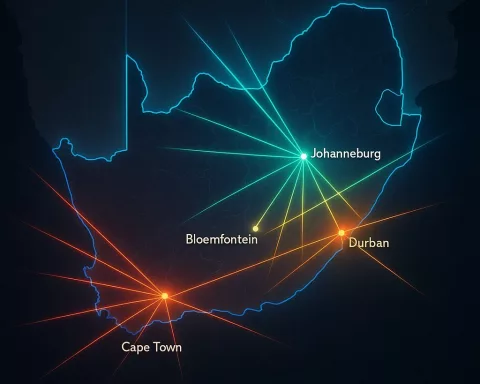
Mahlalela, in his calm demeanor, shared details about an ambitious plan of action launched by the South African government in 2021. The primary objectives of this initiative were to disseminate information, engage in dialogues about the prevailing challenges, and identify strategies to reinstate South Africa as a sought-after tourist destination. His message was not confined only to his fellow countrymen. It was meant for the world at large, extending beyond Africa to the Middle East, Asia, and the Americas.
The latest report from the IATA painted a hopeful picture amidst an ocean of obstacles. There was a 28.4% increase in total passenger traffic compared to the preceding year, nearly restoring global passenger traffic to its pre-pandemic state at 95.7%. This was a promising sign of a rebounding travel industry.
A Comprehensive Outreach Program
The government’s outreach program, accorded significant emphasis by Mahlalela, was not limited to broadcasting information. It also aimed at identifying and capitalizing on opportunities to draw tourists from East Africa. This initiative provided a platform for stakeholders to exchange views, debate the problems at hand, and devise government-supported interventions.
The Deputy Minister underscored the pivotal role of diplomatic missions in marketing South Africa to attract investment, enhance export marketing, and globally boost tourism. He stressed the need for these missions to assist South Africa’s business sector in exploring fresh market opportunities, which could foster economic growth, strengthen trade relationships, increase national investment and tourism, and facilitate skills development.
Mahlalela steered the discussion towards the impressive infrastructure that South Africa possesses for destination marketing. He mentioned the South African Tourism, the official Destination Marketing Organisation, the extensive network of diplomatic missions, and entities like Brand South Africa, South African National Parks, and Airports Company South Africa. He indicated the unique advantage these infrastructures provide to firms considering an investment in South Africa.
Development and Recovery Strategy
Following the Tourism Sector Human Resources Development (TSHRD) Strategy, South Africa has been implementing capacity-building programs to enhance skills and human resources in the tourism industry. These initiatives aim to equip learners with industry-relevant skills, supply the industry with competent personnel, offer businesses an opportunity to recoup their capital loss due to Covid 19, and address job losses.
Mahlalela also applauded the department’s accomplishments in empowering women, youth, and the differently-abled in the 2022/2023 and 2023/2024 fiscal years. Through various skill development training programs, South Africa exceeded its target of 2500, training and placing 2802 unemployed and retrenched youth.
The dialogue then shifted to the performance of tourism in South Africa during the pandemic. Despite the severe circumstances, the Stats SA report revealed an 89.5% increase in accommodation revenue in the three months ending August 2022 compared to the same period in 2021.
Mahlalela transitioned the focus to tourist arrivals, underscoring the importance of prioritizing the East African region markets. He highlighted the necessity of diplomatic support in offering an organized, seamless service to align South African products and experiences to cater to the East African market.
Tourist safety was another crucial issue Mahlalela touched upon. He described the formation of the National Tourism Safety Forum, consisting of both public and private sector organizations, including the South African Police Services. The forum’s objective is to orchestrate a unified response to tourist safety concerns, focusing on proactive measures, responsive measures, and an aftercare program.
As the address came to a close, Mahlalela underlined the need for vigorous engagement to rekindle the demand for travel and tourism in South Africa. Displaying confidence in the South African Tourism’s recovery plans, programs, and mechanisms, he focused on the challenges and the path ahead.
In conclusion, Deputy Minister Mahlalela’s speech was a tribute to the resilience of South Africa’s tourism industry and its government’s determination to surmount the challenges brought about by the Covid19 pandemic. The journey to recovery may be long and arduous, yet the vision is unambiguous and the resolve, unyielding. Mr. Fish Mahlalela’s passion and determination, evident in his concluding remarks, resonated strongly with the audience, leaving an indelible mark on them.
1. What was the focus of Deputy Minister Mr. Fish Mahlalela’s speech in Nairobi?
Deputy Minister Mr. Fish Mahlalela’s speech in Nairobi focused on a comprehensive strategy to revive South Africa’s tourism industry after the pandemic.
2. What was the primary objective of the South African government’s outreach program?
The primary objective of the South African government’s outreach program was to disseminate information, engage in dialogues about the prevailing challenges, and identify strategies to reinstate South Africa as a sought-after tourist destination.
3. What is the TSHRD strategy, and what does it aim to achieve?
The TSHRD strategy is the Tourism Sector Human Resources Development Strategy, which aims to implement capacity-building programs to enhance skills and human resources in the tourism industry, equip learners with industry-relevant skills, supply the industry with competent personnel, offer businesses an opportunity to recoup their capital loss due to Covid 19, and address job losses.
4. What was the increase in accommodation revenue in the three months ending August 2022 compared to the same period in 2021, despite the pandemic?
Despite the pandemic, the Stats SA report revealed an 89.5% increase in accommodation revenue in the three months ending August 2022 compared to the same period in 2021.
5. What is the National Tourism Safety Forum, and what is its objective?
The National Tourism Safety Forum is a forum consisting of both public and private sector organizations, including the South African Police Services, formed to orchestrate a unified response to tourist safety concerns, focusing on proactive measures, responsive measures, and an aftercare program.
6. What was the Deputy Minister’s emphasis on diplomatic missions, and how can they support South Africa’s tourism industry?
The Deputy Minister emphasized the pivotal role of diplomatic missions in marketing South Africa to attract investment, enhance export marketing, and globally boost tourism. He stressed the need for these missions to assist South Africa’s business sector in exploring fresh market opportunities, which could foster economic growth, strengthen trade relationships, increase national investment and tourism, and facilitate skills development.