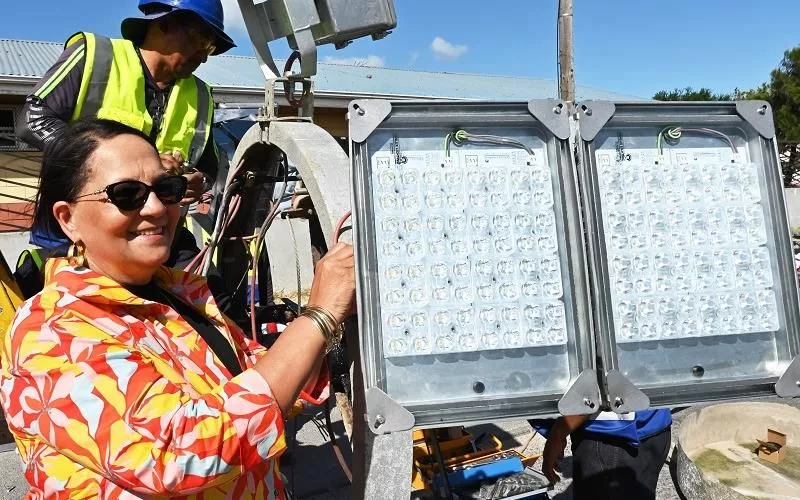
The Khayelitsha LED high-mast renovation project is replacing old high-mast lights with state-of-the-art LED fixtures in an effort to promote economic growth, increase safety, and reduce energy usage. The first phase is being implemented in the neighborhood of Makhaza, with a total of 222 high-mast fixtures to be replaced across Khayelitsha. This initiative represents a significant investment in the city’s key infrastructure and signifies a significant shift towards urban sustainability. However, the success of this initiative depends on collective responsibility and the support of the community.
What is the Khayelitsha LED high-mast renovation project?
The Khayelitsha LED high-mast renovation project is an initiative by the City’s Energy Directorate to replace old high-mast lights with state-of-the-art LED fixtures. The project aims to enhance visibility, increase safety, promote economic growth, and reduce energy usage. The first phase of the project is being implemented in the neighborhood of Makhaza, with a total of 222 high-mast fixtures to be replaced across Khayelitsha. Collective responsibility from the community is essential for the successful execution of this project.
As a fresh day dawns over Khayelitsha, the city is on the cusp of a new chapter in energy conservation. More than just the usual hustle of city life, it’s the inception of an enlightened voyage in the sphere of energy efficiency. The City’s Energy Directorate has launched a mission to swap out old high-mast lights for state-of-the-art LED fixtures, indicating a new era of sustainability and a transformation in the city’s approach to public lighting.
This committed and forward-thinking initiative to retrofit conventional high-mast lights with more energy-efficient LEDs signifies a significant investment of R3.5 million. Predominantly geared toward enhancing public lighting, this project symbolizes the City’s dedication to nurturing a safer, more sustainable living environment.
The First Phase: Makhaza’s Transformation
The vibrant neighborhood of Makhaza in Khayelitsha stands at the forefront of this transformation. Here, the outdated high-mast lights are slated for replacement with contemporary LED lamps, a process that will be gradually implemented over the subsequent months and years. With a total of 222 high-mast fixtures across Khayelitsha, this initiative requires meticulous planning and execution. The deployment and maintenance of the LED fixtures heavily rely on a 30-tonne crane truck, operated by a highly skilled team of engineers.
This initiative represents more than just a project – it denotes a significant shift towards urban sustainability. Beyond merely replacing old lights with LEDs, it serves as an essential investment in the city’s key infrastructure. As this renovation takes shape across the metropolitan area, the gains are diverse, including improved visibility, increased safety, economic potential, and energy conservation.
The Aims and Benefits: Augmenting Visibility and Safety
The primary aim of this project is to enhance the visibility in the area, thereby offering residents clearer sightlines during nighttime. This improved visibility can also function as a deterrent for potential wrongdoers, helping to lower crime rates and increase safety.
The economic outcomes of this renovation project are significant. Enhanced lighting conditions can catalyze economic and entrepreneurial activities post-sunset. The city, often overlooked regarding its nighttime economy, now sees an opportunity to prosper under the energy-efficient LED lights.
The environmental factors associated with this project are equally noteworthy. LEDs, contrary to their traditional counterparts, are energy-efficient, thereby reducing overall energy usage. This initiative signifies a proactive approach towards energy conservation and the development of sustainable infrastructure.
However, the success of this initiative hinges on collective responsibility. The city encourages its residents to protect public lighting assets. It is their civic duty to report illegal connections, theft, and vandalism to the authorities. The South African Police Service, the chief agency in crime prevention, stands prepared to respond to any reports of suspicious activities.
In conclusion, the Khayelitsha LED high-mast restoration project is more than a simple investment in lighting. It represents a pledge to community safety, sustainability, and economic growth. As reiterated by Councillor Van Reenen, the ongoing support of the community is crucial for the successful execution of this project. This collaborative effort illuminates the path towards a brighter and safer Khayelitsha.
What is the objective of the Khayelitsha LED high-mast renovation project?
The Khayelitsha LED high-mast renovation project aims to replace old high-mast lights with state-of-the-art LED fixtures in an effort to promote economic growth, increase safety, and reduce energy usage.
Where is the first phase of the project being implemented?
The first phase of the project is being implemented in the neighborhood of Makhaza, Khayelitsha.
How much is the investment in the project?
The project represents a significant investment of R3.5 million.
What are the benefits of the LED high-mast renovation project?
The benefits of the project include enhanced visibility, increased safety, economic potential, and energy conservation.
How can the community support the project?
The success of the initiative depends on collective responsibility and the support of the community. Residents are encouraged to protect public lighting assets by reporting illegal connections, theft, and vandalism to the authorities.
What is the significance of the LED high-mast project?
The Khayelitsha LED high-mast renovation project signifies a significant shift towards urban sustainability, and an essential investment in the city’s key infrastructure.