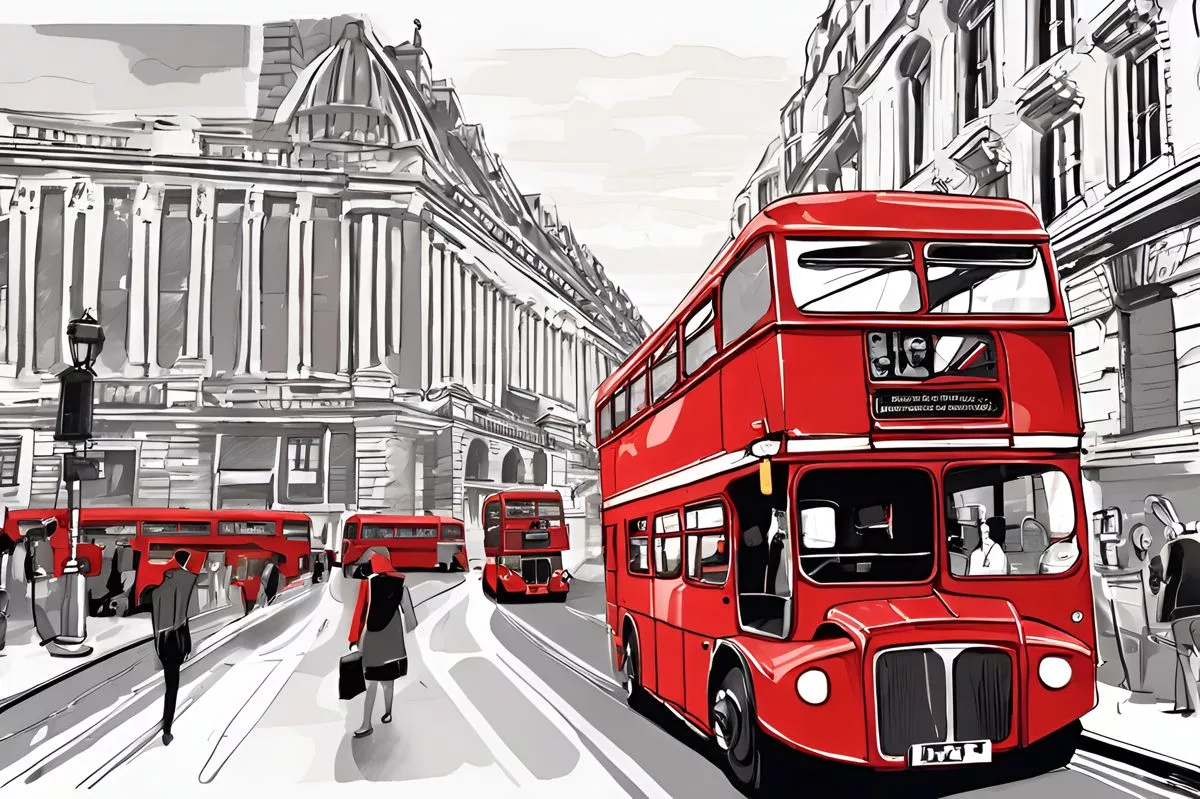
London’s red double-decker buses are a beloved symbol of the city, providing transportation for residents and tourists alike. On March 10th, vintage models will take to the streets, offering a nostalgic connection to the past and a tribute to London’s heritage. This event reflects the city’s constant evolution while also honoring its enduring icons, such as the red public telephone booths and the red double-decker buses.
What is the significance of the red double-decker buses in London?
London’s red double-decker buses have been a symbol of the city’s identity for decades. They have facilitated movement across the city and are an integral part of everyday transportation for both residents and tourists. Although their visual appeal has evolved over time, the revival of vintage models on March 10th offers a physical connection to the past and a tribute to London’s heritage.
A Journey Back in Time
London’s legendary skyline is set to provide a backdrop for a spectacular slice of nostalgia this upcoming Sunday. Adding a touch of vintage charm to the dynamic streets will be the iconic red double-decker buses, an unforgettable part of London’s rich heritage. This unique spectacle will further enhance London’s global appeal as a prime tourist destination, attracting countless visitors every year to its impressive blend of archaic and contemporary attractions.
The city’s character is symbolized by enduring icons that have outlived the relentless hands of time. Among these enduring symbols, the ubiquitous red public telephone booths stand as timeless reminders of a bygone era. Another such symbol that personifies London is the red double-decker bus, its distinctive silhouette traversing the city’s breadth.
Emblems of London’s Identity
These esteemed buses have, for numerous decades, acted as Britain’s capital visual emblem. Facilitating movement across the city, they have integrated themselves into the shared recognition of both residents and tourists. This is underlined by the reliance of individuals on these services for their everyday transportation needs.
However, with the passage of time and the inevitable progress that follows, changes have been made. Over time, the visual appeal of the buses has evolved, mirroring technological advancements and the pursuit of operational effectiveness and passenger comfort. This transformation has led to the phasing out of older models, succeeded by their contemporary versions, which, although practical, lack the old-world charm that made their predecessors so cherished.
Revival of the Iconic Double-Deckers
Nevertheless, for one singular day, the roads of North London will once again welcome these red double-decker buses. Covering models from the 1950s to the 1980s, they will journey across multiple routes in the city on the 10th of March.
For those self-proclaimed bus aficionados, as well as those casually intrigued, there will be an opportunity to journey on these vintage double-deckers on various North London routes. In a spirit reflecting the event’s essence, some of these buses will even provide their services complimentary, quite an enticing deal considering the regular ticket fare of £1.75.
London’s Continuous Evolution
This renaissance serves as a poignant sign of the city’s constant evolution. Much like the gradual retirement of the older buses, London has recently witnessed the closure of the historic Fenwick store on Bond Street. This department store, a city landmark for 130 years, has shut its doors, signifying the conclusion of an era.
Ultimately, the temporary resurgence of the red double-decker buses is a tribute to London’s heritage. It offers a physical connection to the past, a proof of the city’s tenacity, and a reminder of this iconic city’s relentless progress. As they patrol the streets, they will act as a moving homage to London’s persevering spirit, capturing the attention of both nostalgic locals and awe-struck tourists.
When will vintage red double-decker buses be taking to the streets of London?
Vintage red double-decker buses will be taking to the streets of London on March 10th.
What is the significance of the red public telephone booths in London?
Red public telephone booths are enduring icons of London’s heritage and symbolize a bygone era.
How have the red double-decker buses evolved over time?
The visual appeal of the red double-decker buses has evolved over time, mirroring technological advancements and the pursuit of operational effectiveness and passenger comfort.
What models of red double-decker buses will be on the streets of North London on March 10th?
The vintage red double-decker buses on the streets of North London on March 10th will cover models from the 1950s to the 1980s.
Can visitors ride on the vintage red double-decker buses on March 10th?
Yes, visitors can ride on the vintage red double-decker buses on various North London routes, with some buses even providing their services complimentary.
What is the significance of the temporary resurgence of the red double-decker buses in London?
The temporary resurgence of the red double-decker buses in London is a tribute to London’s heritage and offers a physical connection to the past, while also reflecting the city’s constant evolution and tenacity.