A Monumental Task in a Crucial City Vein
The city’s lifeline, the Wemmershoek Water Treatment Plant (WTP), is undergoing a remarkable transformation. This enormous project confirms the city’s dedication to securing a consistent and supreme quality water supply for its citizens. The Water and Sanitation Directorate has shown its support for this endeavour by allocating a substantial R25 million for the revamp of this pivotal facility.
The Wemmershoek WTP holds a critical position in the city’s water distribution network. Its fascinating history and paramount role make it a vital part of the city. The WTP, positioned at the city’s heart, draws its water from the vast Wemmershoek Dam. This mammoth dam, built in 1957, boasts a capacity of 58,644 ML. From the dam, water is channeled to the WTP which then disperses it via a 1525mm pipeline extending to municipalities like Drakenstein and Stellenbosch.
The Wemmershoek WTP: A Lifeline for Many
This extensive pipeline isn’t just a conduit for municipalities, but it also caters to the needs of farmers and other businesses situated along its path. Thus, it guarantees a constant water supply, quenching the thirst of the bustling city of Cape Town’s northern suburbs. Adding to its importance, the WTP is responsible for supplementing the Glen Garry reservoir, a critical source of water for the Tygerberg reservoirs.
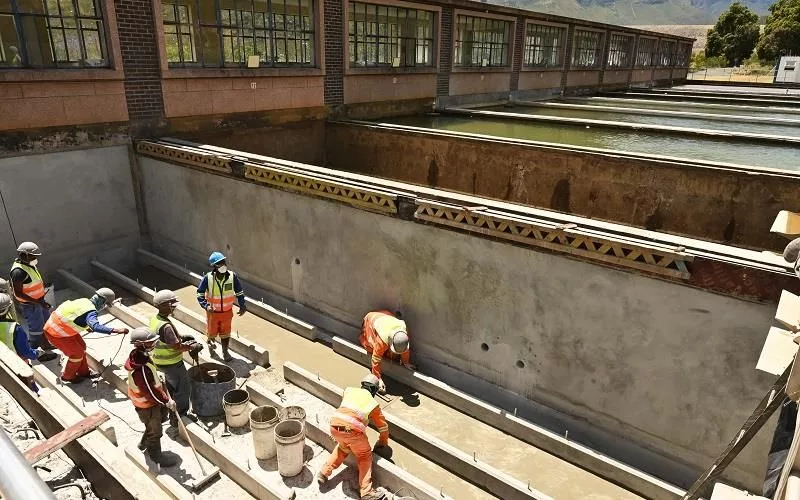
The revitalization project at Wemmershoek WTP has been strategically divided into four precise stages. This strategic division aims to ensure operations run smoothly with minimal interference to the water supply. The process kick-started in April 2023, with an expected completion date by December 2024. Every stage of the process spans roughly three months, followed by a month to prepare the filters for operation.
The filters used in the WTP are a marvel in themselves, spanning a surface area of 12x4m and reaching 2.5 meters deep. Each can process a staggering twelve million litres of water per day. Additionally, this careful procedure has been scheduled outside the peak summer demand period to lessen any potential effects on water supply.
Temporary Setbacks for Long-term Gain
However, despite detailed planning, the renovation has brought about a temporary decrease in production flow at the Wemmershoek WTP. The flow rates have decreased from 200 MLD to 150 MLD, and sometimes even to 120 MLD. This mandatory adjustment has put strain on the Wemmershoek pipeline.
The city’s inhabitants have shown commendable understanding and cooperation in the face of this change. The citizens have shown an admirable awareness of the large-scale maintenance work happening in their vicinity and have modified their water consumption accordingly. This has helped alleviate some of the pressure on the supply. The city extends its heartfelt appreciation for their patience and collaboration during this refurbishment period.
The Larger Objective: Strengthening the City’s Water Infrastructure
The primary aim of the Bulk Water Infrastructure Refurbishment and Replacement Programme is to ensure long-lasting maintenance and improvement of the water infrastructure to meet the increasing water supply demand. The significant investment in the Wemmershoek WTP underlines the city’s unwavering commitment to maintaining the robustness of its water supply infrastructure.
The renovation of the Wemmershoek WTP is more than just upgrading infrastructure; it’s an investment in the very pulse of the city. It assures the continual provision of this invaluable resource and symbolizes the city’s devotion to its residents. It underscores the city’s pledge to deliver a consistent, premium quality water supply, both now and in the future. Though the renovation might cause temporary inconveniences, the city promises to mitigate disruptions as much as possible and assures residents that the end result will undeniably be worth the temporary discomfort.