
South African budget airline FlySafair has revolutionized air travel by offering domestic flights for just R10, less than the price of a cup of coffee. As part of a sale of 50,000 seats on certain routes to mark its 10-year anniversary, the airline has brought its prices down to the absolute minimum, democratizing travel for many. The sale has been so popular that FlySafair has introduced a digital waiting room to manage the high demand.
FlySafair, a budget airline from South Africa, has made it possible to embark on an exciting voyage for just R10. In honor of its decade-long operation, FlySafair has rolled out a sale of 50,000 seats on chosen domestic routes, each available for a meager R10, making travel within reach for countless individuals, not just a privileged minority. The airline foresees engagement from up to a million people, causing the chances of obtaining a R10 seat to dwindle.
Advancing Affordable Travel
Most of us cherish the aspiration to venture to a new destination, but budgetary restrictions often clip our wings. However, in a ground-breaking initiative, FlySafair, a budget airline from South Africa, has made it possible to embark on an exciting voyage for just R10. This price makes a flight ticket more cost-effective than a cup of coffee. This revolutionary move underscores the democratization of travel, making it within reach for countless individuals, not just a privileged minority.
In honor of its decade-long operation, FlySafair has rolled out a sale of 50,000 seats on chosen domestic routes, each available for a meager R10. The airline, already recognized for its aggressive pricing strategy, has outshone itself with this offer that brings ticket prices down to their absolute minimum. This campaign follows a trend of reducing ticket prices, with seats being sold for R9 and R8 in the past couple of years.
However, this seemingly miraculous offer has a catch. It creates an enormous demand. With the potential to travel at a fraction of the standard cost, scores of excited flyers are predicted to flood the airline’s website. The airline foresees engagement from up to a million people, causing the chances of obtaining a R10 seat to dwindle.
The Digital Waiting Room
To handle this influx, FlySafair has conceived a unique system of an online waiting room. Irrespective of the enormous number of customers competing for the golden ticket, the waiting room permits only a limited number of users per minute. This technique, while maintaining the website’s stability, injects a component of fortune into the process. Customers are chosen at random and given permission to access the booking portal.
The actual booking process is a sprint. Those fortunate enough to navigate the virtual waiting room are granted only ten minutes to finalize their booking. The relentless ticking of the clock enhances the thrill, transforming ticket bookings into an exhilarating chase.
The R10 ticket sale’s staggering popularity has converted it into an annual phenomenon, with its hype resonating throughout the online sphere. Anecdotes of customers juggling multiple gadgets to enhance their chances of accessing the website contribute a personal touch to the occasion.
Business as Usual and Future Expansion
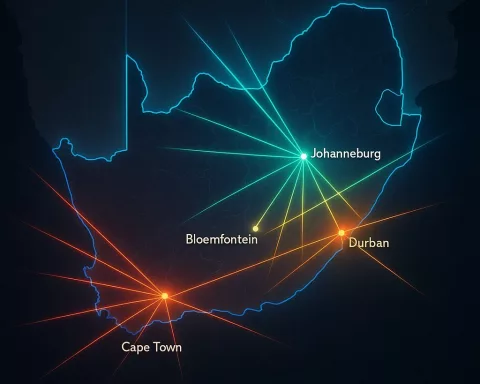
Despite the hubbub surrounding the R10 ticket sale, FlySafair maintains its regular bookings via its dedicated application, ensuring that its standard operations are not disrupted. Moreover, the airline has recently broadened its array of destinations by commencing a route from Cape Town to Kruger National Park. This tactical move is designed to distribute tourism across South Africa, unveiling its picturesque beauty to domestic and international tourists.
FlySafair’s R10 flight sale exemplifies the airline’s dedication to making air travel an inclusive experience. It symbolizes a shake-up of the conventional model, challenging the seemingly high cost barrier attached to air travel. The likelihood of securing a R10 ticket may be relatively low, but the prospect of an affordable adventure keeps the dream of travel very much alive.
Such groundbreaking initiatives by FlySafair echo its pursuit of creating a revolution in the aviation industry. It redefines the traditional notions of travel being a luxury, making it accessible to a broader audience. Although getting a R10 ticket is more about luck than certainty, the sheer possibility keeps the dream of exploring new destinations alive for many. While a cup of coffee might cost more, the possibility of an affordable adventure on the horizon indeed adds flavor to it!
1. What is FlySafair?
FlySafair is a budget airline based in South Africa that offers domestic flights at affordable prices.
2. What is the R10 ticket sale?
To mark its 10-year anniversary, FlySafair has rolled out a sale of 50,000 seats on certain domestic routes, each available for just R10.
3. How does the online waiting room work?
The online waiting room limits the number of users per minute and grants customers access to the booking portal at random. Customers have ten minutes to finalize their booking.
4. Is FlySafair’s regular booking system affected by the R10 sale?
No, FlySafair maintains its regular bookings via its dedicated application, ensuring that its standard operations are not disrupted.
5. What is FlySafair’s recent expansion?
FlySafair has recently broadened its array of destinations by commencing a route from Cape Town to Kruger National Park, distributing tourism across South Africa.
6. What does FlySafair’s R10 flight sale symbolize?
The R10 flight sale symbolizes FlySafair’s dedication to making air travel an inclusive experience and challenging the high cost barrier attached to air travel. It is a shake-up of the conventional model, making travel accessible to a broader audience.