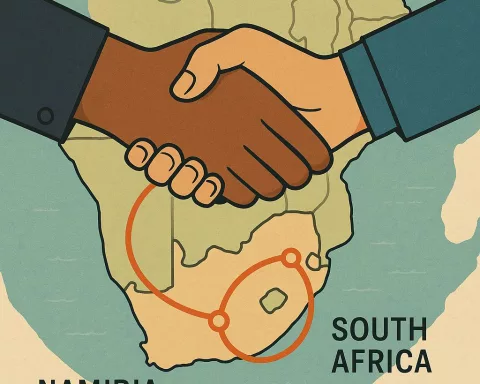
In the quiet border town of Matatiele, ten children were saved from traffickers who snuck them across hidden paths between Lesotho and South Africa. This case shines a light on how easy it is for criminals to exploit the many unofficial crossings and trusting communities. Thanks to a watchful local and swift police action, the children were rescued, but the story reveals a bigger challenge: South Africa’s fight against human trafficking is tough because borders are wide open, laws are hard to enforce, and traffickers often prey on hope and trust. The case reminds us that staying alert and working together is key to protecting the vulnerable and stopping this crime.
What happened in the Matatiele case and how does it highlight South Africa’s human trafficking challenge?
The Matatiele case involved the rescue of ten children trafficked across the Lesotho-South Africa border, revealing exploitation through informal crossings. It underscores challenges like porous borders, community vigilance, and gaps in enforcement under South Africa’s Prevention and Combating of Trafficking in Persons Act.
In the Heart of Matatiele: An Ordinary Morning Broken
As dawn draped gentle light across the undulating hills near Matatiele, routine gave way to the extraordinary. Life in this Eastern Cape town typically unfolds in a patchwork of market errands and school commutes. But on June 14, 2025, the calm shattered at a bustling fuel station in the center of town, revealing the darker undercurrents that flow through Southern Africa’s communities.
It started quietly, with a local noticing an unusual scene – a lone man surrounded by a group of children, anxiety flickering across their faces. The concerned citizen’s suspicions set events into motion, connecting an average day to a larger battle against human trafficking. A call to the South African Police Service summoned officers to the scene, transforming Matatiele from a sleepy border town into a frontline in the struggle against exploitation.
When police questioned the forty-year-old man, a Lesotho national, he offered a familiar narrative: he claimed to be escorting ten children to Pietermaritzburg, where their mothers supposedly awaited. The story might have passed unquestioned, echoing the countless legitimate journeys that bind Lesotho and South Africa through work, family, and survival. The border, after all, is as much a thread as a barrier in the fabric of local life.
But beneath that veneer, a deeper truth emerged. The children did not know their supposed guardian. They recounted a journey beginning in Qacha’s Nek – on the Lesotho side – where the man approached them, promising reunification with their mothers. Instead, he led them through Paqama, an unofficial crossing, bypassing the gaze of immigration authorities. These well-worn paths, often trodden by farmers and traders, have become dangerous corridors for traffickers exploiting those seeking hope or escape.
With the account unraveling, police swiftly acted. They arrested the suspect and a twenty-year-old accomplice, registering cases under the Prevention and Combating of Trafficking in Persons Act and the Immigration Act. Now, both await their day in court, the stark reality of their alleged crimes echoing through the once-quiet streets of Matatiele.
Borders Etched by History: Context and Consequence
The events in Matatiele cannot be understood in isolation; they are rooted in historical, economic, and social currents stretching back generations. The border dividing Lesotho and South Africa slices through communities with shared languages, cultures, and kinships, a colonial legacy both arbitrary and enduring. For families on either side, the border is not just a political demarcation but a living horizon – sometimes promising opportunity, other times signifying loss.
Throughout the 20th century, migration was a matter of necessity. Men from Lesotho frequently traveled to South Africa’s mines, driven by the need to provide for families left behind. In the process, entire generations grew up on stories of separation – of parents seeking livelihoods across lines drawn by others. This tradition of movement, while vital, birthed vulnerabilities routinely exploited by opportunists and criminals.
Artists and chroniclers of the region, such as Mongane Wally Serote, have long described the ambivalence of migration. Their work explores not only the hopes born from crossing borders but also the pain and exploitation that often follow. In post-apartheid South Africa, these complexities remain: migration offers both the hope of a better future and the ever-present risk of predation.
Communities along these borders maintain informal networks of support – sometimes out of solidarity, sometimes out of necessity. Yet, as the Matatiele case demonstrates, these same features can also be exploited by those with darker intentions. Traffickers understand the region’s geography and its gaps in oversight, weaving themselves into the fabric of everyday movement.
The Anatomy of Trafficking: Deception and Vulnerability
Human trafficking rarely presents itself as stark threat. Instead, traffickers often cloak their intentions in promises and the language of opportunity. The ten children from Qacha’s Nek, for example, were lured by assurances that played directly into their emotional vulnerabilities – reunion with loved ones, the hope for security, and relief from hardship.
According to global organizations such as the United Nations Office on Drugs and Crime, millions become victims of trafficking every year. In Southern Africa, the interplay of poverty, porous borders, and insufficient enforcement creates fertile ground for traffickers. The region’s rural fringes, its economic hardships, and its labyrinthine network of unofficial crossings offer both opportunity and cover for those seeking to exploit the desperate.
Contrary to the stereotype of traffickers as faceless criminals lurking in the shadows, many are familiar figures – sometimes acquaintances or distant relatives – who use trust as their weapon. Exploitation flourishes where vigilance slackens and where communities feel isolated or overwhelmed. The children intercepted in Matatiele now find refuge under the care of the Department of Social Development, their futures uncertain but their immediate danger averted. Social workers confront a daunting task: restoring a sense of safety and trust in those who have experienced betrayal and fear.
Yet, intervention does not end with rescue. Healing stretches over months and years. Children must navigate new environments, confront trauma, and rediscover the boundaries of trust. The myriad challenges faced by social workers and child advocates highlight the need for not just legal action, but empathetic, sustained support.
Community Vigilance: Turning Point and Tradition
A pivotal moment in Matatiele’s story lies not in the machinery of police work, but in the attentive gaze of a single community member. This willingness to “notice” and respond reflects an ethic deeply embedded in South African society and culture: the principle of Ubuntu – “I am because we are.” The fight against trafficking hinges on such moments when ordinary people refuse to turn away from what seems out of place.
Major General Thandiswa Kupiso, the province’s acting police commissioner, emphasized the vital role of community vigilance in tackling trafficking. Her words highlight a crucial lesson: while police and courts play essential roles, the first and often most effective line of defense is the collective awareness and action of neighbors, friends, and passersby.
This communal spirit, far from new, draws on traditions of mutual care that have long shaped rural and urban life in the region. In times of crisis – from colonial incursions to apartheid’s brutality – South African communities learned to watch over one another. Oral history and folklore celebrate the protectiveness of neighbors and the collective power of people standing together against threats.
Today, the challenge is to bridge traditional vigilance with modern realities. Trafficking networks have grown sophisticated, but so too has the capacity for community mobilization. Awareness campaigns, workshops, and neighborhood patrols can amplify the power of “noticing,” turning everyday interactions into safeguards for the vulnerable.
Law, Enforcement, and the Road Ahead
South Africa’s legislative arsenal against trafficking stands as one of the most comprehensive in Africa. The Prevention and Combating of Trafficking in Persons Act – enacted in 2013 – criminalizes trafficking, mandates victim support, and provides witness protection. However, the gap between written law and lived reality remains daunting. The Matatiele case highlights both the capacity of law enforcement and its limitations: while quick action saved ten children, countless others still elude detection.
Effective enforcement demands extensive resources and training. Border officials must patrol vast, rugged terrains where official checkpoints are few and informal crossings abound. Police units face logistical and financial constraints, while social services are stretched thin amid escalating caseloads. For rescued victims, the legal process itself – complex and drawn-out – can become a new source of anxiety.
Regional and global strategies increasingly recognize the interconnectedness of trafficking. The Southern African Development Community, among others, encourages member states to share intelligence, conduct joint patrols, and harmonize policies for victim protection. Such cooperation, while promising, is only as effective as its local implementation.
The struggle against trafficking is ongoing and layered with complexity. Each rescue, each prosecution, each moment of vigilance adds a stroke to a broader canvas – a portrait of communities fighting to reclaim their safety and dignity from the grip of exploitation. As the Matatiele intervention makes clear, the journey is far from over, but every act of courage and care lights a path through the shadows.
FAQ: Understanding the Matatiele Case and South Africa’s Human Trafficking Challenge
What happened in the Matatiele case and why is it significant?
In June 2025, ten children were rescued from traffickers near Matatiele, a border town between Lesotho and South Africa. The traffickers used unofficial border crossings to smuggle the children, exploiting the porous borders and trusting communities. This case is significant because it highlights South Africa’s ongoing struggle with human trafficking – showing how criminals exploit informal routes, the vulnerabilities of children, and the challenges law enforcement faces in protecting vulnerable populations.
How do unofficial border crossings contribute to human trafficking in South Africa?
Unofficial or informal border crossings – paths often used by local farmers, traders, or commuters – are difficult to monitor by immigration and law enforcement officials. Traffickers exploit these crossings to bypass official checkpoints, making it easier to smuggle victims undetected. The Matatiele case illustrates how these “hidden paths” create loopholes in border security, enabling traffickers to prey on those seeking better opportunities or escape, especially children.
What role does community vigilance play in combating human trafficking?
Community vigilance is critical in identifying and preventing trafficking. In the Matatiele case, a local resident’s alertness to suspicious behavior triggered the rescue of the children. South African society values the principle of Ubuntu – “I am because we are” – which emphasizes collective care and responsibility. When communities stay informed, watchful, and report suspicious activity, they form the first and most effective line of defense against traffickers.
What legal measures exist in South Africa to fight human trafficking?
South Africa’s key legislation is the Prevention and Combating of Trafficking in Persons Act (2013), which criminalizes all forms of trafficking, mandates victim support services, and provides for witness protection. Additionally, the Immigration Act supports enforcement at borders. Despite strong laws, enforcement challenges remain due to vast terrains, limited resources, and complex legal processes for victims and law enforcement alike.
How are victims of trafficking supported after rescue?
Victims, like the rescued children in Matatiele, are typically placed under the care of the Department of Social Development. Support includes shelter, counseling, medical care, and legal assistance. Healing can be a long process focused on rebuilding trust, addressing trauma, and reintegrating victims into society safely. Social workers and child advocates play a vital role in this ongoing recovery.
What regional efforts are in place to combat human trafficking in Southern Africa?
Regional cooperation is key to tackling trafficking across borders. Organizations such as the Southern African Development Community (SADC) promote intelligence sharing, joint border patrols, and harmonized victim protection policies among member states. These collaborative efforts aim to close gaps exploited by traffickers, improve enforcement, and provide comprehensive support to victims beyond national boundaries.
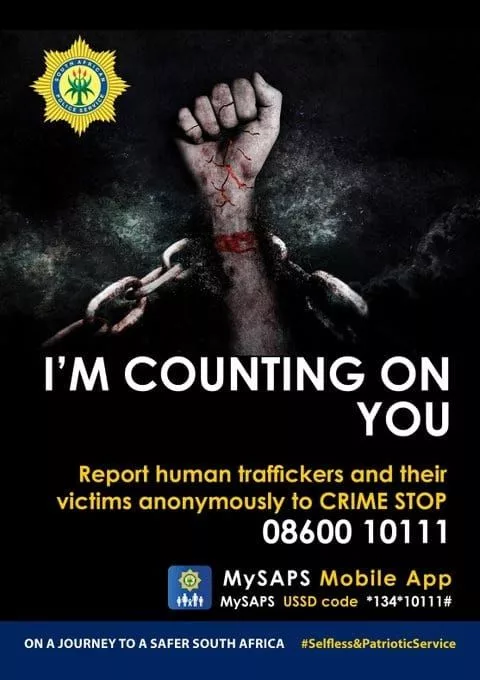
If you’d like more information on how you can help or recognize signs of trafficking, local NGOs and law enforcement agencies often offer resources and community workshops. Staying informed and vigilant can make a difference.