Paul Adams, with his quirky bowling style, is not just a cricket legend; he’s sparking a revolution in township cricket! His program goes beyond just teaching kids how to play; it empowers them through multi-sport festivals, expert coaching, and crucial community services. This amazing initiative proves that talent can bloom anywhere and helps kids grow in every way, showing the world that a simple game can change lives.
What is Paul Adams’ impact on township cricket?
Paul Adams’ legacy in township cricket extends beyond his unique bowling action; he has inspired a new generation through a comprehensive program. This initiative, featuring multi-sport festivals, cricket-specific coaching, and vital community services, empowers youth, proving that talent thrives irrespective of circumstance and fostering holistic development.
1. The Silhouette That Refuses to Fade
Saturday wind snaps across Lavender Hill and every second child is a mini-gargoyle: wrists cocked at impossible angles, necks tilted like they’re sniffing rain, feet flung apart as if the ground insulted them. They are not imitating a YouTube ghost; they are downloading muscle memory of a man who twisted his body into a question mark and still got the answer right. No coach yells “bend your back”; they holler “fold like Paulie,” and the kids obey because the move feels mischievous before it feels technical.
Aaliyah September is the afternoon’s headline. She is twelve, lives two streets from the half-collapsed wall where Adams once painted a white square, and has just bamboozled a boy two years older with a chinaman that kissed the off-stump paint. She owns only one shoe with spikes; the other foot wears a sneaker borrowed from her cousin. The mismatch does not bother her – she is already rewriting the story that talent needs matching boots.
The chalk square on the wall still exists, now ringed by political graffiti that curses the mayor and praises a local rapper. Coaches refreshed the square at dawn because heritage is cheaper than turf nets. Aaliyah will go home tonight, Google “Paul Adams 1996 Kingsmead,” and realise she bowled the same shot that made Mike Gatting’s eyebrows collide. The circle will close; the circle will open wider.
2. Three-Day Festivals, One Life Pivot
Across the Cape Flats the programme runs like a travelling circus that refuses to leave town until it has left skills behind. Day one is a magnet: netball hoops welded from scrap steel, seven-a-side rugby on a patch that used to host gang initiations, 3×3 basketball where the key is spray-painted around a manhole. Kids drift in for the noise, stay for the discovery that their wrists can do more than flick a cigarette.
Day two is cricket only, stations named after local taxis – “Cattle-Kraal End,” “Nyanga Flyer” – so directions feel conversational. Proteas alumni arrive without bodyguards, sleeves rolled, lending shoulder to kids who have never felt a hard-ball seam. A net session is filmed on a phone, uploaded that night to a cloud folder parents can share with grannies in the Eastern Cape. Data is cheaper than transport; pride travels faster than both.
Day three turns the outfield into a jobs fair. NGOs, bursary boards, a nurse who will prick your ear for HIV results, a tech start-up that teaches Java while you wait for batting gloves to dry. One gazebo, one queue, many futures. A mother walks away with a college prospectus tucked next to a loaf of government bread; her son carries a cricket kit bag that doubles as school luggage. No one uses the word “holistic”; they just live it.
3. Spreadsheets, Spectacles and Safety Nets
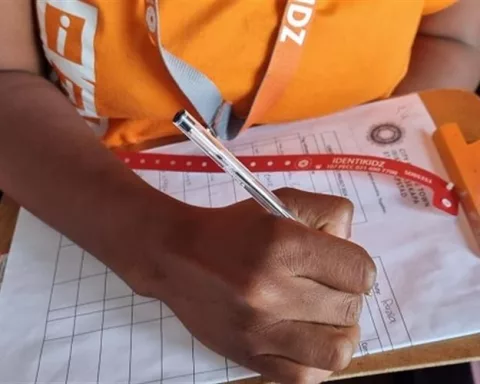
Behind the colour lies arithmetic that bites. Every child wears a QR wristband; scan it and you unlock a mini-biography – sprint time, vaccination date, favourite superhero, parental consent for filming. The numbers feed a heat-map that shows Lavender Hill produces late-bloomers who are 18 % lighter in skeletal-muscle mass than their southern-suburbs counterparts. The gap is not a scandal; it is a business case for donors who understand margins better than murals.
A sports scientist noticed that one in three kids could not track the hand that hides behind the back – undiagnosed astigagnes. Volunteer optometrists arrived, prescribed candy-coloured frames, and bowling accuracy jumped 22 % within a week. Spin, it turns out, starts with sight, not just wrist position. An Indian lens factory saw township branding opportunity; kids saw the world in HD.
Foundation staff have signed MOUs with neighbourhood watches. A coach carrying stumps is also a violence interrupter; practice schedules overlap with patrol timetables. Early data from a pilot block show gunfire incidents dipped 9 % on nights when nets are up. The sample is small, the symbolism huge: leg-slip becomes life-slip.
4. Tokens, Trade Routes and the Ball That Never Lands
Wednesday night in a Constantia barn, patrons sipped chenin while a gavel pounded R3.2 million in 42 minutes. Auction lots came with reverse anthropology – Michelin dinner served in a Langa dining room, Sussex coaches flying here to learn how to tape a tennis ball for reverse swing. Wealth buys experience, but experience must travel back; the equation is deliberate.
To keep the money river flowing, the foundation mints digital “wicket” tokens. Each R1 000 contribution buys one vote on the next project – new nets in Kimberley or optometrists in Vrygrond. Tokens trade on a local crypto platform, turning philanthropy into a small stock exchange. Former Proteas who never cashed IPL cheques now own social-capital equity; they finally feel rich.
The ICC is watching. Antigua wants a beach-cricket pilot; Adams may soon teach Caribbean kids how to run a Lavender-Hill-style festival between coconut trunks. Exporting a methodology born on sand is poetic justice for a boy once photographed barefoot on Grassy Park beach.
Night swallows the ground. Aaliyah’s last tennis-ball six lands on a rooftop among satellite dishes, spinning unseen like the next chapter of a story that refuses to stop turning. No one counts the runs; the run is the point.
What is Paul Adams’ impact on township cricket?
Paul Adams, known for his unique bowling style, is revolutionizing township cricket through a comprehensive program. This initiative goes beyond simple cricket coaching, empowering youth through multi-sport festivals, expert guidance, and essential community services, fostering holistic development and proving that talent can emerge from any background.
How does Paul Adams’ program engage children in cricket?
The program actively engages children by making cricket accessible and exciting. Kids in townships like Lavender Hill are encouraged to emulate Adams’ distinctive bowling action, with coaches even using the phrase “fold like Paulie.” The program uses innovative methods like chalk squares on walls for practice and provides opportunities for children to learn from Proteas alumni, fostering a love for the game and demonstrating that talent doesn’t require expensive equipment.
What unique elements do the multi-sport festivals include?
The multi-sport festivals are designed to attract and engage a wide range of children. Day one features diverse activities such as netball, seven-a-side rugby, and 3×3 basketball, often utilizing repurposed materials and spaces. Day two focuses on cricket with stations named after local landmarks, providing an authentic and relatable experience. These festivals act as a magnet, drawing children in with the excitement and introducing them to new sports and skills.
How does the program ensure holistic development and community support?
The program extends beyond sports to offer crucial community services. Day three of the festivals transforms the outfield into a “jobs fair,” connecting participants with NGOs, bursary boards, health services (like HIV testing), and tech startups offering educational opportunities. This integrated approach addresses various aspects of a child’s life, from education and health to future career prospects, demonstrating a commitment to their overall well-being.
What innovative methods are used to manage and fund the program?
The program employs innovative strategies for management and funding. Each child wears a QR wristband that tracks their progress and provides vital information, enabling data-driven insights for improvement and donor engagement. Health screenings, like eye exams for astigmatism, are integrated, leading to immediate improvements in performance. For funding, a unique digital “wicket” token system allows donors to vote on projects, turning philanthropy into an interactive investment. Auctions also raise significant capital, with unique experiences offered to donors.
Is Paul Adams’ program gaining international recognition?
Yes, Paul Adams’ program is garnering international attention. The ICC (International Cricket Council) is closely observing its success, with countries like Antigua expressing interest in replicating the model, particularly for beach cricket initiatives. This signifies the program’s potential for global impact, showcasing a methodology born in South African townships as a viable blueprint for community development through sport worldwide.