
The #Coding4Mandela competition is a coding tournament that honors the legacy of Nelson Mandela and encourages students to showcase their coding skills. Participants use an app called RANGERS to complete tasks while being tested on completion speed, accuracy, and error count. The event emphasizes the importance of coding education and its potential to transform communities in South Africa. Through this initiative, the nation made a substantial leap towards a technologically progressive future, honoring the beloved Madiba’s memory.
What is the #Coding4Mandela competition?
Coding4Mandela is a coding competition that honors Nelson Mandela’s legacy. Organized by the Leva Foundation, the tournament is designed for students to showcase their coding prowess. The competition involves completing tasks on an app called RANGERS, and the winning team is determined by completion speed, accuracy, and error count. The event emphasizes the importance of coding education and its potential to transform communities in South Africa.
In the contemporary digital epoch, codes dominate and dictate our world. On December 5th, South Africa hailed a unique event that celebrated this modern trend. This date marked the 10th anniversary of the loss of an exemplary leader and moral guide, Nelson Mandela. To honor the memory of this esteemed freedom fighter, the country organized a coding contest known as the #Coding4Mandela tournament.
The Leva Foundation, a philanthropic entity, released a comprehensive report addressing the structure and objectives of the competition. The tournament, conducted entirely through online platforms, was ingeniously designed to draw students into the enthralling sphere of coding. In this competition, the participants had to utilize their coding proficiency in an app labeled RANGERS. The app, packed with compelling and interactive tasks, required the aspiring coders to guide an object to its destination.
Determining the Winner in the Digital Challenge
The teams were tested against the clock, each given only 30 minutes to overcome 11 stages. The time constraint definitely ignited a sense of competition among the participants. The triumphant team was decided based on the completion of levels. In case of a tie, the team with the least number of errors was declared the winner. The final determinant of victory was the speed of coding execution, rewarding the team that accomplished their task in the shortest time frame.
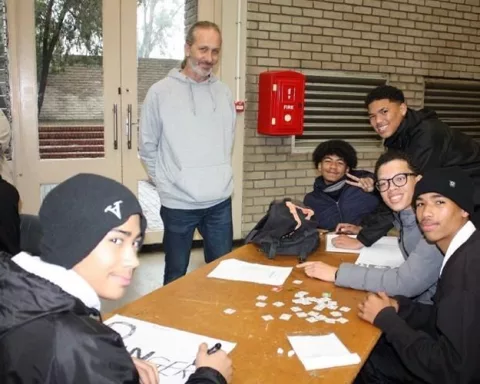
To ready themselves for the contest, the participants congregated at Astra Special School in Montevideo for practice sessions. The memorable event was unveiled by Randal Rousseau, a passionate coding coach. Rousseau started his journey in the Belhar Library, infusing coding into traditional learning methods utilizing a unique app called TANKS. He then expanded this program to the Bonteheuwel Library, dedicating two hours daily for two months to train assistants who would subsequently impart coding skills to learners.
Embracing Coding as a New Form of Literacy
Ricardo Antha, the head coach of the Belhar Coding Club, was inspired to delve into the coding world by his own daughter. Antha envisions coding as a fundamental component of school education. He meticulously tailors his coaching strategies to accommodate his students’ needs. His teaching methods encompass visual aids and comprehensive explanations to serve students with diverse learning preferences.
Keziah, Antha’s daughter, embarked on her coding journey in July of the preceding year. For her, coding is a thrilling process of crafting games and animations. She encourages others to embrace coding, not only for its practical usage, but also for its potential to boost problem-solving skills and academic performance.
Echoing Keziah’s enthusiasm, Aidan Nissen, a student from Belhar High, expressed, “I enjoy coding because it expands our thinking … I like that we can also have fun with each other while learning.”
Shadwell Overmeyer, a coding coach at Belhar Library and volunteer at Valhalla Park Library, underscores the transformational power of coding. He is convinced that coding can serve as a lighthouse for children seeking direction in life. He stated emphatically, “The alternative is drugs and gangsterism and we had to be that catalyst that brings change to the community and coding is doing a brilliant job at that.”
#Coding4Mandela: More Than Just a Competition
The #Coding4Mandela tournament was, therefore, more than just a competition. It was indeed a landmark in South Africa’s journey towards digital literacy. Through this initiative, not only did the nation pay its respects to its cherished Madiba, but it also made a substantial leap towards a technologically progressive future.
1. What is the #Coding4Mandela competition?
Coding4Mandela is a coding competition that honors Nelson Mandela’s legacy. Organized by the Leva Foundation, the tournament is designed for students to showcase their coding prowess. The competition involves completing tasks on an app called RANGERS, and the winning team is determined by completion speed, accuracy, and error count. The event emphasizes the importance of coding education and its potential to transform communities in South Africa.
2. How is the winner determined in the #Coding4Mandela competition?
The winning team in the #Coding4Mandela competition is determined by completion speed, accuracy, and error count. The teams are given only 30 minutes to overcome 11 stages on the RANGERS app. In case of a tie, the team with the least number of errors is declared the winner. The final determinant of victory is the speed of coding execution, rewarding the team that accomplished their task in the shortest time frame.
3. What is the RANGERS app?
The RANGERS app is an app used in the #Coding4Mandela competition. It is designed to test the coding proficiency of participants through compelling and interactive tasks. The app requires the aspiring coders to guide an object to its destination.
4. How did the participants prepare for the #Coding4Mandela competition?
The participants congregated at Astra Special School in Montevideo for practice sessions to ready themselves for the #Coding4Mandela competition. Randal Rousseau, a passionate coding coach, unveiled the memorable event. He started his journey in the Belhar Library, infusing coding into traditional learning methods utilizing a unique app called TANKS. He then expanded this program to the Bonteheuwel Library, dedicating two hours daily for two months to train assistants who would subsequently impart coding skills to learners.
5. Why is coding education important?
Coding education is essential because it provides a new form of literacy that can transform communities in South Africa. It has the potential to boost problem-solving skills and academic performance, and it is a fundamental component of school education. Furthermore, coding can serve as a lighthouse for children seeking direction in life, providing an alternative to drugs and gangsterism.
6. What was the significance of the #Coding4Mandela competition?
The #Coding4Mandela competition was a landmark in South Africa’s journey towards digital literacy. Through this initiative, the nation paid its respects to its cherished Madiba, and it also made a substantial leap towards a technologically progressive future. The event emphasized the importance of coding education and its potential to transform communities in South Africa.