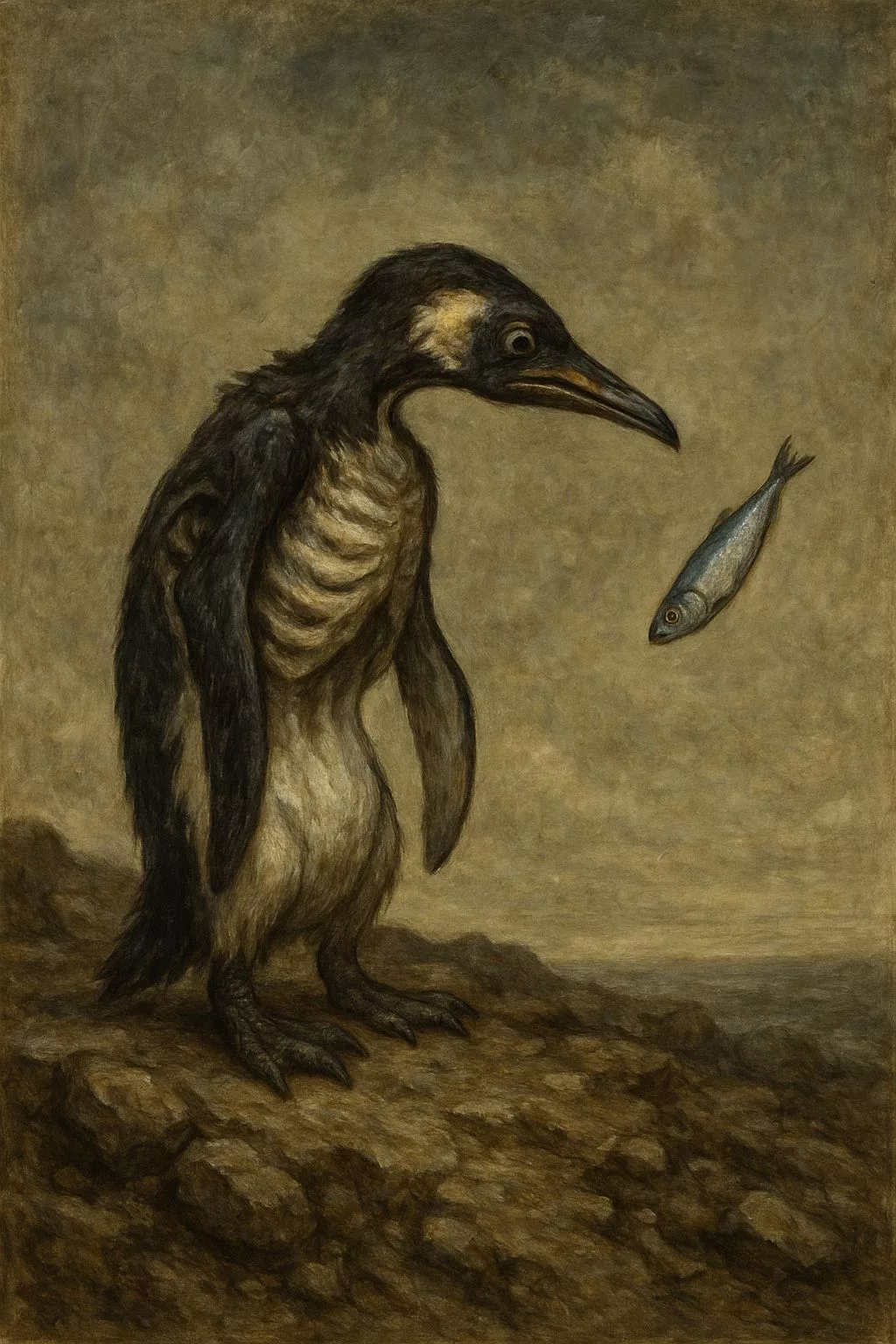
African penguins are in deep trouble! Their main food, sardines, have mostly disappeared, especially when penguins need them most to change their feathers. This means many penguins starve, get sick, and can’t have babies. It’s a sad story of hunger and a changing ocean that threatens to silence their noisy islands forever.
Why are African penguin populations declining?
African penguin populations are declining primarily due to a severe sardine shortage, especially during their critical moulting season. This lack of their main food source leads to starvation, weakened immune systems, and reduced breeding success, with climate change and overfishing exacerbating the problem.
Dassen and Robben, two sun-baked granite islands off South Africa’s west coast, were once so loud that their chorus carried across the bay like a flock of braying donkeys. Today the same rocks stand in near-silence. Between 2004 and 2011, nine out of every ten African penguins that nested there in 2004 vanished; the majority perished during the three-week midsummer window when each bird must replace every feather on its body. A University of Exeter-led study published today in Ostrich: Journal of African Ornithology shows that the die-off traces back to one lethal choke-point: the sudden disappearance of sardines at the exact moment penguins are stranded on shore and unable to hunt.
The paper reconstructs a domino effect that begins in the nutrient-rich upwelling cell south of the Benguela Current and ends with 62,000 fewer breeders. Mark–recapture histories, satellite tags and two decades of colony counts reveal adult survival mirrors sardine biomass, but only during the moult. When the fish stock falls below a quarter of its historic peak – which happened every year from 2004 to 2011 – birds arrive on land already under-weight and burn their last reserves before new plumage is finished. Carcasses recovered mid-moult carried 38 % less fat than birds that lived through years of richer prey, a shortfall equal to three full days of fasting metabolism.
The sardine shortfall itself stems from an eastward slide in spawning success. Satellite data show surface temperatures west of Cape Agulhas climbed 0.7 °C faster than the species’ thermal sweet-spot, while egg surveys logged a 40 % drop in larval density. Warmer, fresher surface water has deepened the thermocline, trapping plankton too low for first-feeding larvae. Off the cooler south-east coast, larval counts have tripled since 1998. Yet industrial purse-seine nets stayed put: 84 % of the annual quota was still landed west of Cape Agulhas in 2005, creating what the authors dub a “spatial trap” for penguins that kept searching traditional waters now largely emptied of prey.
The Cruel Math of a Collapsing Food Web
An adult African penguin must pack away 240 g of sardines every day to build the 1.5 kg fat buffer required for 21 days without food. During the lean years, the average catch inside the birds’ core foraging radius fell to 11 kg per boat-day, one-fifth of the 1990s average. Even if the birds could switch to anchovy – the second-most important prey – they would still face a 70 % energy shortfall, because anchovy are both leaner and scarce in mid-summer. Chick-rearing compounds the problem; parents that fledge young in February begin their own moult only four weeks later, their fat reserves already depleted. The outcome is a demographic double blow: fewer fledglings and fewer adults alive to breed again.
Hunger is not the only assassin. Feather samples from 2010 carcasses show corticosterone levels triple the baseline, a hormonal red flag for chronic stress that cripples immunity. Post-mortems found 62 % of moulting adults carrying heavy loads of the blood parasite Babesia , a pathogen usually kept in check by good nutrition. Beached birds also contained an average of 14 micro-plastic fragments per stomach, suggesting starving penguins swallow more debris when natural prey is scarce. Still, food trumps all: in the one summer when sardine biomass briefly rebounded to 40 % of the historic high, survival rates snapped back within a single season, proving how tightly the birds’ fate is hitched to the shimmering silver school.
A Century of Loss and the Forecast Ahead
In 1900, an estimated 1.4 million African penguins occupied 29 islands and four mainland rookeries stretching from Namibia to Algoa Bay. Guano scraping, egg collecting and sealing removed both habitat and offspring, yet numbers still hovered near one million in 1956 when industrial sardine fishing began. Today fewer than 9,900 breeding pairs remain – a 98 % plunge in 120 years. The west-coast stock, once deemed bullet-proof thanks to the Benguela’s relentless upwelling, first imploded in the late 1960s, rebounded during the 1980s anchovy regime, and now sits at record lows. Climate models predict a further 20 % shrinkage of suitable spawning habitat by 2035 as the Agulhas Current strengthens and the South Atlantic high-pressure cell intensifies, raising the spectre of serial moult-season failures.
Managers have begun to react. Since 2020, purse-seine boats may not launch within 20 km of the six largest colonies during April and May, the critical fattening weeks before moult. The no-take zones blanket 3,200 km² of ocean that overlap GPS-tracked penguin hotspots. Early returns from Robben Island show a 14 % dip in adult mortality in 2021 versus 2019, although sardine biomass was also marginally higher, muddying attribution. A bolder experiment is running on St Croix Island in Algoa Bay: quota holders voluntarily shift effort eastward whenever acoustic surveys detect west-coast biomass below the 25 % threshold. Initial figures indicate a 30 % drop in local fishing mortality, but industry participation hinges on a compensation fund bank-rolled by conservation NGOs and an eco-label still courting supermarket chains.
Emergency Experiments and Global Ripples
During the 2023 moult, rehabilitators at SANCCOB pre-fed 86 tag-bearing adults on sardine-rich diets for ten days before release. The birds survived moult at double the rate of untreated controls, a proof-of-concept that targeted supplementation could plug short-term gaps. Scaling up would demand 11 t of sardines annually – logistically feasible but ethically fraught when the same fish feed people. Researchers are therefore trialling lipid-rich Japanese flying-squid surimi; captive penguins maintain mass on squid pellets laced with 5 % fish oil, a formula that could be broadcast from robotic barges.
Others pursue genomic rescue. Museum skins dating to 1900 reveal a 28 % loss of genetic diversity, with immune-system genes eroding fastest. The University of Cape Town and Copenhagen Zoo are cryo-banking sperm from males reared during the last sardine boom, aiming to artificially inseminate females in inbred colonies once conditions improve. Parallel work pinpoints alleles tied to efficient fat metabolism, raising the distant prospect of selective breeding for “low-sardine tolerance.” Critics warn such fixes could distract from the real problem – ecological collapse – but proponents argue extreme endangerment warrants every insurance policy.
The crisis has already crossed borders. Namibia’s penguins fell 70 % between 2016 and 2022 after warm Angolan water pushed sardines southward. BirdLife International has enrolled the species in its “Edge of Existence” programme, unlocking EU funds for transboundary acoustic surveys. The Benguela Current Convention – Angola, Namibia and South Africa – now lists the penguin as an indicator species, legally binding member states to weave seabird survival into fisheries policy. The first test comes in November 2024, when TotalEnergies must submit an impact assessment for a new offshore oil block west of Robben Island; campaigners cite the starvation–moult link to argue that seismic blasts could further constrict the birds’ narrow foraging window.
On the beaches, rangers document behaviour never seen before: penguins foraging at night under the glare of squid-jigging boats, diving 113 m – 30 m beyond their former limit – to chase lanternfish, or attempting double broods in a single season. Whether such plasticity can outrun environmental change is the urgent, unanswered question. Every indicator – prey biomass, sea temperature, adult body mass, chick survival, genetic diversity – now flickers at the edge of viability. The next sardine recruitment failure, expected if the 2025 El Niño strengthens, will coincide with the largest cohort of moulting adults since 2012. Without immediate, coordinated action across fleets, rigs, NGOs and coastal cities, the raucous chorus that once defined the Cape west coast may shrink to a faint echo, preserved only in museum recordings and the memories of ageing fishers who remember when the sea itself shimmered silver.
Why are African penguin populations declining so drastically?
African penguin populations are declining primarily due to a severe sardine shortage, especially during their critical moulting season. This lack of their main food source leads to starvation, weakened immune systems, and reduced breeding success. Climate change, which causes warmer ocean temperatures and shifts in sardine spawning grounds, and overfishing exacerbate the problem.
What is the critical ‘moult season’ for African penguins and why is it so deadly?
The moult season is a critical three-week period when African penguins replace all their feathers. During this time, they are stranded on land, unable to hunt for food. They rely entirely on fat reserves built up beforehand. If sardine availability is low, penguins arrive underweight, quickly deplete their reserves, and many starve to death or become too weak to survive.
How has the sardine shortage specifically impacted the penguins’ survival during moult?
During lean years (2004-2011), when sardine stock fell below a quarter of its historic peak, penguins arrived on land already underweight. Carcasses recovered mid-moult carried 38% less fat than birds in years with abundant prey, equivalent to three days of fasting metabolism. This severe energy deficit directly led to a significant increase in mortality.
Beyond starvation, what other health issues are affecting African penguins?
Hunger triggers a cascade of other health problems. High levels of corticosterone (a stress hormone) cripple their immunity, making them susceptible to diseases like the blood parasite Babesia. Starving penguins also ingest micro-plastic fragments, mistaking them for food, further compounding their health woes. Fewer fledglings and fewer adults surviving to breed again create a ‘demographic double blow’.
What measures are being taken to help African penguins?
Managers have implemented no-take zones for purse-seine fishing boats near colonies during critical fattening months. Experiments include pre-feeding adults with sardines before moult, trialling lipid-rich squid surimi as an alternative food source, and genomic rescue efforts like cryo-banking sperm and identifying genes for ‘low-sardine tolerance’. Conservation efforts also involve transboundary acoustic surveys and integrating seabird survival into fisheries policy.
What is the long-term outlook for African penguins and what challenges remain?
The long-term outlook is precarious, with a 98% population plunge in 120 years. Climate models predict further shrinkage of suitable spawning habitat. While some conservation efforts show promise, challenges include the ethical dilemma of feeding wild populations, the logistical scale of intervention, and the risk of ecological collapse. The upcoming El Niño, if it strengthens, could lead to another sardine recruitment failure coinciding with a large moulting cohort, making immediate, coordinated action crucial to prevent their extinction.