Eskom, the largest power utility in South Africa, has achieved an unprecedented 65day suspension of load shedding, signaling a significant improvement in power reliability. This has resulted from Eskom’s strategic efforts to bolster the dependability of its power generation fleet and streamline maintenance, as outlined in its Generation Operational Recovery Plan. Key performance indicators such as the Unplanned Capacity Loss Factor and Sustained Energy Availability Factor demonstrate Eskom’s progress towards greater reliability. Despite these achievements, Eskom urges the public to continue using electricity judiciously, promoting a reliable energy future for South Africa.

The debate continues in Cape Town on balancing urban structure and safety in cycling paths. Initially, hailed as an efficient transport network, crime has transformed these paths into epicenters of unlawful activity. The city has decided to close numerous cycling paths and pedestrian walkways, but citizens are invited to engage in the decisionmaking process for a democratic outcome. Despite the closures, there is hope as residents can lease the land and convert it into gardens, reflecting the city’s ongoing adaptability and resilience in confronting adversity.
Amid the city districts of Cape Town, urban pocket forests are sprouting using the Miyawaki afforestation method, a Japanese technique that emphasizes growing dense, diverse forests of native and indigenous plant species. Mzanzi Organics and local elementary schools are utilizing this method to plant 800 indigenous trees and shrubs across 200 square meters of Langa, leading to the birth of the region’s firstever forest. These green sanctuaries serve as alfresco classrooms for learning sessions and venues for music collaborations between musicians and pupils, while also encouraging biodiversity and ecosystem restoration.
The Big Biodiversity Challenge is a competition for students in Grades 6 to 9 to come up with innovative solutions to environmental issues threatening biodiversity. The challenge is a joint effort by several organizations in the Western Cape, aimed at inspiring the next generation of environmental custodians. Students can participate solo or in teams, with the chance to win exciting prizes. The competition provides a unique opportunity for young minds to become part of the solution to environmental issues and take a proactive approach towards ecological responsibility.
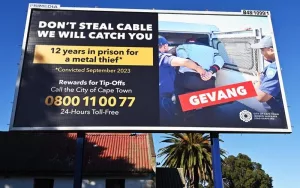
Cape Town is fighting against metal theft using advanced technology like infrared cameras and a tollfree hotline with an incentive program for those who provide information that leads to the capture and prosecution of cable thieves. The city is also using a billboard campaign to deter potential thieves and reinforcing patrols to increase the pressure on metal thieves. The public is encouraged to report any suspicious activities and serve as protectors of the infrastructure in their local areas. Despite the challenges, Cape Town remains resilient and innovative in its fight against metal theft.
The recent divorce of Rassie Erasmus, coach of the Springboks rugby team, has sparked a nationwide debate about the balance between privacy rights and public interest for sports celebrities. While Erasmus has been notoriously private about his family life, the lack of comments regarding his divorce has raised questions about whether his offfield life should be subject to public scrutiny. The situation highlights the complex reality of public figures, where personal and professional lives often become intertwined, and opinions on privacy rights continue to be diverse.
Justice Yvonne Mokgoro was an extraordinary trailblazer, breaking through barriers to become the first black woman appointed to South Africa’s Constitutional Court. Her legacy extends beyond South Africa, as she presided over the UN’s Internal Justice Council and was appointed as the inaugural chair of the Independent Expert Mechanism to Advance Racial Justice and Equality in LawEnforcement by the UN Human Rights Council. Her legal philosophy centered around human dignity, and her judgments consistently championed the rights of the most vulnerable members of society. Her life and legacy serve as a potent reminder of our shared responsibility to build a society centered on true equality, liberty, and respect for human rights.
The Slave Route Challenge is an annual event in Cape Town that offers a handson experience of the city’s historical narrative through a half marathon, a 10km, and a 5km race. The routes guide runners through historically significant locations, such as District 6, the Castle of Good Hope, and BoKaap, offering participants a deep understanding of the city’s origins. More than just a sports event, the Slave Route Challenge is a commemorative celebration of Cape Town’s heritage and culture, fostering a sense of harmony in diversity.
Updating your contact information on the Housing Needs Register can unlock a brighter future with a wide array of housing opportunities offered by the City of Cape Town, including programs like Breaking New Ground, Gap to Flisp, and Community Residential Units. Mr. Ismail de Jongh’s story is a prime example of the transformative power of the City’s housing opportunities, and the City invites inquiries and encourages residents to keep their details uptodate to benefit from these programs. Seize the moment and join forces with the City to build a stronger community, one home at a time.
In Cape Town, the Water and Sanitation Directorate is facing a crisis as workers responsible for providing clean water and sanitation solutions are being threatened by criminal activity. In the preceding fiscal year, there were 22 hijackings and 52 robberies reported, causing a financial burden of R8.5 million in private security escorts to ensure personnel safety and continuity of services. The Mayor has launched an AntiExtortion Campaign, and Councilor Zahid Badroodien is calling for community cooperation to guarantee safer working conditions for essential workers, emphasizing the need for collective action to protect public service providers.
The South African rugby team, the Springboks, are facing a tough challenge as their experienced loosehead prop, Steven Kitshoff, recovers from a chronic knee injury. This calls for a calculated management approach for his training and workload going forward and the need for alternative loosehead prop options for upcoming matches. Despite this setback, the Springboks have a talented team that can rise to the occasion with careful management and strategic planning.
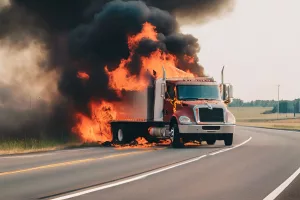
South Africa’s trucking industry faces a looming shutdown as the All Truck Drivers Forum and Allied SA (ATDFASA) announced a shutdown planned for May 20, 2024. This is due to the ongoing conflict over hiring foreign truck drivers, which has resulted in national shutdowns, protests, casualties, damage to trucks, and loss of goods. The impact of the protests has extended beyond the industry, severely affecting the South African economy and public safety. The disruptions have also caused shortages of basic necessities, delays in deliveries, and increased absences among staff members.
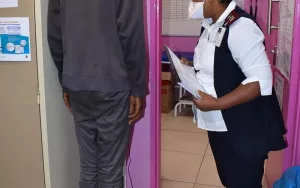
Hypertension, or high blood pressure, is a dangerous health risk that can lead to serious complications like stroke and heart attack. The city’s health department has increased screenings and promoted prevention measures like medication, physical activity, and healthy eating to combat this “silent killer.” They have found that more young people are being diagnosed with hypertension, and urge everyone to prioritize their health and get screened regularly. By adopting a preventive healthcare approach and routine screenings, the city’s health department is fighting against this unseen threat.
South Africa’s participatory democracy has entered a new chapter with the establishment of a new Parliamentary Constituency Office (PCO) in Botshabelo, Free State, under the stewardship of Mr. Lechesa Tsenoli. The refurbished PCOs provide a platform for Members of Parliament to communicate directly with the public, facilitating a deeper understanding of their concerns and aspirations. The goal is to promote public access and meaningful engagement in parliamentary proceedings, nurturing a more inclusive society. The Botshabelo PCO symbolizes a new era of lively community partnership and a vision for an inclusive democracy.
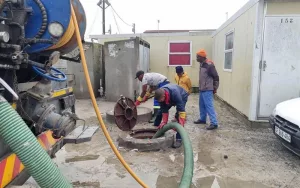
The maintenance of vast sewage and river systems is a strategic priority, particularly as a sewage overflow or river flood is the last thing a city needs during the colder months. The city’s Water and Sanitation Directorate is preparing for winter’s increased stormwater volume by cleaning sewer pipelines, clearing litter traps in river systems, and monitoring stormwatertosewer connections. Residents can help by adhering to protocols like flushing only human waste and reporting blockages and overflows. By collaborating with the city’s efforts, we can ensure a safer and cleaner winter season.
The trial of Nafiz Modack and his companions in the Western Cape High Court involves a locationtracking platform used to monitor the movements of individuals, including law enforcement officers. Tech tycoon Larry Hurwitz provided revealing testimony on the software’s intricate workings, leading to debates on the ethical and legal limitations of surveillance technology. The trial sheds light on the interplay between technology, crime, and law enforcement, and the potential for abuse of surveillance tools.