The Kaizer Chiefs, one of South Africa’s most prominent football clubs, are reportedly considering Salim Magoola, a standout goalkeeper from Richards Bay, as a potential successor to Itumeleng Khune. Magoola, a Ugandan national player, has achieved 14 cleansheets out of 38 appearances for Richards Bay, and his performance will be closely monitored by the Chiefs as they continue their search for a new goalkeeper. The recent highlypublicized faceoff between the Kaizer Chiefs and Orlando Pirates, as well as FIFA President Gianni Infantino’s personal testimony of his first Soweto Derby experience, exemplify the passion and fervor that characterizes South African football.

In a seminal moment marking the convergence of social and economic spheres, the Department of Women, Youth, and Persons with Disabilities (DWYPD) and the African Union Development Agency (AUDANEPAD) held a dialogical gathering on Positive Masculinity to End Violence Against Women and Girls (EVAWG). Taking place on November 17, 2023, in South Africa’s bustling city of Midrand, Pretoria, this meeting was a significant leap towards a more just society.
South Africa, an energetic nation brimming with diverse cultures and a wealth of history, is fervently preparing to stage a distinct event. The 3rd African Union Men’s Conference focusing on the promotion of positive masculinity in leadership to eradicate violence against women and girls will unfold between 27 and 28 November 2023 in Pretoria. This significant event carries not only weight for Africa but also symbolises a worldwide shift in societal norms.
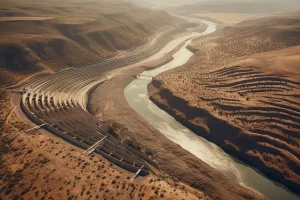
The Department of Water and Sanitation’s weekly reservoir status report shows a slight increase in water levels in Mpumalanga Province, South Africa, from 90.6% to 90.7% on November 13, 2023. However, the water situation in the region is complex, with some districts experiencing a decline in water levels while others saw a significant increase. This data highlights the ongoing struggle with water scarcity in South Africa and the importance of responsible water usage. It also reminds us of our inherent responsibility towards water conservation and the vulnerability of our natural resources.
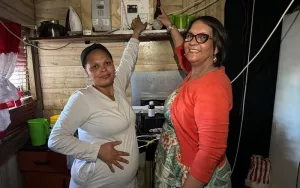
Kensington, a suburban locality in Cape Town, has undergone an electrification project that has linked homes to the grid, providing improved living conditions, security, and relief from the uncertain reliance on exposed fires. The city has invested R23 million in the project, allowing roughly 2,440 households to escape from the confining darkness. This initiative has become a precursor to improved living conditions, security, and a muchdesired relief from the uncertain reliance on exposed fires.
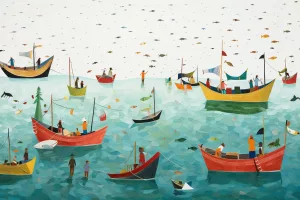
Smallscale fishers in South Africa’s Western Cape have been granted 15year fishing rights, benefiting 62 smallscale fishing cooperatives and 3,850 declared fishers. This allocation is a significant shift in the landscape, paving the way for the formal recognition of the Western Cape’s fishing communities, stimulating economic growth, supporting food security, and legitimizing traditional fishing practices. The Department collaborated with CommunityBased Organizations and fishing communities to register cooperatives and launched training workshops to prepare for the allocation of smallscale fishing rights, and is currently working on creating a sustainable and economically viable species mix. This historic milestone in South Africa’s fisheries sector amplifies the excitement of the beginning of the West Coast Rock Lobster fishing season.
The crucial try that was denied due to an earlier knockon during the Rugby World Cup Final sparked controversy and debate among fans and critics, even though the decision was made by the Television Match Official Tom Foley. While World Rugby has privately acknowledged breaking protocol with the decision, it has not publicly addressed the issue, causing frustration among many. However, despite the controversy, the final serves as a reminder of the pressures and challenges associated with professional sports, and the exceptional skill and commitment demonstrated by teams like the All Blacks.
South Africa’s National Tourism Safety Strategy (NTSS) is a threefold approach to address safety concerns in the tourism industry. The strategy includes preventative actions, responsive actions, and followup programs to enhance the visitor experience and shift perceptions of South Africa as an unsafe destination. Measures such as a Crisis Management Communications Plan, partnerships with law enforcement, and the deployment of Tourism Monitors to key attractions and sites aim to facilitate the practical implementation of the NTSS. The overall goal of the strategy is to safeguard both domestic and international tourists, alter perceptions about South Africa as a destination, and secure its position as an appealing and safe destination for tourists worldwide.
The Table Mountain Aerial Cableway Company is hosting its annual “Take a Hike Day” event from November 15th to 17th, which aims to engage the public in hiking Table Mountain while also cleaning it up. Participants can trade the litter they gather for a free cable car ride, making the effort as exciting as it is environmentally friendly. Hikers are encouraged to tailor their own adventure while submitting their collected trash by 17:00, and Table Mountain recently surpassed Mount Everest on the list of natural wonders of the world, highlighting its beauty and the need for conservation.
South Africa is undergoing a cultural revolution led by the Department of Sport, Arts and Culture and the South African Geographical Names Council. The aim is to ensure that geographical names truly reflect the languages, natural landscapes, and cultural heritage of its inhabitants and remove the remaining traces of colonial and apartheidera influences. The initiative encourages individuals to participate in the renaming process to resonate with their distinct languages and cultural heritage, with significant progress already seen in some provinces. The goal is to leave a legacy of places with names that mirror a democratic South Africa in terms of its many languages and cultural heritage.
The Soweto Derby is a highly anticipated football match between rivals Orlando Pirates and Kaizer Chiefs in Johannesburg. The game is a battle of tradition, rivalry, and passion, with victory depending on who desires it the most. Leading the Pirates’ charge is the experienced forward Kermit Erasmus, who emphasizes the importance of composure and precise execution in the attacking third of the field. Despite recent successes, the Pirates recognize the danger of the Chiefs and understand the significance of the derby as one of Africa’s most substantial games. All eyes are on the upcoming match, hoping for a grand spectacle.
Khuliso Mudau, a defender for Bafana Bafana, caught the attention of coach Hugo Broos with his impressive performance in a recent match against Cote d’Ivoire. Broos initially preferred another player for the rightback position, but Mudau’s rise from underdog to a player supported by Broos exemplifies the dynamism of football. While Mudau’s position in the team for upcoming matches remains uncertain, his transformation is nothing short of motivational. The story becomes even more exciting as the team prepares for their upcoming matches.
Infecting The City Festival is a twoweeklong public art festival held in Cape Town that features music, dance, video, and visual art, transforming urban spaces into audiovisual spectacles. The festival aims to challenge the idea of a smart city as a stronghold of creative expression, and to serve as a soundboard for universal rights, intensifying the voice of the city and its inhabitants. Completely free of charge and accessible to all, the festival is a key instrument that connects the personal, public, and private domains in Cape Town.
Eric Tinkler, Gavin Hunt, and Steve Barker are among the selected group of coaches embarking on the prestigious CAF A License coaching course, which demands 200 hours of study until its conclusion in June 2024. The program is a vital step towards enhancing professionalism in football coaching in South Africa and across the continent. The trio’s participation in the course underscores their commitment to continuous learning and constant enhancement in their profession, emphasizing the ceaseless quest for knowledge, improvement, and excellence that lies at the core of football coaching.
In a quiet village in South Africa’s Sekhukhune District, a dedicated team of police officers conducted an operation against illegal mining and successfully detained eight individuals. The operation shed light on the widespread issue of illegal mining, which poses a threat to the environment and the local economy. Though the operation was a success, the issue persists, and there is a pressing need for comprehensive policies to address the root causes of such activities. The police’s vigilant efforts in upholding law and order remain a beacon of hope for the community.
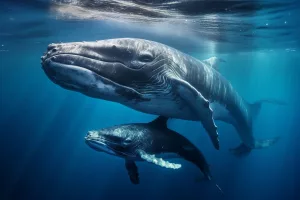
Cape Town is committed to preserving its coastal biodiversity and encourages respectful cohabitation between humans and marine life. The city has regulations in place to safeguard the natural ecosystem and urges all visitors and locals to experience its stunning coastline responsibly. Cape Town’s call to respect and protect its coastal wildlife is more than a plea; it signifies their conviction in the delicate balance of nature.