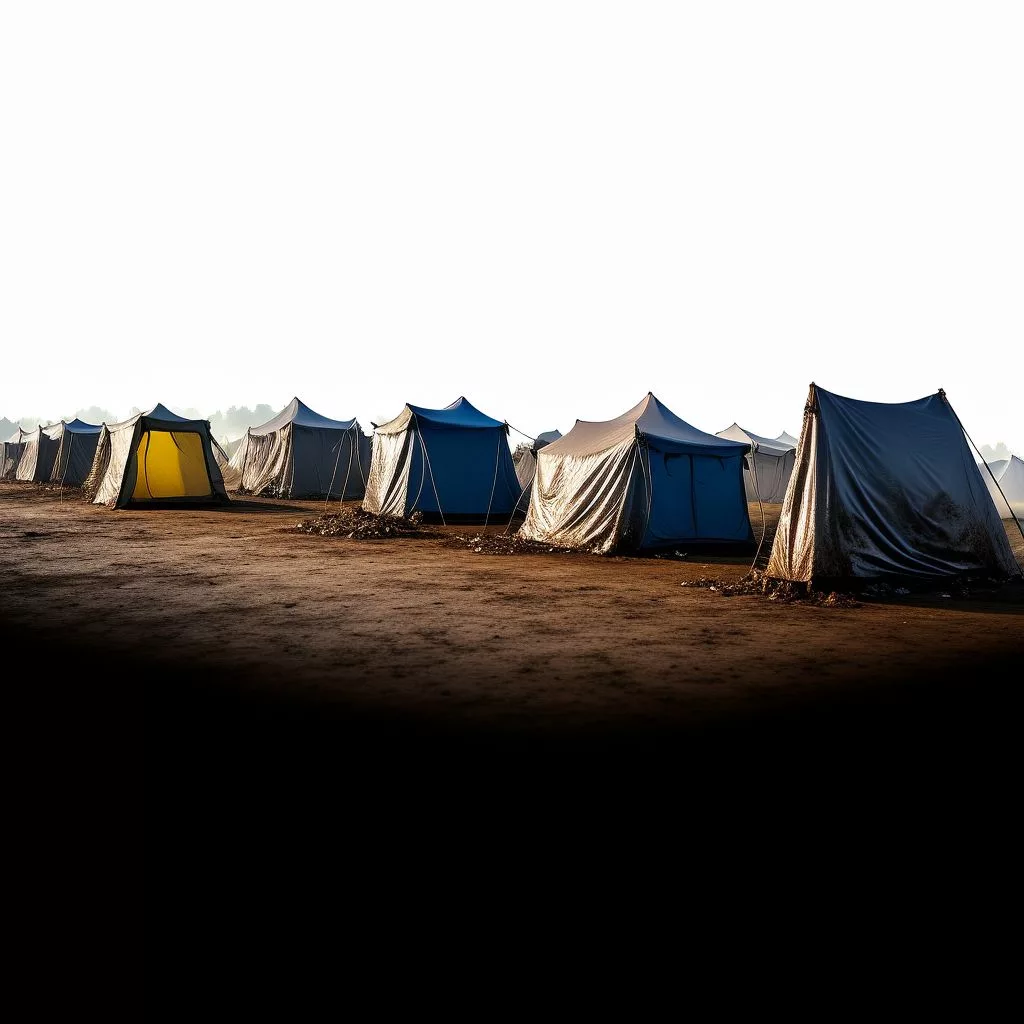
Life in Paint City refugee camp is tough and full of challenges like cold weather, crowded tents, and little clean water. Yet, families like Francine’s stay strong, sharing what they have and hoping for a safer future. Though the camp feels like a prison at times, it also becomes a small village where people create new bonds and ways to live despite hardship. Even with fears of eviction and danger outside, the residents hold onto hope that one day they will find a permanent home.
What is life like for refugees living in Paint City’s tented camp in Cape Town?
Life at Paint City refugee camp involves daily struggles with overcrowding, poor sanitation, and exposure to harsh weather. Despite insecurity and limited services, residents show resilience by forming communities, sharing resources, and holding onto hope for resettlement and safety amidst ongoing hardships.
A Daily Struggle for Safety and Dignity
Each morning at Paint City, Francine Nduyimana stands watchful at the edge of a muddy footpath, her youngest child clinging to her sleeve. The camp, set on the outskirts of Cape Town in Bellville, has become both a sanctuary and a cage for Francine and hundreds of other refugees. Winter’s harsh winds and rain easily penetrate the battered plastic sheets that serve as walls for their makeshift homes, leaving families exposed to the biting cold. Originally from Burundi, Francine fled mounting violence with her four children, seeking safety in South Africa. But she quickly learned that safety often comes at the cost of comfort and, sometimes, dignity.
Francine recounts her journey with quiet strength. Her youngest son, born amid the chaos and uncertainty of camp life, knows nothing outside of Paint City’s boundaries. For him, this environment is normal. For Francine, every day demands tough choices: how to ration food donations, how to keep her children warm at night, and how to shield them from the daily humiliations of life as a displaced person. She still recalls the mass protests from October 2019, when refugees demonstrated outside the United Nations High Commissioner for Refugees (UNHCR) office, demanding resettlement opportunities in Europe or Canada. Many eventually returned to the communities they had tried to settle in, but some – Francine’s family among them – remained, determined to hold out for resettlement. When the pandemic struck, authorities moved these determined groups to “temporary” sites: Wingfield near Maitland and Paint City in Bellville.
Despite the hardship, Francine and many others feel more secure inside the camp than in South African townships, where hostility toward foreigners remains a constant threat. “Children do not feel safe at school,” Francine says, her voice heavy with the sadness of a mother unable to promise safety. No one chooses to live in such conditions, but for many, there is no alternative.
The Shape of Displacement: Camps as Unintended Villages
Throughout history, camps like Paint City have offered reluctant refuge to people fleeing war or persecution. After World War II, displaced Europeans took shelter in similar improvised settlements – rows of tents, shipping containers, and rough wooden huts. These temporary structures, born of necessity, also represent something more: the stubborn persistence of hope. Over the years, architects and urban theorists have studied these spaces, noting how residents create meaning and community even in the most makeshift environments. The Situationist International, a post-war art movement, once described such conditions as “constructed situations,” shaped by the daily acts of resistance and adaptation by those within.
The rhythm of camp life revolves around the ordinary: cooking, washing, teaching children. These simple routines become powerful acts of resilience. Still, at Paint City, the prevailing mood remains somber. The threat of eviction hangs heavy, amplifying the anxiety that seeps through the narrow alleys between tents. Ethiopian refugee Dutamo Azazh expresses what many feel. “The government must help us go to a safe place. We are not safe here. Even with documents, you are still a foreigner. It does not matter.” His words, delivered without anger but with deep exhaustion, capture the sense of powerlessness that pervades the camp. The authorities have offered repatriation, but returning to countries torn by war or persecution is not an option most can contemplate.
The bureaucratic machinery continues to move, slowly and impersonally. The City of Cape Town, together with the national government, has sought court orders to evict the residents. Last November, a clash at Paint City forced nearly 150 people – men, women, and children – out of the state-provided tent. In response, they constructed makeshift shacks along the pavement, exposed to traffic and weather until city officials intervened. By June 2024, the City relocated the remaining camp dwellers to a plot next to the original tent. Now, basic services teeter on the edge of collapse. A single communal tap provides water, and rows of portable toilets line one side of the camp. Children play in muddy streams of wastewater, a stark sign of ongoing hygiene challenges.
Official Responses and the Limits of Aid
The City’s official documentation paints a stark picture of the camp’s challenges – citing overcrowding, poor sanitation, vermin, and damp as threats to health and human dignity. Mayor Geordin Hill-Lewis ties the presence of the camp to wider community issues, including traffic congestion, rising crime, and vandalism. Municipal records reveal that the state has spent more than R30 million on the site, primarily for tent rental and portable toilet maintenance. Officially classified as “emergency housing,” these facilities remain places of indefinite waiting for their residents.
Echoes of other crises linger. The Dadaist artists of early 20th-century Zurich famously turned discarded materials into art, protesting the chaos of their world. At Paint City, children’s games reflect a similar creativity – a global tradition where adversity fuels invention. Children fashion toys from discarded plastic and cardboard, transforming the bleak environment into a playground. Sociologists often describe refugee camps as spaces of constant negotiation, where identities shift, languages mingle, and new customs form out of necessity rather than design.
Amidst all this, the hope for resettlement abroad persists. Jan De Bisschop, UNHCR’s representative in Pretoria, explains that less than 1% of the 31 million people under UNHCR protection in 2024 – about 188,800 individuals – will find resettlement in a third country. For most Paint City residents, the prospect of a new life remains a distant dream, blocked by bureaucratic hurdles and global political realities.
Resilience, Community, and the Uncertain Road Ahead
City officials maintain that large-scale xenophobic violence has not erupted in recent years, and they urge refugees to reintegrate into local communities or accept repatriation. Luthando Tyhalibongo, the City’s spokesperson, insists that reintegration is possible. Yet, residents remain wary. Many recall previous waves of xenophobic attacks, and stories of intimidation and exclusion circulate daily. Some parents keep their children out of school for fear of attacks, while others anxiously follow news reports for signs of rising tensions.
Daily life outside the camp continues as usual. Bellville’s streets bustle with minibus taxis, market vendors, and commuters. Paint City stands as an unwelcome interruption – its presence a visible reminder of challenges many would rather forget. Yet, within the camp, resilience flourishes. At dusk, smoke from cooking fires curls between the tents. Neighbors share bread and laughter, forging bonds amid adversity. Over time, the camp has grown into an informal village, with its own unwritten rules, alliances, and traditions.
Residents work resourcefully to transform their temporary shelters into something more lasting. They salvage building materials from nearby construction sites, turning discarded banners and tarpaulins into patchwork walls. Children’s drawings brighten the interiors of the otherwise drab shelters. This ongoing transformation, sociologists argue, is a process of “place-making” – slowly turning a collection of tents and shacks into a community that feels like home.
Navigating life in Paint City means contending with a maze of bureaucracy and personal uncertainty. Refugees attend court hearings, fill out forms, and negotiate with officials, each encounter carrying the risk of rejection or misunderstanding. Yet, within the camp, networks of support emerge. A local church group might deliver blankets during a cold snap; a neighbor may offer advice on asylum paperwork; a volunteer doctor could treat a lingering illness. These acts of solidarity become lifelines in an otherwise uncertain world.
Refugee camps, in the imagination of many, conjure images of endless hardship: rows of tents, worried faces, and the monotony of waiting. However, daily life in Paint City also pulses with creativity, ingenuity, and hope. As sociologist Arjun Appadurai notes, such places act as “laboratories of the possible,” where people invent new ways of living together under pressure. Here, parents pass on their languages – Kirundi, Somali, Amharic – preserving culture even as circumstances shift.
As evening settles over Paint City, music from a battered radio carries through the camp. The day winds down, but life continues – some families pray, others plan for tomorrow. Despite the hardship, hope persists: hope that someday, the waiting will end, and the journey toward dignity and a permanent home will finally arrive.
FAQ: Life at Paint City’s Tented Refugee Camp
1. What are the main living conditions like in Paint City refugee camp?
Life in Paint City is extremely challenging. Residents face overcrowded tents, poor sanitation, limited access to clean water – often just a single communal tap – and exposure to harsh weather like cold winds and rain that penetrate makeshift shelters. Hygiene is difficult to maintain due to wastewater flowing between tents and limited portable toilets. Despite these hardships, families form close-knit communities and support each other daily.
2. Why do refugees choose to stay in Paint City despite the difficult conditions?
Many refugees, like Francine from Burundi, stay because they feel safer inside the camp than in nearby South African townships, where xenophobic violence and hostility toward foreigners are common. Although life in the camp is tough and uncertain, the fear of eviction or danger outside makes Paint City a relatively secure refuge. Additionally, residents hold onto hope for resettlement in safer countries, which motivates them to endure hardships.
3. What kind of community life exists within the camp?
Despite being a temporary settlement, Paint City has evolved into an informal village with its own social bonds and traditions. Residents share resources, cook together, and care for each other. Children create toys from discarded materials and play together in improvised playgrounds. Local church groups and volunteers provide support, such as distributing blankets or medical aid. These acts build resilience and foster a sense of belonging amid adversity.
4. What efforts have city authorities made regarding Paint City?
The City of Cape Town, together with the national government, classifies Paint City as emergency housing and has spent over R30 million mainly on tents and portable toilets. They have pursued court orders for eviction, arguing that the camp causes issues like overcrowding, sanitation problems, and community tensions. Some residents were relocated to nearby plots, but basic services remain minimal. Officials encourage refugees to reintegrate locally or accept repatriation, though many fear returning to unsafe home countries.
5. What are the prospects for refugees in Paint City to be resettled in third countries?
Resettlement opportunities are extremely limited worldwide. According to UNHCR, less than 1% of the over 31 million refugees globally – about 188,800 people – are expected to be resettled in 2024. For most Paint City residents, bureaucratic delays, political challenges, and global restrictions mean that resettlement remains a distant dream. Many continue to wait indefinitely while navigating complex legal and administrative processes.
6. How do refugees at Paint City cope emotionally and culturally with displacement?
Residents maintain hope through community support, cultural preservation, and creative adaptation. Languages like Kirundi, Somali, and Amharic are passed on to children, helping sustain identity. Daily routines – cooking, teaching, playing – are acts of resilience. Creativity flourishes as children make toys from scrap materials and families decorate shelters. Despite uncertainty and hardship, many hold onto faith, hope, and plans for a better future, turning the camp into a “laboratory of the possible” for new ways of living together.
If you want to learn more about refugee experiences or ways to support displaced communities, organizations like UNHCR and local NGOs offer resources and opportunities to help.