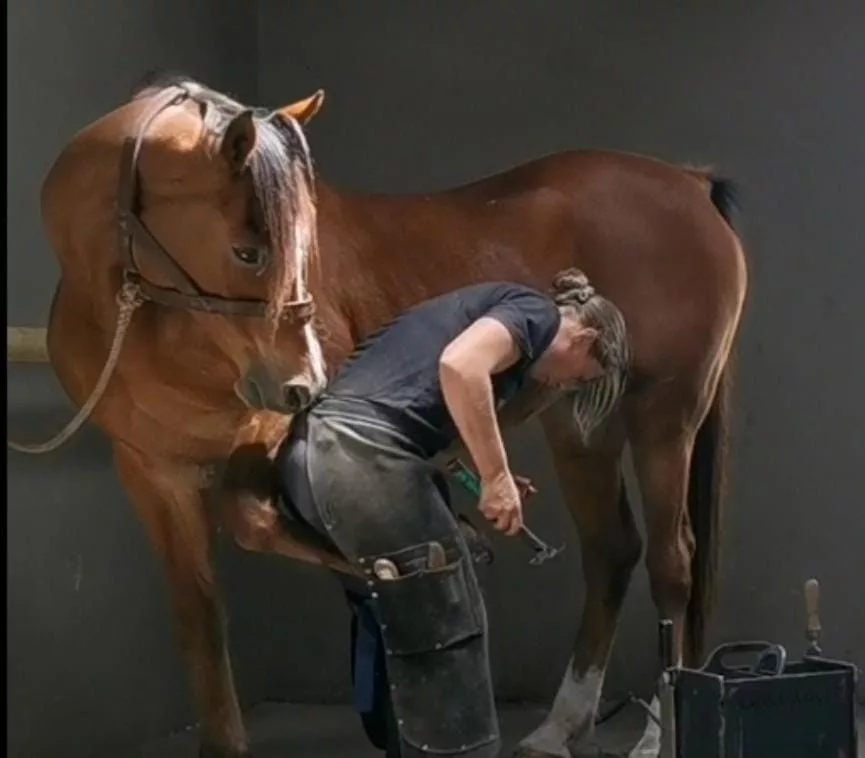
Sergeant Vernadene Jonker is a strong and skilled member of South Africa’s mounted police, who rides horses, cares for them, and even shoes their hooves. She breaks barriers as a woman in a tough, male-dominated job, showing courage and dedication every day. Jonker’s love for horses and hard work shines through as she trains, cares for, and leads horses on patrols and ceremonies. Her story inspires young people, proving that with passion and skill, anyone can overcome challenges and make a difference.
Who is Sergeant Vernadene Jonker and what is her role in South African mounted policing?
Sergeant Vernadene Jonker is a dedicated member of South Africa’s mounted police, excelling as a rider, stable official, and farrier. She combines horsemanship, hoof care, and policing skills to support patrols, ceremonial duties, and community safety, breaking barriers as a female leader in a traditionally male field.
The Dawn of a Calling: Roots in Service and Tradition
Every winter morning at the Gqeberha Mounted Unit begins with a symphony of muffled hoofbeats and the gentle rustle of hay. In these early hours, Sergeant Vernadene Jonker moves through the stable with a purposeful grace, her presence both approachable and quietly remarkable. The world of mounted policing in South Africa carries echoes of both ceremonial grandeur and practical necessity – a living tradition rooted in centuries-old cavalry units, now tasked with the complex realities of modern policing.
Sergeant Jonker’s story starts much as many do, with a desire to serve. When she joined the South African Police Service Academy at All Saints in July 2009, Jonker dove into the rigors of law enforcement training. The academy instilled in her the essentials: unwavering discipline, the value of teamwork, and a commitment to justice. However, Jonker’s experience soon took a unique turn. Driven by a deep-seated love for animals, she began to seek paths within the police force where her passion could align with her duties.
The early stages of her career led Jonker through diverse postings in the Eastern Cape. She worked in the Kamesh Crime Prevention and Operational Command Centre, responding to emergencies and patrolling communities in what was once known as the Uitenhage Cluster. These demanding roles tested her resolve, forging the resilience required to face South Africa’s shifting social landscape – a region marked by both its difficult history and its ongoing transformation. Through these challenges, Jonker’s sense of purpose only grew clearer.
Amidst her growing experience, Jonker found herself increasingly drawn to horses. She recognized in them not only the legacy of South Africa’s mounted police but also a powerful symbol of partnership and trust. The connection between horse and rider, built over countless hours of training and mutual understanding, demanded skills that were at once traditional and thoroughly contemporary.
Mastering Horsemanship: A Passion Turned Profession
In 2019, Jonker seized the opportunity to deepen her skills by enrolling in the Basic Mounted Policing Course. The program immersed her in the discipline of horsemanship, challenging her to master everything from riding techniques to the nuances of equine behavior. Jonker’s commitment stood out – not just in the saddle but also in the daily care her four-legged partners required.
Committed to excelling in every aspect of her role, Jonker advanced to the Stable Official Course in 2021. She took pride in the responsibilities that came with the job, from cleaning out stalls to monitoring the health of each horse under her care. Far from shying away from the less glamorous side of the work, she embraced it, understanding that these routines formed the foundation of trust and operational readiness.
Yet, Jonker’s ambitions didn’t end with horsemanship. She recognized a deeper calling in the tradition of the farrier – a craft steeped in history, skill, and artistry. The [South African Police Service’s Farrier Development Programme](https://capetown.today/mowbray-cemetery-in-cape-town-unveils-new-salah-facility/) offers specialized training in hoof care and horseshoeing, demanding a rare blend of anatomical knowledge, blacksmithing prowess, and empathetic intuition. By deciding to join this elite training in 2023, Jonker positioned herself to break new ground.
The farrier’s workshop, thick with the scent of hot iron and the ring of hammers, challenged Jonker in ways both physical and mental. As the sole woman among her peers, she had to prove herself not only to the horses she cared for but also in a field traditionally dominated by men. Each session at the forge became a testament to her strength, skill, and sensitivity – the tools as much a part of her arsenal as her uniform.
Forging New Paths: Skill, Courage, and Representation
Jonker’s journey through the Farrier Development Programme marked a significant milestone. She did not merely learn to shoe horses; she became fluent in a tradition stretching back to medieval guilds, where the farrier stood at the crossroads of equestrian knowledge and practical craft. In European and African contexts alike, the figure of the farrier has always symbolized a connection between human ingenuity and the needs of the animals that serve alongside us.
What set Jonker apart, however, was her determination to redefine what was possible. Her daily work at the Gqeberha stables involves much more than technical expertise. She ensures that each operational horse is prepared for the demands of patrols, protest management, and ceremonial duties. In environments where vehicles struggle – rural landscapes, crowded events, and the heart of community gatherings – Jonker and her horses become a visible emblem of service, discipline, and adaptability.
Jonker’s achievements take on special significance during Youth Month 2025, themed “Skills for the Changing World – Empowering Youth for Meaningful Economic Participation.” This annual observance, rooted in the legacy of the 1976 Soweto Uprising, has become a powerful reminder of the transformative potential of young South Africans. In this context, Jonker’s presence at the forge and in the field stands as a beacon, illustrating what happens when passion, opportunity, and skill intersect.
Her words capture the weight of her responsibility and the pride she takes in her role: “This is not just a job. It is an act of courage, strength, and skilled precision.” With every horse she fits for duty, Jonker demonstrates that no obstacle – be it tradition or expectation – is too great to overcome. “No dream is too heavy to carry. No fire too hot to handle,” she asserts, embodying the spirit of resilience that shapes both her work and her message.
Inspiring a New Generation: Leadership and Legacy
Sergeant Jonker’s influence extends well beyond the boundaries of the stables. As she patrols rural roads or leads horses in ceremonial processions, she challenges stereotypes and opens doors for others. Her calm confidence and unwavering focus serve as a model for colleagues and youngsters alike, pushing back against the notion that certain roles remain off-limits to women.
Her leadership shines under pressure, whether facing emergencies or simply carrying out the daily routines that keep the mounted unit functioning at its best. Jonker’s example recalls pioneering women who insisted on their place in fields dominated by men – from the activists of South Africa’s Black Sash to the female innovators of the Bauhaus. In every case, these women changed the conversation, proving that ability transcends gender.
To the youth of South Africa – and especially to young women – Jonker offers a challenge and a promise. “Let my story be your signal. You can lead, you can serve, you can master any skill. You are strong, you are capable, you are next.” Her message rings with the same energy that fueled the New Women of the early twentieth century: the conviction that barriers exist only to be overcome, and that dreams, no matter how daunting, can be made real.
Within the police force and throughout the wider community, Jonker’s story is celebrated not just for her skills but for the values she represents. She is a living symbol of resilience, transformation, and hope at a time of immense social change. Her daily presence – steady in the stables, visible on patrol – reminds colleagues and civilians alike that true strength arises from commitment, integrity, and the willingness to serve.
The forge where Jonker works stands as a metaphor for progress. In this place, tradition and innovation meet; old tools shape new futures, and each spark kindled illuminates the path forward. Through her journey in the Eastern Cape, Jonker offers a compelling portrait of what is possible when skill, courage, and heart work together. Her story encourages reflection – not just on her own achievements, but on the capacity of all South Africans to adapt, lead, and thrive in a world of constant change.
FAQ: Sergeant Vernadene Jonker and South African Mounted Policing
Who is Sergeant Vernadene Jonker and what is her role in South African mounted policing?
Sergeant Vernadene Jonker is a dedicated member of South Africa’s mounted police unit based in Gqeberha. She serves as a skilled rider, stable official, and farrier – caring for horses, shoeing their hooves, and leading them on patrols and ceremonial duties. Her role combines law enforcement with expert horsemanship and animal care, breaking barriers as a woman in a traditionally male-dominated field.
How did Sergeant Jonker begin her career in the South African Police Service?
Jonker joined the South African Police Service Academy at All Saints in July 2009, where she underwent rigorous law enforcement training focused on discipline, teamwork, and justice. Initially assigned to various operational roles in the Eastern Cape, including crime prevention and emergency response, she later found her passion for horses and shifted her focus toward mounted policing.
What specialized training has Sergeant Jonker completed to excel in mounted policing?
In 2019, Jonker completed the Basic Mounted Policing Course, mastering riding techniques and equine behavior. She further advanced her skills by finishing the Stable Official Course in 2021, where she learned essential horse care and stable management. In 2023, she joined the South African Police Service’s Farrier Development Programme, acquiring expertise in hoof care and horseshoeing – a physically demanding and traditionally male-dominated craft.
Why is Sergeant Jonker’s work as a farrier significant?
Farriery is a specialized trade combining blacksmithing, anatomy, and horse care, with deep historical roots dating back to medieval guilds. Jonker’s role as a farrier is significant because she is one of the few women in this elite craft within the police force. Her expertise ensures that horses are healthy and ready for operational duties such as patrols, crowd control, and ceremonial events, especially in environments where vehicles cannot operate effectively.
How does Sergeant Jonker inspire youth and break social barriers?
Through her leadership, professionalism, and skill, Jonker challenges gender stereotypes and opens doors for women in policing and traditionally male trades. She serves as a role model by showing that passion, dedication, and resilience can overcome societal expectations. During Youth Month 2025, her story was highlighted to inspire young South Africans – especially women – to pursue meaningful careers and believe in their potential to lead and serve.
What values and message does Sergeant Jonker embody for the community and police force?
Sergeant Jonker represents resilience, courage, integrity, and transformation. She views her work as an act of strength and precision, emphasizing that no dream is too challenging and no obstacle is insurmountable. Her presence in the mounted unit symbolizes the fusion of tradition and innovation, encouraging others to embrace change, pursue skills, and contribute to a safer, more inclusive society.
If you want to learn more about mounted policing or the role of women in South African law enforcement, feel free to ask!