
Cape Town’s Bree Street Safe Passage pilot is changing how people cycle in the city by creating protected bike lanes with easy-to-move barriers. This makes cycling safer and encourages more people to ride bikes, helping reduce traffic problems and support local shops. The project is flexible and can be adjusted based on what works best, showing the city’s smart, people-first approach to making streets greener and friendlier. With this new setup, Bree Street is becoming a lively, safer place where cyclists, drivers, and pedestrians can share the road happily.
What is Cape Town’s Bree Street Safe Passage pilot and how does it improve urban cycling?
Cape Town’s Bree Street Safe Passage pilot uses tactical urbanism to create protected cycle lanes with modular barriers, enhancing cyclist safety and encouraging active mobility. It reduces conflicts with motorists, supports local businesses, and promotes greener, safer streets through adaptable, people-centered urban design.
The Heartbeat of Bree Street
Bree Street stands as one of Cape Town’s most recognizable and vibrant avenues, pulsing with the constant flow of city life. Each morning, the enticing aroma of freshly roasted coffee wafts from the numerous independent cafés, while cyclists share the road with motorists, their gears whirring through the early city bustle. This energy typifies urban living, yet for years, cyclists have faced a daily struggle – navigating between hurried drivers and unpredictable parking habits that threaten their safety.
For those weaving through traffic on two wheels, Bree Street has often felt like a gauntlet. Motorists, pressed for time, jostle for space, leaving cyclists exposed to sudden car doors and haphazardly parked vehicles. The street, so full of promise for active mobility, has long needed a safer way for riders to coexist with cars. In response, Cape Town’s city government has embarked on a new journey, using Bree Street as a focal point to showcase what modern, people-centered urban mobility can look like.
Recent changes invite both citizens and city planners to reconsider what is possible. These tactical interventions – practical, flexible additions to the urban streetscape – signal a shift in attitude. Rather than viewing cycling as a marginal activity, the city has chosen to foreground it, inviting both daily commuters and casual riders into the conversation about how Cape Town moves.
Rolling Out Safe Passage: A City’s Commitment
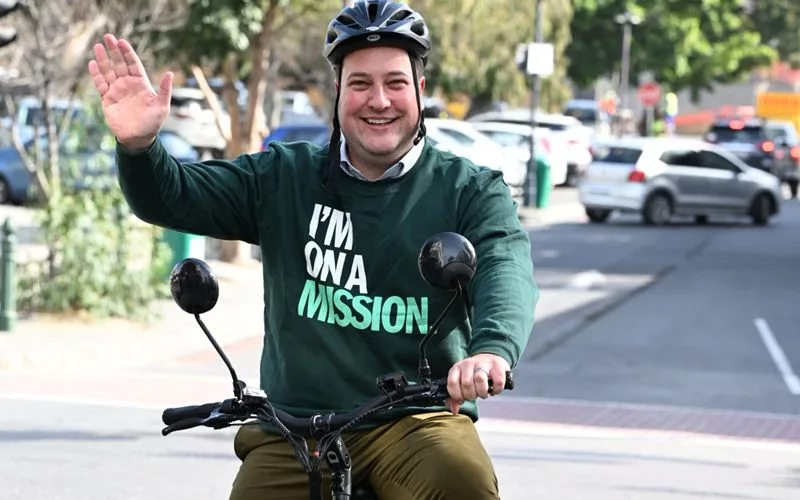
Early August marked a milestone for Bree Street and Cape Town’s broader cycling community. Mayor Geordin Hill-Lewis, accompanied by Councillor Rob Quintas, members of the Young Urbanists, and a diverse group of cyclists, officially launched the Bree Street Safe Passage pilot. The mayor’s decision to ride the length of the new cycle lanes himself was not just symbolic; it was a powerful endorsement of Cape Town’s new direction. His participation sent a clear message that cycling infrastructure holds a central place in the city’s vision for the future.
The event resonated with hope, especially for those all too familiar with the slow pace of urban change. Small gestures, like longtime flower seller Nadia Gamaldien handing bouquets to the mayor and councillor, added a deeply personal touch. These moments illustrate that improvements to cycling aren’t just technical upgrades – they foster real connections among the people who live and work on Bree Street every day.
The Safe Passage pilot draws on the principles of tactical urbanism, a movement that has roots in late 20th-century urban planning. Instead of waiting for labor-intensive and expensive construction, the city opted for quick, adaptable solutions. Using safe-hit bollards and modular concrete delineators, planners created a visible, physical barrier between the cycle lane and motor traffic. These structures do more than mark territory – they set new behavioral expectations, discouraging illegal parking and dangerous maneuvers that put cyclists at risk.
Tactical Urbanism in Action
Rob Quintas, the city’s Mayoral Committee Member for Urban Mobility, has championed this approach, arguing that today’s cities need to do “more for less.” Budget constraints and the urgent need for safer streets require creativity and experimentation. The Bree Street pilot embodies this ethos, with modular materials that make it possible to tweak, adapt, or remove elements based on real-world feedback. Rather than committing immediately to permanent, inflexible infrastructure, the city can learn from what works and what doesn’t.
This philosophy aligns with modern design thinking, which values continuous iteration over rigid planning. If a particular section of lane proves problematic – perhaps a bollard blocks emergency vehicles, or a kerb is too narrow – the city can adjust it within days. This nimbleness not only saves money but also keeps the conversation open, inviting input from users and allowing the street to evolve alongside its community.
Collaboration has been at the heart of the Safe Passage initiative. The Young Urbanists, a group dedicated to transforming Cape Town’s public spaces, worked hand-in-hand with city officials to bring this pilot to life. Managing Director Roland Postma has emphasized the importance of broad engagement, bringing together voices from government, civil society, and private industry. This collaborative model echoes the successes of global urban movements – from Jane Jacobs’ activism in New York to Copenhagen’s cycling revolution – showing that real change happens when diverse interests unite around a common goal.
A Blueprint for Greener, Safer Streets
Cape Town’s new Walking and Cycling Strategy, adopted in April, provides the policy backdrop for these interventions. The strategy shifts the focus from vehicles to people, aiming to make city streets safer and more inviting for pedestrians and cyclists. The logic is simple yet powerful: by prioritizing active mobility, the city encourages greener travel choices, leading to cleaner air, quieter neighborhoods, and more vibrant public spaces.
Benefits extend far beyond the cycling community. When streets feel safer and more welcoming, everyone stands to gain – shoppers linger longer, families walk together, and local businesses thrive. Bree Street’s transformation aspires to the ambitions seen in European cities like Amsterdam or the Dutch woonerf model, where shared spaces bring together cars, cyclists, and pedestrians in a harmonious urban environment.
On an everyday level, these changes have an immediate impact. Commuters and delivery riders, such as the Green Riders who carry goods across the city, can now travel between Shortmarket Street and Hans Strijdom Avenue with a newfound sense of security. The physical barriers not only protect cyclists but also encourage drivers to slow down and pay attention, reducing the stress and danger for all road users. This “traffic calming” effect is well-documented worldwide, creating safer and more pleasant streets for everyone.
Voices from Bree Street: Culture and Economy in Motion
The transformation of Bree Street is more than an infrastructure project – it’s a cultural shift. The pilot launch brought together cyclists, city leaders, and local vendors, all sharing the space in a new way. For delivery workers, the improvements mean more than convenience; they represent dignity and the ability to earn a living without fear. One rider commented that, for the first time, he felt “visible and protected” as he navigated the city’s core.
The project’s design prioritizes reversibility and learning-by-doing. Taking cues from early 2000s guerrilla urbanism – where citizens temporarily repurposed parking spots and artists created DIY crosswalks – the Safe Passage pilot enables quick adjustments. If a section doesn’t work, planners can alter it swiftly, ensuring that the street remains responsive to the needs of its users. This experimental spirit fosters a sense of collective ownership and creativity that echoes international movements but retains a distinctly Cape Town flavor.
Economic opportunity also plays a pivotal role. The SDI Trust’s Safe Passage Programme, which helps empower small businesses and informal workers, highlights how safe cycling infrastructure can spur local economies. In cities like Nairobi and Mexico City, similar efforts have connected distant communities to central markets, enabling both formal and informal businesses to flourish. Bree Street’s changes aim to create not just safer roads, but stronger links between neighborhoods and economic opportunities.
Looking Ahead: Lessons and Future Expansion
Cape Town’s commitment to adaptive urbanism doesn’t stop with Bree Street. Planners have already set their sights on extending the pilot from Shortmarket Street to Hertzog Boulevard, tackling the additional challenge of integrating cycle lanes alongside on-street parking bays. These “door zones” require careful design, as unexpected car doors can pose serious risks to cyclists. Solutions may include improved signs, innovative layouts, or even rethinking how and where cars park in busy urban corridors.
The city’s willingness to experiment and learn stands out. Each phase of the project will bring new lessons: Will more people choose to cycle? Do delivery workers report feeling safer? Does Bree Street become a quieter, greener, more welcoming space for all? Continuous feedback will guide future adaptations, ensuring that the street remains a dynamic, evolving part of Cape Town’s urban fabric.
Ultimately, Bree Street’s Safe Passage pilot represents more than a set of physical interventions. It’s an invitation – to rethink how cities move, to value the voices of everyday users, and to rediscover the possibilities that lie within our streets. As Cape Town observes the pilot’s progress, the city signals its ambition to transform public spaces into living arteries that connect, protect, and inspire all who traverse them.
What is the Bree Street Safe Passage pilot in Cape Town?
The Bree Street Safe Passage pilot is a city initiative designed to improve urban cycling by creating protected bike lanes separated from motor traffic using modular, easy-to-move barriers. This tactical urbanism project enhances cyclist safety, encourages more people to ride bikes, reduces traffic conflicts, and supports local businesses along Bree Street. It represents Cape Town’s people-first approach to creating greener, safer, and more vibrant streets.
How do the protected bike lanes on Bree Street work?
The protected bike lanes use physical barriers such as safe-hit bollards and modular concrete delineators to separate cyclists from cars. These barriers discourage illegal parking in cycle lanes and protect cyclists from hazards like sudden car doors opening. The modular design allows the city to quickly adjust or remove elements based on real-world feedback, making the infrastructure flexible and responsive to users’ needs.
What are the benefits of the Bree Street cycling project for the local community?
The project improves safety for cyclists and other road users by calming traffic and reducing conflicts between cars and bikes. It fosters a welcoming urban environment where pedestrians, cyclists, and drivers share space more harmoniously. The safer streets encourage shoppers and families to spend more time in the area, boosting local businesses and helping informal workers, such as delivery riders, earn a living with dignity and security.
How does tactical urbanism influence the Safe Passage pilot?
Tactical urbanism emphasizes quick, low-cost, and adaptable urban interventions that can be tested and changed easily. Bree Street’s pilot embodies this by using modular barriers and temporary measures that can be tweaked based on user experience and city feedback. This iterative process saves money, accelerates improvements, and keeps local communities engaged in shaping their street environment.
Who has been involved in the development and launch of the Bree Street Safe Passage?
The project has been a collaboration between Cape Town city officials – including Mayor Geordin Hill-Lewis and Councillor Rob Quintas – the Young Urbanists advocacy group, local businesses, cyclists, and community members. This inclusive approach ensures the pilot reflects the needs and aspirations of various stakeholders, drawing inspiration from global urban mobility movements.
What are the future plans for cycling infrastructure in Cape Town following this pilot?
Cape Town plans to extend the Safe Passage pilot beyond Bree Street, aiming to connect more areas such as Shortmarket Street to Hertzog Boulevard. Future efforts will address challenges like “door zones” where parked cars pose risks to cyclists, potentially through innovative parking designs and improved signage. The city’s commitment to adaptive, people-centered urban design means ongoing monitoring and adjustments to make cycling safer and more accessible citywide.