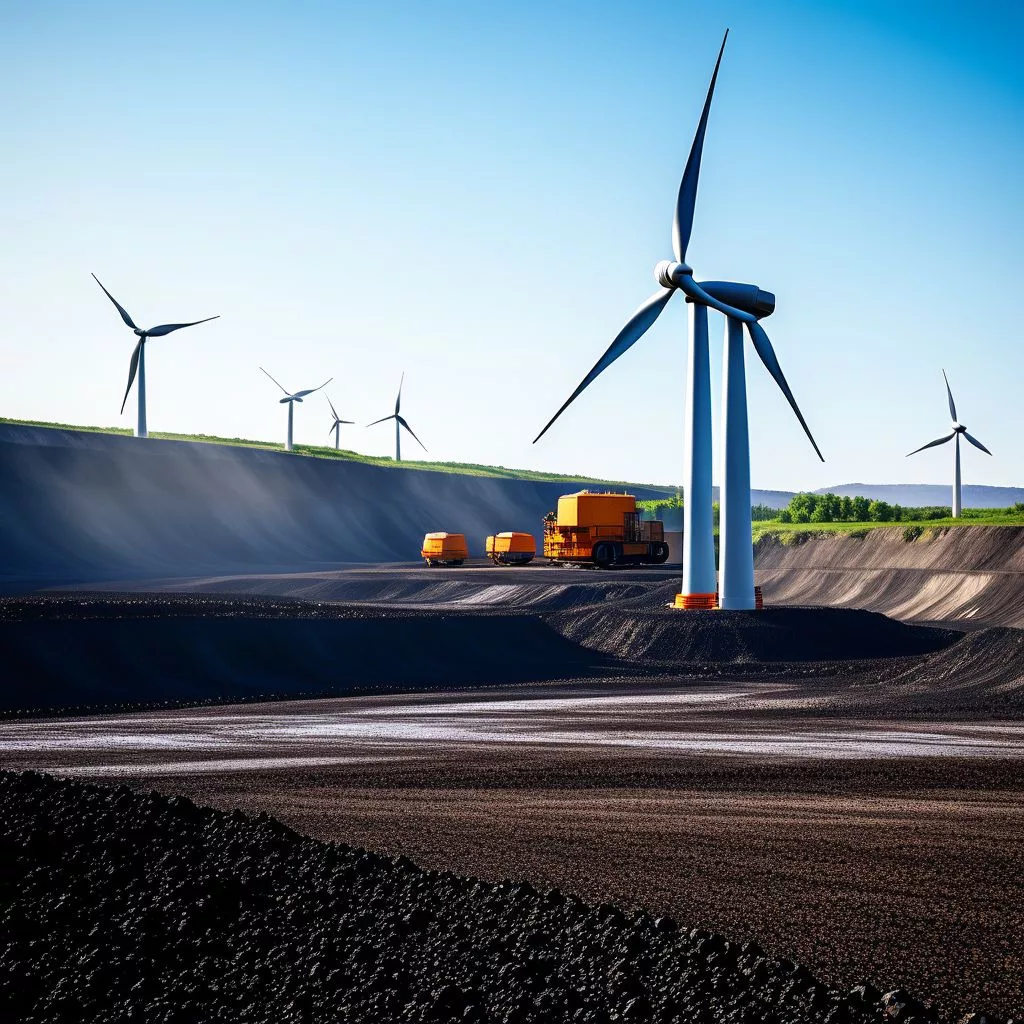
South Africa is changing from coal to clean energy in a way that cares for its people and communities. Through special training centers and education programs, workers are learning new green skills like fixing solar panels and wind turbines. This big change aims to create good jobs, help regions hit hard by coal job losses, and include everyone – especially women and young people. With teamwork between the government, businesses, and global partners, South Africa is building a fair, green future where no one is left behind.
What is South Africa’s Just Energy Transition and how is it shaping the future?
South Africa’s Just Energy Transition focuses on shifting from coal to renewable energy while prioritizing social justice. It includes skills development, education reform, and regional hubs to empower communities, create green jobs, and ensure an inclusive, sustainable economy through collaboration between government, industry, and international partners.
On a brisk winter day in Midrand, the Gallagher Convention Centre hosted a gathering that felt more like the start of a national movement than a routine policy launch. Government officials, representatives from labor unions, higher education, and international agencies filled the hall with eager anticipation. The event marked the unveiling of three pivotal initiatives: the Just Energy Transition (JET) Skills Desk, the National JET Skills Advisory Forum, and the Multi-Donor Initiative (MDI). Rather than simple administrative measures, these initiatives represent a promise to place everyday South Africans at the very center of the country’s shift toward renewable energy.
This moment recalls great turning points in global history, when societies reimagined themselves to meet new challenges. Like the Bauhaus movement, which fused art, industry, and social progress into a new vision for the 20th century, South Africa now aims to harmonize economic modernization with justice and dignity. The energy transition ahead is not just about technology or infrastructure – it is about people, their skills, and their futures.
Bridging the Skills Gap: Empowering Communities for Green Jobs
South Africa’s energy history runs deep in the coal-rich valleys of provinces like Mpumalanga. For decades, coal has been more than a fuel – it has shaped the economic identity of entire communities. However, the rise of renewable energy and the global push to address climate change call for a new approach. Today, the country faces the urgent need to shift toward clean energy sources, a move that mirrors historic technological revolutions but with even greater emphasis on social responsibility.
Deputy President Paul Mashatile, speaking through Minister Buti Manamela, made it clear that a just energy transition must go beyond numbers and infrastructure. South Africa’s future depends on ensuring that the economic and social benefits of the energy revolution reach everyone, especially those whose livelihoods are most at risk. The vision is clear: a transformation that restores hope, rebuilds communities, and provides opportunities for all.
The reality on the ground reveals both challenges and promise. In coal-dependent regions, jobs are disappearing and prospects shrink for local youth. Yet, the seeds of change are visible. Training centers now offer courses in solar panel installation, wind turbine maintenance, and other green technologies. Stories like that of Thulani, a former mine worker retraining for the solar industry, give a face to the transition. Individuals and communities are beginning to see possibilities where there was once only decline.
Education Reform: Laying the Foundations for a New Economy
The success of South Africa’s just energy transition hinges on education and skills development. Inspired by the reconstruction efforts of post-war Europe, the country recognizes that building a green economy requires more than investment in technology – it demands an overhaul of how people learn and train for new roles. Technical and vocational education must adapt rapidly to meet the needs of emerging industries.
The JET Skills Desk, now part of the Department of Higher Education and Training, serves as the transformation’s command center. Its role extends beyond traditional training; it identifies future skills, responds to shifts in the labor market, and partners with industry leaders to ensure training aligns with real-world demand. The Desk focuses especially on adults in regions where coal job losses have struck hardest, providing a lifeline for those needing to reskill or upskill for the new economy.
Meanwhile, the National JET Skills Advisory Forum brings together a wide spectrum of stakeholders – government, business, labor, and civil society. In a model reminiscent of historic workshops where innovation flourished through collaboration, the Forum ensures all voices contribute to the national strategy. This inclusive approach means that solutions tailor themselves to South Africa’s unique landscape, rather than simply importing foreign models.
Regional Hubs and Global Partnerships: Spurring Local Innovation
Across the country, “Skills Development Zones” are emerging as engines for local renewal. These hubs, located in areas like the Eastern Cape and Northern Cape, connect education directly to new opportunities in renewable energy, green hydrogen, and electric mobility. Imagine a training center in the windswept Karoo, where students practice maintaining turbines while learning about global trends in clean technology. These zones are not only producing skilled workers, they are building resilient, future-ready communities.
This local approach echoes successful community development efforts around the world, where regions reinvent themselves by connecting local strengths to new economic currents. By supporting local talent and grounding innovation in the lived realities of communities, South Africa aims to ensure that the benefits of the green transition spread widely.
Achieving these ambitions requires significant investment. South Africa, like many developing economies, faces the challenge of limited funding for such large-scale initiatives. The solution lies in a mosaic of partnerships. Public funds set the groundwork, but private sector investment and philanthropic support are essential. International partners – such as the European Union, Germany, and Switzerland – have stepped up through the Multi-Donor Initiative, providing funding and expertise to help operationalize the JET Skills Desk. These collaborations, managed by GIZ, serve to accelerate progress without undermining national leadership or priorities.
Social Justice at the Forefront: Inclusion and Empowerment
The commitment to a just transition goes beyond economic or technological change. Social justice stands at the heart of the new skills strategy, with a special focus on women, young people, and communities most affected by the shift away from coal. The government has linked the JET Skills Portfolio to Women’s Month, underscoring the need to address the disproportionate impact of both climate change and economic exclusion on women.
Programs offer targeted support – career guidance, entrepreneurship development, and specialized training – for those who have historically faced barriers to opportunity. The goal is to turn regions of hardship into places of innovation and hope. This approach calls on traditions of collective upliftment, drawing from South Africa’s own legacy of resilience and global examples of grassroots transformation.
International exchange forms another pillar of the country’s approach. By partnering with other nations that have advanced their own green transitions, South Africa brings home best practices and global networks. Student exchanges and technical collaborations foster a flow of ideas and skills, ensuring that local strategies benefit from global experience.
Turning Vision into Action: Building a Sustainable, Inclusive Economy
South Africa’s leaders recognize that the time for strategy is over – the focus must now shift to implementation. Years of research and planning have mapped the path forward; now, the work involves building capacity, scaling up programs, and measuring results. The JET Skills Integrated Plan coordinates these efforts, aligning investment, monitoring progress, and adapting as needed.
The end goal reaches beyond job creation. South Africa envisions a future where its citizens can lead in green industries, drive innovation, and achieve shared prosperity. Skills development becomes the bridge between a divided past and an inclusive future, empowering people to play an active role in shaping the nation’s destiny.
The scene at Gallagher Convention Centre was more than symbolic. It signaled the birth of a new era – one in which South Africa’s transition to clean energy serves as a model of social inclusion and collective progress. With determination and vision, the country stands ready to turn the dream of a just energy transition into lasting reality.
What is South Africa’s Just Energy Transition (JET) and why is it important?
South Africa’s Just Energy Transition (JET) is the country’s planned shift from coal-based energy to renewable energy sources like solar and wind. What makes it “just” is its focus on social justice – ensuring that communities and workers affected by the decline of coal industries are supported through retraining, job creation, and inclusive policies. The JET aims not only to address climate change but also to build a sustainable economy that leaves no one behind, especially women, young people, and coal-dependent regions.
How is South Africa addressing the skills gap for green jobs?
To bridge the skills gap, South Africa has established specialized training centers and education programs that teach new green skills such as solar panel installation and wind turbine maintenance. The JET Skills Desk, part of the Department of Higher Education and Training, leads efforts to identify future skills needs and align training with industry demand. Regional “Skills Development Zones” are set up to provide localized education and employment opportunities, helping coal-affected communities transition smoothly to green jobs.
What role does education reform play in the Just Energy Transition?
Education reform is critical to building South Africa’s green economy. The country is overhauling technical and vocational education to prepare workers for emerging sectors like renewable energy, green hydrogen, and electric mobility. The National JET Skills Advisory Forum brings together government, businesses, labor unions, and civil society to ensure that education programs meet real-world needs and reflect South Africa’s unique social and economic context. This approach aims to make lifelong learning and reskilling accessible to all, especially adults from coal-affected areas.
How are regional hubs and global partnerships contributing to the transition?
South Africa is developing regional training hubs in areas like the Eastern Cape and Northern Cape, where learners gain hands-on experience with renewable technologies. These hubs foster local innovation and community resilience. International partnerships, including support from the European Union, Germany, and Switzerland through the Multi-Donor Initiative, provide crucial funding, expertise, and technical exchange opportunities. This collaboration accelerates progress while ensuring South Africa maintains leadership over its transition priorities.
What measures are in place to ensure the transition is socially inclusive?
Social justice is central to South Africa’s transition strategy. Programs specifically support women, young people, and communities hit hardest by coal job losses through targeted training, career guidance, and entrepreneurship development. The government links these efforts with broader initiatives, such as Women’s Month celebrations, to highlight and address gender disparities. International exchanges and collaborations further promote inclusion by sharing global best practices and fostering diverse talent development.
What are the next steps for South Africa’s Just Energy Transition?
Having laid the groundwork through research, planning, and stakeholder engagement, South Africa is now focused on implementation. The JET Skills Integrated Plan coordinates investments, monitors progress, and adapts strategies as needed. The goal is to scale up training programs, create sustainable green jobs, and empower citizens to lead in new industries. This ongoing effort aims to transform South Africa’s economy and society into a model of equitable, green growth and innovation.