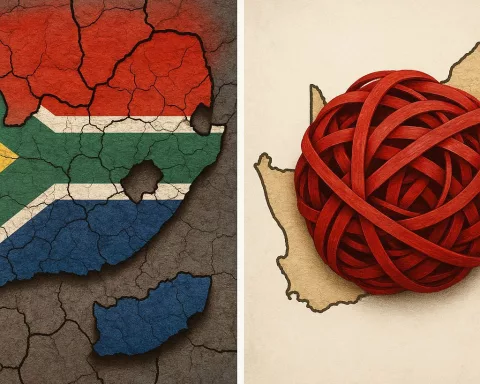

South Africa is working hard to fight unemployment and build a future based on knowledge and skills. The Human Resource Development Council (HRDC) brings together government, businesses, and communities to improve education, training, and support for young entrepreneurs. They focus on closing the gap between school and work, helping youth gain digital skills, and encouraging small businesses to grow. Even though many young people face big challenges, South Africa believes that teamwork, new ideas, and strong education can create real opportunities for everyone. With determination and smart planning, the country aims to build a brighter, fairer tomorrow.
How is South Africa advancing human resource development to tackle unemployment and build a knowledge-based economy?
South Africa’s Human Resource Development Council (HRDC) drives inclusive growth by uniting government, business, and civil society to enhance education, skills training, and entrepreneurship. Key strategies include bridging education-to-employment gaps, promoting digital inclusion, and supporting youth entrepreneurship to reduce unemployment and foster innovation.
Charting a National Path for Growth
The energy in the Gallagher Convention Centre was unmistakable as policymakers, educators, and civic leaders gathered for the latest session of the Human Resource Development Council (HRDC). Deputy President Paul Mashatile’s opening address set the tone for a day filled with both urgency and determination. He called on those present to harness their shared expertise and passion for increasing productivity and unlocking the human resource capacity needed to propel South Africa into a knowledge-driven era.
The HRDC stands as more than just another entity; it acts as the vital bridge between South Africa’s ambitions and its everyday realities. The Council’s charge is both clear and daunting: guide the nation toward a thriving, knowledge-based economy while tackling persistent unemployment and inequality. Mashatile’s message echoed through the room – South Africa’s future depends on how effectively it mobilizes and develops its people’s talents. Instead of acting in isolation, the Council brings together leaders from across government, business, and civil society, uniting them behind a vision of inclusive growth.
Despite the optimism, sobering statistics offered a stark reminder of the work ahead. According to the latest data from Statistics South Africa, the country faces an unemployment rate of 33.2%, with the burden falling disproportionately on youth, women, and marginalized communities. Among those most at risk are the millions of young people categorized as NEET – not in employment, education, or training. For the 3.5 million South Africans aged 15–24 who find themselves adrift between school and work, opportunity feels increasingly out of reach.
Responding to Complex Challenges
Personal stories emerge behind the statistics – young graduates circulating their CVs, skilled workers sidelined by automation, and communities where hope for progress flickers. Studies by the Southern Africa Labour and Development Research Unit highlight the persistent exclusion and precariousness experienced by the NEET population, as many struggle to transition from education to meaningful employment.
The Council’s mandate reaches far beyond setting policies on paper. South Africa’s leadership understands that words must translate into real opportunities for those whose futures hang in the balance. Since the dawn of democracy, the government has recognized that education and training are essential levers for economic empowerment. The National Development Plan (NDP) and the Human Resource Development Strategy (HRDS) reflect this commitment, setting ambitious benchmarks to drive progress.
Creating real change requires the kind of collaboration that crosses sectors and regions. Mashatile’s call to action draws from a rich tradition of partnership, recognizing that long-term progress happens when government, business, educators, and civil society work in tandem. In this “whole-of-society” approach, the HRDC acts as a forum for consensus-building and innovation, ensuring no single group shoulders the burden alone.
Education in South Africa faces significant headwinds. Foundational learning gaps and under-resourced technical and vocational programs hamper the ability to match graduates’ skills with workforce demands. A shortage of qualified teachers and outdated curricula further complicate the task. Employers regularly note a disconnect between the education system’s output and the needs of a rapidly changing marketplace.
Building a Pipeline of Skills and Innovation
The HRDC has responded with a comprehensive strategy that nurtures young talent from early childhood through to employment. Rather than focusing solely on traditional schooling, the Council supports a “skills pipeline” that includes bridging programs, workplace learning, and robust entrepreneurship support. Career guidance and mentoring have become cornerstone elements, guiding youth as they navigate complex education and employment pathways.
South Africa can draw lessons from the world’s postwar recoveries. Germany and Japan, for instance, rebuilt their economies by fusing technical training with practical workplace experience, creating adaptable and resilient workforces. South Africa’s path must be unique, reflecting its history and diversity, but the vision remains the same: every young person deserves the chance to develop their potential and contribute to society.
Rapid technological change demands constant innovation. Automation and artificial intelligence are reshaping industries, creating demand for new skills while phasing out traditional jobs. The HRDC recognizes that education must become agile, equipping learners with both technical know-how and the ability to adapt to new challenges. This transformation echoes global trends, seen in efforts like UNESCO’s Education for Sustainable Development, and calls for curricula and training programs that prepare students for jobs that may not yet exist.
Digital inclusion forms a critical part of the HRDC’s agenda. Technology offers immense opportunity, but millions remain excluded due to geography, limited resources, or systemic barriers. The Council’s strategy insists that skills development reach all communities, urban and rural alike. By doing so, South Africa hopes to prevent a new digital divide from replacing old inequalities.
Local Innovation and Global Partnerships
The HRDC recognizes the importance of tailoring solutions to local realities. New provincial councils in North-West and Mpumalanga exemplify how regions can adapt national strategies to their unique needs. These local bodies have the flexibility to pilot programs, form partnerships with local industries, and address specific challenges, ensuring that skills development resonates from remote villages to urban centers.
This decentralized approach mirrors successful governance models in countries like Australia and Canada, where provinces or states play a key role in shaping education and training. For South Africa, embracing regional diversity is not just practical – it is essential for creating a system that leaves no one behind.
International cooperation adds another dimension. Through the G20 Education Working Group, South Africa joins with peers worldwide to share best practices and jointly tackle the challenges of youth empowerment and education system resilience. This spirit of collaboration recalls historic gatherings like the 1955 Bandung Conference, where newly independent nations worked together for mutual advancement.
Driving Implementation and Fostering Entrepreneurship
Leadership on the Council continues to evolve, as seen in Minister Buti Manamela’s recent appointment to Higher Education and Training. Known for his longstanding commitment to youth development, Manamela brings deep insight into the challenges that young South Africans face. Under his guidance, the Council is working to strengthen the connection between education and employment by encouraging businesses to become active participants in training.
Entrepreneurship now stands at the heart of the HRDC’s vision. While large corporations command attention, it is small and medium enterprises that generate the lion’s share of new jobs. The Council advocates for policies and programs that nurture startups and support the informal sector, recognizing these businesses as engines of inclusive growth. The National Youth Service also plays a valuable role, helping young people build soft skills and gain real-world experience while serving their communities. Scaling up such initiatives remains a key priority.
Yet, the journey from policy to impactful delivery is never straightforward. Implementation gaps persist, a challenge familiar to many governments. Mashatile emphasizes the need for a disciplined focus on execution – not just planning, but ensuring results on the ground.
In their quest to reshape South Africa’s future, leaders must blend technical expertise with vision and creativity. The HRDC’s work, at its core, reaffirms the belief that by investing in people – through education, innovation, and opportunity – South Africa can build a more equitable and prosperous society. As delegates left the Gallagher Convention Centre, the sense lingered that the task ahead is monumental but achievable. With persistent effort and collective will, South Africa’s future is one of promise, built skill by skill, and dream by dream.
What is the main goal of South Africa’s Human Resource Development Council (HRDC)?
South Africa’s HRDC aims to reduce unemployment and build a knowledge-based economy by uniting government, business, and civil society. It focuses on improving education, skills training, and entrepreneurship – especially for youth – to bridge the gap between schooling and meaningful employment. The Council promotes digital skills, supports small business growth, and fosters inclusive economic opportunities for all South Africans.
How does the HRDC address the challenges faced by youth who are Not in Employment, Education, or Training (NEET)?
The HRDC recognizes that millions of young South Africans aged 15–24 fall into the NEET category, facing barriers to education and work. To help, the Council implements bridging programs, career guidance, mentoring, and workplace learning initiatives. These efforts are designed to create pathways from education to employment, equip youth with relevant digital and entrepreneurial skills, and encourage participation in programs like the National Youth Service to build soft skills and real-world experience.
What role does digital inclusion play in the HRDC’s strategy?
Digital inclusion is critical in closing South Africa’s inequality gaps. The HRDC emphasizes equipping young people with digital skills and ensuring access to technology and training across both urban and rural areas. This focus helps prevent a growing digital divide and prepares South Africans for jobs in a rapidly evolving technological landscape shaped by automation and artificial intelligence.
How does the HRDC incorporate local and international partnerships in its approach?
The HRDC supports decentralization by establishing provincial councils, such as in North-West and Mpumalanga, to tailor national skills development strategies to local needs. This regional flexibility fosters innovation and partnership with local industries. Internationally, South Africa participates in forums like the G20 Education Working Group, sharing best practices and collaborating globally to improve youth empowerment and education system resilience.
Why is entrepreneurship a key focus area for South Africa’s human resource development?
Entrepreneurship, particularly among small and medium enterprises (SMEs), is crucial because these businesses create most new jobs in South Africa. The HRDC promotes policies and programs that nurture startups and the informal sector, recognizing them as engines of inclusive growth. Supporting youth entrepreneurship helps diversify the economy, encourages innovation, and provides alternative employment pathways beyond traditional corporate jobs.
What are some ongoing challenges that South Africa faces in implementing human resource development initiatives?
Despite strong policies like the National Development Plan and the Human Resource Development Strategy, South Africa struggles with implementation gaps. Challenges include under-resourced education systems, foundational learning deficits, outdated curricula, a shortage of qualified teachers, and a disconnect between education outputs and labor market needs. The HRDC emphasizes the importance of disciplined execution and cross-sector collaboration to translate policies into real, measurable outcomes on the ground.