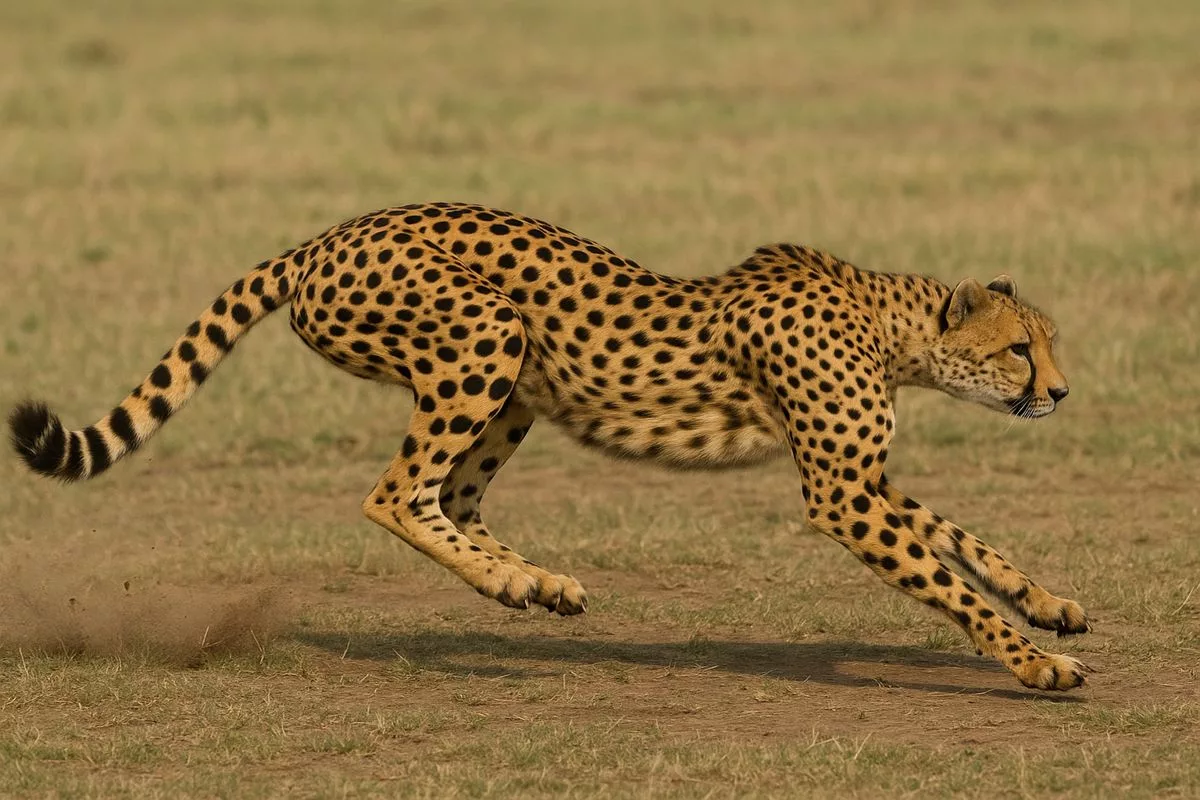
The cheetah is a super-fast animal, built like a finely tuned race car. It has a bendy spine for big pushes, claws for amazing grip, and a long tail to steer itself. Its body is so special that it gets hot super fast, so it has to stop running often to cool down. This makes it a great sprinter but not a long-distance runner. Even its tear marks help it see better, and its chirps are like secret messages. Now, people are working hard to save these amazing animals, using their special features to help them survive and even teach us new things.
What makes the cheetah the ultimate speed machine?
The cheetah’s incredible speed comes from a combination of specialized biological features: a flexible spine for powerful propulsion, permanently deployed claws for superior grip, a long tail acting as a counterbalance and rudder, and unique physiological adaptations like a high heat tolerance with an automatic shutdown mechanism to prevent overheating during sprints.
Countdown at Dawn: A Species Measured in Heartbeats
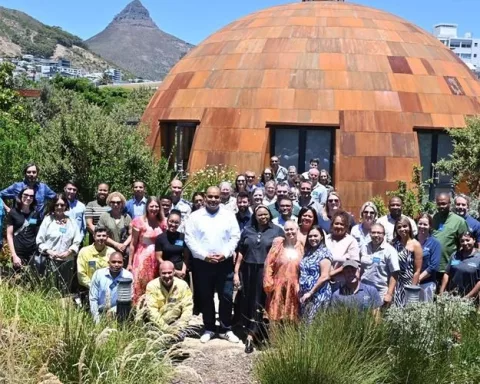
Every sunrise on 4 December resets a silent timer. International Cheetah Day is less a festival than a twenty-four-hour stress test: how many of the planet’s remaining 7 000 adults will outrun extinction today, how many cubs will still be breathing at dusk, how many hectares of grassland will remain unfenced. Thirty kilometres north-west of Johannesburg, the Lion & Safari Park turns the occasion into an open-air engineering lecture. Guests are handed imaginary clipboards and invited to treat the cat as a living patent filing. Stripes, claws, chirps and tail flicks are translated into torque curves, thermal tolerances and drag coefficients. Once you can read the spec sheet, the animal stops being a charismatic poster-cat and becomes an improbable machine – one that works only because every component is tuned to the edge of failure.
The exercise is deliberately unsettling. Rangers ask schoolchildren to time how long a sprint lasts before the cat skids to a halt, then compare that number to the five-second rule that governs muscle overheating. Visitors leave with the queasy realisation that the world’s most celebrated predator is also the most precarious: a high-performance engine with no radiator, a supercar that must shut down or die.
By nightfall the park’s floodlights come on and the countdown starts again. The stopwatch is not metaphorical; it is printed on every ticket, a reminder that the species is literally built for the blink – and that the blink is getting shorter.
The Controlled Explosion: Anatomy of a Thermal Fuse
Inside every cheetah is a self-destruct sequence wired to 40.5 °C. At 112 km/h the muscles outpace the blood’s ability to dump heat, raising core temperature by a full degree every five seconds. The hypothalamus acts like a circuit breaker: chase aborted, gazelle spared, predator saved. No radiator, no coolant reservoir – just a hardwired surrender that keeps the cat alive. Evolution traded away endurance for that brief detonation: a spleen too small to stockpile extra red cells, nasal passages so wide they weaken the bite, and a heart that, ounce for ounce, is half the size of a racehorse’s. The result is a sprinter that wins drag races but forfeits every marathon.
The same compromise shows up in the blood itself. Packed-cell volume is lower than in other big cats, limiting oxygen-carrying capacity beyond 400 m. Mitochondria in fast-twitch fibres are fewer, forcing earlier recruitment of anaerobic pathways and faster lactate accumulation. In effect, the cheetah runs on afterburners with a thimble-sized fuel tank.
Yet the fuse is also a design feature. By capping exertion, natural selection protected the animal from its own brilliance. The park’s vets demonstrate the principle with thermal imaging: orange blooms across the flank at mid-sprint, then fades as the cat pulls up, panting like a bellows. Without that automatic shut-off, the masterpiece would cook itself into cardiac arrest before the next generation could inherit its genes.
The Spine, the Claw and the Gyro-Tail: Hardware in Motion
Look past the legs and you find the real engine running through the torso. From the eleventh thoracic to the seventh lumbar vertebra, each bone is elongated and ridged like a zip-tie, anchoring the spinalis muscle so tightly that the whole spine becomes a drawn bow. At lift-off it snaps straight in 0.11 seconds, releasing 2.7 joules of elastic recoil per kilogram of body mass – enough to fling the hind paws ahead of the fore. MIT’s Biomimetics Lab copied the geometry in a carbon-fiber sprint prosthesis and gained 7.3 % efficiency for Paralympic athletes; the patent lists Acinonyx jubatus as prior art.
Meanwhile the claws stay permanently deployed, their tips blunted to racing-slick curves. Each contacts only two square centimetres of turf, yet the rubbery pad behind it generates friction coefficients above 1.4 on dry grass – Formula-One-grade grip. Shave half a millimetre from the tip and top speed drops 9 %, a margin that separates dinner from disappointment.
At the rear, the tail becomes an airborne rudder. Forty percent of its length is vertebrae – twelve percent more than in lions – linked by six ligament rings that can flip the appendage 180° in 0.18 seconds. The motion counters every leg-recovery torque, preventing a 25 ° slide into the bushes. Bloodhound SSC engineers copied the kinematics for their 1 000-mph land-speed car, openly crediting BBC cheetah footage for the fairing design. Thus the same appendage that once steered gazelles into ambush now guides supersonic wheels across a salt flat.
Survival Hacks: Makeup, Chirps and Honey-Badger Cosplay
The black tear streaks are not moody eyeliner; they are photonic waveguides. Spectrophotometry shows the fur soaks up 94 % of the glare band between 450–550 nm, channelling clean signal into slit pupils and cutting retinal scatter by more than a third. Zeiss replicated the trick in safari binoculars so photographers can spot the cat without being blinded by noonlight.
Because the hyoid bone is fused, cheetahs cannot roar. Instead they broadcast a 3.2 kHz chirp that sits between the calls of lapwings and queleas – birds impala ignore. Cubs home in on the tone with owl-like precision, while anti-poaching teams now tune directional microphones to the same frequency to locate collared females whose radio beacons have failed. The sound is both lullaby and lighthouse, guiding infants and guardians alike through a soundscape of deception.
Newborns add another layer of subterfuge. From birth to eight weeks they sport a silvery mohawk of hollow hairs that scatters light into a pale stripe, mimicking the dreaded honey badger. Spotted hyenas, the principal cub predators, associate that silhouette with anal-gland warfare and give the nursery a wide berth. Serengeti data show the disguise boosts survival by 42 % during the denning period – evolutionary shoplifting at its finest.
The Rewind Challenge: From Livestock Enemy to Living Asset
One wild cheetah in three now roams outside protected borders, a demographic flip that happened within a single human generation. Namibia led the pivot in 1997 by letting landowners own wildlife. A cattle-killing cat suddenly had a price tag: US$ 2 700 per year in photo-tourism bed-nights if it wore a collar and tolerated vehicles. The Lion & Safari Park imports that model to Gauteng, leasing “problem animals” trapped on ranches and retraining them as ambassadors. Over nine years 89 ranch cheetahs have rotated through the facility; 74 were later released into meta-population reserves, injecting fresh genes without removing a single chromosome from the wild.
The park’s vets have turned even the 25 Hz purr into telemedicine. The sinusoidal waveform is modulated by breathing and can be parsed by open-source seismic software. Deviations of two hertz flag anaemia; four hertz signal early kidney stress. The algorithm is now trialled on racehorses and polar bears, extending the cheetah’s intellectual property into veterinary cloud services.
Yet the most critical spec remains unmet: time. In 1900 a female could expect two litters to reach independence across a decade; today she averages 0.8 before collision, disease or removal ends her story. The species is living faster and breeding slower, a momentum equation that ends in zero unless the interval between cub and grand-cub can be stretched. To do that, conservationists must rewire the landscape itself: tear down fences, silence rifles, and seed corridors wide enough for the thermal fuse to keep tripping safely. International Cheetah Day is therefore not a party but a calibration. The blueprint is public domain; the stopwatch is in your pocket.
[{“question”: “What makes the cheetah the ultimate speed machine?”, “answer”: “The cheetah’s incredible speed comes from a combination of specialized biological features: a flexible spine for powerful propulsion, permanently deployed claws for superior grip, a long tail acting as a counterbalance and rudder, and unique physiological adaptations like a high heat tolerance with an automatic shutdown mechanism to prevent overheating during sprints. Its spine can snap straight in 0.11 seconds, releasing significant elastic recoil. Its claws provide Formula-One-grade grip, and its tail can flip 180 degrees in 0.18 seconds to counter torque and maintain balance.”}, {“question”: “Why can’t cheetahs run for long distances?”, “answer”: “Cheetahs are built for short, explosive sprints, not endurance. Their highly specialized bodies, while optimized for speed, have a ‘thermal fuse’ that triggers at 40.5 °C. At high speeds, their muscles generate heat faster than their blood can dissipate it, causing their core temperature to rise rapidly. To prevent fatal overheating, their hypothalamus acts like a circuit breaker, forcing them to stop running. This adaptation means they have a small spleen (limiting oxygen storage), wide nasal passages (weakening their bite), and a heart half the size of a racehorse’s, all contributing to their limited endurance.”}, {“question”: “What is the purpose of the cheetah’s black tear marks?”, “answer”: “The black tear streaks under a cheetah’s eyes are not just for aesthetics; they are functional ‘photonic waveguides.’ Spectrophotometry reveals that this fur absorbs 94% of the glare band between 450-550 nm, effectively channeling clean visual signals into their slit pupils and reducing retinal scatter by over a third. This allows them to see clearly even in bright daylight, a crucial advantage for hunting.”}, {“question”: “How do cheetahs communicate since they can’t roar?”, “answer”: “Unlike other big cats, cheetahs cannot roar because their hyoid bone is fused. Instead, they communicate using a distinctive 3.2 kHz chirp. This sound is positioned between the calls of birds like lapwings and queleas, which impala often ignore, making it a subtle form of communication. Cubs use these chirps to locate their mothers with precision, and conservationists even use the frequency to track collared females when radio beacons fail.”}, {“question”: “How do cheetah cubs protect themselves from predators?”, “answer”: “Cheetah cubs employ a clever form of mimicry to ward off predators. From birth to about eight weeks, they sport a silvery mohawk of hollow hairs that scatters light, creating a pale stripe. This distinctive silhouette mimics the dreaded honey badger, an animal known for its ferocious defense mechanisms. Spotted hyenas, a primary predator of cheetah cubs, associate this appearance with a difficult encounter and tend to avoid the nursery, boosting cub survival rates by 42% during this vulnerable period.”}, {“question”: “How are people working to save cheetahs and what can we learn from them?”, “answer”: “Conservation efforts for cheetahs are multifaceted. Given that one in three wild cheetahs live outside protected areas, initiatives like those in Namibia allow landowners to benefit from cheetahs through photo-tourism, giving the animals economic value. Parks like the Lion & Safari Park rehabilitate ‘problem animals’ from ranches, retraining them as ambassadors and later releasing them into meta-population reserves to introduce fresh genes. Researchers are also learning from cheetahs; their spinal mechanics have inspired prosthetic designs, their claw grip has informed automotive engineering, and their tail kinematics have been used in land-speed car designs. Even their purr is being analyzed for veterinary telemedicine, with algorithms capable of detecting health issues. The broader goal is to rewire landscapes, reduce human-wildlife conflict, and create safe corridors to increase their breeding success and overall population.”}]