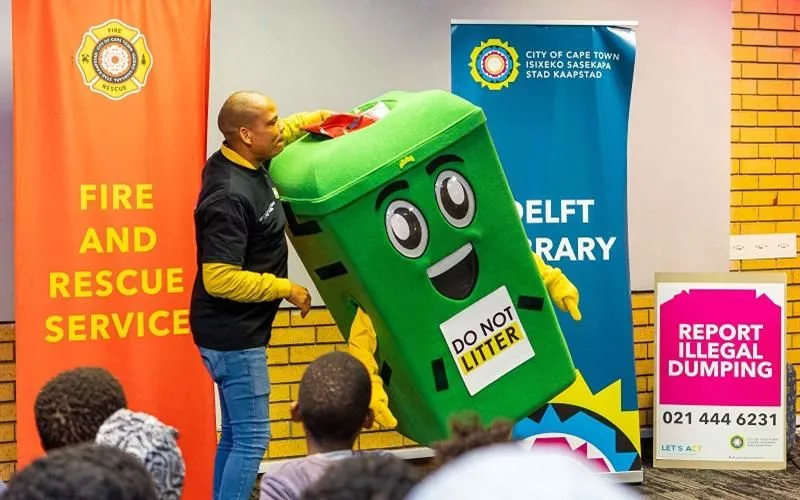
Cape Town’s Urban Waste Management (UWM) Directorate has introduced a new anti-litter mascot called Bingo to combat littering. Bingo’s aim is to increase children’s awareness of the harmful effects of littering and illegal dumping through fun and educational approaches. Bingo has already visited several schools across Cape Town, and the UWM team hopes that the mascot’s engaging presence will inspire children to become more responsible and environmentally aware individuals, fostering a sustainable environment for future generations.
Can mascots be effective teaching tools?
Mascots like Bingo can substantially impact children’s lives by instilling a sense of responsibility and environmental stewardship. With conventional teaching methods not always resonating with children, Bingo’s dynamic presence offers a fresh and engaging way to emphasize the significance of proper waste management. Bingo’s main objective is to increase awareness of littering and illegal dumping’s harmful effects on the environment.
Mascots as Effective Teaching Tools
Mascots have consistently played essential roles in social and cultural movements by captivating people’s hearts and minds. Representing the cause they stand for, mascots like Bingo can substantially impact children’s lives by instilling a sense of responsibility and environmental stewardship.
With conventional teaching methods not always resonating with children, Bingo’s dynamic presence offers a fresh and engaging way to emphasize the significance of proper waste management. Bingo and the UWM team can create unforgettable experiences by appealing to children’s natural curiosity and eagerness to learn, hopefully inspiring change.
Taking Action: Visiting Schools Across Cape Town
Bingo has already visited numerous schools throughout Cape Town, transforming students into more environmentally aware individuals. The City of Cape Town’s website now features an accessible online booking platform, making it easier than ever for schools to arrange a visit from Bingo and seize this exclusive opportunity to enlighten and motivate their pupils.
During these visits, Bingo’s main objective is to increase awareness of littering and illegal dumping’s harmful effects on the environment. The mascot delivers educational talks covering various subjects, such as the consequences of waste on the environment, the importance of reducing, reusing, and recycling, and the need for cleanliness in homes and nearby areas. Bingo interacts with students through entertaining and informative show-and-tell sessions, plays, poems, and even educational songs.
Based on the student group’s size and age, Bingo might also participate in interactive games and activities that emphasize responsible waste management. As Bingo travels from school to school, the captivating character’s influence is anticipated to extend beyond the classroom, reaching family members and the broader community.
Creating Positive Change: Expanding Beyond the School Environment
Alderman Grant Twigg, Mayoral Committee Member for Urban Waste Management, has faith in Bingo’s ability to shift perspectives on waste among children and their families. By targeting the younger generation, Alderman Twigg aims to spark change that will ultimately transform the way communities approach waste management.
As children adopt eco-friendly habits, it is anticipated that these practices will spread to their families and neighborhoods, promoting a joint effort to maintain clean and safe communities. After all, significant change requires the entire community’s involvement, and Cape Town’s residents and businesses must collaborate to foster a sustainable environment for future generations.
Collaborating for a Cleaner Future
The introduction of Bingo as the anti-littering campaign’s representative symbolizes a new direction in waste management for Cape Town. As the city and its residents strive to create safer and cleaner communities, it is crucial to acknowledge the importance of innovative and engaging methods like mascots to captivate the younger generation’s imagination.
By adopting these creative approaches and harnessing the power of collaboration, Cape Town’s residents can work together to tackle littering and illegal dumping challenges. With Bingo at the forefront, the city’s waste management future appears more promising than ever.
To schedule Bingo for your next school event and make a lasting impact on your students, visit: https://bit.ly/3rTaDLY. Please note that completing and submitting the request form does not guarantee a booking.
What is the Urban Waste Management Directorate’s initiative to combat littering?
The Urban Waste Management Directorate has launched an initiative to combat littering by introducing an anti-litter mascot named Bingo. Bingo’s goal is to increase children’s awareness of the harmful effects of littering and illegal dumping through fun and educational approaches.
What is the purpose of the anti-litter mascot named Bingo?
The purpose of the anti-litter mascot named Bingo is to increase awareness of littering and illegal dumping’s harmful effects on the environment. Bingo interacts with students through entertaining and informative show-and-tell sessions, plays, poems, and even educational songs.
How effective can mascots be as teaching tools?
Mascots like Bingo can substantially impact children’s lives by instilling a sense of responsibility and environmental stewardship. With conventional teaching methods not always resonating with children, Bingo’s dynamic presence offers a fresh and engaging way to emphasize the significance of proper waste management.
What does Bingo do during visits to schools in Cape Town?
During school visits, Bingo delivers educational talks covering various subjects, such as the consequences of waste on the environment, the importance of reducing, reusing, and recycling, and the need for cleanliness in homes and nearby areas. Based on the student group’s size and age, Bingo might also participate in interactive games and activities that emphasize responsible waste management.
How can schools in Cape Town arrange a visit from Bingo?
Schools in Cape Town can arrange a visit from Bingo by visiting the City of Cape Town’s website, which now features an accessible online booking platform. This exclusive opportunity to enlighten and motivate pupils is now easier than ever to arrange.
What is Alderman Grant Twigg’s vision for the initiative?
Alderman Grant Twigg, Mayoral Committee Member for Urban Waste Management, has faith in Bingo’s ability to shift perspectives on waste among children and their families. By targeting the younger generation, Alderman Twigg aims to spark change that will ultimately transform the way communities approach waste management.
What is the significance of mascots in waste management for Cape Town?
The introduction of Bingo as the anti-littering campaign’s representative symbolizes a new direction in waste management for Cape Town. As the city and its residents strive to create safer and cleaner communities, it is crucial to acknowledge the importance of innovative and engaging methods like mascots to captivate the younger generation’s imagination.
How can Cape Town’s residents collaborate for a cleaner future?
By adopting creative approaches and harnessing the power of collaboration, Cape Town’s residents can work together to tackle littering and illegal dumping challenges. With Bingo at the forefront, the city’s waste management future appears more promising than ever.