
Cape Town is throwing out old paper driving tests. Now, people will use cool touch-screen booths. These booths use fingerprints and have videos in many languages. This makes getting a license faster and stops cheating. It’s a big, smart change for everyone learning to drive.
What is Cape Town’s new touch-screen learner’s licence system?
Cape Town’s new touch-screen learner’s licence system is a digital overhaul replacing paper-based tests with kiosks. Launching fully by Valentine’s Day 2026, it uses fingerprint authentication, offers 11 languages, and features 35,000 video clips, significantly boosting efficiency and combating fraud in the licensing process.
1. Goodbye Booklets, Hello Booths
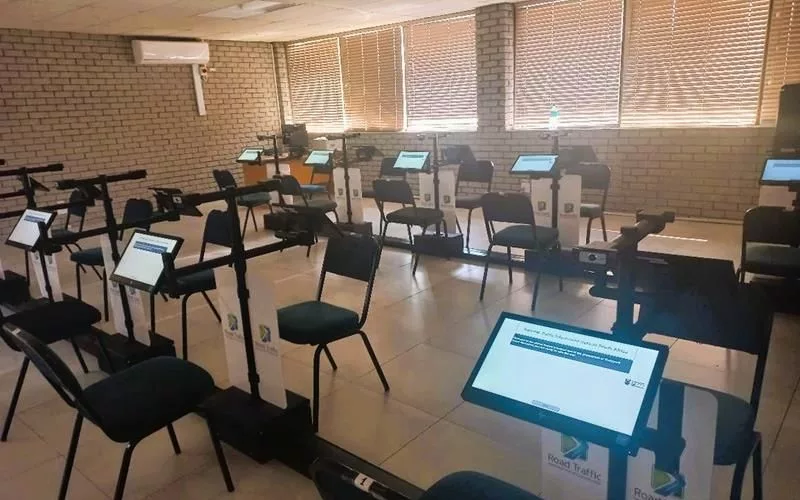
On 15 December 2025, two modest brick buildings in Brackenfell and Elsies River will make global traffic-tech headlines. At 08:00 sharp, the first 40 candidates will slide their thumbs onto matte-black fingerprint readers and watch 15,6-inch sunlight-proof screens flicker to life. In that instant, South Africa’s 56-year-old paper booklet ritual – dog-eared, ink-stained and infamous for “ghost writers” – officially retires.
The change is only the tip of a country-wide overhaul steered by the City’s Safety and Security arm for the RTMC and the Western Cape Transport Department. By Valentine’s Day 2026, every municipal testing bay from leafy Durbanville to tin-roofed Mfuleni will have swapped stapled questionnaires for rugged touch kiosks. A process that once swallowed an entire morning now fits inside 45 minutes, while results that lagged four weeks appear in under three minutes.
Fingerprint authentication against the Home Affairs HANIS database kills the old cottage industry of impersonators. A candidate who passed yesterday in Elsies River cannot re-book today in Mitchells Plain; the system simply refuses. The city estimates the leap will triple daily throughput without hiring a single extra examiner, freeing staff to focus on calming anxious teenagers instead of shuffling paper.
2. Inside the Intelligent Booth
Each terminal is built like a mini mission-control: capacitive glass rated at 1 000 nits so skylight glare never washes out a road-sign video, twin USB-C headsets magnet-docked within easy reach, and a lithium-iron pack tucked beneath the desk that keeps everything alive for four hours when Eskom blinks.
Candidates pick one of 11 official languages, toggle between male or female narrators, or silence audio completely and rely on subtitles. A sign-language avatar pops up for the hard-of-hearing, while a five-minute “sandbox” tutorial teaches users how to drag an arrow onto the correct lane or zoom a high-resolution yield sign. Examiners still patrol – one marshal per dozen booths – but their job description has flipped from watch-dog to tech concierge.
The question bank dwarfs the old 3 000-item booklet: 35 000 freshly shot clips populate a vault that refreshes nightly via AES-256 encrypted pipe from Pretoria. Expect dash-cam footage taken on Chapmans Peak, drizzle on the N2, or a cyclist darting across a Paarl intersection – familiar landmarks that sharpen relevance and retention.
3. Black-out Proof & Fraud-proof
Load-shedding terrorised planners for three years until engineers settled on a hybrid energy recipe: roof-mounted PV panels trickle-charge individual 1,2 kWh batteries, while dual 200 Mbps City fibre plus a 5G fail-over keep data flowing even if a JCB again severs a cable, as happened in Tshwane’s 2023 pilot. If both links die, the booths switch to “island mode,” cache answers locally and beam them up once connectivity returns.
Corruption is battled with equal vigour. Every click is hashed into an immutable CSIR blockchain ledger. Facial-recognition cameras mounted above each screen compare live faces to ID photos; mismatch alerts freeze the session, record a 30-second clip and ping the national Anti-Corruption Unit inside 90 seconds. Double-booking the same ID at two centres on the same day triggers the same red flag.
The R1,3 billion national hardware bill is footed from RTMC’s Road Accident Fund surplus, shielding ratepayers. Centres receive 32–48 kiosks based on historic volume; Brackenfell’s 40-unit chevron layout, for example, comfortably handles its weekly quota of 420 applicants.
4. Human Impact, Global Benchmarks & What Comes Next
Grandparents who flunked the paper test six times are invited to rehearse on a demo booth in the waiting hall; 73 % of sandbox users finish faster than the national median, and panic-driven walk-outs dropped from 8 % to 2 %. Instructors from Calvinia now bus learners to Bellville for a two-hour kiosk orientation; SAIDI stats prove early exposure lifts pass rates by 18 %.
Because every interaction is logged, analysts already know that 62 % of applicants misread a flashing amber arrow. A Swedish tutorial on the dilemma will be dubbed and uploaded before Christmas. Insurance houses are eyeing anonymised risk bands that predict accident probability within a year; early models show a 0,41 correlation coefficient, enough to tweak first-time driver premiums.
Appointment slots (08:00, 10:00, 12:00, 14:00) stay the same, yet capacity jumps from 60 to 180 exams per day. A smart algorithm may soon ping walk-ins when last-minute cancellations arise, using the City’s “WhereIsMyLicence” geo-dataset to minimise travel.
Cape Town borrowed best-practice cues from Estonia (2013) and New South Wales (2018): colour-blind palettes, dyslexic-friendly fonts and a QR-coded pass that lands straight in the RTMC digital-wallet already used for driving-licence cards. European BYOD models were rejected due to local theft and Bluetooth cheating risks; instead, steel-framed, bleach-proof kiosks dominate the floor.
Once learner licences stabilise, RTMC will tabletise the yard test. October 2026 could see examiners riding shotgun while accelerometers and OBD-II ports record brake reaction and hill-start angles at six busy Cape sites. For now, the spotlight sits on Monday’s cut-over. At 07:55 MEC will tap “Start Test,” a drone will live-stream to Facebook, and by 08:45 forty Capetonians will clutch QR codes that certify they know the difference between a yield and a yellow line – proof that the country’s roads just took a decisive algorithmic step toward the future.
What is Cape Town’s new touch-screen learner’s licence system?
Cape Town’s new touch-screen learner’s licence system is a digital overhaul replacing paper-based tests with kiosks. Launching fully by Valentine’s Day 2026, it uses fingerprint authentication, offers 11 languages, and features 35,000 video clips, significantly boosting efficiency and combating fraud in the licensing process.
When will the new touch-screen learner’s licence system be fully implemented?
The new system will begin its rollout on December 15, 2025, in Brackenfell and Elsies River. By Valentine’s Day 2026, every municipal testing bay in Cape Town, from Durbanville to Mfuleni, will have swapped paper questionnaires for the new touch-screen kiosks.
How does the new system combat fraud and impersonation?
The system incorporates several anti-fraud measures. It uses fingerprint authentication against the Home Affairs HANIS database to prevent impersonation and double-booking. Additionally, facial-recognition cameras above each screen compare live faces to ID photos; any mismatch triggers an alert to the national Anti-Corruption Unit. Every click is also logged into an immutable CSIR blockchain ledger for transparency.
What are the key features of the intelligent booths?
Each booth is designed with a 15.6-inch sunlight-proof capacitive glass screen, twin USB-C headsets, and a lithium-iron battery for up to four hours of power during outages. Candidates can choose from 11 official languages, toggle between narrators, or use a sign-language avatar. A five-minute “sandbox” tutorial is provided, and the question bank includes 35,000 video clips, refreshing nightly with AES-256 encrypted data.
How does the system handle power outages and connectivity issues?
To combat load-shedding, the system uses a hybrid energy recipe with roof-mounted PV panels trickle-charging individual 1.2 kWh batteries. Dual 200 Mbps City fibre and a 5G fail-over ensure continuous data flow. If both links fail, booths switch to “island mode,” caching answers locally until connectivity is restored.
What are the benefits and human impact of this new system?
The new system significantly reduces test time (from an entire morning to 45 minutes) and result waiting time (from four weeks to under three minutes). It’s projected to triple daily throughput without needing extra examiners. Early data shows a decrease in panic-driven walk-outs (from 8% to 2%) and an 18% increase in pass rates for those with early exposure. The detailed logging of interactions allows for continuous improvement of content, such as adding tutorials for commonly misunderstood scenarios. The system also aims to provide more accessible and inclusive testing with multi-language and sign-language options.